
On this page
Building a SaaS involves a relentless pace of development where features are shipped weekly, but the marketing of those features often lags behind for months. This gap creates 'documentation debt'—a scenario where your product's potential far exceeds its public visibility. When high-value features remain undocumented, they are invisible to search engines, AI discovery agents, and potential customers.
Traditional content creation methods struggle to keep up with the technical nuance and speed of modern software. Hiring a team of technical writers or distracting your product managers with draft reviews is often too slow and expensive for a scaling company. Founders need a more efficient way to transform their technical roadmap into a library of discoverable, high-intent assets.
Autonomous blogging represents a shift from manual drafting to an evidence-grounded content pipeline. By leveraging a system that understands the technical facts of your software, you can ensure that every minor enhancement and major update becomes an entry point for new users. This guide explores the blueprint for achieving 100% content coverage across your product ecosystem using autonomous systems.
The Challenge: Breaking the SaaS Content Bottleneck
Documentation debt is the silent killer of organic growth for SaaS companies. It occurs when your engineering team is faster than your marketing team. Every time a feature is released without a corresponding piece of product-led content, you lose an opportunity to capture high-intent search traffic. Over time, this backlog makes the product feel older to the outside world than it actually is.
For a lean SaaS team, the manual content process is the primary bottleneck. A single technical article requires keyword research, hours of interviews with product leads, and multiple rounds of SEO optimization. This cycle is unsustainable when you are simultaneously trying to reach product-market fit or scale an enterprise sales motion.
The cost of this bottleneck is not just missed traffic; it is also a mounting support burden. When users cannot find a guide or an explanation for a specific function, they open support tickets. This forces your customer success team to do the work that a well-optimized blog should have done automatically. To scale effectively, you need a system that can explain your product with the authority of a developer but the reach of a marketer.
The Autonomous Solution: Factual Grounding with a Knowledge Engine
The primary concern for founders adopting AI content tools is accuracy. Generic language models often 'hallucinate,' inventing features or misinterpreting technical workflows that lead to brand damage. To achieve comprehensive coverage that builds trust, the content must be grounded in reality. This is why professional autonomous blogging platforms like Blogged utilize a dedicated Knowledge Engine.
A Knowledge Engine does not rely on the general data the AI was trained on; instead, it uses your specific, verified data as the ultimate source of truth. This ensures that every post is technically accurate and reflects the actual mechanics of your software. By providing the system with your unique technical specifications, you enable it to write with a precision that generic tools cannot match.
This evidence-first approach allows the platform to reason about your product’s value proposition. It doesn't just list features; it explains the specific pain points those features solve. For a SaaS founder, this means your blog becomes a product-led growth engine that actually converts readers into users because the information provided is genuinely useful and accurate.
Fueling the Engine with Technical Evidence
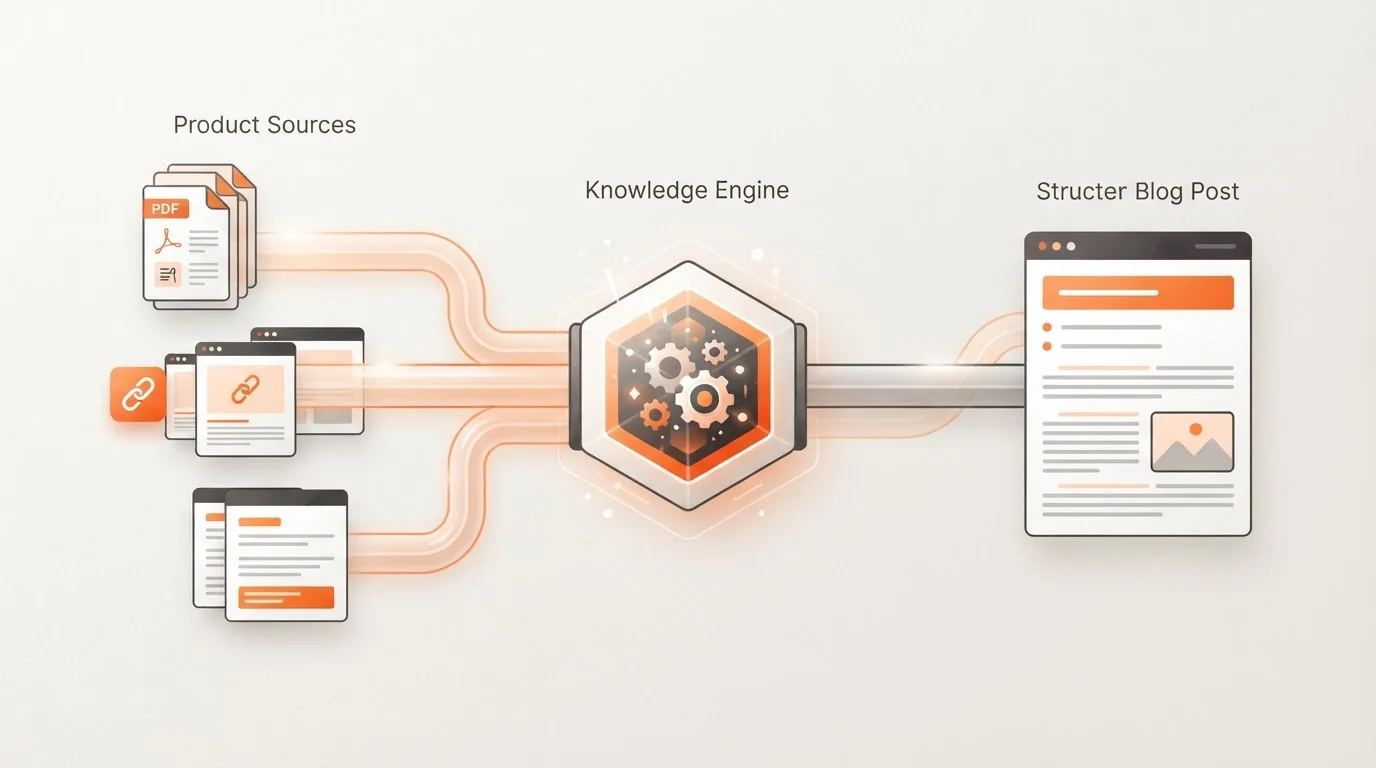
The effectiveness of an autonomous blog depends on the quality of the 'evidence' provided to the system. Blogged’s Knowledge Engine for Autonomous SaaS Blogs allows users to provide four distinct types of input: public product sources, uploaded documents, pasted links, or a direct written product description. This multi-source flexibility is critical for documenting new or updated features.
For example, you can drop a link to a technical brief, an internal specification doc, or even a Loom transcript into the engine. The platform then uses this context to draft high-density, search-optimized guides. This process effectively turns your internal documentation and product planning notes into external marketing assets without requiring a single minute of manual writing.
Strategy: Achieving 100% Feature Coverage
Achieving comprehensive coverage requires integrating content creation directly into your product roadmap. The goal is to ensure that as soon as a feature enters the production environment, it also enters the Knowledge Engine. This creates a repeatable workflow that prioritizes accuracy and speed without taxing your human resources.
The first step is identifying undocumented features or 'invisible' value within your platform. Once identified, the relevant technical data is fed into the Knowledge Engine. The platform then suggests topics that align these features with user intent—targeting the problems your target audience is searching for and positioning your software as the specific solution.
The final check happens at the 'Review Gate.' Because Blogged includes unlimited team seats on its paid plans, founders can involve both marketing leads and technical product managers in the approval process. This ensures that while the heavy lifting of writing is autonomous, the final word on technical accuracy always remains with your internal experts.
Beyond SEO: Winning the Recommendation Wars with GEO
Traditional Search Engine Optimization (SEO) focuses on ranking in list-based search results. However, the rise of AI agents like ChatGPT and Google AI Overviews has introduced a new priority: Generative Engine Optimization (GEO). These AI systems do not just look for keywords; they seek structured evidence and authoritative, citable facts.
By using an autonomous platform to publish detailed, factual content for every feature, you are essentially providing the 'training data' these AI systems need to recommend your software. When a user asks an AI agent for a tool that solves a specific niche problem, the agent looks for the most authoritative source. If you have the most comprehensive and factual guide on that topic, your product becomes the cited recommendation.
Documenting minor enhancements is no longer just about long-tail traffic; it is about building brand authority in the generative era. Every feature guide you publish serves as a 'fact deposit' that AI engines use to build confidence in your brand. This comprehensive coverage ensures that your software is mentioned whenever a relevant solution is requested.
Get practical updates on saas comprehensive product feature content case study
Receive new articles and practical insights by email.
Integrating Automation into the SaaS Tech Stack
For a content strategy to be truly autonomous, it must integrate seamlessly with your existing infrastructure. Manual copy-pasting is a friction point that often leads to abandoned blogs. Modern founders look for solutions that handle the entire lifecycle from research to final publication.
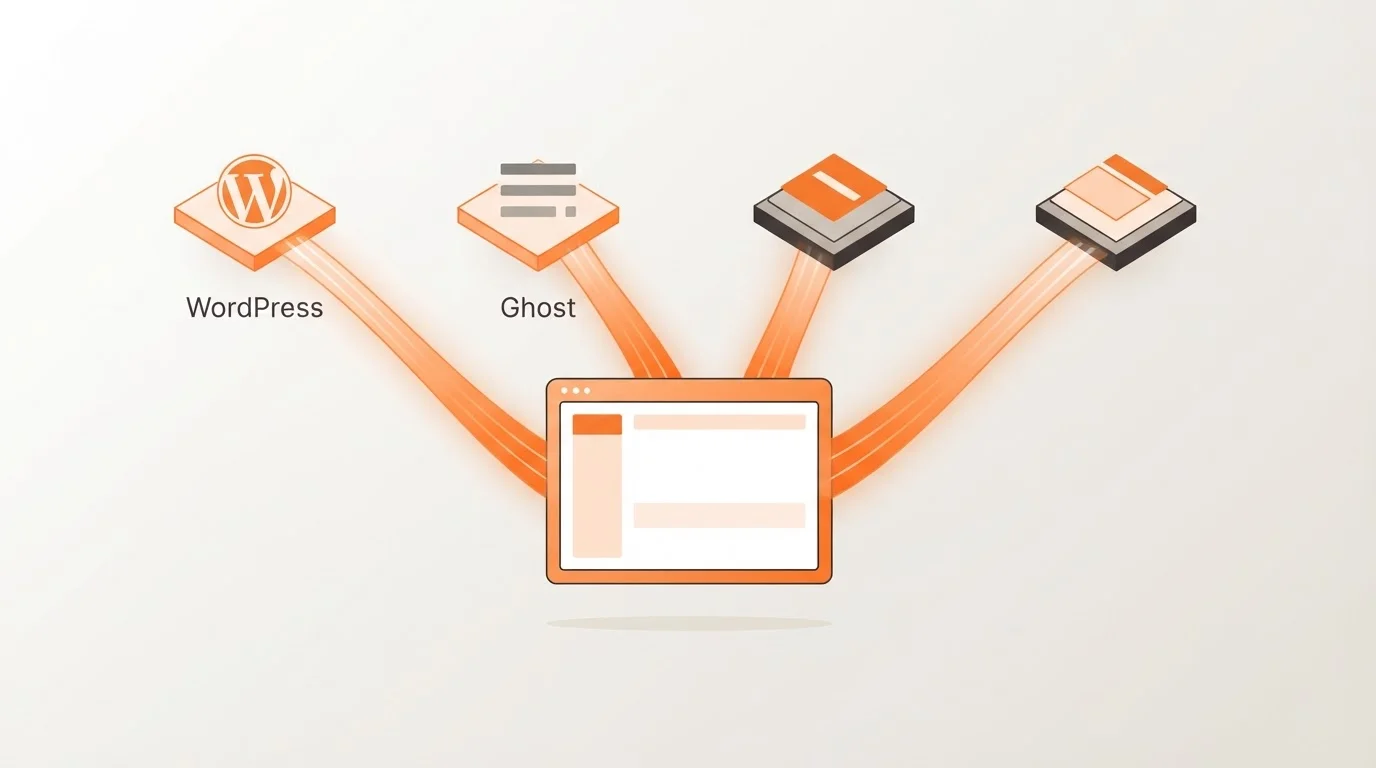
Blogged’s WordPress AI Blog Publishing integration allows users to manage the entire creation and review process within the platform and then deliver the content directly to a self-hosted WordPress site using a dedicated plugin and an application password. This level of automation ensures that content is published on schedule without manual intervention once the draft is approved.
This automation extends to other popular SaaS architectures. Whether you use Ghost, Webflow, or a headless setup like Next.js, the delivery should be streamlined. By utilizing Signed Webhooks and a Content API, technical teams can even build custom workflows that trigger content updates the moment a new feature is deployed in the codebase, ensuring your blog is always as current as your software.
Maintaining Authority Through Continuous Updates
Autonomous blogging is a long-term strategy for maintaining topical authority. As your product evolves, your content must adapt to reflect the latest UI changes and feature capabilities. High-end platforms allow for this evolution by making it easy to refresh existing assets.
Depending on the specific plan, Blogged includes up to 3 revisions per article, allowing you to regenerate or refine content as your product matures. When a feature is updated, you simply update the facts in the Knowledge Engine and request a revision. This ensures your library of product-led content never becomes a liability of outdated information.
Frequently Asked Questions
Q: Does using AI for blogging hurt my SEO ranking?
No. Search engines prioritize helpful, high-quality, and original content regardless of its creation method. By using a Knowledge Engine to ground your blog in technical product facts, you create unique value that generic AI cannot replicate.
Q: How much time does the review process take?
For most SaaS founders or product managers, reviewing an autonomously drafted article takes between 10 and 15 minutes. The platform handles the research and SEO, so you only need to verify technical accuracy.
Q: Can I integrate this with my custom-built website?
Yes. While there are native integrations for WordPress, Ghost, and Webflow, you can also use a Content API or Signed Webhooks to deliver articles to custom or headless environments like Next.js.
Q: What kind of documents can I use for the Knowledge Engine?
You can provide public product sources, upload documents like PDFs or technical specs, paste links to existing pages, or provide a written product description to ground the AI.
Q: How do revisions work if my product changes?
Blogged includes between 1 and 3 revisions per article depending on your plan. This allows you to update the content as your features evolve to ensure accuracy over time.
In the competitive SaaS landscape, the speed of development must be matched by the speed of discovery. Relying on manual content creation creates a permanent bottleneck that hides your product’s true value from potential users. By adopting an autonomous approach, founders can eliminate documentation debt and ensure that every feature contributes to organic growth.
Comprehensive feature coverage is more than just an SEO tactic; it is a commitment to user education and brand authority. When your product knowledge is transformed into a discoverable, citable asset, you maximize the ROI of every line of code you ship. For SaaS founders ready to scale, the path is clear: move your content from the manual queue to an autonomous pipeline and let your product’s features drive your growth.