
On this page
For SaaS founders, the path to organic growth is often obstructed by a single, immovable constraint: time. You have the technical vision and deep product knowledge, but maintaining a consistent publishing schedule while shipping features and managing a team is an uphill battle. This results in "content debt"—the widening gap between the educational resources your audience needs and the actual articles you have the bandwidth to produce.
True saas seo ranking acceleration requires more than just high-volume output; it demands a product-led strategy that builds authority through technical accuracy and consistent visibility. By shifting from manual drafting to an autonomous blogging workflow, founders can transform their existing product documentation into a discovery engine. This article explores the mechanics of how automation handles the entire lifecycle of content to drive sustainable organic growth.
The SaaS Founder's Content Crisis
Most startups follow a predictable content trajectory where early high-quality posts by the founding team drive initial traffic. However, as the product matures and the roadmap expands, content production often becomes sporadic. When publishing slows down, SEO rankings stagnate, and the cost of customer acquisition (CAC) begins to rise as the brand relies more heavily on paid channels.
Consider a hypothetical SaaS startup, GrowthEngine, building a complex data orchestration tool. Their small team faces three main points of failure when attempting manual SEO: a lack of consistency that prevents ranking acceleration, generic content that fails to address technical user pain points, and a massive time drain on engineering resources. Traditional outsourcing rarely works here, as external agencies often lack the depth required to explain a proprietary API or specific encryption protocol effectively.
To break this cycle, founders need a way to scale their expertise without physically writing every word. This is where autonomous blogging shifts the focus from manual labor to strategic oversight, allowing the team to focus on building the SaaS while the blog builds the audience.
What is Autonomous Blogging?
Autonomous blogging is a specialized process where a platform manages the complete content lifecycle—from research and keyword planning to writing, SEO optimization, interlinking, and final publishing. Unlike basic AI writing assistants that require constant manual prompting, an autonomous platform like Blogged functions as a self-sustaining marketing arm that understands your specific product context.
For a technical founder, this means the system doesn't just generate text; it learns. By ingesting your unique value proposition, target personas, and documentation, the platform executes a strategy designed for saas seo ranking acceleration. It ensures every article contributes to a broader topic cluster, which search engines recognize as a signal of niche authority.
Transforming Product Knowledge into Discoverable Content

The engine behind this growth is the ability to bridge the gap between technical documentation and search-friendly articles. The Knowledge Engine for Autonomous SaaS Blogs allows founders to provide public product sources, upload technical documents, paste links to existing documentation, or even provide a simple written description of the product.
This technical ingestion ensures that the output is not just grammatically correct, but technically accurate to your specific software. For a founder, this means your blog can explain the nuances of your product's architecture or specific use cases without a developer spending hours on a draft. The autonomous system handles the research and structural heavy lifting, turning internal knowledge into external discovery.
The Mechanics of SEO Ranking Acceleration
Achieving rapid visibility in search requires a blend of high-frequency publishing and deep relevance. In the world of SaaS SEO, consistency serves as a powerful ranking signal. When a site consistently produces high-quality, interlinked content on a specific technical subject, search engines index the site more frequently and assign higher authority to its domain.
Autonomous platforms accelerate this by maintaining an "autopilot" cadence. This removes the human bottleneck of waiting for a developer to have a free afternoon to review or write. By feeding your product documentation into the system, you ensure that every post is product-led content that solves specific user problems. This strategy targets users who are actively searching for solutions your SaaS provides, rather than just broad, top-of-funnel information that rarely converts.
Technical Integration: Seamless Publishing Workflows
A primary concern for founders is the complexity of adding new tools to their technical stack. However, modern autonomous blogging platforms are designed to integrate directly with existing Content Management Systems (CMS). These integrations handle the technical overhead, ensuring that articles are delivered and formatted correctly without manual intervention.
Platforms like Blogged offer native connectors for the most common SaaS blogging environments. Whether you are using a traditional CMS or a modern headless stack, the goal is to create a hands-off pipeline where content is reviewed in the platform and pushed to the live site with a single click. This separation of concerns allows the AI to handle content production while your CMS maintains control over the reader-facing design.
WordPress and Ghost Publishing Workflows
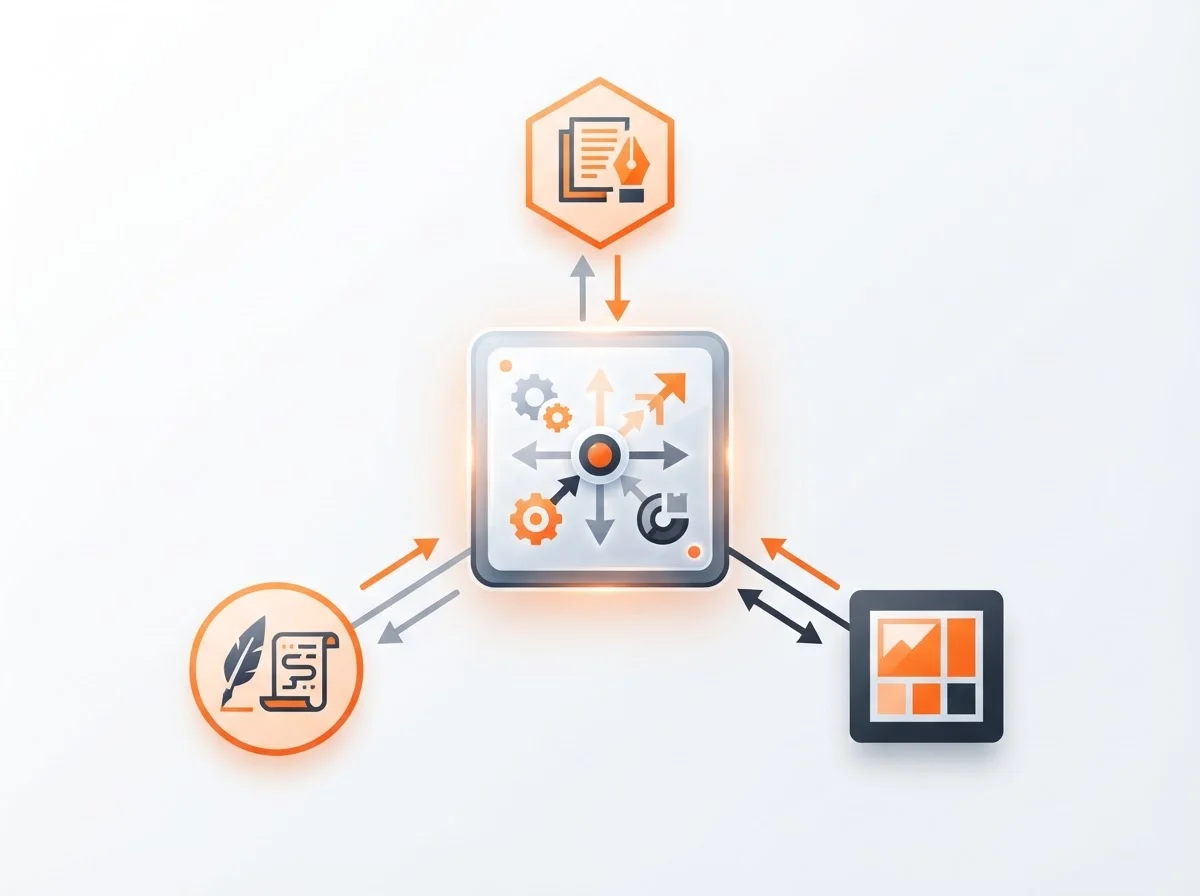
For teams using WordPress, the WordPress AI Blog Publishing integration simplifies the entire review cycle. Users can review articles within the Blogged dashboard and deliver them directly to their website via the Blogged Publishing plugin. This connection is secured using an application password, making the setup process fast and secure.
If your SaaS blog runs on Ghost, the integration is equally streamlined. The Ghost AI Blog Publishing integration allows you to create a custom integration within the Ghost admin panel, copy the API key, and verify the connection. Once active, the autonomous platform manages the content creation and optimization, while Ghost renders the reader experience. This setup ensures that your site remains fast and SEO-friendly without adding to your daily task list.
Get practical updates on saas seo ranking acceleration
Receive new articles and practical insights by email.
Headless Stacks: Next.js and Webflow
For SaaS companies built on modern headless or low-code stacks, integrations for Next.js and Webflow CMS provide advanced tracking capabilities. These integrations allow founders to collect consented visits and track specific conversions directly for verified articles.
Using signed webhooks and content APIs, these systems ensure that the automated content fits perfectly into your custom frontend. This is particularly valuable for founders who want to maintain a highly customized user experience while benefiting from the speed of autonomous content production. It bridges the gap between high-performance web engineering and high-frequency content marketing.
Beyond SEO: Generative Engine Optimization (GEO)
Search is evolving beyond the traditional list of blue links. With the rise of AI-led discovery, founders must optimize for both standard search engines and generative AI responses. This is known as Generative Engine Optimization (GEO). Modern autonomous blogging platforms prioritize this by creating content that is structured for AI discovery.
GEO focuses on making your product's unique features and technical advantages highly legible to large language models. By using the Knowledge Engine to ground content in specific product facts, you ensure that when a user asks an AI "Which tool is best for data orchestration?", your SaaS is cited as a reliable answer. This dual-track approach—SEO for today and GEO for the future—is critical for long-term organic dominance.
Collaboration and Review Cycles at Scale

Scaling a blog shouldn't mean losing control over your brand voice. Autonomous blogging platforms include features designed for team collaboration, ensuring that even as your content volume increases, your standards remain high. For instance, Blogged includes unlimited team seats on its paid plans, allowing product managers, marketers, and founders to participate in the review process without additional costs.
To maintain quality, the platform offers revision cycles. Depending on the plan, you can request 1 or 3 revisions per article to ensure the technical nuances are exactly right. This allows founders to act as editors rather than writers, providing high-level feedback that the AI then implements. This collaborative approach ensures that the content remains human-centered and technically sound while moving at an automated pace.
Measuring the ROI of Autonomous Content
The goal of saas seo ranking acceleration is to drive business outcomes, not just vanity metrics. Autonomous blogging impacts the entire funnel by creating a repository of searchable, product-led knowledge. First, it improves conversion rates because visitors are finding articles that solve their specific technical challenges using your software.
Second, it reduces the load on customer support. By transforming technical documentation and FAQs into discoverable blog posts, you answer user questions before they result in a support ticket. Finally, the time saved is perhaps the most valuable ROI. By automating the 10-15 hours a week typically spent on content management, founders can reinvest that time into product development and high-level strategy, which are the true drivers of a SaaS company's value.
Frequently Asked Questions
Q: How much time does autonomous blogging actually save founders?
Most founders save between 10 to 15 hours per week by automating the research, writing, optimization, and publishing phases of content marketing.
Q: Can autonomous blogging handle very technical SaaS products?
Yes. By using a Knowledge Engine to ingest your specific documentation, API guides, and technical whitepapers, the platform produces content that reflects your product's unique technical capabilities.
Q: Is the content optimized for search engines automatically?
Yes. The platform handles on-page SEO, keyword integration, and internal linking as part of its autonomous workflow, ensuring every post follows best practices for ranking.
Q: Do I lose control over what is published on my blog?
No. You maintain full control through a review and approval process. Platforms like Blogged offer 1 to 3 revisions per article depending on your plan, allowing you to fine-tune the output before it goes live.
Start Your SEO Acceleration Today
The competitive landscape for SaaS is increasingly crowded, and organic visibility remains the most sustainable way to build a brand. You don't need a massive marketing department to win at SEO; you need a system that leverages your existing product knowledge. By transforming your documentation into an autonomous content engine, you free yourself to build the software while the blog builds your audience. If you are ready to stop struggling with content debt and start driving organic growth, autonomous blogging is the logical next step for your SaaS journey.