
On this page
For most SaaS founders, content marketing feels like a trade-off between volume and depth. Product-led content is a sustainable engine for organic growth, yet the manual labor required to produce technically accurate articles often conflicts with product development. When founders delegate this work to generalists, the result is often generic 'fluff' that fails to reflect the software's true value.
Bridging this gap requires shifting from a manual writing process to an autonomous blogging framework. By leveraging a structured methodology and specialized tools, founders can ensure every article is grounded in real product facts rather than AI hallucinations. This approach transforms the blog into a high-performance asset that ranks for both traditional search and AI-driven discovery.
In this guide, we break down specific quality bottlenecks, the methodology for improving technical accuracy through a product knowledge engine, and the workflow for scaling consistent, high-quality content without sacrificing founder bandwidth.
The SaaS Quality Gap: Why Traditional Content Fails to Scale
The core challenge for early-to-mid-stage SaaS companies isn't just generating words; it's ensuring those words are actually useful. When a founder is the primary subject matter expert, they become the ultimate bottleneck. As the company grows, delegating content to generalist freelancers who lack deep technical context leads to the 'Quality Gap.'
Generalist writers rarely possess the depth necessary to explain complex SaaS workflows or specific technical value propositions. This leads to extensive review cycles where founders spend hours correcting technical errors in drafts. Without a way to automate the injection of product expertise, organic growth remains tethered to the founder’s personal bandwidth.
The Inconsistency Problem
Without a structured, autonomous approach, SaaS blogs often suffer from sporadic topic ideation. A founder might post three articles during a launch and then nothing for a month. This inconsistency hurts domain authority and fails to provide a reliable journey for potential customers. A durable SaaS content plan requires a system that maintains a consistent publishing cadence regardless of internal team availability.
Bridging the Gap with a Product Knowledge Engine
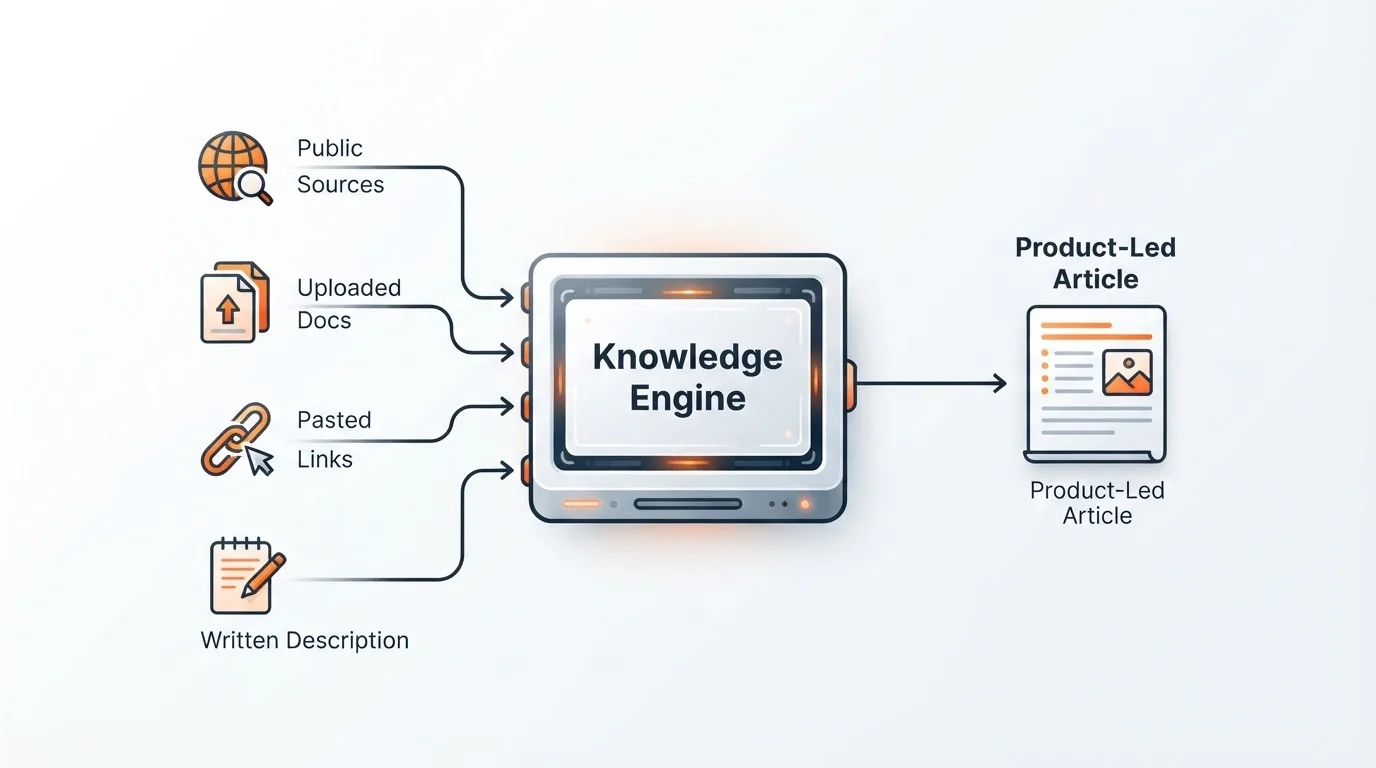
The primary weakness of traditional content outsourcing is a lack of context. Autonomous blogging platforms solve this by allowing founders to provide a high-fidelity data source for the system to draw from. By using a specialized Knowledge Engine, you can ingest public product sources, upload technical documentation, paste internal links, or provide detailed product descriptions.
This centralized repository becomes the 'single source of truth' for every article generated. Instead of a writer guessing how a feature works, the platform pulls facts directly from your verified inputs. Blogged lets users organize facts by product entity and facet, ensuring the system understands not just what the product is, but how it functions in specific user scenarios. This eliminates the 'hallucination' problem common in general-purpose AI writing.
Establishing a Rubric for SaaS Content Quality
To improve content quality, you must first define it through measurable metrics that correlate with user trust and search performance. Instead of subjective feedback, evaluate content across four critical pillars: Technical Accuracy, Strategic Relevance, Brand Voice Consistency, and Completeness. Factual errors are a fast track to losing prospect trust, especially in technical niches.
Moving from a manual process to a product-led autonomous system typically results in a significant jump in these scores. Because the system draws from verified facts rather than general internet data, the accuracy of feature descriptions remains high. This allows founders to shift their focus from 'fact-checking basics' to 'refining strategy.'
Implementing Autopilot: Consistent Planning and Refill
A durable SaaS content plan requires more than just high-quality writing; it requires consistent planning. Founders often struggle to replenish their topic queue, falling back on generic industry trends that don't drive conversions. To fix this, you need a way to align content directions with product evolution without manual intervention every week.
By leveraging Full Autopilot, platforms like Blogged can automatically refill a Topic Queue from approved Content Directions. This ensures the blog stays active even during intensive product sprints. This capability allows founders to establish a long-term strategy where the system researches, plans, and optimizes product-led content that drives growth through both SEO and Generative Engine Optimization (GEO).
Get practical updates on saas content quality improvement case study
Receive new articles and practical insights by email.
Technical Workflow: Integrating with Your SaaS Stack
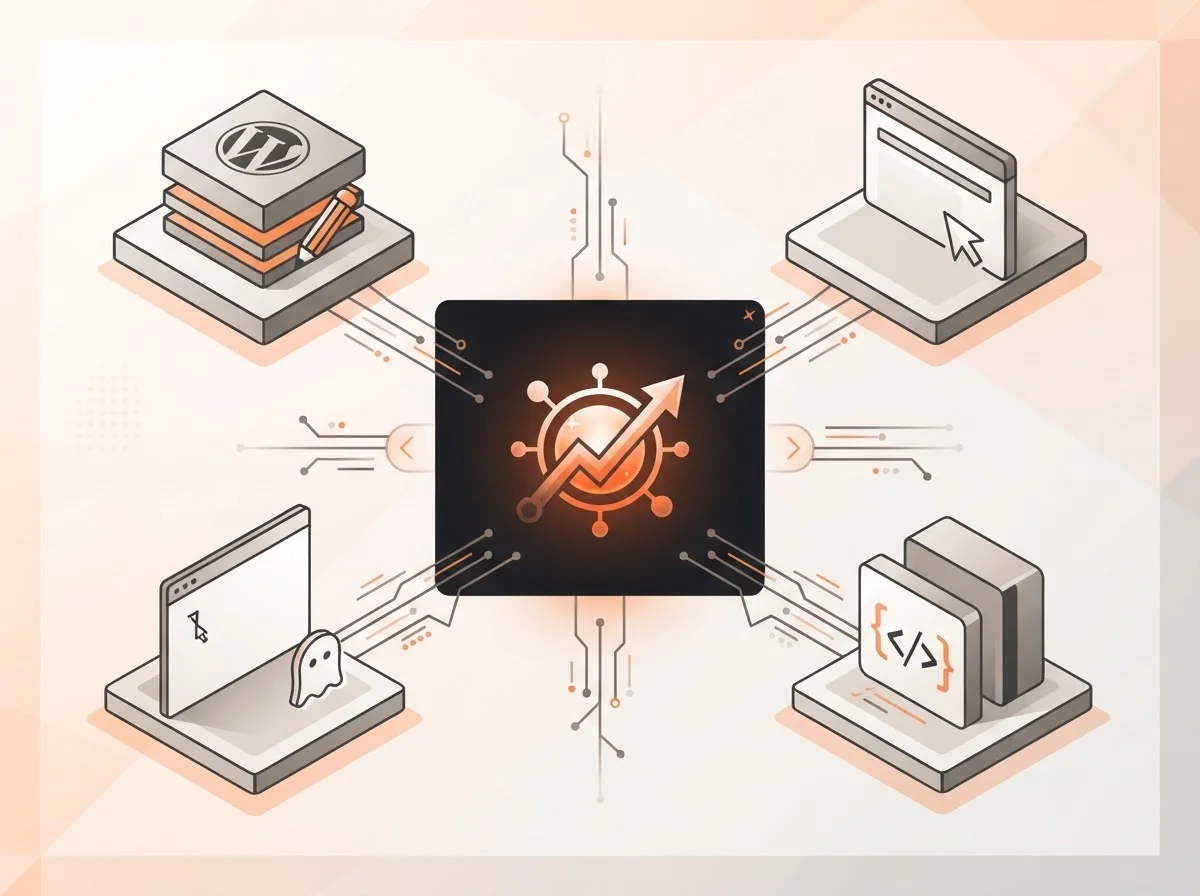
The effectiveness of an autonomous solution depends on how well it integrates with your existing tech stack. You shouldn't have to manage another silo; you need a system that enhances your current publishing environment. Blogged provides native paths for various CMS architectures to ensure a frictionless workflow.
For WordPress users, the WordPress AI Blog Publishing integration allows teams to create and review articles within the Blogged interface and deliver them to their site. By using the Blogged Publishing plugin and an application password, you eliminate manual copy-pasting. If your technical blog runs on Ghost, the integration allows Blogged to manage creation while Ghost renders the reader experience via a custom Admin API key.
Tracking Conversions and Performance
For high-performance applications, the Next.js AI Blog Publishing integration and Webflow CMS integration allow founders to collect consented visits and track configured conversions for verified articles. This provides a clear link between content quality and business ROI. You can track Search Console performance, homepage engagement, and lead outcomes directly within the platform, ensuring your strategy remains data-driven.
The Strategic Shift: Reclaiming Editorial Control

Improving content quality is only half the battle; the true benefit of an autonomous framework is the shift in team roles. When the platform handles initial research, drafting, and optimization, the internal team's role shifts from primary creators to strategic editors. This allows you to focus on high-level strategy like competitive analysis and lead growth tracking.
Because all paid plans on Blogged include unlimited team seats, founders can bring product managers and marketers into the review process without additional costs. This collaborative environment ensures that every article is checked for brand alignment while still moving at the speed of automation. You can maintain a consistent cadence without the burnout associated with manual content production.
Frequently Asked Questions
Q: How does a Knowledge Engine improve quality?
It ensures the AI writes based on your specific documentation and product facts rather than generic web data, which significantly increases technical accuracy.
Q: Can I use autonomous blogging with my existing CMS?
Yes. Blogged supports native integrations for WordPress, Ghost, Next.js, and Webflow, as well as a signed webhook and Content API for custom tech stacks.
Q: How do I track the ROI of this content?
You can track Search Console performance, homepage engagement, and configured conversions for verified articles directly within the Blogged platform.
Q: Does this replace my marketing team?
No. It allows your team to shift from time-consuming drafting to high-level strategy and final editorial review, making them more efficient.
Scaling Your Voice Without the Burnout
SaaS founders no longer need to choose between building a product and building a blog. By leveraging a product knowledge engine and an autonomous publishing framework, you can produce content that is technically accurate, strategically relevant, and highly discoverable. This approach ensures your brand remains an authoritative voice in your niche, driving sustainable organic growth while you focus on building the future of your SaaS.