
On this page
Quick answer: For SaaS founders, achieving product-led content growth requires shifting from manual drafting to autonomous content operations. By leveraging existing product documentation as a primary data source for an autonomous engine, founders can scale publishing velocity without increasing headcount. This approach connects a product’s unique value directly to organic search and AI discovery engines (GEO).
The struggle for lean SaaS teams is rarely a lack of knowledge—it is the time required to translate that knowledge into discoverable content. When a company’s "source of truth" is ingested by a specialized engine, the blog stops being a manual bottleneck and becomes a scalable acquisition channel. By automating research, SEO optimization, and publishing, teams focus on strategy while organic visibility grows consistently.
The Scaling Bottleneck for SaaS Founders
SaaS founders often face a structural hurdle: technical experts are too busy building the product to write about it, and marketing teams spend more time chasing briefings than publishing. This creates "content debt," where new features remain invisible to search engines for weeks or months. The effort required to produce technically accurate, product-led content often caps publishing frequency at just one or two articles per month.
To evaluate your own scaling challenges, audit the hours spent from the initial product briefing to the final SEO review. Much of this time is consumed by repetitive research and drafting tasks that require technical accuracy but not constant strategic intervention. When founders identify this bottleneck, they realize the problem isn't just writing—it's a resource allocation issue. Scaling requires moving the team from content creators to strategic editors who oversee an autonomous pipeline.
Why Traditional AI Content Fails Technical Products
Generic AI tools often fail SaaS companies because they lack context. Without grounding, AI generates high-level fluff that misses the nuances of a specific API, integration, or user workflow. For content to drive growth, it must be factually accurate and reflect the actual capabilities of the software.
Effective product-led content growth for SaaS depends on a system that doesn't just "write" but synthesizes internal product data. This ensures that every article published is useful to a technical audience and builds the authority necessary to rank for high-intent keywords.
How Autonomous Blogging Transforms Product Knowledge
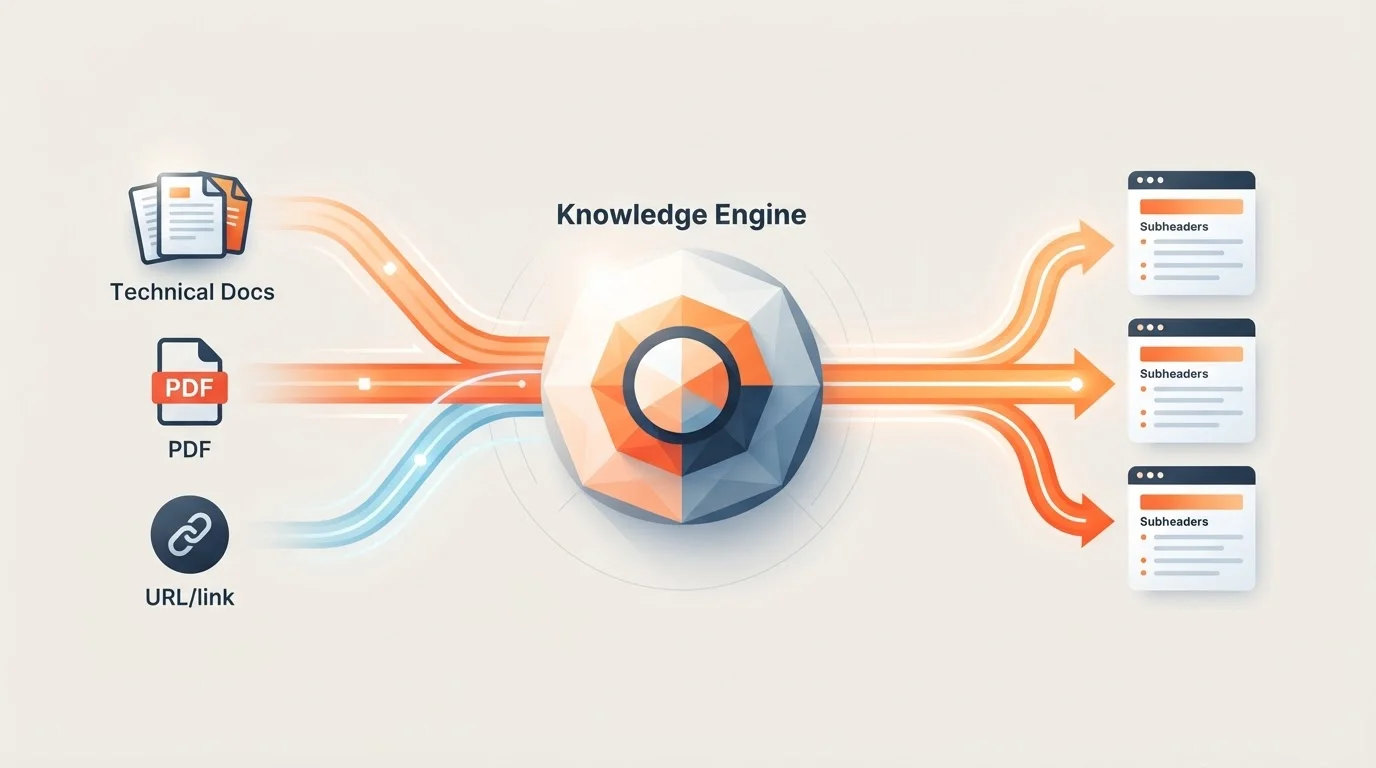
The transition to an autonomous platform is driven by the need for technical accuracy at scale. A specialized system grounds every article in your actual product capabilities. This is achieved through a Knowledge Engine, which allows you to provide public product sources, uploaded documents, pasted links, or written descriptions as the foundation for all content.
Instead of starting with a blank page, the system starts with your feature set, API documentation, and user guides. This ensures that the generated content is factually grounded and aligned with your product's positioning.
- Source-Bound Facts: Content is generated based on verified assertions, minimizing the risk of misinformation.
- Automated Synthesis: The platform synthesizes information from multiple internal sources to create educational posts.
- GEO Optimization: Content is structured for discovery in both traditional search engines and AI-driven answer engines like Perplexity or ChatGPT.
Building a Durable SaaS Content Plan
A durable growth strategy requires consistency. Using Full Autopilot, founders can build a content plan where the system maintains a Topic queue based on approved Content Directions. This prevents the "feast or famine" publishing cycle common in early-stage startups.
By transforming technical guides into educational blog posts, you capture top-of-funnel pain points. For example, a technical guide on API implementation can be transformed into a discoverable article about solving specific industry workflows, broadening the path for new potential customers to find your solution.
Integrating Autopilot into Your Tech Stack
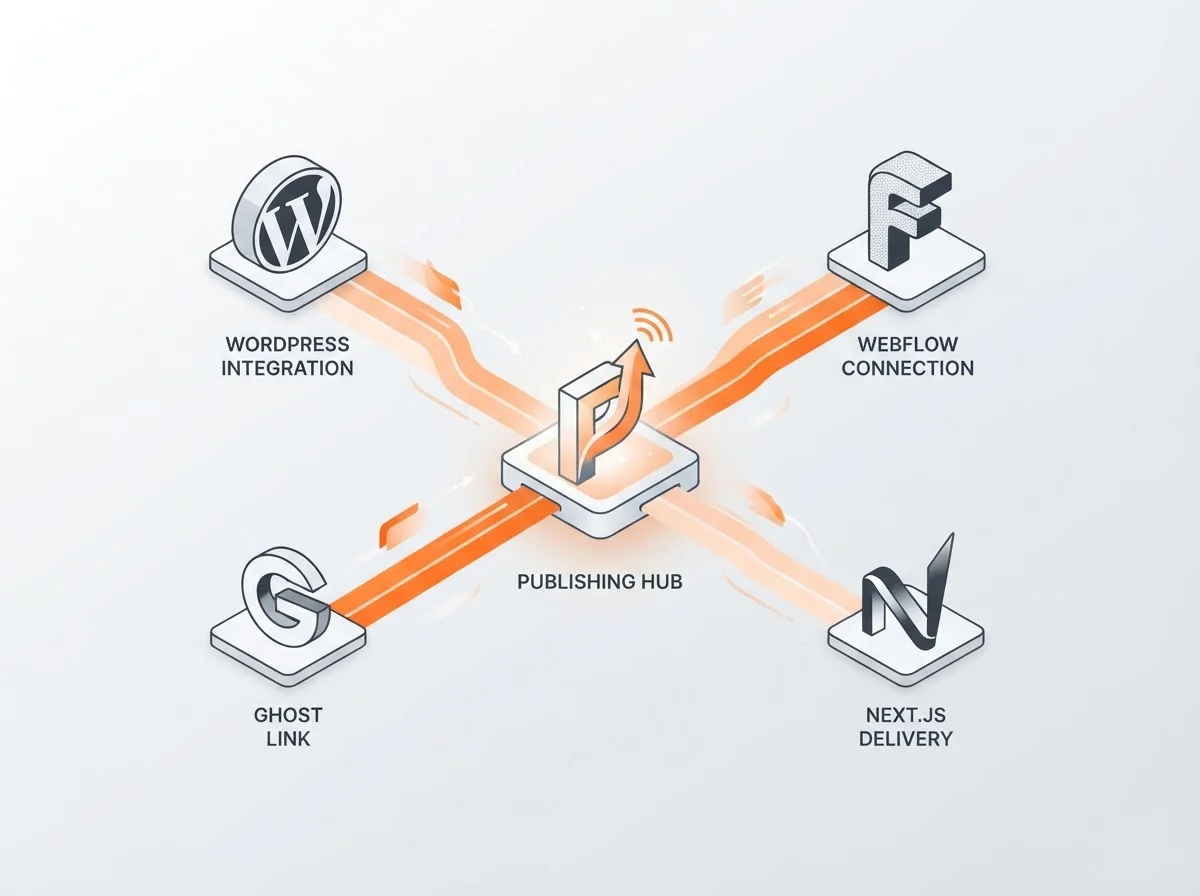
For a SaaS founder, the goal is a "set and forget" workflow where the blog maintains itself with minimal oversight. Modern autonomous platforms offer direct integrations to ensure that once an article is reviewed, it moves to the CMS without manual formatting or metadata entry.
| CMS Integration | Capability | Best For |
|---|---|---|
| WordPress | Direct delivery via companion plugin and application password. | Self-hosted blogs with established themes. |
| Webflow | Collects consented visits and configured conversions. | Design-forward SaaS sites using Webflow CMS. |
| Ghost | Admin API key integration for custom reader experiences. | Newsletter-focused SaaS and professional publishing. |
| Next.js | Delivery via signed webhook and content API. | Custom-built applications and headless architectures. |
These integrations handle formatting and image placement, ensuring the final output matches your brand voice. Because these platforms often include unlimited team seats, product managers can verify technical details without increasing licensing costs for the marketing team.
GEO: Preparing for the Future of AI Search
Search behavior is shifting toward Generative Engine Optimization (GEO). Users are increasingly asking AI agents for software recommendations and technical "how-to" answers. To remain discoverable, your content must be structured so LLMs can easily parse and cite your product as a solution.
By providing structured data and clear, source-backed assertions, autonomous blogging helps your product be cited in AI-driven discovery tools. This creates a durable "SEO moat" that protects your brand against competitors who rely only on traditional keyword targeting. Tracking performance through Search Console and lead outcomes ensures you can see exactly which product-led pieces are driving trial signups.
Frequently Asked Questions About Autonomous Blogging
Q: How does autonomous blogging handle technical accuracy for complex SaaS products?
Platforms like Blogged use a Knowledge Engine to ground the AI in your specific product sources, such as documentation and API refs. This prevents the system from making up features and ensures the content reflects your actual product capabilities.
Q: Is the content optimized for AI search engines like Perplexity?
Yes, this is known as GEO (Generative Engine Optimization). By providing structured data and clear, source-backed assertions, autonomous blogging helps your product be cited and recommended by LLM-based discovery tools.
Q: Does an autonomous blog require a human editor?
While the system can run on Full Autopilot, we recommend a human review of the first few articles to ensure the brand voice is calibrated. Most teams find they only need to spend a few minutes per week on final approvals.
Q: Can I integrate this with a headless CMS?
Yes, Blogged provides a signed webhook and Next.js integration to support custom-built SaaS sites and headless architectures.
Growth in the SaaS sector is no longer just about publishing volume; it is about smarter, product-led operations. By moving product knowledge from static documentation into a dynamic, autonomous blogging engine, founders unlock a scalable growth channel that runs in the background of their business. Your best marketing assets are already within your product; autonomous blogging is simply the most efficient way to make them discoverable to the world.
Get practical updates on product led content growth saas
Receive new articles and practical insights by email.