
On this page
SaaS founders face a structural challenge when scaling early-stage companies: the constant tension between engineering the product and driving organic discovery. Building features solves immediate customer needs, but without a predictable mechanism to attract new users, even the most innovative software risks stagnation. Traditional marketing channels often require massive capital or continuous manual effort, both of which are scarce resources for a growing startup.
Content creation remains a highly effective channel for sustainable customer acquisition, yet maintaining a consistent publishing cadence frequently bogs down technical teams. This guide explores a blueprint for scaling content operations autonomously, enabling software companies to establish deep organic visibility without diverting engineering focus from the product roadmap. By shifting from manual production to a product-led knowledge system, founders can transform their existing expertise into a self-sustaining growth engine.
The Growth Bottleneck: Engineering vs. Marketing in Early-Stage SaaS
For a technical founder, every hour spent away from the codebase carries a distinct operational penalty. Initial marketing efforts usually start with great enthusiasm, resulting in a few detailed, product-focused articles. However, as customer support tickets accumulate and feature requests mount, content creation is invariably deferred. This reactive approach creates an inconsistent publishing schedule that fails to build meaningful momentum with search algorithms.
Organic growth relies on compounding authority, which demands programmatic consistency rather than sporadic bursts of writing. When a site goes weeks or months without updates, search crawlers reduce their indexing frequency, making it harder to rank for highly relevant target keywords. Manual production involves extensive background research, strategic keyword planning, drafting, and internal linking. Expecting a small product team to execute these steps systematically while maintaining software delivery cycles is often unsustainable.
The Opportunity Cost of Manual Content Creation
The true cost of manual writing isn't just the hours logged; it is the strategic value of the projects left unexecuted. When a founder or lead engineer spends a full working day drafting a single blog post, vital product updates are delayed. This technical debt directly slows down the software roadmap, impacting user retention and competitive positioning.
To break this bottleneck, companies require a content strategy that operates independently of day-to-day human input. By treating content generation as an integrated technical system rather than an administrative chore, founders can turn product knowledge into an automated growth channel. Furthermore, outsourcing to generalist marketing agencies often fails because external writers lack deep software context, leading to surface-level content that requires heavy editing.
Strategic Architecture: Implementing an Autonomous Content Platform
Transitioning to an autonomous system requires an infrastructure that handles the complete content lifecycle—from deep factual research to final indexing. The core technical objective is to establish an automated pipeline that ingests raw product parameters and transforms them into authoritative text. A modern autonomous platform does not rely on generic public text models; instead, it uses a dedicated knowledge engine that links directly with the product's unique value proposition.
This automation strategy requires clean integration paths into existing web stacks. SaaS platforms use diverse content management setups depending on their audience and infrastructure. Whether a team builds on traditional CMS platforms, developer-centric frameworks, or modern headless architectures, the publishing system must connect natively to eliminate friction. An ideal architecture works in the background, mirroring the continuous integration and deployment (CI/CD) models used in software development.
Native CMS Connectivity: WordPress, Ghost, and Webflow
For teams utilizing traditional or modern content management environments, native publishing connectors establish a direct bridge between the autonomous dashboard and the live web server. The Blogged WordPress AI Blog Publishing integration allows users to manage research and reviews within a unified dashboard, delivering optimized articles directly to a self-hosted WordPress site via a dedicated plugin and application password. This eliminates the need to expose primary administrative credentials.
Similarly, the Blogged Ghost AI Blog Publishing integration separates production mechanics from front-end presentation. The autonomous platform controls research and systematic internal linking, while Ghost delivers a fast, developer-friendly reader experience. Setting up this workflow involves generating a custom integration within the Ghost interface and validating the Admin API key. For visual-first teams, the Blogged Webflow CMS AI Blog Publishing integration operates with similar efficiency, matching programmatic text generation with custom layout fields.
Headless Architectures: Next.js and Custom API Integration
Modern SaaS architectures increasingly utilize headless frameworks to optimize page performance and security. The Blogged Next.js AI Blog Publishing integration addresses this by letting engineering teams ingest dynamically generated content through structured application routes. This maintains strict performance metrics on the front end while allowing the autonomous system to handle background optimization and structural markup.
When working with proprietary internal tools, the platform provides a Signed Webhook and Content API for AI Blog Publishing that allows developers to design customized publishing pathways. Just like the native integrations, this headless architecture allows users to collect consented visits and track configured conversions for verified articles. This ensures that even the most complex technical setups can measure true business value and product sign-ups without sacrificing infrastructure integrity.
The Knowledge Engine: Powering Product-Led Content with Real Context
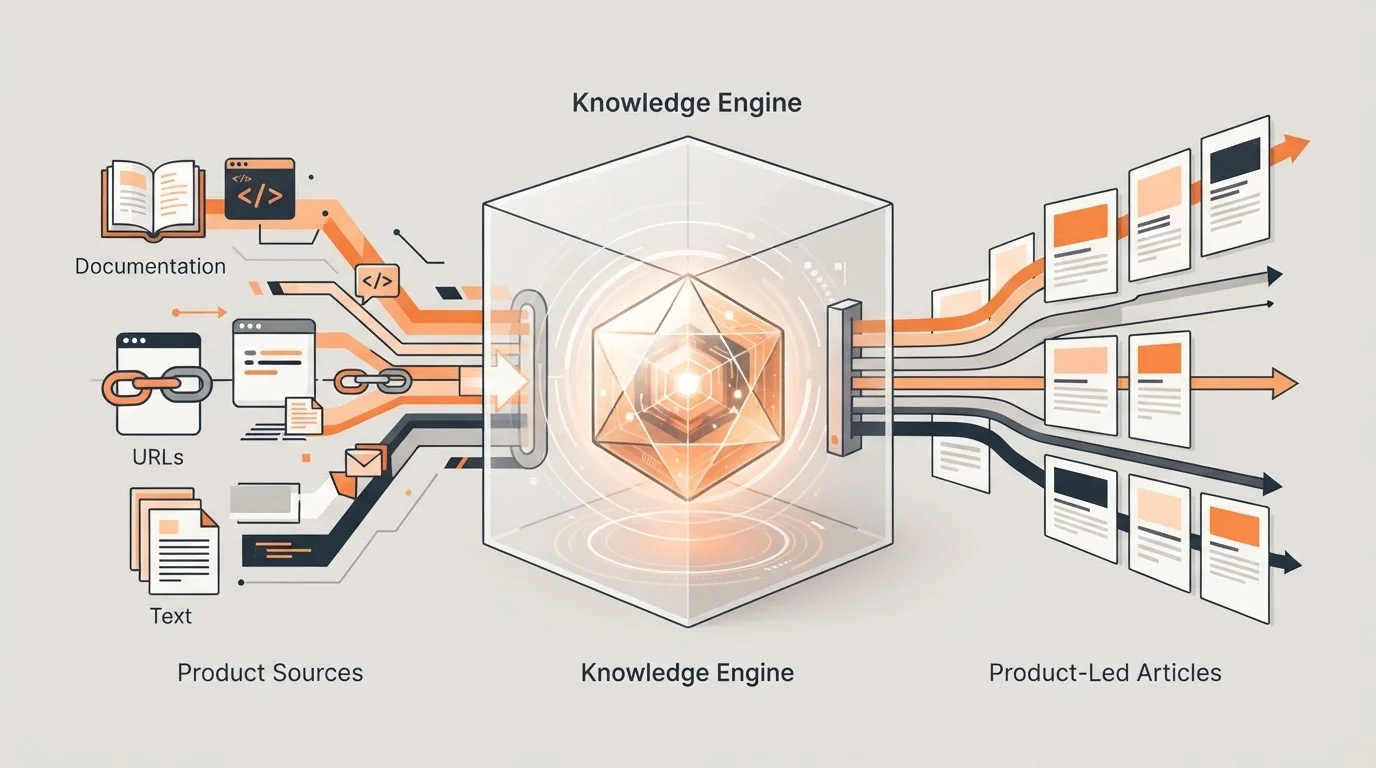
The primary risk of automated writing tools is the generation of generic, hollow text that fails to provide real utility. Search engines and modern users penalize surface-level copy that simply echoes existing public material. To succeed, an autonomous blog must publish product-led content that incorporates deep, proprietary domain expertise.
The Blogged Knowledge Engine for Autonomous SaaS Blogs resolves this issue by anchoring the content generation process in specific, verified facts. Instead of guessing how a feature functions, the platform references direct company inputs to construct authoritative articles. Founders can supply public product sources, upload internal documents, paste exact links, or insert comprehensive written descriptions to instruct the underlying model. This ensures every piece of content reflects the technical realities of the product, explaining complex features clearly to prospective users.
Structuring Product Facts by Entity and Facet
To maintain structural accuracy across hundreds of published articles, information within the engine must be highly organized. The platform allows users to organize facts by product entity and facet, constructing a relational database of product mechanics. For instance, a core feature can be defined as a specific entity, while its compliance parameters and integration protocols are mapped as distinct facets.
This structured categorization prevents the text generation system from conflating separate features or inventing non-existent capabilities. When the platform writes an article detailing security standards, it systematically queries the specific compliance facets saved in the database. The resulting prose retains absolute factual consistency, maintaining an authoritative tone that builds trust with readers who need accurate information.
Get practical updates on saas founder organic discovery case study
Receive new articles and practical insights by email.
Asset Management and Quality Control
A high-quality technical blog requires precise visual documentation, such as user interface screenshots and architectural diagrams. To streamline this, the platform allows users to manage a private SaaS product asset library that integrates directly with the content workflow. This specialized framework features integrated review queues, visible approvals, and safe archiving tools to maintain complete control over media distribution.
To optimize for accessibility and search performance, the system handles alt text generation and maintains asset provenance to track where images are applied. If an interface component changes during a software update, teams can update or retire visual assets globally. This professional presentation elevates standard articles into authoritative guides that convince discerning enterprise buyers.
Optimizing for the Dual Era: SEO and Generative Engine Optimization (GEO)
The search ecosystem is undergoing a fundamental structural transition. Traditional search engine optimization (SEO) is no longer the sole vector for organic visibility; SaaS platforms must now optimize for conversational AI interfaces as well. Generative AI tools like ChatGPT and Perplexity summarize web documentation to answer direct queries from buyers. If your product information is not structured correctly, these engines may bypass your site entirely.
Mastering this intersection is essential for maintaining product visibility as search technology evolves. An autonomous blogging platform must be designed from the ground up to address both distribution frameworks simultaneously. Human readers finding you via Google receive deep, long-form content, while AI engines parsing your site retrieve clear data blocks to power their conversational outputs.
Generative Engine Optimization (GEO) Frameworks
To maintain visibility within conversational AI ecosystems, articles must employ Generative Engine Optimization (GEO) strategies. Generative engines do not simply count keywords; they extract relational concepts and verified data points from structured code. Content must be direct, technically precise, and organized with clear informational hierarchies.
Autonomous blogging frameworks address this by formatting content with absolute semantic clarity. Using precise subheadings, direct answer paragraphs, and structured bulleted formats allows generative models to easily parse and cite your website. When an enterprise buyer asks an AI assistant for a software recommendation, your product is positioned as a primary source because its compliance and functional details are easily verifiable through clean markup.
Operationalizing the Review Workflow Without Founder Burnout
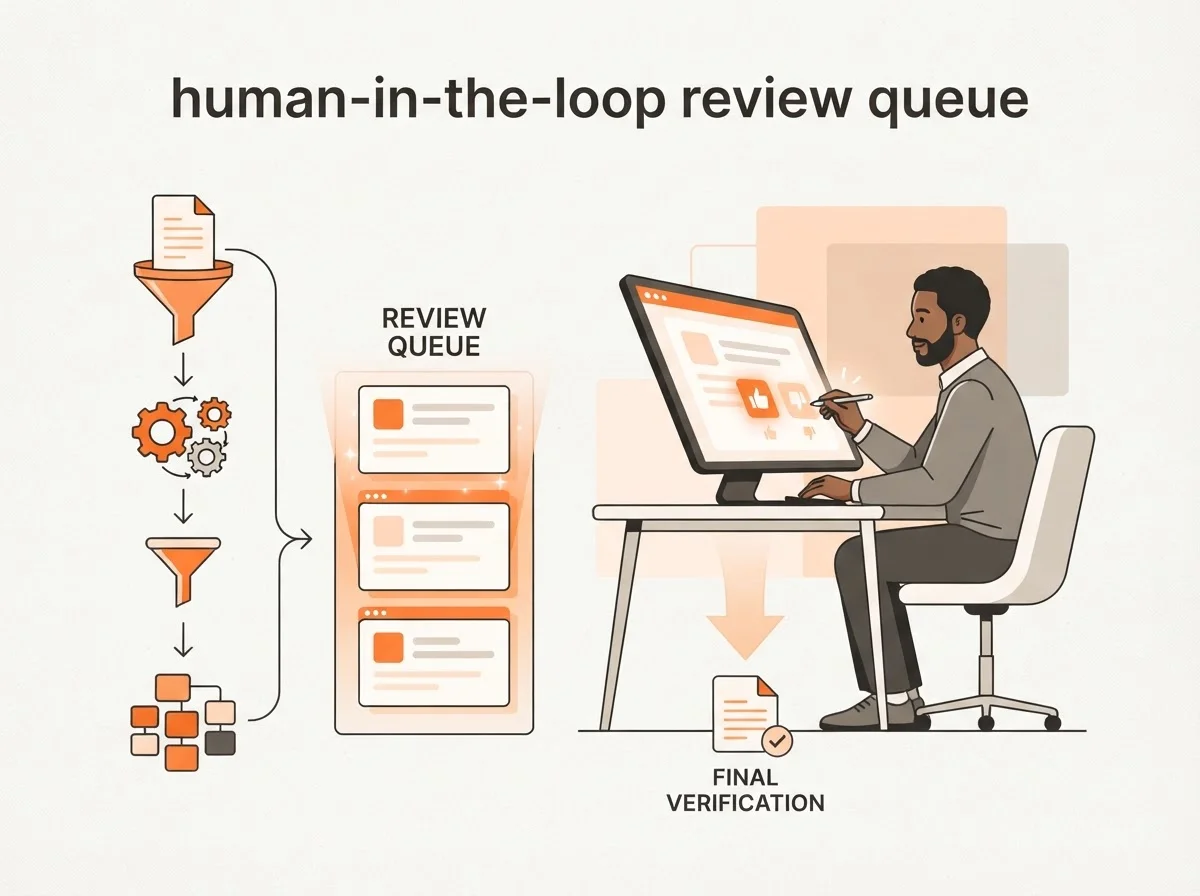
Transitioning to an autonomous system does not mean giving up editorial control. Maintaining high brand standards requires a human-in-the-loop review workflow that ensures quality without demanding excessive executive hours. The ideal system acts as an autonomous assistant that presents completed, optimized drafts for brief final verification. By utilizing structured dashboards, teams can review technical accuracy and make localized adjustments in a few minutes.
Every paid plan includes unlimited team seats, allowing product managers, technical writers, or external editors to participate in the review process without additional costs. This collaborative flexibility shifts the founder’s role from primary creator to high-level strategic reviewer. Managing content through a structured workflow queue removes the psychological weight of the blank page, ensuring content velocity matches software shipping speeds.
Tracking Performance: Metrics That Matter for SaaS
An autonomous content strategy must be measured by its impact on business metrics. The platform includes native tracking tools to monitor Search Console performance, homepage engagement, and reader feedback directly from the dashboard. This configuration tracks critical visibility indicators to verify growth without needing complex third-party script configurations.
Founders can analyze specific conversion pathways directly tied to deep technical articles. If a specific topic generates a high volume of software sign-ups, the product knowledge engine can be updated to expand coverage in that profitable area. This behavioral visibility ensures marketing investments are continuously optimized to support enterprise growth.
Frequently Asked Questions
Q: How much time does it take to configure autonomous blogging software?
Initial configuration can be completed quickly by linking your CMS or API keys and uploading your initial documentation or product descriptions to the knowledge engine.
Q: How does the system maintain text quality and prevent generic filler?
Quality is maintained by anchoring the text generation process in your own uploaded technical data. By organizing facts by specific product entities and facets, the platform writes text rooted in real product functionality.
Q: Can multiple team members participate in the article verification process?
Yes. Every paid plan includes unlimited team seats, allowing you to invite product managers or editors to manage review queues and handle approvals.
Q: How does autonomous blogging assist with modern AI search engines?
The platform builds content using Generative Engine Optimization (GEO) principles, utilizing clear structural hierarchies that allow conversational AI tools to easily parse and cite your product.
Scaling organic visibility should not come at the expense of your product roadmap. For SaaS founders, balancing software engineering with a demanding content schedule often leads to burnout or inconsistent results. Shifting to an autonomous blogging framework lets teams convert internal technical knowledge into a self-sustaining acquisition channel that operates continuously in the background.
By implementing a system that handles research, technical optimization, internal linking, and direct CMS publishing, companies can secure long-term organic growth. This approach establishes the deep authority required by both traditional search algorithms and modern generative AI models. Ultimately, automating these intensive content operations gives founders the freedom to focus entirely on building exceptional products while their online discovery expands automatically.