
On this page
Organic distribution is often the missing element in a sustainable software growth playbook. Most founders understand that high-quality, product-led articles can build long-term traffic pipelines that outlast paid advertising campaigns. Yet, maintaining a consistent publishing schedule while shipping features, resolving bugs, and supporting customers presents an operational barrier. When team resources are focused primarily on product development, the company blog frequently stalls, leaving an empty digital presence that fails to capture active searchers. This guide outlines how to build an autonomous engine that converts deep product knowledge into organic traffic and discovery footprints.
The Strategic Bottleneck of Product-Led Content
Building a company means managing strictly finite operational resources. Technical founders possess an intimate knowledge of user pain points, architectural advantages, and real-world edge cases. When this expertise remains locked in the minds of the engineering team or scattered across internal channels and roadmaps, the company's external messaging stays superficial. This creates an unaddressed content debt that leaves the platform invisible to potential users. Hiring external generalist writers often introduces a different type of friction. Generalists typically lack the deep domain experience required to speak authoritatively to a sophisticated B2B audience. They produce high-level overviews that fail to demonstrate the product's actual value proposition, resulting in high bounce rates and low trial conversions. The continuous cycle of onboarding writers, editing technical inaccuracies, and rewriting drafts creates a management bottleneck that consumes the exact leadership hours it was intended to save.
The Anatomy of an Autonomous Content Pipeline
An autonomous content pipeline moves past the simple, repetitive prompts used by basic generative tools. Instead of treating text generation as an isolated task, a mature autonomous framework combines market research, continuous knowledge indexing, and programmatic optimization into a single loop. This structural shift repositions the internal team from primary content writers to strategic editors. This process reduces production friction while safeguarding technical accuracy. A unified system like Blogged manages this lifecycle natively. By operating an autonomous SEO and GEO blogging platform designed for software founders, the software handles research, planning, writing, optimization, internal linking, and publishing under one dashboard. This architecture ensures that content generation remains aligned with the technical reality of the product. Founders can establish a predictable visibility engine without diverting focus from their product roadmap.
Ingesting Product Context into a Central Knowledge Base
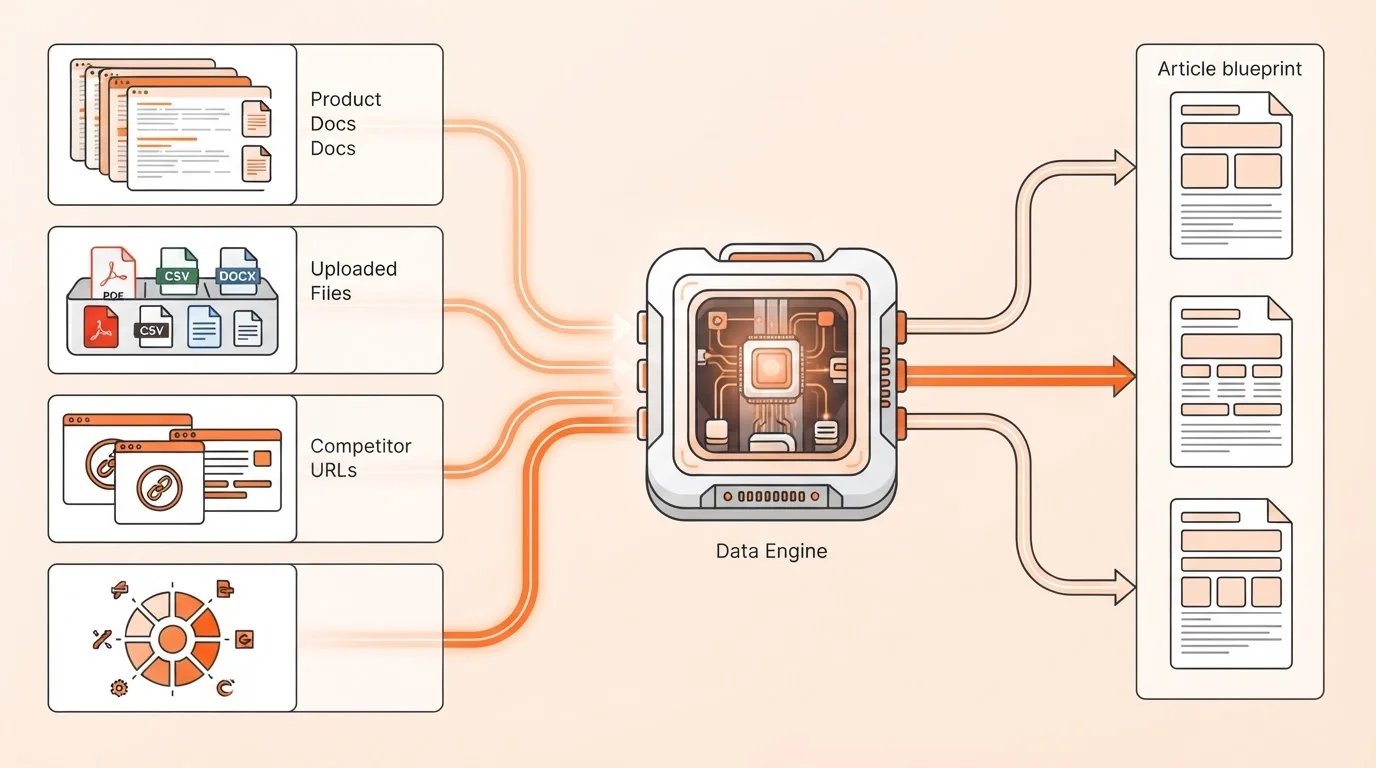
The core differentiator of a dedicated autonomous publishing system is its method of context ingestion. Generic artificial intelligence models operate on generalized web training data, which leads to shallow, uninspired articles. To establish true authority, an autonomous setup relies on a dedicated repository that consumes specific brand assets. This is accomplished through features like the Knowledge Engine for Autonomous SaaS Blogs. This technical framework allows teams to supply specific product context from multiple secure vectors: Public product sources and live documentation links. Uploaded documents, internal user manuals, or technical PDF specifications. Pasted links containing direct competitor feature data. Written product descriptions that capture unique brand tones and positioning guidelines. By anchoring the generation process to these exact sources, the platform eliminates the risk of abstract hallucinations. The resulting drafts reflect the specific functionality, interface components, and workflows of your software. This allows you to build an expert-level content library that addresses the exact considerations of technical buyers.
Sustaining a Long-Term Content Plan without Fatigue
Organic growth strategies rarely fail due to a lack of initial topics; they fail because of execution exhaustion. Brainstorming keyword lists, mapping user intent, and balancing a publication calendar requires persistent administrative effort that software teams cannot easily sustain. When other company priorities mount, content consistency is usually the first element sacrificed. This sporadic delivery signal penalizes visibility on modern search platforms. An automated system removes this operational burden through tools like Autopilot Content Planning and Topic Refill. This capability enables users to establish a durable content plan and define a predictable publishing cadence. Once these initial guardrails are set, the Full Autopilot system automatically refills a brief Topic queue directly from approved Content Directions. This continuous loop keeps production moving forward without requiring constant strategic oversight from leadership.
Bridging Technical Assets and Article Placement
Technical software content is fundamentally incomplete without clear visual support. Modern software buyers require concrete evidence, such as dashboard screenshots, configuration windows, and architectural workflows, to verify product capabilities. However, manually inserting, resizing, and optimizing media files across dozens of articles introduces severe administrative friction. If a user interface changes, tracking down every published instance to swap outdated screenshots becomes a major bottleneck. To resolve this asset challenge, companies can utilize a private SaaS product asset library. This type of integrated media system features centralized review queues, visible approvals, instant undo capabilities, and bulk asset decisions. It streamlines the creation workflow by automatically applying optimized alt text, establishing clear provenance tracking, and enabling safe file archiving. When the system places an approved screenshot into an article draft, it guarantees a professional layout while maintaining historical asset compliance.
Optimizing for the Two Frontiers: Traditional SEO and Generative GEO
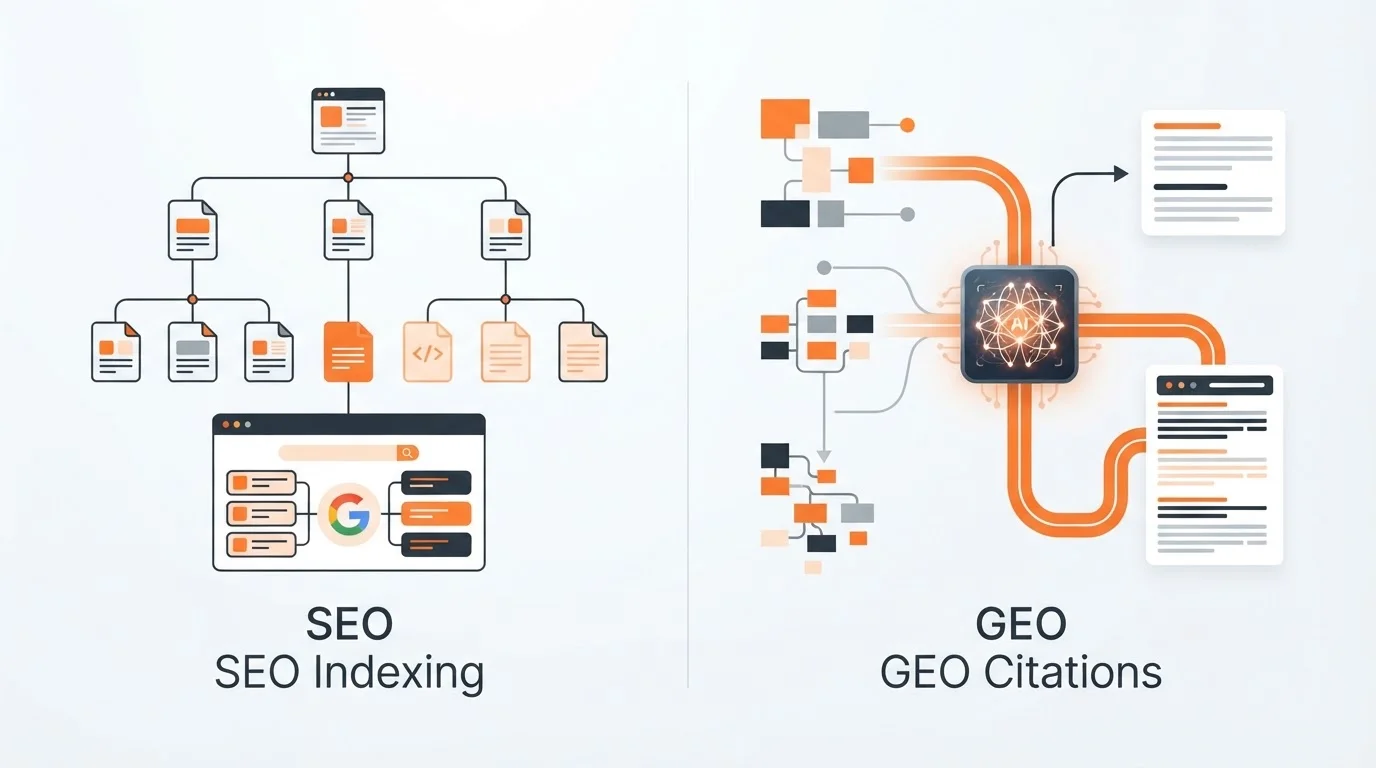
Maximizing organic traffic now requires optimizing for two distinct web environments simultaneously. The first is traditional Search Engine Optimization (SEO), which targets standard browser results, blue-link keyword rankings, and structural indexing. The second frontier is Generative Engine Optimization (GEO). This emerging discipline optimizes content specifically for conversational answer engines and AI search tools like ChatGPT, Perplexity, and Gemini. Generative answer engines do not simply list website URLs; they scan the web to synthesize direct answers for users. To be extracted and cited by these conversational models, software content must be dense with facts, structured cleanly, and built upon verified data layers. By utilizing an automated platform that processes raw product knowledge into highly accurate, structured documentation, your articles satisfy both algorithms. This dual optimization approach increases discovery opportunities across standard search engines and modern conversational models.
Integrating Automation into Your Production Tech Stack
An autonomous content strategy must blend cleanly with your existing software architecture without introducing engineering complexity. Software teams generally reject any system that demands invasive migrations or disrupts their clean frontend stack. The ideal automation model functions as an asynchronous engine, processing data in the background while leaving user-facing layers intact. This preserves site reliability and security boundaries. Connecting these systems is achieved via specialized integrations, such as the Ghost AI Blog Publishing integration. This configuration manages the complete content creation and editorial review process inside the automated workspace while Ghost handles the reader experience. To deploy this, users create a custom integration inside their Ghost dashboard, copy the provided Admin API key, and verify their connection within Blogged. This setup enables automatic delivery of polished content without manual file exports. Similar programmatic connections are available for alternative development environments. The Webflow CMS AI Blog Publishing integration and the Next.js AI Blog Publishing integration offer identical decoupled workflows for those specific frameworks. These secure API channels allow founders to scale content velocity across their chosen web infrastructure. The engineering team can focus entirely on core product code while marketing workflows run independently.
Establishing Performance Boundaries and ROI Tracking
Automation is only beneficial if its output drives measurable business value. To move beyond surface-level metrics like page views, founders must monitor the entire performance loop from initial impression to final trial sign-up. A comprehensive dashboard lets users track Search Console performance, homepage engagement, internal on-site searches, and clear CTA outcomes. This level of tracking changes content creation from a speculative marketing experiment into a visible revenue pipeline. Platforms like Blogged build this transparency directly into the distribution channel. The integrated publishing connectors let users collect consented visits and configured conversions for verified articles automatically. This structural data visibility shows teams exactly which topics attract high-intent buyers and which assets yield the highest conversion value. This data enables precise adjustments to the content plan over time. Collaborative management is also simplified under this integrated framework. Because every paid plan includes unlimited team seats, product managers, engineers, and growth marketers can participate in the review process. Teams can invite internal domain experts to perform rapid quality checks and adjust content directions without facing user-based seat fees or scaling costs. This collaborative layer ensures that the automated output remains technically accurate and aligned with company goals.
Frequently Asked Questions
Q: How long does it take to connect an autonomous content engine to an existing blog?
Initial setup typically takes less than an hour. Founders create a custom integration inside their CMS, copy the required Admin API key, verify their connection within the autonomous platform, and seed the engine with core product documentation.
Q: How does autonomous blogging maintain technical accuracy for complex software products?
Technical accuracy is secured by anchoring the platform to a dedicated product knowledge base rather than public internet sources. By parsing your specific API documentation, help center files, and custom descriptions, the system writes with precise technical context that is then verified through an editorial approval queue.
Q: What is the main operational difference between SEO and GEO?
SEO optimizes for traditional web crawlers by focusing on search indexing, metadata structure, and keyword paths. GEO formats and presents facts so that generative AI assistants can cleanly extract, synthesize, and cite your product when users input natural language software inquiries.
Q: Can external contributors or product managers review drafts without extra fees?
Yes. Every paid plan includes unlimited team seats, allowing product managers, internal developers, and marketing leads to participate in the review and approval queue without incurring additional user license charges.
Q: What happens to article screenshots if the software product interface is updated?
Media assets are managed within a private product asset library equipped with review queues and visible approvals. When an interface is updated, teams can execute bulk decisions or swap out old media records, updating visuals across published posts while preserving optimized alt text.
Get practical updates on saas founder organic growth case study
Receive new articles and practical insights by email.
Scaling Your Organic Acquisition Engine
Developing a predictable organic acquisition channel is a critical requirement for sustainable software scaling. Relying on intermittent manual drafting or detached marketing agencies creates an operational bottleneck that strains internal focus and stalls growth. By establishing an autonomous blogging system that converts raw product data into high-value discoverable articles, teams create an enduring growth pipeline. This structural transition changes the economics of content production. Instead of treating article generation as an expensive hourly chore, teams transform their proprietary documentation into a compounding asset that captures buyers across traditional and generative search frontiers. Implementing an autonomous SEO and GEO platform provides the operational leverage necessary to scale traffic efficiently. This approach enables founders to build long-term market presence while remaining fully focused on engineering their core product.