
On this page

Many SaaS founders reach a point where product development and customer success consume every waking hour, leaving little room for the consistent content marketing required to fuel a sales pipeline. When manual content strategies become too resource-intensive—requiring hours of research and editing for every single post—lead generation often stagnates. The most effective path to overcoming this growth plateau is the adoption of an autonomous blogging system that transforms product knowledge into a high-performance lead engine. By moving away from manual drafting and embracing autonomous SEO and GEO blogging, founders can achieve a significant increase in qualified lead generation without increasing their marketing headcount. This guide breaks down the specific strategies, from integrating a factual knowledge engine to executing localized GEO targeting, that allow you to scale your SaaS while keeping your focus on building the product.
The Founder's Dilemma: The Stagnation of Manual Content
SaaS companies frequently face a frustrating paradox: they possess a world-class product but lack the search visibility to attract users. The core problem is usually not the quality of the product, but the inconsistency of the outreach. Traditional content marketing demands a grueling cycle of keyword research, drafting, and optimization that is difficult to sustain while managing a growing team. Founders often find that their teams spend precious resources on individual blog posts that, while well-written, fail to provide a predictable or scalable lead pipeline.
A lack of continuous content flow means that organic traffic remains sporadic and search visibility is limited to a handful of broad, competitive keywords. Furthermore, without a centralized way to track Search Console performance alongside lead outcomes and reader feedback, determining which efforts actually drive revenue becomes guesswork. This lack of data-driven insight keeps founders trapped in inefficient cycles, producing content that reaches the wrong audience or fails to highlight the product's unique value proposition. Scaling lead generation requires a shift from viewing content as a series of manual tasks to treating it as an automated, integrated system designed for growth.
The Knowledge Engine: Ensuring Factual Integrity and Brand Trust
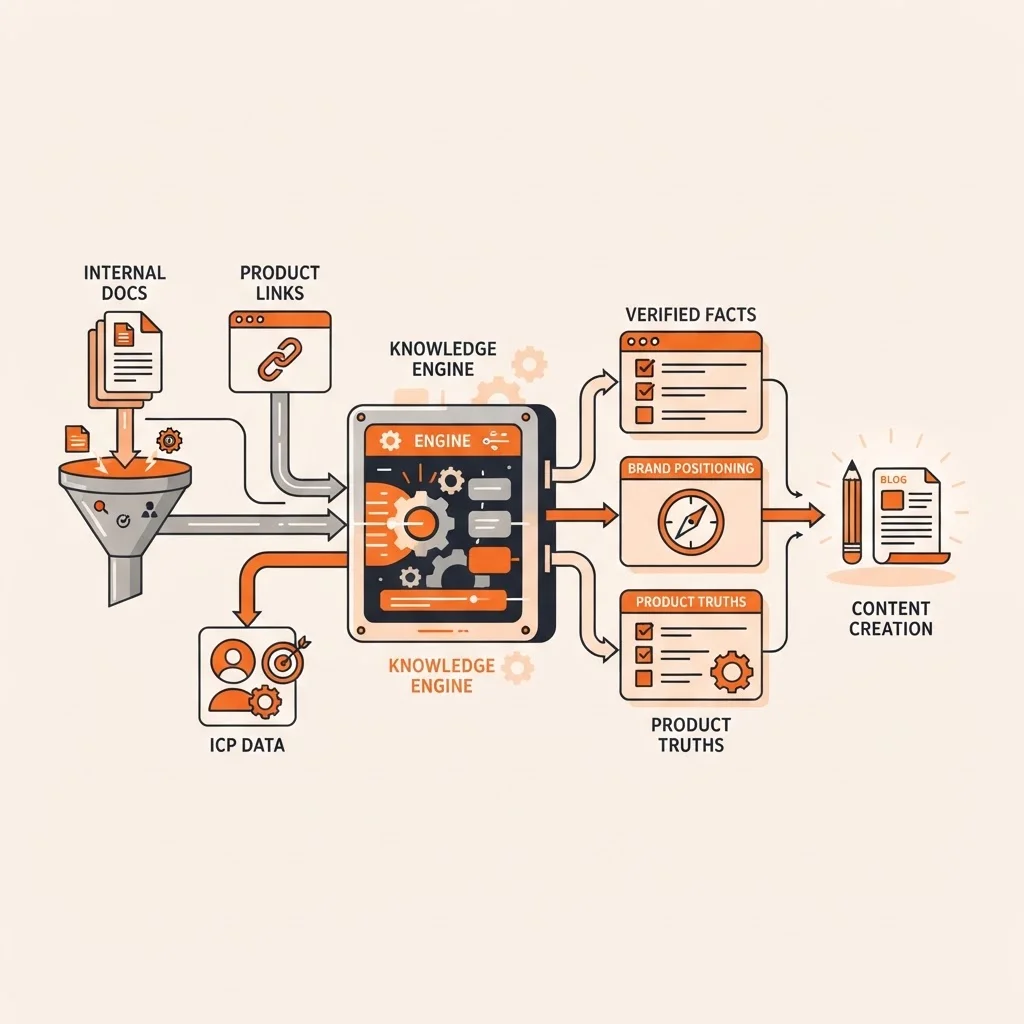
A primary concern for any SaaS founder adopting automation is the risk of generic or inaccurate content. Autonomous blogging platforms solve this by utilizing a dedicated Knowledge Engine. This tool allows you to provide public product sources, upload internal documents, and paste links to technical resources, which the system organizes into bounded facts. By defining your Ideal Customer Profile (ICP), product description, and unique positioning, you ensure the autonomous system has a clear boundary of truth.
This structured approach to knowledge management is essential for building brand credibility. It ensures that every article produced is grounded in your SaaS product's actual features, pricing, and limits, rather than generic AI-generated filler. When your content is factually accurate and tailored to your audience's specific pain points, it builds trust with prospects before they ever speak to a salesperson. For a founder, this means the content acts as an extension of the product's logic, providing high-quality information that pre-qualifies leads based on their actual needs and your product's specific capabilities.
Execution: Strategic Content Pillars and GEO Targeting
With a factual knowledge base established, the focus shifts to strategic execution through content pillars and GEO targeting. Content pillars are the foundational themes that align with the specific problems your SaaS solves. By mapping out these core themes, you ensure every piece of content contributes to a larger authority on relevant topics. The autonomous platform then generates long-tail keyword articles that address specific user questions within those pillars, creating a comprehensive search ecosystem.
GEO targeting is perhaps the most impactful way to capture niche search intent that broad-stroke competitors often miss. Many SaaS products have specific applications or regulatory requirements in different regions. By incorporating GEO targeting, you can create localized content that speaks to regional challenges or industry-specific regulations in different markets. Whether you are targeting compliance software needs for European fintechs or project management tools for North American agencies, this precision allows you to scale your reach globally. The ability to automate the research and optimization for these localized articles means you can win in competitive markets without needing to hire local marketing experts for every territory.
Building Durable Content Plans with Autopilot
Sustainability is the largest hurdle in SaaS blogging. To maintain search dominance, you need a system that identifies and publishes content on a consistent cadence. Autonomous blog publishing features allow founders to build a durable content plan where a Full Autopilot mode refills a topic queue based on approved content directions. This ensures that once you set the strategic direction, the platform takes over the tactical execution of identifying new topics that fit your product logic. By automating the loop from topic ideation to final publication, your blog remains a fresh, authoritative source of information that continuously signals quality to search engines.
Get practical updates on saas lead generation success story
Receive new articles and practical insights by email.
Measuring Success: Integrating Search and Lead Analytics
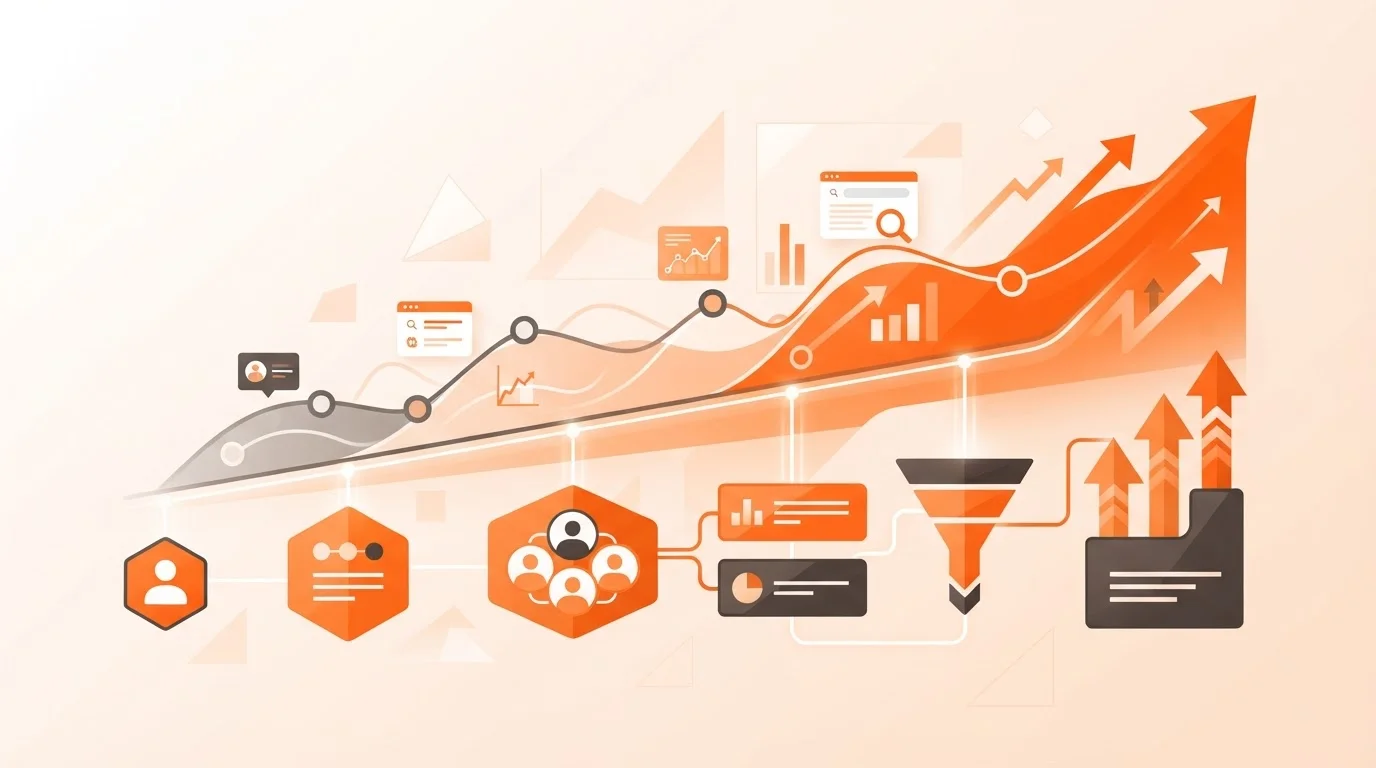
Transitioning to autonomous blogging transforms marketing from a 'black box' into a transparent growth engine. A comprehensive platform allows you to track Search Console performance, lead outcomes, and reader feedback in one place. This visibility is crucial for understanding how product-led content contributes to the bottom line. You can monitor homepage engagement and on-site searches to see exactly what users are looking for when they arrive.
Because the content is product-led and factually grounded, it tends to attract prospects who match your ICP and arrive with high purchase intent. Founders often note that these leads have shorter sales cycles because the content has already educated them on the product's value proposition. By scaling content production without increasing your team's workload, you can reallocate resources to focus on user retention and product innovation. The result is a sustainable growth model where your blog serves as a 24/7 sales representative, providing measurable results and a clear path to organic scaling.
Frequently Asked Questions
Q: How much time does it take to set up an autonomous blog?
Initial setup involves feeding the Knowledge Engine with your product documents and descriptions, which can take as little as an hour. After defining your content directions, the Autopilot begins refilling your queue and publishing on your desired cadence.
Q: Does autonomous blogging help with SEO ranking?
Yes. By maintaining a consistent publishing cadence and utilizing GEO-targeted phrases and long-tail keywords, autonomous platforms build the topical authority that search engines reward with higher rankings.
Q: Can I control the quality of the articles?
Yes. Platforms like Blogged allow you to approve content directions and typically include a revision process—such as one revision per article—to ensure the final output aligns with your brand voice.
Q: Is the content truly product-led or just generic AI writing?
When using a dedicated autonomous platform, the content is specifically product-led because it is derived from your unique Knowledge Engine. This engine contains your SaaS product's specific features, ICP, and positioning, ensuring the content is relevant to your business goals.
The path to SaaS growth no longer requires choosing between product development and audience building. By implementing an autonomous blogging strategy, founders can turn their technical expertise into a scalable lead generation engine. The combination of a factual Knowledge Engine, strategic content pillars, and precision GEO targeting provides a durable framework for achieving organic search dominance. Embracing these autonomous systems allows you to maintain the consistency required for long-term growth while keeping your focus exactly where it belongs: on building a world-class product for your customers.