
On this page
For solo SaaS founders, growth is often a game of trade-offs. You have a finite number of hours each day, and every minute spent writing a blog post is a minute not spent shipping code, fixing bugs, or talking to users. This is the Founder's Content Trap: you know that organic traffic is a sustainable way to grow, yet the manual labor required to build a content engine can feel like a full-time role that distracts from core development. When building a lean operation, hiring a full-scale marketing agency is often financially out of reach, leaving many founders in a state of marketing paralysis.
The solution lies in a strategic shift toward autonomous blogging. By leveraging platforms that transform your deep product knowledge into discoverable, product-led content, you can break the bottleneck of manual creation. This approach allows solo founders to scale their reach, optimize for the next generation of AI-driven search, and build a compounding asset that works while they focus on their product roadmap. Through autonomous systems, the expertise you've built into your software becomes the primary driver of your organic growth.
The Solo Founder’s Dilemma: The Opportunity Cost of Content
Organic growth through SEO and GEO (Generative Engine Optimization) has become a survival requirement for modern SaaS. However, the path to organic success is paved with operational hurdles that disproportionately affect lean teams. Traditional content marketing is a linear, labor-intensive process: research, outlining, drafting, editing, SEO optimization, interlinking, and publishing. When a solo founder attempts this manually, they face a staggering opportunity cost.
Every hour spent formatting a blog post or researching keywords is an hour taken away from high-leverage activities like product strategy or customer success. For a technical founder, this trade-off is often the primary reason why content marketing falls by the wayside. If the blog is updated only sporadically, search engines fail to see the site as a fresh, authoritative source, leading to stagnating traffic and a higher reliance on expensive paid acquisition channels.
Beyond the time, there is the Expertise Gap. A freelance writer might understand basic grammar, but they rarely grasp the nuances of your API, the specific friction points of your user base, or the strategic "why" behind your latest feature set. This often leads to "thin content" that fails to build trust. As a founder, you are the only one with the deep product knowledge required to write effectively, yet you are the person with the least amount of time to do it. Autonomous blogging is designed to bridge this gap by capturing your expertise and scaling it without the manual drafting phase.
Product-Led Content: The Engine of Modern SaaS Growth
Product-led content differs from traditional blogging by placing the software itself at the center of the narrative. Instead than writing generic industry observations, product-led content addresses specific user problems and demonstrates exactly how your product solves them. It is tactical, educational, and highly aligned with user intent.
For solo founders, this approach is the most efficient way to drive conversions. It guides potential customers through the buying journey by providing tutorials, use cases, and feature spotlights that help reduce the Time-to-Value (TTV) for new users. When a prospect finds a post that explains how to solve their exact technical challenge using your tool, the path to a trial sign-up becomes frictionless.
However, scaling this strategy manually is nearly impossible for a team of one. You need a system that can take your raw product insights—your documentation, your landing pages, and your feature lists—and synthesize them into a library of discoverable assets. This transforms your technical documentation from a static resource into a dynamic marketing engine.
Enter Autonomous Blogging: How the Knowledge Engine Works
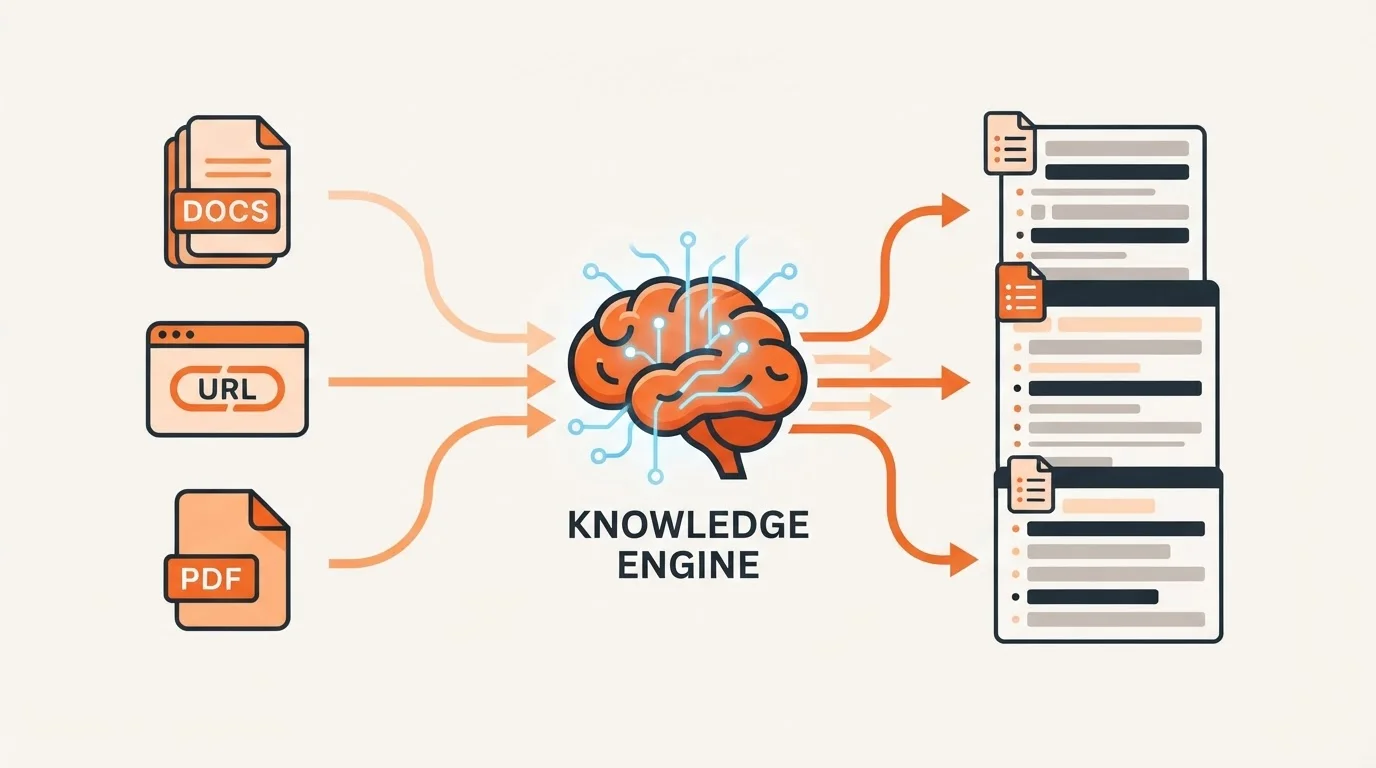
Autonomous blogging platforms like Blogged change the fundamental workflow of content creation. Instead of starting with a blank cursor, you start with your product's existing intelligence. The core of this transition is the Knowledge Engine, a feature that allows founders to feed the system with the raw materials of their SaaS.
By providing public product sources, uploaded documents, pasted links, or a written product description, you give the system the context it needs to write like an insider. This ensures that every generated article is grounded in the reality of your software. For a solo founder, this means the research phase of blogging is largely automated. The platform analyzes your product's value proposition and automatically identifies the topics that will resonate most with your target audience based on the data you provide.
From Raw Data to Structured Authority
Once the Knowledge Engine has ingested your product data, the autonomous system begins the heavy lifting of planning and writing. It doesn't just produce isolated posts; it builds a comprehensive content architecture. This includes identifying long-tail keywords that competitors might be overlooking and creating internal links between articles to build topical authority.
This structural integrity is vital for SEO. Search engines reward sites that demonstrate a deep, interconnected understanding of a specific niche. By automatically interlinking related posts—such as connecting a specific feature guide to a broader industry "how-to" article—the platform helps search engines crawl your site more effectively and establishes your SaaS as a trusted authority in your category.
Solving the Publishing Bottleneck: Seamless CMS Integrations
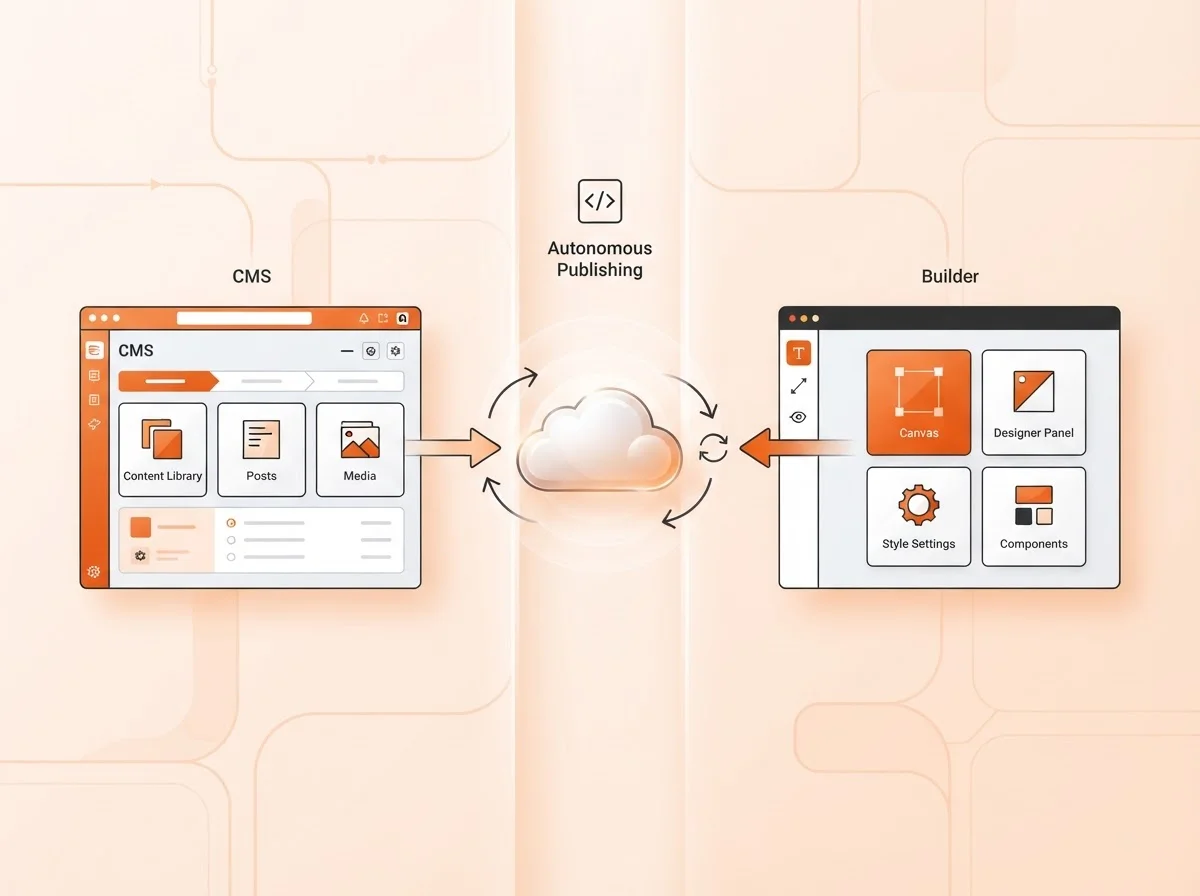
Creating content is only half the battle; getting it live and tracking its performance is the other. For a solo founder, managing the back-end of a blog—formatting, image placement, and meta-tagging—can be a tedious chore. Autonomous blogging platforms solve this by integrating directly with popular Content Management Systems (CMS).
If you are running your SaaS marketing site on WordPress, integrations allow you to create and review articles within the autonomous platform and then deliver them directly to your site. This eliminates the need for manual copy-pasting. Furthermore, the integration allows you to collect consented visits and configured conversions for every verified article, giving you a clear view of which posts are actually driving trials and revenue. This data is essential for iterating on your growth strategy.
Support for Ghost, Webflow, and Modern Frameworks
The flexibility of these integrations is crucial for founders who prefer different tech stacks. For example, the Ghost AI Blog Publishing integration manages the content creation and review process while allowing Ghost to handle the actual reader experience. For those using Webflow, the integration similarly allows for the collection of visit and conversion data for verified articles.
Technical founders building on Next.js can utilize dedicated API and webhook support to ensure their blog remains a measurable part of their application. By automating the delivery and tracking of content across these platforms, solo founders can maintain a professional-grade blog without the overhead of manual site management.
SEO vs. GEO: Winning the Discovery Game
The search environment is undergoing a significant shift. While traditional SEO remains essential for ranking in Google’s standard search results, a new discipline has emerged: Generative Engine Optimization (GEO). GEO is the practice of optimizing content so that AI systems—such as ChatGPT, Gemini, and Perplexity—reference and recommend your brand inside their generated answers.
Autonomous blogging platforms are uniquely positioned to win at both. Traditional SEO rewards long-form, authoritative content with clean technical structures. GEO, on the other hand, rewards content that is highly extractable—meaning AI engines can easily find direct answers and expert context within your text to cite as sources. By using an autonomous platform that understands these nuances, you ensure your SaaS is the one recommended when a user asks an AI for the best solution to a specific problem.
Implementation Strategy: The Solo Founder Workflow
Transitioning to an autonomous blogging model doesn't mean losing control. Instead, it changes your role from "Writer" to "Editor-in-Chief." A successful implementation follows a structured workflow that minimizes your time investment while maximizing quality.
Get practical updates on saas solo founder product led content scaling
Receive new articles and practical insights by email.
1. The Product Ingestion Phase
Start by feeding the platform your most authoritative product data via the Knowledge Engine. This should include your technical documentation, your 'About' page, and feature descriptions. The more high-quality context you provide, the more accurate the output will be. Think of this as training a new team member on the fundamentals of your software's value proposition.
2. Setting the Strategic Compass
Configure your preferences for tone, target audience, and content types. You can guide the system to focus on specific formats, such as comparison pages or technical guides. By setting these parameters, you ensure the autonomous system produces content that fits your specific stage in the growth cycle and maintains a consistent brand voice.
3. The Editorial Review

Automation handles the repetitive drafting and optimization, but the final human touch is what builds ultimate trust. Solo founders can spend a few minutes reviewing each generated draft for technical accuracy and brand alignment. If your team eventually grows, Blogged offers unlimited team seats on its paid plans, allowing you to bring in a part-time editor or product manager to handle this review without increasing your software costs.
4. Automated Publishing and Tracking
Once you approve a draft, let the platform handle the publishing to your CMS. Use the integrated conversion tracking to see which articles lead to sign-ups. If content about a specific integration or feature is performing well, you can feed the Knowledge Engine more documentation on that topic to trigger additional related content, creating a virtuous cycle of growth.
The ROI of Autonomy: Reclaiming Your Time and Your Growth
The most significant result of scaling with autonomous blogging is the decoupling of content output from founder hours. A solo founder who previously struggled to publish once a month can now maintain a consistent schedule with significantly less effort. This consistency is what builds a compounding traffic loop.
Each post becomes a permanent digital asset that attracts leads around the clock. Over time, the aggregate effect of this traffic can lead to a lower Customer Acquisition Cost (CAC) compared to paid channels. Furthermore, by reclaiming the hours previously spent on manual drafting, you can accelerate your product roadmap. In the world of lean SaaS, efficiency isn't just about saving resources; it's about maximizing your impact on the tasks that only you can perform.
Frequently Asked Questions
Q: Will search engines penalize content created through autonomous platforms?
Search engines like Google prioritize helpful, high-quality content that provides value to users. By using your specific product knowledge as the foundation, autonomous blogging ensures that the content is unique and authoritative, which aligns with search engine quality guidelines.
Q: How much technical expertise do I need to set this up?
No specialized SEO expertise is required. The platform handles the technical optimization, keyword research, and internal linking. Your role is to provide the product expertise through the Knowledge Engine and review the final output.
Q: Can I add team members as I scale?
Yes. Blogged includes unlimited team seats on its paid plans, so you can easily collaborate with others as your startup grows without incurring additional per-user fees.
Q: Does this work with my existing site?
Autonomous platforms integrate with major CMS providers like WordPress, Ghost, and Webflow, and offer API/Webhook support for custom-built frameworks like Next.js.
For the solo SaaS founder, scaling product-led content is no longer a choice between quality and time. Autonomous blogging platforms have bridged the gap, allowing lean teams to produce high-authority, SEO-optimized, and GEO-ready content at a volume that was previously reserved for larger marketing departments. By transforming your product knowledge into a scalable asset, you can drive sustainable organic growth while staying focused on building your product. The future of SaaS marketing is autonomous—and it starts with putting your blog on autopilot.