
On this page
For most SaaS founders, the bottleneck to organic growth isn't a lack of ideas—it is the sheer weight of the research required to execute them. Producing high-quality, product-led content demands more than just writing; it requires a deep understanding of competitor features, user intent, and the technical nuances of your own product. When you are building a company, spending ten hours a week sifting through keyword tools and competitor blogs is an unsustainable diversion of resources.
Blogged solves this by automating the entire content research loop, transforming raw product knowledge into a structured, autonomous publishing engine. By integrating a governed Knowledge Engine with an AI-powered research assistant, Blogged allows founders to maintain a consistent content pipeline that serves both search engines and the emerging generative AI discovery market. This guide explores how automated content research for SaaS changes the growth equation, freeing you to focus on building while your blog runs on autopilot.
The Manual Research Trap for SaaS Teams

In the competitive SaaS environment, traditional keyword research is no longer enough. To rank for high-intent terms, you must bridge the gap between what users are searching for and what your product actually does. This manual process typically involves three time-consuming stages:
- Competitor Auditing: Manually tracking what features competitors are launching and how they are positioning them in their own blogs.
- Intent Mapping: Identifying whether a keyword indicates a user looking for a tutorial, a comparison, or a top-of-funnel guide.
- Product-Led Ideation: Determining which product features solve the specific pain point addressed in a potential article.
Without automation, these tasks become reactive. A founder might see a competitor's post and decide to write something similar, rather than proactively identifying gaps in the market. Blogged lets users build a durable SaaS content plan that moves beyond this reactive cycle, allowing you to publish on your own cadence while a Full Autopilot refills your topic queue based on approved Content Directions. This shift from manual searching to automated strategic planning ensures your content remains relevant and targeted without requiring a full-time marketing research team.
The Knowledge Engine: Grounding AI Research in Reality
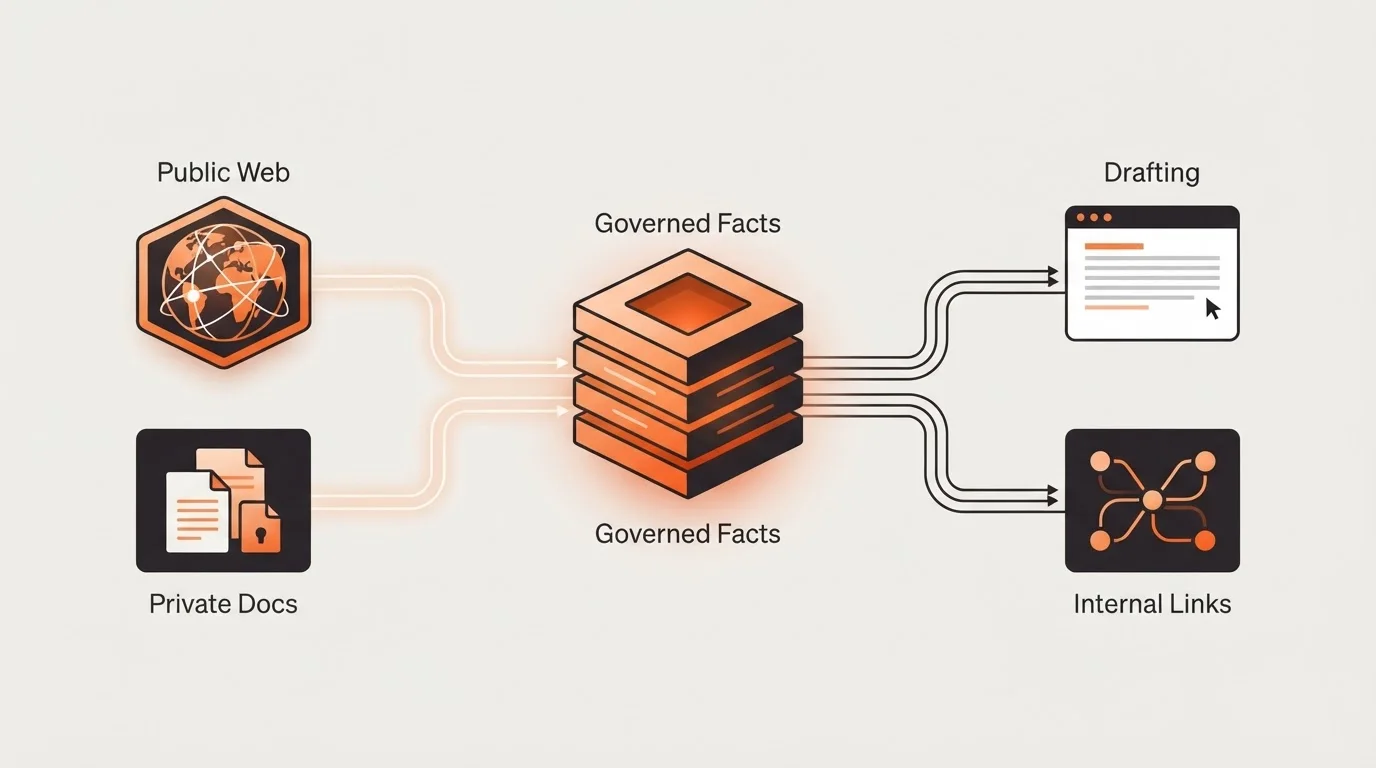
The primary risk of AI content research is the "hallucination" of product facts. Generic AI models often remember general category information but fail to grasp the specific nuances of your SaaS, leading to drafts that claim you have integrations you don't or miss key pricing limits. Blogged addresses this through its Knowledge Engine for Autonomous SaaS Blogs.
This engine acts as a governed store of facts about your product, your competitors, and your market. Each fact is tied to a specific entity—such as your own product or a competitor—and categorized by facets like pricing, features, or positioning. By organizing this context into bounded facts with provenance and verification states, Blogged ensures that the research process is grounded in verified evidence rather than plausible guesses.
Managing Public and Private Evidence
Effective research requires a mix of public and private data. You might have internal product roadmaps or internal positioning documents that you want the AI to understand, but not necessarily cite as a public footnote. Blogged grounds research and writing in supported product and market evidence while keeping public sources and private documents distinct.
Facts drawn from public web pages can be used as citations in your blog posts, enhancing your authority. Conversely, facts from private uploaded documents inform the writing and research logic but are never emitted as public citations. This allows founders to upload a private "one-pager" about a new feature and let the platform handle the research on how to position it against the market without exposing internal documents.
Freshness and Conflict Control
SaaS markets move fast. A competitor's pricing or a feature set from six months ago is likely stale. The Blogged Knowledge Engine includes freshness and conflict controls, flagging facts that need an update and highlighting contradictions between sources. This level of governance ensures that the automated research phase doesn't just find any information, but the most accurate information currently available.
From Topic Ideation to Comprehensive Outlines
The transition from a raw idea to a publishable outline is often where content production stalls. Blogged automates this by utilizing Content Directions. Instead of starting with a blank page, you approve a high-level strategic direction, and the platform's Autopilot handles the granular research needed to build a two-page draft structure.
During this phase, the system analyzes search intent and competitor strategies to propose a logical flow. Because Blogged is built specifically for SaaS, it automatically looks for places to weave in your product’s unique selling propositions. It doesn't just suggest a list of headers; it builds a product-led content strategy that shows exactly how your software solves the reader's problems.
Automating Product Asset Management
A common bottleneck in SaaS blogging is the management of visual proof. Product screenshots and diagrams are essential for explaining complex features, but collecting and placing them manually is tedious. Blogged lets users manage a private SaaS product asset library with features designed for high-volume publishing.
This library includes review queues, visible approvals, and bulk decisions, ensuring that every image used in your blog has been vetted for accuracy. The platform even handles the technical side of research-driven visuals, such as alt text generation and provenance tracking. This means that when the automated research identifies a need for a "feature tutorial" section, it can draw from an approved library of screenshots to illustrate the point, ensuring your blog is as visually informative as it is well-written.
Optimizing for the Future: SEO, GEO, and AEO
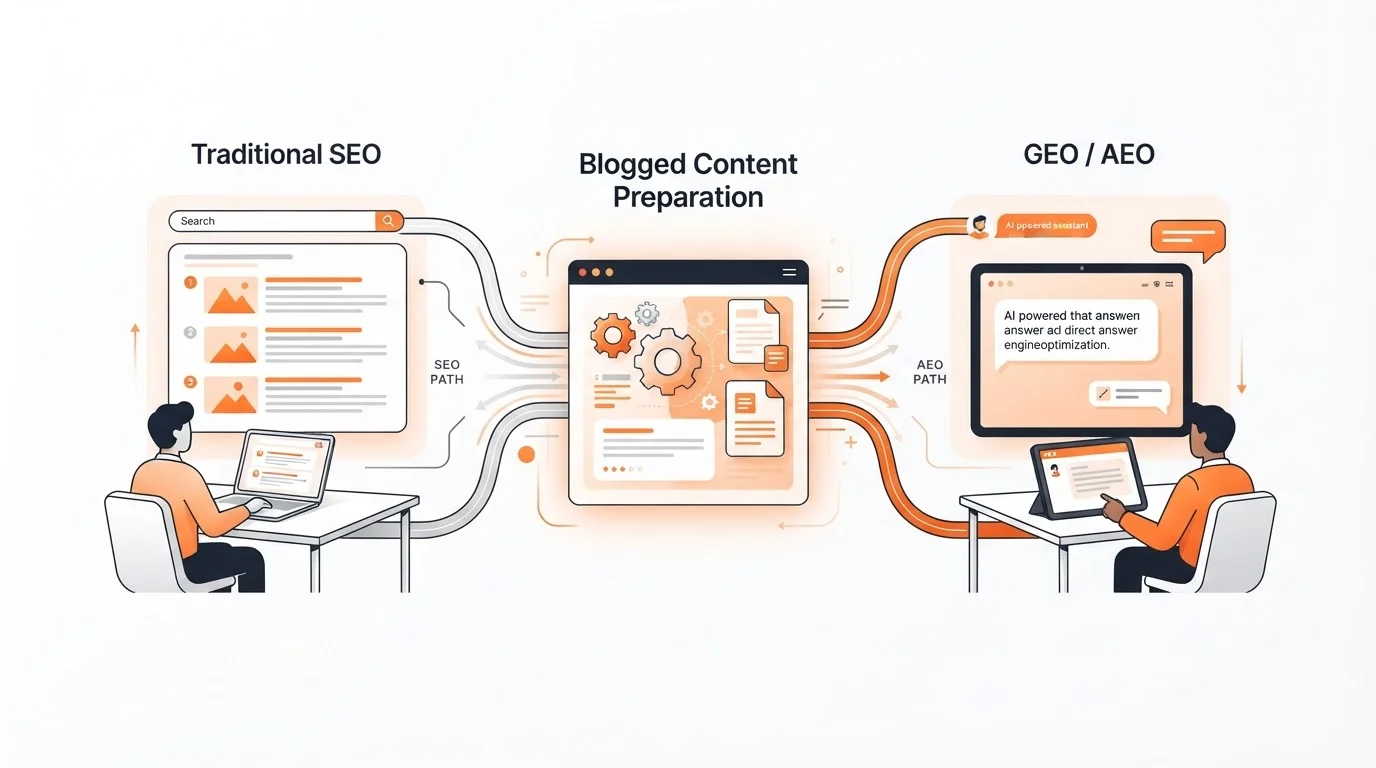
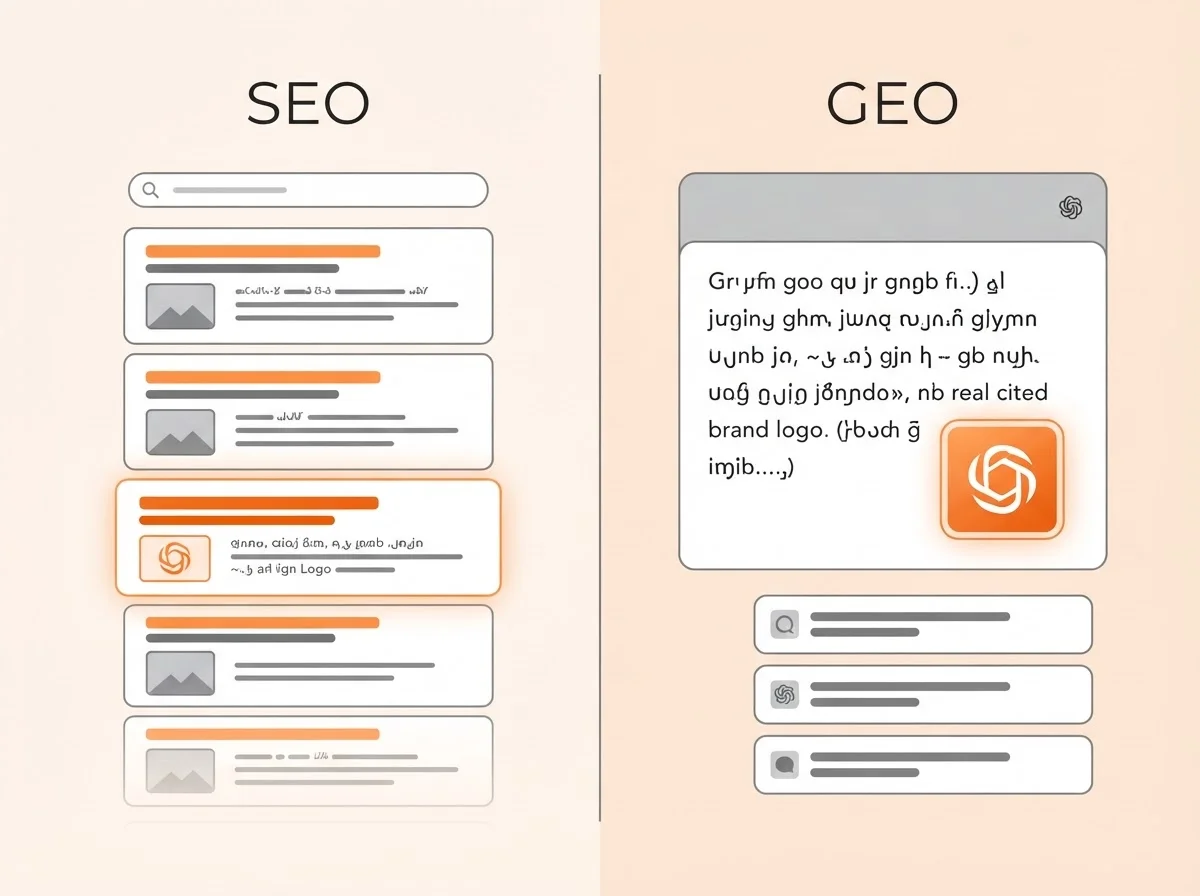
In 2026, content research is no longer just about ranking on Google's first page. It is about appearing in AI-generated answers and conversational search results. Blogged is an autonomous SEO and GEO blogging platform, meaning its research engine is specifically tuned for both traditional Search Engine Optimization and Generative Engine Optimization.
GEO (and its cousin, Answer Engine Optimization or AEO) focuses on making your product the one that AI assistants like ChatGPT or Perplexity name when a user asks for a recommendation. By researching how AI models summarize your category, Blogged structures your content to be highly "citeable." It verifies destinations, identifies why a link fits a specific section, and helps you build the topical authority needed to be recognized as a primary source in your niche.
Scaling Without Increasing Headcount
One of the most significant benefits for founders is the ability to scale content output without proportional increases in costs or management overhead. Manual research scales linearly—if you want twice the content, you need twice the research hours. Automated research scales exponentially.
Blogged supports this growth by offering unlimited team seats on all self-serve plans. This means you can involve your product team in verifying facts in the Knowledge Engine or have your customer success team suggest new Content Directions without worrying about per-user licensing fees. The platform also includes plan-based revision limits—ranging from 1 to 3 revisions per article—which allows for a structured quality assurance loop. You aren't just hitting "publish" on an AI draft; you are managing an automated supply chain where the heavy lifting of research is done for you, leaving your team to act as the final editorial gatekeeper.
Frequently Asked Questions
Q: How does Blogged research my competitors?
Blogged includes a Competitor Watch feature that tracks between 7 and 25 competitors depending on your plan. It monitors their blog and product updates, feeding this data into the Knowledge Engine so your content can address market gaps in real-time.
Q: What is the difference between a Topic and a Content Direction?
A Content Direction is a high-level strategic goal (e.g., "Compare our project management tool vs. Trello for developers"). A Topic is a specific, researched entry in your queue that is ready to be transformed into an article. Autopilot uses your approved Directions to generate new Topics automatically.
Q: Does Blogged help with internal linking during the research phase?
Yes. Blogged includes an internal linking tool that verifies destinations and explains why a specific link fits a section. Editors can insert or undo these links without leaving the post, ensuring your internal research supports a strong site architecture.
Q: Can I use my own private internal documents for research?
Absolutely. You can upload private documents to the Knowledge Engine. These inform the AI's understanding of your product but are protected from becoming public citations, ensuring your internal strategy remains confidential.
Empowering Founders to Lead with Content
The transition from a founder who "does it all" to a founder who "leads the system" is the key to SaaS scalability. By embracing automated content research, you remove one of the most significant barriers to organic growth. You no longer have to choose between shipping a new feature and shipping a new blog post.
With Blogged, the research, planning, and optimization are handled by an autonomous engine that understands your product as well as you do. By grounding AI in a governed Knowledge Engine and focusing on the emerging GEO market, you can build a blog that doesn't just attract traffic, but builds genuine authority and drives trial signups on autopilot. Stop researching the market and start leading it.
Get practical updates on automated content research saas
Receive new articles and practical insights by email.