
On this page
In the current B2B SaaS market, the generic marketing blog is losing its effectiveness. Modern buyers are increasingly wary of surface-level advice; they seek to understand exactly how a tool solves their specific, immediate hurdles. A product-led content strategy shifts the focus from broad industry commentary to demonstrating your product as the logical solution. It bridges the gap between top-of-funnel awareness and product activation by making your features the center of the narrative.
For a founder, this approach is more than just marketing—it is a sustainable growth engine. By centering content on the product, you build a durable asset that educates potential users, fosters trust, and reduces the friction of evaluation. When executed correctly, your content doesn't just drive traffic; it drives signups and feature adoption by showing, rather than just telling.
Defining Product-Led Content for SaaS Organic Growth
Product-led content is a strategic framework where your SaaS product serves as the primary vehicle for marketing. It moves beyond high-level trends to focus on practical application. Instead of mentioning your product as an afterthought, product-led content integrates the product into the solution for every search query. If a user searches for how to automate a specific workflow, a product-led piece shows the exact steps inside your app to achieve that outcome.
This method aligns with modern buyer behavior where self-education is the priority. By the time a lead reaches out, they often want to have already verified if your product fits their specific technical environment. Product-led content provides the proof they need during this evaluation phase.
To sustain this, founders need a system that transforms technical product knowledge into discoverable assets. Blogged facilitates this by allowing users to build a durable SaaS content plan and publish on their preferred cadence. With Full Autopilot, the platform can refill a short Topic queue from approved Content Directions, ensuring that your blog remains an active, product-centric resource even while you are focused on shipping code.
The Strategic Blueprint: 5 Steps to Implementation
Building a product-led engine requires moving from sporadic posts to a structured workflow. The goal is to create a library of assets that answer specific user questions through the lens of your product's capabilities.
1. Map Product Features to User Pain Points
Start by listing your product’s core features and the specific "jobs to be done" they address. For every feature, ask: What is the user trying to achieve, and what happens if they fail? This mapping prevents you from writing generic content. If your SaaS offers automated data cleaning, your content shouldn't just be about data management; it should focus on eliminating manual entry errors in specific reports. This ensures every reader is a potential user of that specific feature.
2. Identify Your Ideal Customer Profile (ICP)
Vague content attracts low-intent leads. Define exactly who your product is for. Are you speaking to the CTO concerned with security, or the Marketing Manager focused on ease of use? Your content should reflect the vocabulary and technical depth of your ICP. For example, Blogged targets SaaS founders who need to scale organic growth without hiring a full content team, which dictates a tone that is efficient, strategic, and outcome-oriented.
3. Choose the Right Content Formats
Different stages of the buyer journey require different levels of product integration:
- How-to Guides: Step-by-step instructions for solving a specific problem using your tool.
- Workflow Breakdowns: Deep dives into how your product handles complex tasks.
- Comparison Articles: Honest assessments of how you differ from alternatives for specific use cases.
- Troubleshooting & FAQ: Addressing the hurdles that prevent users from getting started.
By diversifying formats, you capture users at various intent levels—from those just discovering the problem to those comparing specific solutions.
4. Optimize for Search and AI Discovery (GEO)
Traditional SEO is evolving into Generative Engine Optimization (GEO). AI search tools prioritize content that is authoritative and structured as a direct answer. Use clear headings, bulleted lists, and structured data to make your product-led insights easily indexable. Focus on long-tail keywords that indicate high intent, such as specific feature combinations, rather than just broad industry terms.
Stay updated on autonomous blogging for SaaS
Get insights and strategies on transforming product knowledge into discoverable content. Learn how to drive organic growth for your SaaS.
5. Iterate Based on Engagement and Conversions
A content strategy is only as good as the data behind it. You must track which pieces of content lead to product signups, not just page views. Blogged enables this by letting users track Search Console performance, homepage engagement, on-site searches, and CTA/lead outcomes. By seeing which articles drive lead growth and reader feedback, you can double down on the topics that actually impact your bottom line.
Integrating Deep Product Knowledge into Every Piece

The biggest failure in SaaS content is "shallow" writing—articles that read like they were written by someone who has never opened the app. To win, your content needs the depth of a product manager and the clarity of a marketer. This requires a centralized knowledge base that your content engine can draw from.
Blogged’s Knowledge Engine is designed specifically for this founder-led need. It allows you to provide public product sources, upload documents, paste links, or provide a written product description. This ensures that every article generated is grounded in your actual product facts, not generic AI hallucinations. Furthermore, because every paid plan includes unlimited team seats, your product and engineering teams can participate in the review and approval process without extra costs. This collaborative environment ensures technical accuracy, which is the cornerstone of trust.
Measuring Success: Beyond Vanity Metrics
If you are following a product-led strategy, your KPIs must reflect product growth. You need to track metrics that matter to the business, not just a marketing dashboard. Key Performance Indicators (KPIs) to monitor include:
- Product-Qualified Leads (PQLs): Readers who sign up and reach their "aha moment" after reading specific content.
- Conversion Outcomes: Tracking how many readers click your primary CTA and successfully complete a signup or demo request.
- AI Citation Frequency: Monitoring how often AI search engines cite your content as an authoritative source for product-related queries.
- Feature Adoption: For existing users, tracking if specific articles lead to higher usage of the features they describe.
By organizing facts by product entity and facet, Blogged allows you to maintain a granular database of product truths, making it easier to see how specific feature-focused content contributes to overall growth.
Scaling Through Autonomous Content Tools
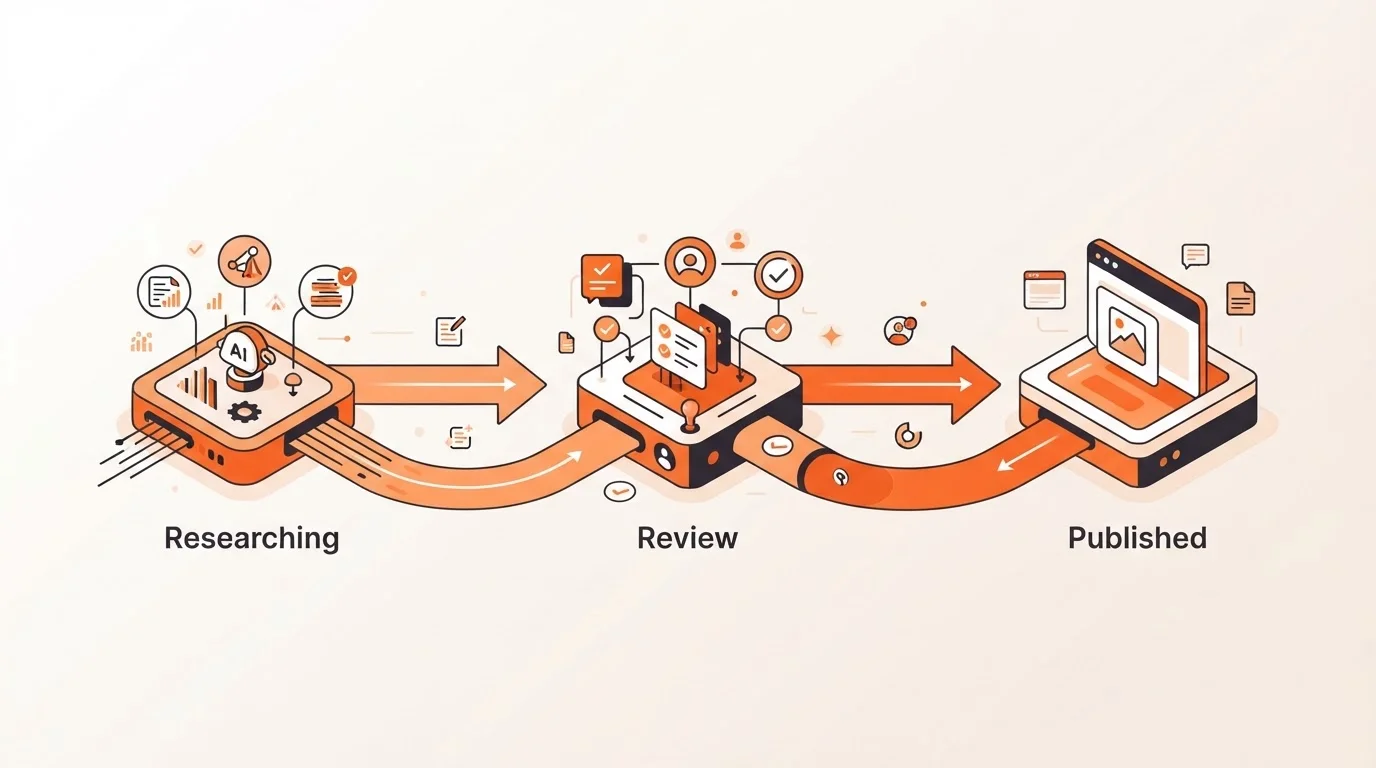
For a growing SaaS, the bottleneck is rarely ideas; it is execution. Sustaining a high-quality publishing cadence while building the product is the primary challenge for founders. Scaling your strategy requires moving toward autonomous content tools that handle the heavy lifting of research, writing, and optimization.
Autonomous platforms like Blogged integrate directly into your existing stack to remove friction. For instance, the Ghost AI Blog Publishing integration manages the creation and review process, while Ghost handles the reader experience. Similar integrations for WordPress, Webflow, and Next.js allow you to deliver verified articles to your site with minimal manual effort. This automation doesn't replace the founder’s vision; it amplifies it, allowing you to scale your organic reach without a proportional increase in headcount.
Frequently Asked Questions
Q: How long does it take to see results from a product-led content strategy?
While organic growth is a compounding asset, SaaS companies typically see significant traction after several months of consistent publishing. Targeting high-intent, product-relevant keywords can accelerate this timeframe.
Q: Does product-led content work for early-stage startups?
Yes. It is often more effective than traditional marketing for early-stage teams because it focuses resources on the most qualified leads and helps build the founder's authority in their specific niche.
Q: How do I prevent my content from feeling like a sales pitch?
The key is to solve the user's problem first. Use the product as the tool to achieve that solution. If the advice is genuinely helpful, the inclusion of the product feels like a resource rather than a pitch.
Q: Can AI write product-led content?
AI can draft the content, but it requires a knowledge engine to provide specific product facts. Without your unique product data and human review, AI will produce generic content that fails to demonstrate real technical experience.
Future-Proofing Your SaaS Growth
The future of SaaS discovery lies at the intersection of deep product knowledge and autonomous execution. As AI search engines become a primary way buyers evaluate software, the winners will be the founders who have built a library of authoritative, product-led assets. By integrating your unique product value into every piece of content, you aren't just attracting visitors; you are building a self-sustaining acquisition machine.
Embrace the product-led blueprint to turn your product knowledge into your most powerful marketing asset. Start by mapping your features to user pain points today, and leverage autonomous tools to ensure your strategy scales alongside your product.