
On this page
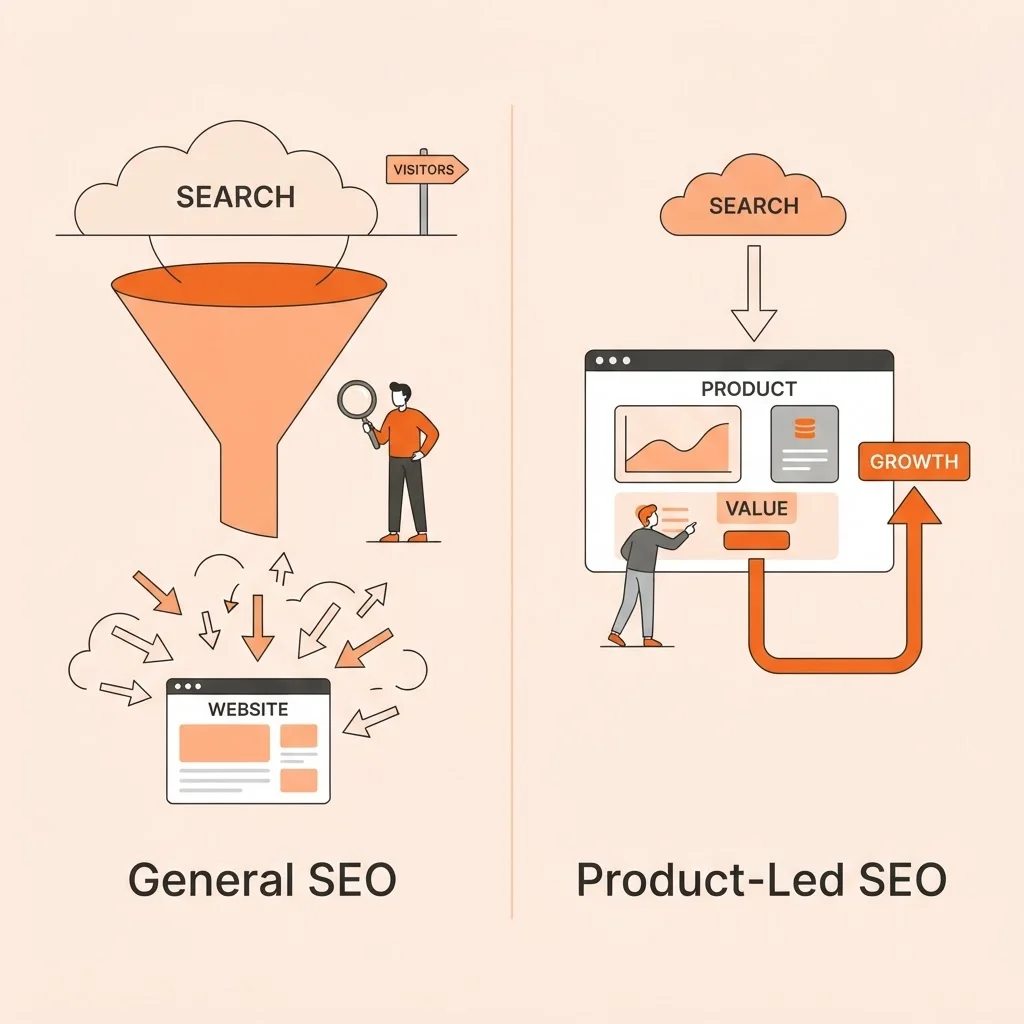
An SEO bot is an autonomous software agent designed to handle the research, writing, and publishing tasks usually managed by a content team. For SaaS founders, these tools promise to solve the content bottleneck—the struggle to maintain a high-quality blog while simultaneously building a product. However, not every bot is built for the same objective. While some focus on high-volume keyword targeting and backlink building, others specialize in product-led content that grounds every article in your specific business facts.
Understanding the features and workflow of an SEO bot is the first step in determining its product fit. Choosing the wrong solution can lead to a blog filled with generic AI-generated fluff that fails to convert. This guide breaks down how these platforms operate and how to evaluate which model aligns with your SaaS growth strategy.
Core Features of Modern SEO Bots
Autonomous SEO platforms have evolved from simple drafting tools into full-cycle marketing engines. Modern solutions, including category leaders like Blogged and SEObot.ai, share foundational capabilities while diverging in their specialized execution. The goal is to move beyond simple text generation toward a system that understands both the search engine and your specific software product.
Autonomous Research and Planning

The bot starts by scanning your existing website, identifying audience personas, and analyzing keyword gaps. Instead of you brainstorming topics, the bot generates a content calendar based on search volume and competition. Specialized tools like Blogged take this further by utilizing a Proprietary Knowledge Engine. This engine ingests your technical documentation, product links, and descriptions to ensure the content is factually accurate to your specific software features.
Content Generation and Optimization
Bots use Large Language Models (LLMs) to draft long-form articles. Key features here include automated internal linking, image generation, and SEO meta-tagging. Some bots also offer reflection steps to improve readability and ensure the content meets Google's E-E-A-T guidelines by citing sources and maintaining a consistent brand voice. Advanced platforms also incorporate GEO (Generative Engine Optimization) to ensure content is discoverable by AI search tools.
Multi-Channel CMS Integration
To be truly autonomous, an SEO bot must publish content without manual intervention. Leading platforms typically integrate with popular SaaS stacks. Blogged, for instance, connects to self-hosted WordPress using a dedicated publishing plugin and application password. It also supports Webflow CMS, Ghost (via Admin API keys), and modern stacks like Next.js through signed webhooks and REST APIs.
The Autonomous SEO Workflow
The effectiveness of an SEO bot depends on the loop it follows. A standard workflow typically cycles through four distinct stages that turn raw product data into organic traffic. By automating these recurring tasks, founders can focus on engineering while the bot maintains the marketing momentum.
The Four-Stage Automation Loop
- Input: You provide the bot with a URL, a product description, or specific documents. In Blogged, you can populate the Knowledge Engine with public product sources, uploaded files, or pasted links.
- Processing: The bot analyzes search intent and competitor content. It drafts the article, inserts relevant internal links to your high-value pages, and generates optimized imagery.
- Output: The content is either sent to a review queue or published directly to your blog. Founders can often toggle between Draft and Auto-publish modes to maintain final editorial control.
- Analysis: The loop closes with performance tracking. The platform monitors Search Console performance, homepage engagement, and lead growth outcomes to see which articles actually convert readers.
Autonomous SEO Platform Comparison
When evaluating product fit, SaaS founders often compare general SEO agents like SEObot.ai with specialized SaaS platforms like Blogged. The choice usually comes down to whether you value total automation volume or product-specific accuracy.
Get practical updates on seo bot features and product fit
Receive new articles and practical insights by email.
Feature Comparison Table
| Feature | Blogged | SEObot.ai |
|---|---|---|
| Core Focus | Product-led SaaS growth | Fully autonomous SEO agent |
| Starting Price | $99/mo (Starter) | Varies by tier |
| Knowledge Source | Proprietary Knowledge Engine (Docs, Links) | Google Scraping & Site Research |
| Tracking | Search Console, CTAs, Lead Growth | Rankings & Organic Traffic |
| CMS Support | WP, Webflow, Ghost, Next.js, API | WP, Webflow, Shopify, Ghost, Framer |
| Special Features | GEO & Knowledge-grounding | pSEO & Backlinks |
Evaluating Product Fit for Your SaaS
Product fit is determined by your specific growth stage and technical needs. Use the following criteria to decide which model of SEO bot is right for your business. Not all automation is created equal; the best fit depends on whether you are selling a generic commodity or a specialized software solution.
Choose Blogged if: You Need Product-Led Content
If your SaaS solves a complex problem, generic AI content will not convert your readers. Blogged is the best fit if you want to transform your specific product knowledge into discoverable content. Because it uses a dedicated Knowledge Engine, it can write about your specific features and use cases without hallucinating facts. It is also the ideal choice if you need to track conversion outcomes, as it monitors how blog visits turn into lead growth.
Choose a General SEO Agent if: You Need Volume and Backlinks
Platforms like SEObot.ai are strong fits for solo founders who want a wide automation surface. If you need to supplement your blog with programmatic SEO (pSEO), news modules, or automated backlink building to grow domain authority quickly, a general agent provides these adjacent growth experiments in a single subscription. These tools are excellent for top-of-funnel traffic where specific product nuance is less critical.
Frequently Asked Questions
Q: Can an SEO bot help with Google's E-E-A-T requirements?
Yes, modern bots help satisfy E-E-A-T by citing authoritative sources and using fact-checking reflection steps. However, providing the bot with unique product data via a knowledge base is the most effective way to demonstrate Experience and Expertise.
Q: Is AI-generated content safe from search engine penalties?
Google's current guidelines state that content is rewarded based on its quality and usefulness, regardless of how it was produced. Using a bot that prioritizes helpful, product-specific information is safer than using a bot that simply churns out generic keyword-stuffed text.
Q: How long does it take to see results from an SEO bot?
Most SaaS founders see a gradual rise in indexed pages and impressions as the bot builds a denser network of internal links and topical authority. Consistent publishing typically leads to improved search visibility over time.
Building Your Autonomous Content Engine
An SEO bot is no longer just a luxury; for lean SaaS teams, it is a competitive necessity. By automating the recurring work of research, planning, and publishing, you free yourself to focus on building your product while the bot builds your audience. When choosing your platform, remember that usefulness beats volume. A platform like Blogged that grounds content in your product facts and tracks lead outcomes will drive a higher ROI than a tool that focuses on traffic alone.