
On this page
SaaS founders often face a content paradox: the growth engine they need—a consistent, high-quality blog—requires more manual hours than their schedule allows as the product scales. Platforms like Writesonic provide a suite of generative tools designed to accelerate this process by turning prompts into marketing copy. However, choosing the right fit for your startup requires understanding the gap between a high-speed writing assistant and a fully autonomous content system. This guide evaluates Writesonic core features, its manual workflow, and how it aligns with the needs of a growing SaaS company seeking sustainable traffic.
Core Writesonic Features for Marketing Teams
Writesonic is a broad AI content platform that offers over 80 different tools for marketing copy, social media, and long-form blogging. The flagship feature, AI Article Writer 6.0, is built to produce structured drafts by scraping real-time web data and analyzing competitor outlines. This capability ensures that generated content is informed by current search results, making it an effective choice for teams that want to assemble articles based on trending topics.
A significant focus for Writesonic is Generative Engine Optimization (GEO). As SaaS companies look toward how their brand appears in AI search results like ChatGPT and Google AI Overviews, Writesonic includes tools to track brand mentions and optimize content for these AI-driven discovery engines. Additionally, the platform Brand Voice feature allows users to upload existing content to train the AI, helping it mimic specific styles across various marketing channels.
The Workflow: Prompting vs. Autopilot
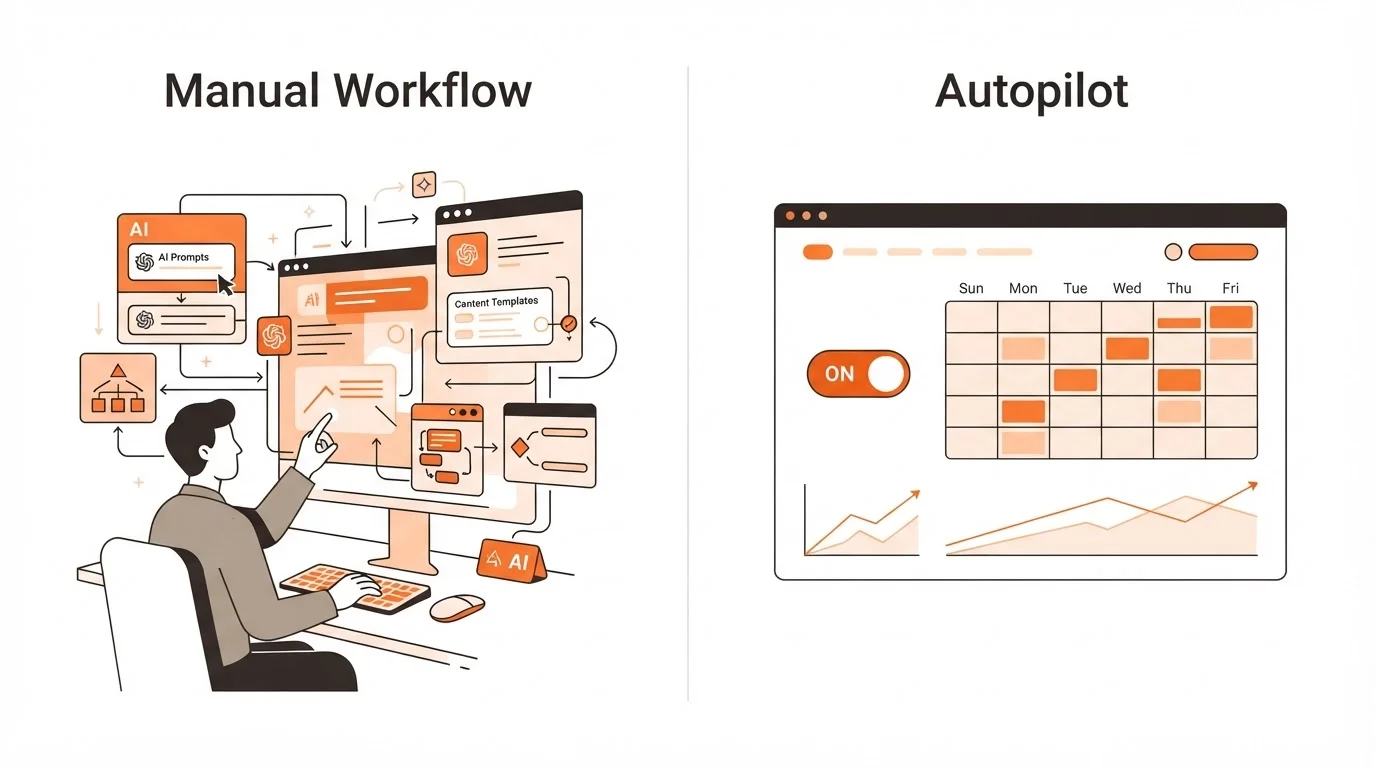
The primary decision for a SaaS founder is whether they want a tool to help their team write or a system that manages the blog for them. Writesonic operates on a manual, prompt-based workflow. Users must select a template, provide a detailed brief, review a generated outline, and then trigger the final draft. While this is significantly faster than human-only writing, it still requires a human driver for every piece of content, from initial research to the final click of the publish button.
In contrast, an autonomous platform like Blogged is built for founders who need to remove themselves from the content cycle entirely. Blogged handles the entire lifecycle—research, planning, writing, optimization, interlinking, and publishing—without requiring a manual prompt for every individual post. While Writesonic helps you write better drafts, Blogged functions as a self-sustaining asset that transforms product knowledge into discoverable content while you focus on building features.
Knowledge Management for Technical Accuracy
For product-led SEO to be effective, content must reflect your SaaS product specific facets. Generic AI writers often struggle with this, producing general summaries that lack technical depth. Writesonic attempts to address this via data-ingestion features, but because the platform is used for broad marketing across many channels, the output can sometimes feel like a generalist summary rather than an expert deep-dive.
Specialized platforms like Blogged prioritize deep product context through a dedicated Knowledge Engine. This feature lets users provide public product sources, uploaded documents, pasted links, or a written product description as the single source of truth for the AI. By organizing facts by product entity and facet, the platform ensures that every article sounds like it was written by a core team member who understands the specific value proposition of the product.
Comparison: Writesonic vs. Blogged
When evaluating product fit, consider the level of oversight your team can realistically provide. Writesonic offers flexibility for marketers who want granular control over every ad headline and social post. Blogged is optimized for founders seeking sustainable organic growth with minimal intervention.
| Feature | Blogged | Writesonic |
|---|---|---|
| Primary Use Case | Autonomous Product-Led SEO | Multi-channel AI Drafting |
| Workflow | Autopilot (Research to Publish) | Manual (Prompt & Edit) |
| Product Context | Entity-based Knowledge Engine | Brand Voice (Style Mimicry) |
| SEO Focus | Internal Links, SEO, and GEO | Keyword scoring & GEO Tracking |
| Integrations | WordPress, Webflow, Ghost, Next.js | WordPress, Zapier, Webflow |
| Team Access | Unlimited seats on all paid plans | Seat-based pricing on most plans |
Get practical updates on writesonic features and product fit
Receive new articles and practical insights by email.
SaaS Scalability and Pricing

Writesonic pricing is often segmented based on a combination of seats and word counts. Their Individual and Small Team tiers start at a lower entry point but scale up as more users are added. This seat-based approach can lead to unpredictable costs for growing teams that need to increase content output or involve multiple stakeholders in the review process.
Blogged offers predictable tiers tailored for SaaS founders. The Starter plan is $99 per month, the Growth plan is $169 per month, and the Ultra Growth plan is $229 per month. A significant differentiator is that every paid plan includes unlimited team seats. This allows founders, product managers, and marketers to collaborate on the content review process without incurring additional per-user fees, making it a highly scalable choice for growing startups.
Frequently Asked Questions
Q: Is Writesonic good for SEO?
Writesonic includes built-in SEO scoring and an Article Writer that analyzes top-ranking competitors. However, it requires manual steps for internal linking and publishing unless integrated with other third-party tools.
Q: Does Blogged replace the need for a writer?
Blogged functions as an autonomous content team. It handles research, writing, and optimization, though most founders perform a final review to ensure content matches their latest product updates before going live.
Q: Can I publish directly from Writesonic to my blog?
Writesonic offers one-click integration for WordPress. For other platforms like Ghost or Next.js, specialized solutions like Blogged provide smoother native publishing workflows and better handling of headless CMS structures.
Q: What is the main difference between Writesonic and Blogged for a founder?
Writesonic is a tool for writing copy across multiple marketing channels. Blogged is a dedicated autonomous system specifically for growing a SaaS blog through product-led content with minimal manual overhead.
Choosing between Writesonic and Blogged depends on your operational goals. If your team needs a high-speed assistant for varied tasks like social media and ad copy, Writesonic 80+ tools provide immense flexibility. However, if you are a SaaS founder looking to scale organic traffic through a blog that runs on autopilot with deep product knowledge, a specialized autonomous platform like Blogged is the more efficient path. By removing the need for manual prompting and management, you can focus on building your SaaS while your content engine works in the background.