
On this page
Organic growth is often described as the compounding interest of the software world, yet for most SaaS founders, it remains frustratingly out of reach. The goal is clear: you need faster content market fit SaaS to drive low-cost customer acquisition and build a defensible brand. However, the path to that fit is typically blocked by an operational tax that most lean teams cannot afford. The problem is not merely 'writing'—it is the relentless cycle of research, SEO optimization, internal linking, and consistent publishing while you are simultaneously trying to build a world-class product.
Content-market fit occurs when your educational and product-led content aligns perfectly with the search intent and problem-solving needs of your Ideal Customer Profile (ICP). Traditionally, reaching this point takes months or years of manual trial and error. You hire writers who don't understand your API, manage spreadsheets that quickly become obsolete, and spend hours in Slack threads correcting technical inaccuracies. This manual approach is fundamentally unscalable because it relies on human synchronization in a fast-moving development environment.
To compete in a modern search environment that rewards specific, useful content over sheer volume, founders must rethink their approach. You need a system that transforms your deep product knowledge into discoverable content without requiring you to become a full-time editor-in-chief. By adopting an autonomous strategy, you can compress the time it takes to find your best-performing content pillars and focus your energy back on product innovation.
The Context Gap: Why Generic Content Stalls SaaS Growth
Most SaaS blogs fail not because of a lack of effort, but because of a lack of context. When you outsource content to generalist writers or use generic AI prompts, the result is 'fluff' that fails to address the specific technical pain points of your users. SaaS customers are sophisticated; they are looking for precise answers to how your tool solves their unique problems. If your content doesn't reflect your product's specific limits, pricing, and features, you lose trust before the user even signs up for a trial.
This 'context gap' is the primary reason founders struggle to find content-market fit. To bridge this gap, you must stop treating your blog as a separate marketing silo and start treating it as a data-driven extension of your product. The foundation of a high-velocity content engine is a structured knowledge base. By centralizing your product description, ICP, positioning, and technical facts, you create a 'source of truth' that ensures every piece of content—from high-level industry guides to deep-dive feature comparisons—is authoritative and factually precise.
Achieving speed in this area requires a platform that can ingest this context once and reuse it across every article. Instead of briefing a writer every week on your new feature release, you update your centralized facts once. This ensures your blog stays synchronized with your development cycle, allowing you to capture search interest for new features the moment they go live, rather than weeks later when the market has already moved on.
Harnessing the Knowledge Engine for Factual Authority
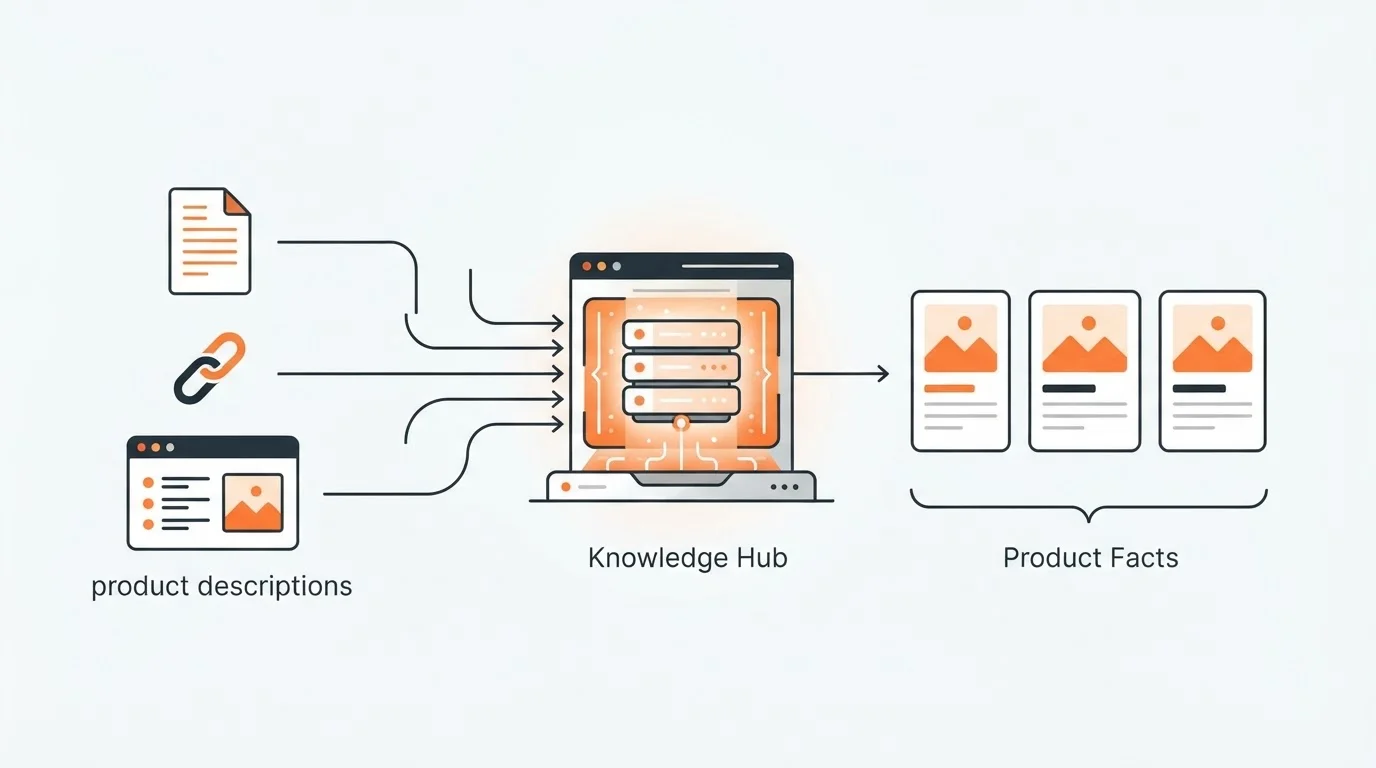
The breakthrough in autonomous blogging is the ability to move beyond vague LLM prompts and into structured data. A sophisticated Knowledge Engine allows you to organize facts by product entity and facet. This level of organization is what separates generic AI-generated text from high-authority, product-led content. When the system knows your specific pricing models, integration limits, and competitive differentiators, it can weave those details naturally into the narrative, providing genuine value to the reader.
Founders can feed this Knowledge Engine from multiple sources to ensure depth. Whether it is providing public product sources, uploading internal documentation, pasting links, or providing a written product description, the goal is to give the autonomous system the same depth of information as a senior product manager. This multi-source ingestion solves the 'hallucination' problem common with generic tools; because the content is grounded in a verified ledger of your own product facts, the output is technically sound.
Furthermore, this approach allows for freshness governance. As your SaaS evolves, your content needs to evolve with it. By managing your product context in a centralized hub, you can ensure that the autonomous platform is always drawing from the most recent data. This is critical for maintaining content-market fit in a competitive landscape where technical details change frequently. You no longer need to audit hundreds of old blog posts manually; you simply update the central fact, and the system reflects that knowledge in all future content.
Accelerating the Cycle with Full Autopilot Content Planning

Speed is the ultimate advantage in a startup. To achieve faster content market fit SaaS, you must be able to iterate on content directions as quickly as you iterate on code. A manual content calendar is a bottleneck because it requires constant human intervention to plan, assign, and approve topics. An autonomous approach removes this friction by utilizing a Full Autopilot system that manages the entire lifecycle of a blog post.
In this model, the founder defines the high-level strategy—what we call 'Content Directions.' The system then autonomously researches and plans the individual articles to fulfill that strategy, refilling a short Topic queue on a schedule you choose. This allows you to build a durable content plan that runs 24/7. While you are focused on shipping code or closing deals, the platform is busy identifying high-value keywords, planning outlines, and drafting content that targets different segments of your ICP.
This rapid iteration cycle provides a continuous stream of data. By monitoring which topics garner the most organic traffic and conversions, you can quickly identify which content pillars are resonating with your audience. If a particular niche—such as 'security for fintech SaaS'—shows high engagement, you can double down on that direction immediately. This compressed feedback loop is how you achieve content-market fit in record time, moving from 'guessing' to 'knowing' what your market wants to read.
Optimizing for the Future: Beyond SEO to GEO
The search landscape is undergoing a radical shift. While traditional Search Engine Optimization (SEO) remains vital, we are entering the era of Generative Engine Optimization (GEO). Users are increasingly turning to AI-driven discovery tools like Perplexity, SearchGPT, and Google’s AI Overviews to find answers. To stay ahead, your content must be optimized not just for keywords, but for AI citability and summarization.
Autonomous blogging platforms designed for SaaS founders integrate GEO principles into every article. By structuring content with clear technical facts, authoritative links, and specific product data, you make it easier for generative engines to identify your brand as a primary source of information. This dual-optimization approach expands your reach: you capture traditional searchers on Google and modern discoverers on AI platforms.
GEO-optimized content relies on the same factual integrity that drives your Knowledge Engine. When your articles are dense with verified product facts and contextual interlinking, they become high-value nodes in the global information graph. This ensures that when an AI engine answers a user's question about your niche, your product is the one it cites. This is the next frontier of content-market fit: being discoverable wherever the user decides to search.
Managing Visual Assets and Provenance at Scale
For a SaaS blog, visuals are not just decorative; they are functional. Readers need to see the product in action to understand its value. However, managing screenshots, videos, and diagrams is one of the most time-consuming aspects of blogging. Founders often resort to generic stock photos because they don't have the time to capture and organize product-specific assets. This hurts credibility and slows down the reader's journey to understanding your tool.
An autonomous platform solves this by providing a Product Asset Library. This private library allows you to manage a collection of high-quality product screenshots and videos with built-in review queues and visible approvals. When the autonomous writer generates an article, it doesn't just pull a random image from the web; it draws from your approved library of assets. This ensures that every image is relevant, on-brand, and technically accurate.
Furthermore, this system handles the critical details of alt text and provenance. By providing accessible descriptions and clear sourcing for every image, you improve your blog's SEO and ensure compliance with accessibility standards. This level of professional asset management allows a small team to produce content that looks and feels like it came from a massive enterprise marketing department, further accelerating the path to market trust and fit.
Workflow Comparison: Manual vs. Autonomous Content Cycles
To visualize the efficiency gains, consider the differences between a traditional manual workflow and an autonomous one powered by a Knowledge Engine.
| Process Feature | Manual SaaS Workflow | Blogged Autonomous Platform |
|---|---|---|
| Research & Topic Selection | Manual keyword tools & spreadsheets | Autonomous refill from approved directions |
| Content Production | Freelance writers & multiple briefings | Grounded drafting via Knowledge Engine |
| Factual Accuracy | Time-consuming manual fact-checking | Automated use of verified product facts |
| Internal Linking | Forgotten or manually searched links | Autonomous contextual interlinking |
| Visual Assets | Disorganized Slack files & stock photos | Private Asset Library with review queues |
| Privacy Compliance | Manual tag & consent management | Built-in DNT and GPC support |
| Scale Potential | Limited by headcount & budget | Scalable to any volume on autopilot |
Operational Integrity and User Trust
As a SaaS founder, trust is your most valuable currency. Your blog is often the first interaction a potential customer has with your brand, and it must reflect your commitment to privacy and data ethics. Scaling content volume should never come at the expense of user privacy. A professional autonomous blogging setup ensures that your growth engine is also a model of compliance.
Modern platforms allow you to connect approved tags with privacy controls such as Do Not Track (DNT), Global Privacy Control (GPC), and specific consent behaviors. This means your blog respects the privacy settings of your visitors automatically, without requiring constant oversight from your legal or engineering teams. In an era of GDPR and CCPA, having this built-in governance is not just a 'nice to have'—it is a requirement for any SaaS looking to sell to enterprise clients.
By integrating these ethical data practices into your organic growth strategy, you build a foundation of trust that accelerates the conversion process. When a user sees a professional, technically accurate, and privacy-conscious blog, they are much more likely to trust the software behind it. This alignment between marketing ethics and product quality is a key driver of long-term content-market fit.
Seamless Execution: Ghost and WordPress Integrations
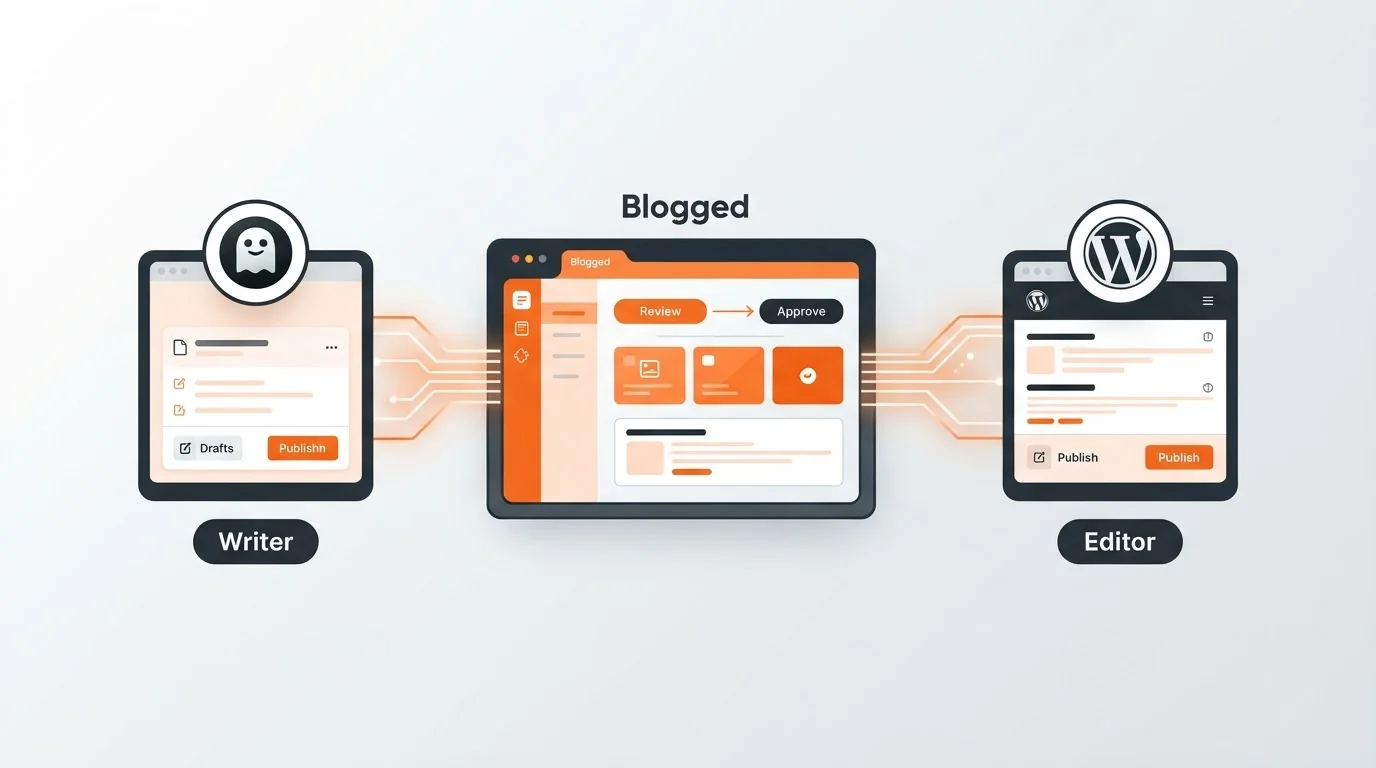
The final step in achieving faster content-market fit is eliminating the 'copy-paste' fatigue that often kills content momentum. A content engine is only effective if it can get in front of readers without creating more work for your team. This is why deep integrations with existing CMS platforms are essential. Whether you use Ghost or WordPress, your autonomous blogging platform should act as a seamless extension of your site.
For teams using the Ghost AI Blog Publishing integration, the workflow is remarkably efficient. The autonomous platform handles the research, writing, and interlinking, while Ghost serves as the high-performance rendering engine. This allows you to collect consented visits and track configured conversions for every article, giving you a direct line of sight from a blog post to a new SaaS signup. The integration is simple: you create a custom integration in Ghost, copy the Admin API key, and verify the connection.
Similarly, the WordPress AI Blog Publishing integration allows you to deliver articles directly to self-hosted sites via a secure publishing plugin and application password. You can review, approve, and publish from a single dashboard. This shift from 'writer' to 'editor' is the ultimate time-saver for founders. You spend minutes reviewing a high-quality draft instead of hours creating it, allowing you to scale your output without increasing your headcount.
Frequently Asked Questions
Q: How do I ensure the AI doesn't hallucinate technical details?
By using a Knowledge Engine grounded in your specific product facts. The system draws from your provided product descriptions, ICP, and uploaded documents, ensuring that all content is factually consistent with your real-world product limits and features.
Q: Does autonomous blogging mean I lose control over my blog?
Not at all. You retain final approval on every article. Depending on your plan, you can request 1 to 3 revisions per article to ensure the tone and technical depth perfectly match your brand voice.
Q: Can I involve my product team in the review process?
Yes. Plans include unlimited team seats, allowing your product managers, engineers, and marketers to participate in the review and approval process without incurring extra costs.
Q: How does this help with 'AI search' like Perplexity?
The platform uses Generative Engine Optimization (GEO) techniques to structure your content so it is easily discovered and cited by AI-driven answer engines, expanding your reach beyond traditional Google searches.
Q: What if I have a custom-built site instead of WordPress or Ghost?
You can use the Signed Webhook and Content API for AI blog publishing to integrate the autonomous engine with any custom setup, allowing you to manage content in one place and render it however you choose.
Get practical updates on faster content market fit saas
Receive new articles and practical insights by email.
Achieving faster content market fit SaaS is not about working harder on your blog; it is about working smarter with the knowledge you already have. Your product expertise is your greatest marketing asset, but it is currently locked inside your head or buried in internal documentation. Autonomous blogging provides the infrastructure to unlock that knowledge and turn it into a self-sustaining growth machine.
By automating the tactical execution of research, planning, and production, you free yourself to focus on the high-level strategy and product development that truly moves the needle. For founders who are tired of the manual content grind, the path forward is clear: stop writing and start building a knowledge-driven engine that works for you 24/7. The result is a blog that doesn't just exist, but actively drives the organic growth and market authority your SaaS deserves.