
On this page
For SaaS founders, content is the primary engine for organic growth, yet it remains one of the most significant operational bottlenecks. The challenge is rarely a lack of ideas; it is the sheer volume of time required to transform technical product knowledge into discoverable, search-optimized articles. Traditional content workflows are often fragmented, forcing founders to trade critical development hours for marketing drafts. By shifting to an autonomous blogging strategy, teams can eliminate production friction, allowing them to focus on building the product while organic traffic grows on autopilot. This guide breaks down the framework for increasing content production velocity and how to replicate these results across a modern SaaS tech stack.
The SaaS Content Bottleneck: Why Production Stalls
Most SaaS companies struggle to maintain a consistent publishing cadence because the traditional content lifecycle is inherently inefficient. According to the 2024 Orbit Media blogging survey, the average time spent writing a single blog post has risen to 3 hours and 51 minutes. For technical SaaS articles requiring deep research and SEO optimization, this figure often climbs even higher. When founders or lead engineers are the only ones with the technical depth to write, production becomes a zero-sum game between shipping features and shipping content.
To identify where your SaaS is losing speed, you must map the time spent on four critical phases:
- Technical Research: Translating feature updates into user-centric benefits.
- SEO & GEO Optimization: Ensuring content is discoverable by both traditional engines and AI-driven Generative Experience Optimization (GEO) environments.
- Internal Linking: Manually connecting new posts to relevant product pages and existing guides.
- Publishing & Formatting: Migrating drafts into a CMS and fixing layout issues.
When these tasks are handled manually, scaling production usually requires hiring more headcount—a costly and slow solution for early-stage companies. Achieving a meaningful jump in velocity requires moving away from manual scaling and toward autonomous systems.
Leveraging a Knowledge Engine for Technical Depth
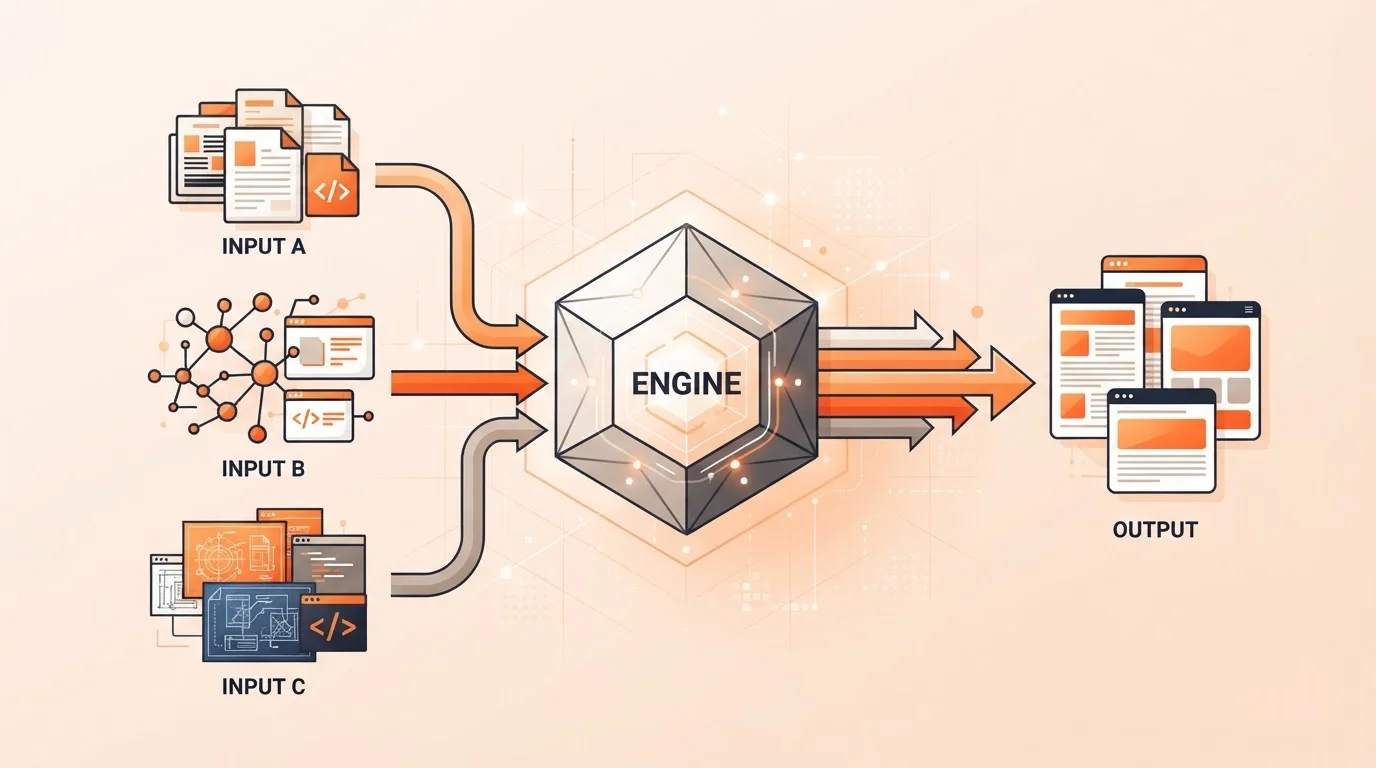
The primary barrier to high-speed content generation is the 'context gap.' Standard AI tools often produce generic 'fluff' because they lack access to your specific product logic. An autonomous approach solves this through a Knowledge Engine, which allows you to provide public product sources, uploaded documentation, and pasted links to ground the output in reality.
By organizing facts by product entity and facet, the system 'understands' the technical nuances of your SaaS. Unlike a freelancer who needs a fresh brief for every article, an autonomous platform retains this context across the entire publishing queue. This ensures that every generated post is factually grounded in your product’s specific terminology and use cases, removing the need for repetitive internal training.
Eliminating Friction with Direct CMS Integrations
A major production leak in SaaS teams is 'publishing friction'—the time wasted moving a draft from a document editor to the live site. To maximize velocity, your blogging platform must sync directly with your existing tech stack. For instance, using a WordPress AI Blog Publishing integration allows you to review articles in a central hub and deliver them instantly via a dedicated plugin and application password.
For teams using different architectures, the strategy remains the same:
- Ghost Integration: Manage creation and review while Ghost handles the reader experience via an Admin API key.
- Next.js Integration: Deploy content to a headless frontend while collecting consented visits and tracking configured conversions.
- Webflow CMS: Push polished drafts directly to your CMS collection to maintain design consistency without manual entry.
By centralizing the creation process in an autonomous hub while distributing to multiple environments, founders can effectively multiply their output without touching their CMS settings once the initial connection is verified.
The Autopilot Framework: From Planning to Refill
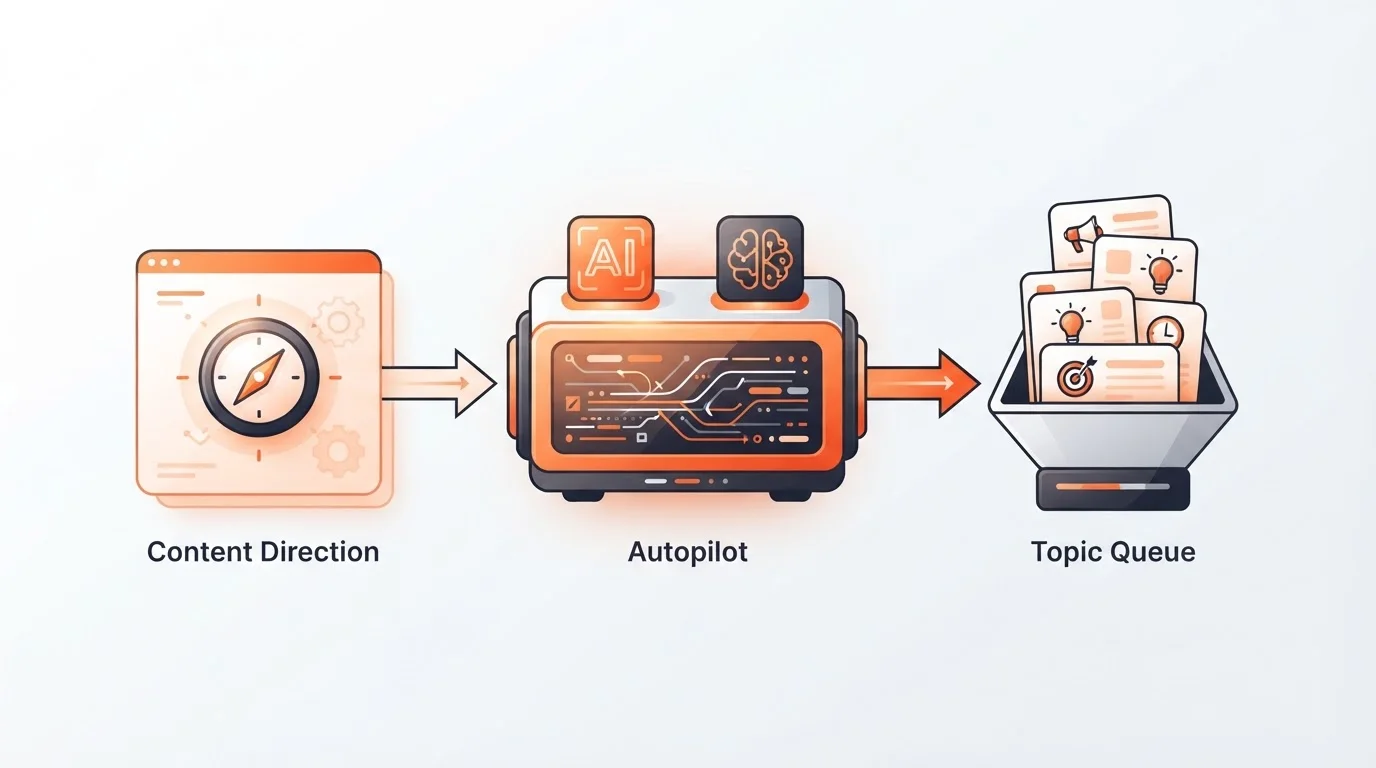
The most efficient way to maintain a high cadence is to move from manual planning to an 'Autopilot' model. Instead of debating what to write each week, founders can define high-level Content Directions. The system then manages the planning and research phases, refilling a short Topic queue automatically based on those approved directions.
This removes 'blank page syndrome' and ensures the blog never goes dark, even during intensive product launch cycles. Furthermore, because search and AI discovery now reward specific, useful content over sheer volume, the platform handles technical SEO tasks—like meta descriptions and internal linking—as part of the automated workflow. This allows the team to spend their limited time on high-value human-in-the-loop reviews rather than formatting tags.
Practical Advice for SaaS Founders Scaling Content
If you are looking to accelerate your content production, focus on systems rather than individual articles. Content velocity is a math problem: it is the sum of your planning speed, drafting speed, and publishing speed. If any of those are manual, you will eventually hit a ceiling.
First, stop 'writing' and start 'directing.' Your role should be to set the content strategy and approved product context while letting autonomous tools handle the syntax and optimization. Second, audit your integration friction; if moving a draft to your CMS takes more than 10 minutes, you are losing hours of productivity monthly. Finally, use platforms that track conversions and CTA outcomes directly. Faster production is only valuable if it drives measurable lead growth and homepage engagement.
Frequently Asked Questions
Q: How do I ensure autonomous content stays technical?
Use a Knowledge Engine to feed the system your actual product documentation, technical specs, and customer success links. This ensures the output uses your specific terminology rather than generic industry jargon.
Q: Does this work with custom SaaS tech stacks?
Yes. Beyond standard integrations like WordPress and Ghost, you can use a Content API and signed webhooks to deliver articles to custom Next.js or Webflow environments.
Q: Can my team review the content before it goes live?
Yes. Paid plans typically include unlimited team seats, allowing founders, engineers, and marketers to participate in the review and approval process to ensure quality assurance.
Q: What is a Topic queue refill?
It is a feature of Full Autopilot where the system generates new topics based on your approved Content Directions, ensuring you always have a fresh supply of drafts ready for review.
Scaling a SaaS blog doesn't have to be a resource drain. By shifting the heavy lifting of research, SEO, and publishing to an autonomous platform like Blogged, founders can maintain a product-led focus critical for growth. The path to dominating organic search is clear: automate the foundational process, ground the content in your unique product knowledge, and scale your velocity until you outpace the competition. Stop trading your time for drafts and start running your organic growth on autopilot.
Get practical updates on faster content production saas
Receive new articles and practical insights by email.