
On this page
Modern SaaS growth depends on mapping raw technical capabilities to the specific problems potential users are trying to solve. For most founders, this product knowledge exists in abundance but remains siloed in internal docs, developer notes, or support tickets. Transforming these internal insights into discoverable content is the most direct path to sustainable organic growth. By treating product knowledge as a structured asset rather than a series of one-off blog posts, companies can ensure their features are visible exactly when a user searches for a solution.
This transformation requires a system that does more than just write; it must extract, verify, and interlink product data to meet the demands of both traditional SEO and modern Generative Engine Optimization (GEO). Blogged facilitates this transition by automating the research, writing, and optimization loop, allowing founders to turn their technical expertise into a high-performing blog on autopilot. This guide examines how structuring internal data creates a competitive edge in discoverability.
The Hidden Value of Internal Product Documentation
SaaS founders often sit on a goldmine of content that never reaches their audience. Internal documentation and technical specifications are packed with the precise details search engines crave, yet these resources are frequently viewed only by the team. The disconnect lies in the translation: internal notes focus on the how, while searchers are looking for the why and the outcome.
To bridge this gap, you must treat your product details as discrete data points. Identify every key feature, the specific functionality it provides, and the tangible problem it solves. This granular approach allows you to build content that is both technically accurate and highly relevant to user intent. When you stop writing generic articles and start publishing content rooted in your actual product specs, you build a level of authority that competitors using generic AI tools cannot match.
Structuring Knowledge: The Foundation of Discovery
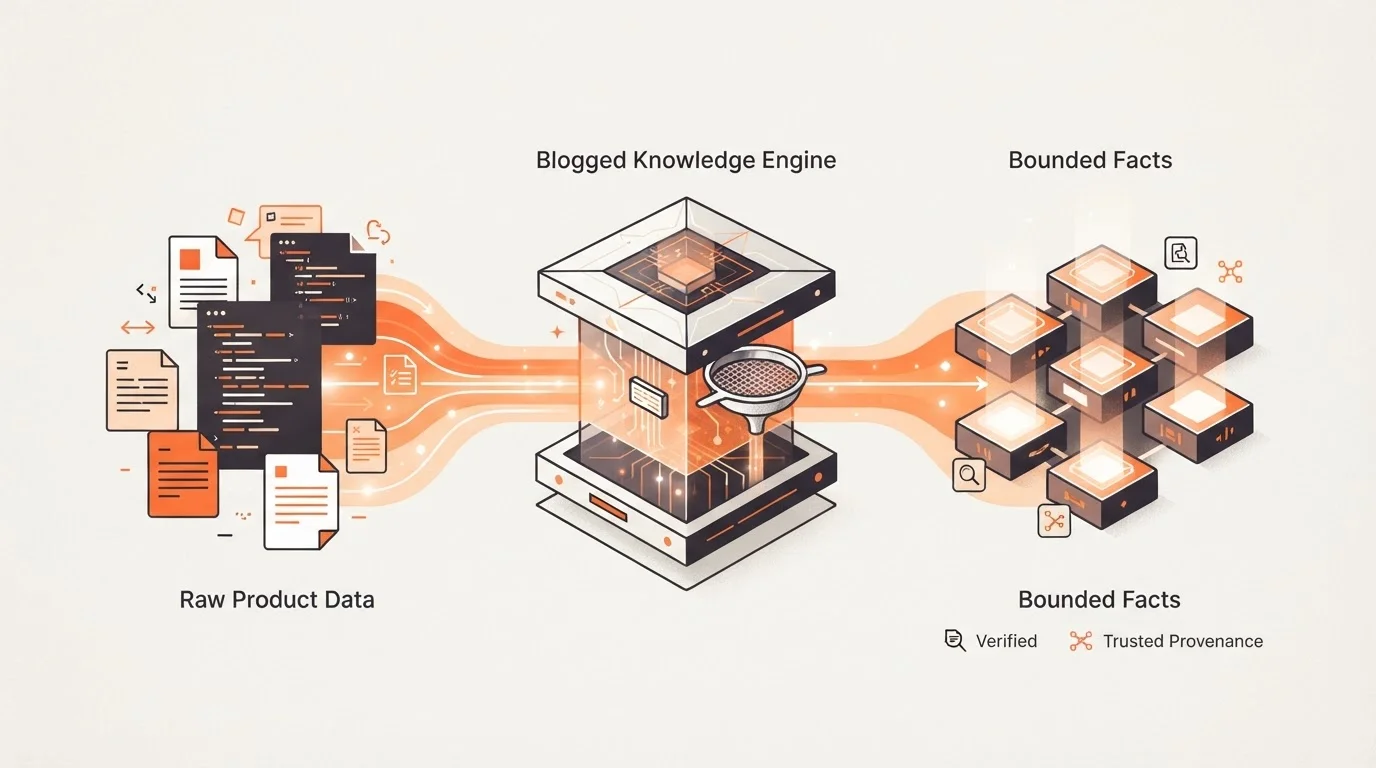
Scaling content creation starts with a reliable foundation of facts. Without structure, an automated blog risks producing hallucinations or outdated information, which is why a dedicated knowledge architecture is essential for SaaS. Organizing information into a verifiable format ensures that every claim made in your content is grounded in your product's current reality.
Blogged's Knowledge Engine for Autonomous SaaS Blogs manages this by organizing product, competitor, keyword, and source knowledge into bounded facts. Each piece of information is assigned a specific provenance and verification state. This system includes freshness and conflict controls, ensuring that if a feature changes or a price is updated, your content pipeline reflects that shift immediately. By maintaining this structured 'source of truth,' you eliminate the need to manually double-check technical details for every new post.
Granular Fact Organization
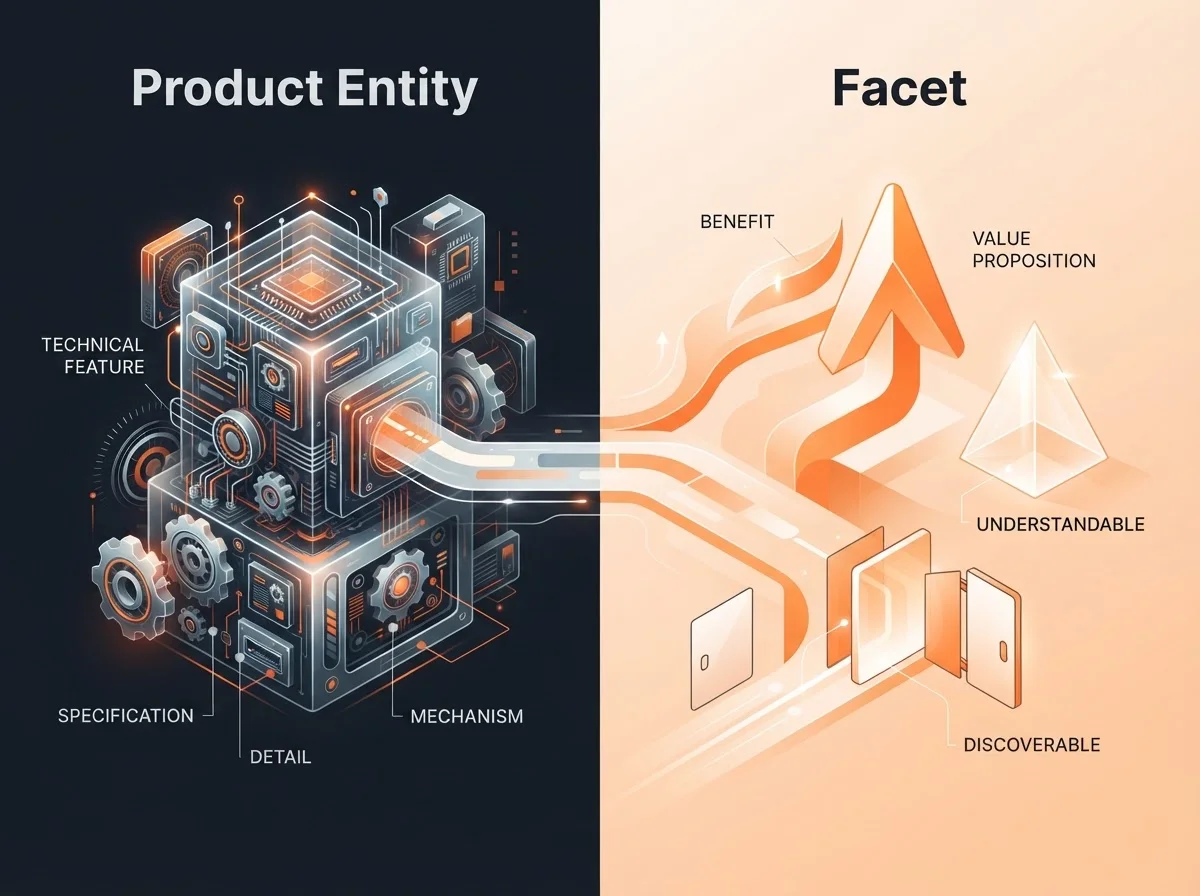
Effective data extraction requires breaking down complex features into their fundamental components. Blogged allows users to organize facts by product entity and facet, creating a semantic network of information. For example, instead of a broad description of a 'security module,' you can define specific facets like encryption standards, compliance certifications, and user access levels. This level of detail allows an autonomous system to generate content that answers highly specific long-tail queries, making your product more discoverable for niche technical searches.
Managing Information Freshness
In SaaS, stale content is a liability. A blog post describing an API endpoint that no longer exists doesn't just hurt SEO; it damages user trust. A robust knowledge system ensures that your content directions remain aligned with your latest product version. By centralizing your product description, ICP, positioning, and keywords, you allow the system to reuse specific context across your entire content library without risking inconsistency.
Automating the Pipeline Without Sacrificing Quality
The primary bottleneck for founders is sustaining a consistent publishing cadence while building the actual product. Automation is the only way to scale, provided it doesn't dilute the brand's voice or technical accuracy. The goal is to create a 'closed loop' where your product knowledge feeds directly into a planning and writing engine.
Blogged's Autonomous Blog Publishing for SaaS feature automates this loop by handling research, planning, writing, and optimization. Users can build a durable content plan and let the Full Autopilot refill a topic queue from approved Content Directions. This ensures that the blog stays active even when the founding team is focused on a major release, maintaining the organic momentum that SaaS companies need to survive the early stages of growth.
Distinguishing Planned and Continuous Workflows
Not all content serves the same purpose. A strategic guide for a product launch requires a different level of oversight than a weekly 'how-to' article. Blogged supports both workflows without treating them as identical. This allows for a mix of high-touch editorial pieces and high-volume autonomous growth content, all drawing from the same knowledge base to maintain a unified brand voice.
Get practical updates on transform product knowledge content
Receive new articles and practical insights by email.
The SEO Advantage: Turning Features into Benefits
Discoverability is more than just ranking for keywords; it is about providing the most useful answer to a user's query. This requires a shift from technical feature descriptions to benefit-driven narratives. By leveraging structured knowledge, you can illustrate exactly how a feature alleviates a user's pain point. If your internal data says 'supports 256-bit AES encryption,' your content should explain that this provides 'enterprise-grade security for sensitive client data.'
This translation is vital for Generative Engine Optimization (GEO). Modern AI-driven search engines prioritize content that demonstrates clear utility and specific, verified facts. When your blog is built on a foundation of unique product facets, it becomes a more authoritative source for these engines to reference, placing your SaaS at the center of the AI discovery landscape.
Internal Linking and Site Architecture
A blog should not be a collection of isolated islands. Proper internal linking helps search engines understand the hierarchy of your site and keeps users engaged for longer. Blogged's Internal Linking Tool simplifies this by verifying the destination of a link and explaining why it fits a specific section. Editors can insert or undo these links without leaving the post, ensuring that every new piece of content strengthens the overall authority of the blog site.
Scaling with a Single Source of Truth
One of the most efficient ways to use product knowledge is through repurposing. A single well-documented feature can serve as the basis for multiple content formats. According to recent observations on AI content transformation, companies can generate varied formats like buying guides, in-depth tutorials, and comparison reviews if competitor data is available in the knowledge base.
This approach turns a static knowledge base into a dynamic asset library. By having your product assets—such as screenshots and diagrams—managed within a private library that supports alt text and provenance, you can automatically place the right visuals in the right context. This significantly reduces the manual labor involved in content production, allowing a small team to produce the volume of a much larger marketing department.
Privacy and Governance in Content Creation

As you scale your content, maintaining compliance with global privacy standards becomes increasingly complex. Content discovery shouldn't come at the cost of user privacy or regulatory risk. SaaS blogs must be equipped to handle modern signals like Global Privacy Control (GPC) and Do Not Track (DNT).
Blogged addresses this by allowing users to connect approved tags with DNT, GPC, and specific consent behaviors. This ensures that as your discoverability grows, your blog remains compliant with user preferences. Furthermore, the platform supports team collaboration with unlimited team seats, allowing for technical experts, marketers, and legal reviewers to collaborate on the content pipeline without friction.
Frequently Asked Questions
Q: How does Blogged ensure technical accuracy in autonomous posts?
Blogged uses a Knowledge Engine that relies on bounded facts with provenance and verification states. By referencing your specific product documentation as the source of truth, the system avoids the generic hallucinations common in standard AI tools.
Q: Can I manage my own product screenshots in the blog posts?
Yes. Blogged includes a private SaaS product asset library where you can manage screenshots, approve them for use, and ensure they include proper alt text and provenance for better SEO.
Q: How does the content planning process work?
You can build a durable content plan and let the Full Autopilot refill a topic queue based on approved 'Content Directions.' This ensures a steady stream of relevant content without manual intervention for every topic.
Q: Does the platform support team collaboration?
Yes, Blogged includes unlimited team seats, allowing you to bring in technical reviewers or editors to ensure every piece of content meets your quality standards before it goes live.
Transforming internal product knowledge into discoverable content is a fundamental requirement for any SaaS looking to dominate its niche. By moving away from manual, inconsistent blogging and toward a structured, autonomous knowledge engine, founders can build a durable marketing asset that grows with the product.
Managing your product's facts, provenance, and internal linking doesn't just improve SEO—it establishes your brand as an authoritative leader in the eyes of both users and AI search engines. With the right systems in place, your product documentation stops being a static record and starts being the primary driver of your company's organic growth.