
On this page
The dilemma for every SaaS founder is the same: you need to drive organic growth to lower your customer acquisition cost (CAC), but your time is entirely consumed by product development and sales. Traditional content marketing is a resource drain that requires manual research, expensive freelance writers, and constant oversight. However, AI content automation has evolved beyond simple text generation into autonomous systems that handle the entire content lifecycle.
The most effective way to scale content without hiring a team is to move from a manual writing workflow to a strategic editorial approval workflow. By leveraging specialized AI systems that ground their output in your specific product facts, you can drastically reduce the time spent on production while maintaining a consistent weekly cadence. This guide explores seven practical AI content automation hacks designed to help SaaS founders build a growth engine on autopilot.
1. Ground Your AI in a Centralized Knowledge Engine
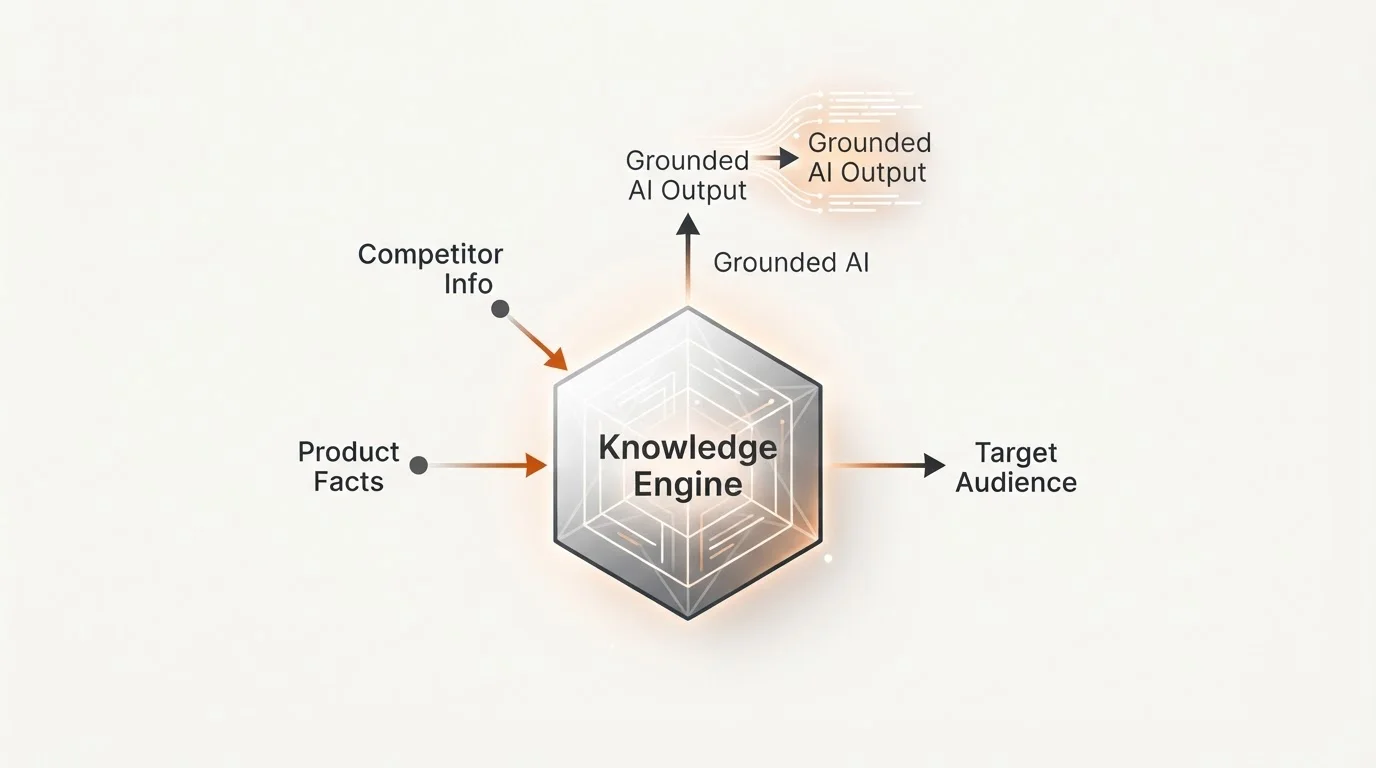
The most common failure in AI content is hallucination or generic output. This happens because most general-purpose AI tools lack specific context about your product's unique features, pricing, and competitive positioning. When an AI doesn't have a source of truth, it fills the gaps with generic industry fluff that provides zero value to your readers. Generic content fails to convert because it doesn't demonstrate how your specific software solves a user's problem.
To solve this, implement a centralized knowledge base that acts as the "brain" for your content. Blogged’s Knowledge Engine allows founders to organize product descriptions, ideal customer profiles (ICPs), and competitive facts into bounded data points. This ensures that every piece of content, from a technical how-to guide to a comparison page, is grounded in verified truth with full provenance. Instead of re-explaining your product to an AI for every new draft, you create a durable truth engine that the AI reuses across all content, ensuring brand consistency and factual accuracy without manual editing.
Moving from Bounded Facts to High-Converting Copy
A knowledge engine doesn't just store information; it manages verification states and freshness. For a SaaS founder, this means you can update a pricing limit or a feature name once, and the autonomous system ensures future content reflects that change. By organizing facts by product entity and facet, you avoid the trap of outdated information appearing in your blog, which is a common risk when scaling content through manual freelance writers.
2. Automate the Loop from Research to Brief
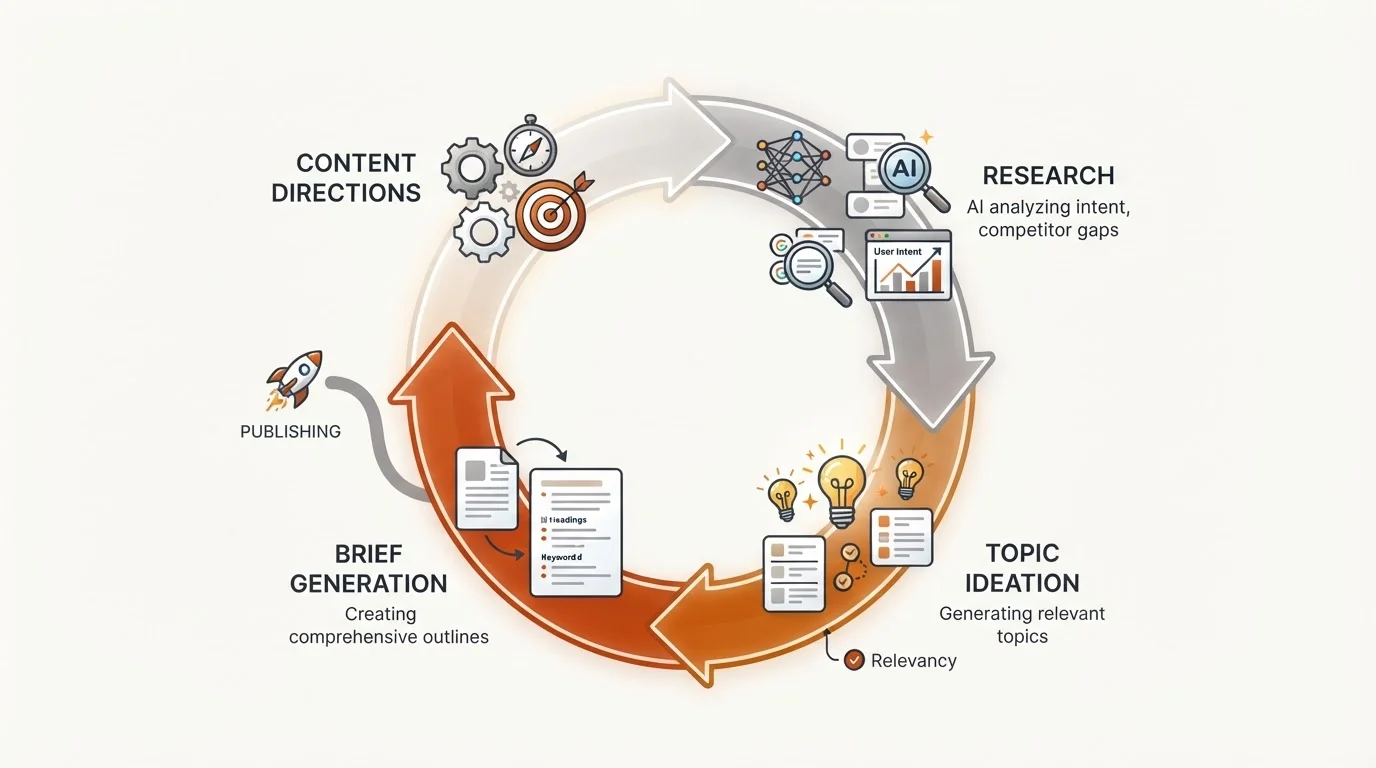
Founders often spend hours in SEO tools trying to find the perfect keyword, only to realize the topic doesn't actually align with their product's value proposition. Efficient automation shifts this burden to an autonomous loop. Instead of manually searching for keywords and then drafting outlines, use a system that handles the research and planning stages concurrently. This eliminates the 'blank page' problem and ensures every post has a strategic purpose.
By defining your Content Directions—such as "Competitor Alternatives" or "Feature Deep-Dives"—you can let an autonomous system like Blogged handle the search intent analysis and topic ideation. The hack here is to move from reactive blogging to a durable content plan. This system can automatically verify the destination of internal links and ensure the topic fits your strategic goals before a single word is written. This allows you to focus on high-level strategy while the AI handles the granular task of refilling the topic queue.
3. Adopt a Strategic Approval Workflow
Scale doesn't come from writing; it comes from approving. To scale without hiring, SaaS founders must adopt a model where the human role is limited to strategic gatekeeping. This involves a clear three-step process: review the brief, approve the draft, and let automation handle the rest. This transition is essential for founders who want to maintain editorial control without getting bogged down in grammar and formatting.
This workflow minimizes operational drag—the time spent wondering if a draft is ready or if a call-to-action (CTA) was included. By using an autonomous platform, you can set the publishing cadence once and act as the final editor. This ensures that quality control remains in human hands while the repetitive tasks of formatting, metadata generation, and publishing are entirely automated. It transforms the founder from a bottleneck into a high-leverage decision-maker who simply guides the machine.
4. Prioritize Bottom-of-Funnel (BOFU) Content First
A common mistake is chasing high-volume Top-of-Funnel (TOFU) traffic that rarely converts. For a lean SaaS team, the highest return on investment comes from content that targets prospects already evaluating solutions. These include "Best [Software Category]" lists, "[Competitor] Alternatives," and comparison pages. These readers have high intent and are much closer to making a purchasing decision.
Use AI to identify these high-intent gaps in your competitor's content. AI tools can analyze competitor websites to find subtopics where their content lacks depth. By focusing your automated content plan on these BOFU topics, you ensure that your organic growth efforts directly influence lead generation and trial signups. Automation allows you to produce these highly specific, data-rich comparison pages at a scale that would be impossible for a single human writer to maintain while building a product.
Get practical updates on ai content automation hacks
Receive new articles and practical insights by email.
5. Scale Product Visuals via Asset Review Queues
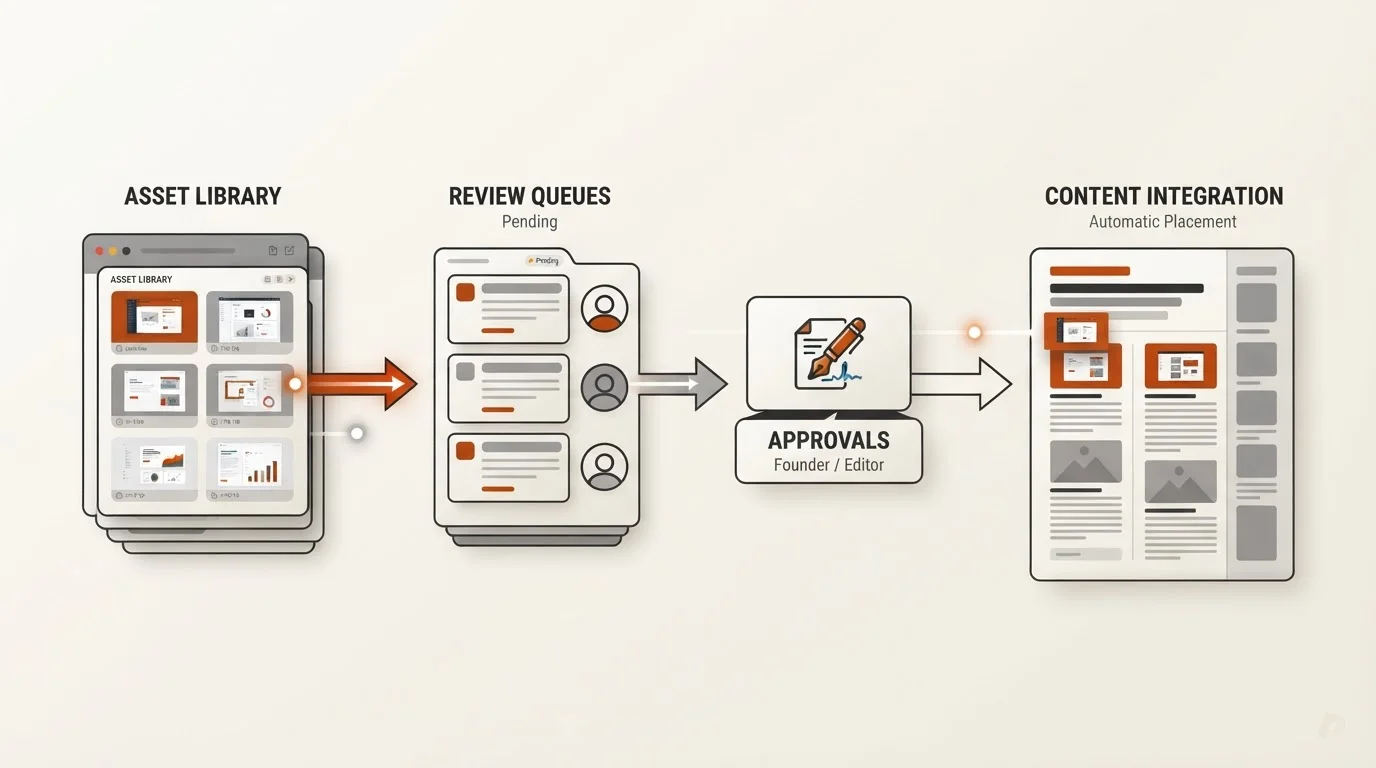
Product-led content requires high-quality visuals, yet managing screenshots and product assets is a notorious bottleneck. A professional SaaS blog needs a structured way to handle private product assets with proper metadata and alt text for search engine optimization. Manually uploading images for every post is a friction point that often leads to blogs being published without helpful visuals.
Instead of hunting through desktop folders or Slack threads, use an organized asset library. Blogged provides a feature for managing private SaaS product assets with review queues and visible approvals. This allows you to manage product screenshots, logos, and diagrams in bulk. You can even automate the generation of alt text and the safe archiving of old assets. This hack ensures that your AI-generated articles are visually rich and on-brand without you having to manually insert and optimize every image for every post.
6. Automate Semantic Internal Linking
Internal linking is a powerful SEO lever that many founders neglect because it is tedious. Proper internal linking distributes authority across your site and helps search engines understand your site's hierarchy. However, doing this manually requires remembering every post you’ve ever written and finding natural ways to connect them. As your blog grows to dozens or hundreds of posts, this becomes humanly impossible to manage perfectly.
AI content automation can solve this by verifying link destinations and identifying the best sections for an internal link based on semantic relevance. Blogged's internal linking tool shows the editor exactly why a link fits a specific section and allows for one-click insertion or undo. This ensures that every new article automatically strengthens the SEO of your entire blog, creating a web of interconnected content that keeps readers on your site longer and drives them toward conversion pages.
7. Maintain a Strict Weekly Publishing Cadence
Consistency is the foundation of organic growth. Search engines and AI discovery tools reward sites that provide fresh, reliable information. A recommended approach for SaaS founders is to publish one post per week without exception. This generates the necessary data to understand what resonates with your audience and builds a predictable traffic ramp over time.
Automation is the only way to sustain this without burning out. By letting an autonomous system refill your topic queue from approved Content Directions, you ensure your blog never goes silent. This "set it and forget it" approach allows you to track key performance indicators like lead growth and reader feedback in real-time, using the data to refine your content strategy for the following month. You aren't just publishing; you're building a data-driven growth engine that functions as a 24/7 salesperson.
Frequently Asked Questions
Q: Can AI content really rank on Google?
Yes. Google rewards helpful, high-quality content regardless of how it was produced. The key is to ensure your AI is grounded in your specific product knowledge and that you maintain a human-in-the-loop for final quality approval to avoid generic output.
Q: How much time can I save with content automation?
For a founder, moving to an autonomous workflow often means shifting from spending 10 hours a week on a single blog post to spending approximately 30 minutes on strategic approval and oversight.
Q: Do I still need to hire an editor?
For lean SaaS teams, an autonomous platform like Blogged removes the need for a full-time editor. The founder or a marketing lead can handle the strategic approval of briefs and drafts, while the platform manages the tactical execution of SEO and publishing.
Q: What is the best way to start with AI automation?
Identify your biggest bottleneck first. If you struggle with ideation, automate the research loop. If you struggle with consistency, implement an autonomous topic queue and a weekly publishing schedule.
Start Scaling Your SaaS Growth
Scaling content doesn't have to mean scaling your headcount. By moving from manual creation to an autonomous publishing system, you can build a sustainable organic growth engine that runs in the background while you focus on building your product. The goal isn't just to publish more, but to publish smarter by using product-led insights that drive actual conversions.
Identify the biggest bottleneck in your current content workflow today—whether it's research, writing, or interlinking—and implement one of these hacks to regain your time. Blogged is designed specifically for this journey, offering an autonomous SEO and GEO platform that transforms your product knowledge into discoverable content on autopilot. With features like the Knowledge Engine and Autopilot planning, you can finally turn your blog into a high-performance sales channel without the overhead of a large team.