
On this page
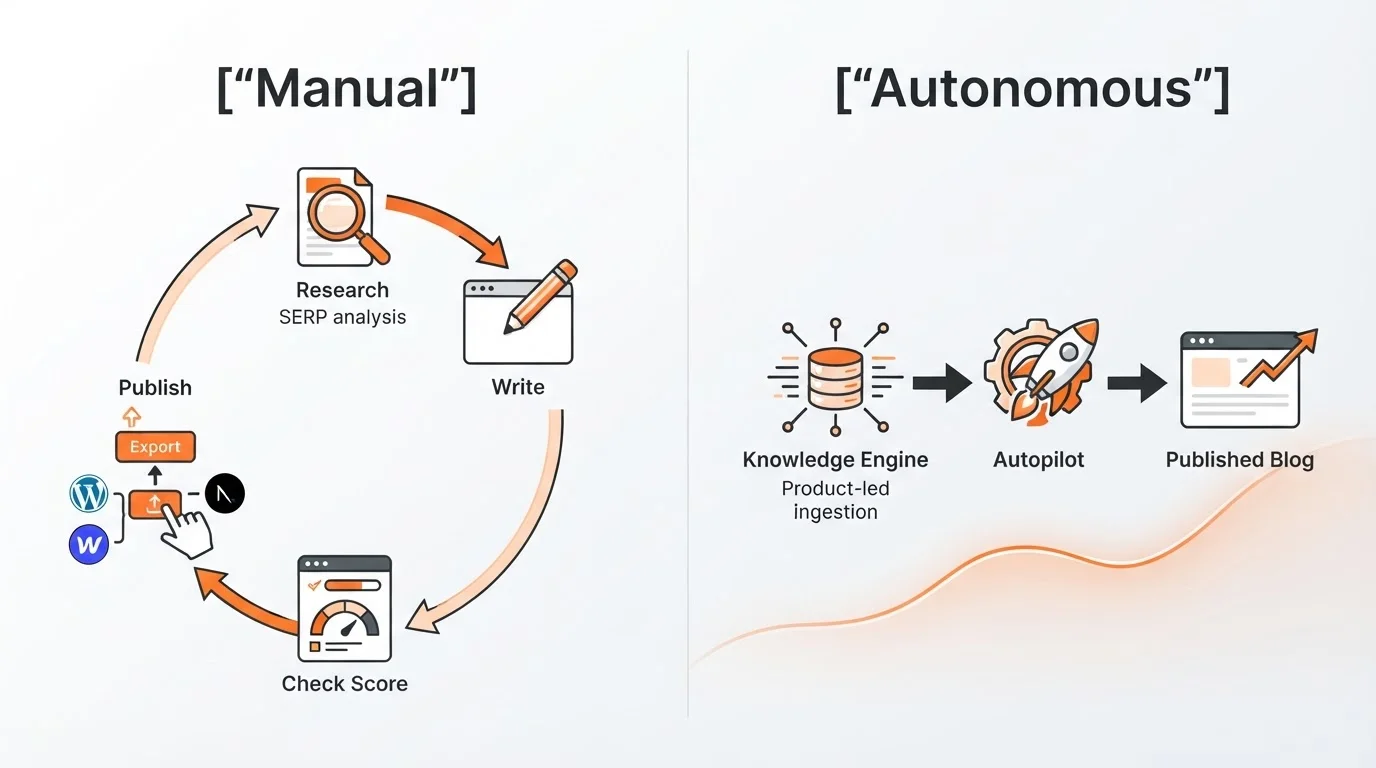
Surfer SEO is a content intelligence platform designed to take the guesswork out of on-page optimization. By analyzing top-ranking pages for specific keywords, it provides a data-driven roadmap of the terms, headings, and word counts necessary to compete in search results. For SaaS founders, however, the decision to use Surfer SEO involves a fundamental choice between two operational models: manual optimization or autonomous growth. While Surfer excels at granular content refinement, its workflow requires significant human intervention, making it a distinct alternative to fully autonomous platforms like Blogged that prioritize hands-off execution.
Data-Driven Optimization: Surfer SEO Core Capabilities
Surfer SEO operates on a data-first philosophy, reverse-engineering Search Engine Results Pages (SERPs) to identify patterns in successful content. The software focuses on technical compliance, ensuring your article aligns with the structural expectations of search engine algorithms. It serves as a sophisticated co-pilot for writers who want to ensure their work is mathematically optimized for visibility.
The Content Editor and NLP Checklist
The flagship feature of the platform is the Content Editor, which provides a real-time Content Score as you write. It utilizes Natural Language Processing (NLP) to suggest specific keywords and entities that search engines expect to see based on current leaders. A writer typically begins by entering a target keyword; Surfer then generates a checklist of secondary keywords, recommended word counts, and heading structures. This is highly effective for technical soundness, but the responsibility for drafting and nuance remains with the human user.
Strategic Planning with Topical Maps
Beyond individual articles, Surfer offers Keyword Research tools that group related search terms into content clusters. This helps users build topical authority by identifying gaps in their current coverage. The mapping feature visualizes these clusters, allowing SEO managers to plan content cycles in advance. While these tools provide the strategy, the execution—including writing, interlinking, and publishing—must still be handled manually.
The Operational Trade-Off: Surfer’s Manual Workflow
For a founder building a product, the primary trade-off when using Surfer SEO is manual control versus operational efficiency. Even with the introduction of Surfer AI to generate drafts, the process remains labor-intensive. A typical session involves researching a keyword, customizing a generated outline, reviewing a draft against an NLP checklist, and manually exporting that content to a CMS like WordPress or Ghost. For a lean team, this can become a significant weekly bottleneck that diverts focus from product development.
Evaluating Product Fit: When Manual Control Costs Too Much
Determining product fit for Surfer SEO depends heavily on your team's existing resources and your long-term organic strategy. It is rarely a 'set and forget' solution, which makes it better suited for specific organizational structures rather than lean, product-focused teams.
When Surfer SEO is the Right Choice
Surfer SEO is a powerhouse for SaaS companies that already employ dedicated content writers or SEO specialists. When a professional writer is already producing content, Surfer provides the guardrails to ensure their creativity does not drift away from what the algorithm demands. It is ideal for teams that want granular control over every paragraph and brand voice nuance, and who have the 10+ hours a week required to manage the tool effectively.
Get practical updates on surfer seo features and product fit
Receive new articles and practical insights by email.
When Blogged is the Strategic Alternative

SaaS founders who need their blog to happen consistently while they focus on code and customers often find a better fit in autonomous platforms. Unlike Surfer, which optimizes based on what competitors are saying, Blogged utilizes a Knowledge Engine to transform your unique product documentation, uploaded files, and pasted links into product-led content. It manages the research, writing, internal linking, and publishing on Autopilot, providing a hands-off organic growth engine that does not require a full-time content manager.
Comparison: Manual Scoring vs. Autonomous Management
| Feature | Surfer SEO | Blogged |
|---|---|---|
| Primary Goal | On-page optimization & scoring | Autonomous blog management |
| Workflow | Manual / Assisted | Fully Autonomous (Autopilot) |
| Knowledge Base | Competitor-based (SERP) | Product-led (Knowledge Engine) |
| Publishing | Manual Export / Plugin | Automated to WordPress, Webflow, Ghost, Next.js |
| Internal Linking | Manual suggestions | Autonomous interlinking engine |
| Pricing (Entry) | $99/mo (Essential) | $99/mo (Starter) |
| Team Seats | Limited by plan | Unlimited team seats |
| Ideal User | SEO Specialists & Agencies | SaaS Founders & Lean Product Teams |
The Shift to Product-Led Autonomy
For many modern SaaS companies, the goal of a blog is not just to rank for generic keywords, but to demonstrate product value. Surfer SEO's competitor-led approach can sometimes lead to 'me-too' content that mirrors what everyone else is writing. Autonomous solutions like Blogged change the dynamic by using your actual product knowledge as the foundation. This ensures that every post published to your WordPress, Webflow, or Ghost site is specifically tailored to your software's unique features and user benefits.
Frequently Asked Questions
Q: Does Surfer SEO write the content for you?
Surfer AI can generate drafts, but it is an assisted process. You must provide the keyword, customize the outline, and manually review the output to ensure it meets the NLP requirements.
Q: How does Blogged differ from Surfer AI?
Surfer AI writes a single optimized article that requires manual handling. Blogged runs the entire SaaS blog on autopilot, handling research, writing, internal links, and publishing of product-led content every week.
Q: Is Surfer SEO worth it for a solo founder?
Only if that founder plans to do the writing themselves. If the goal is to free up time to focus on building the product, an autonomous platform is typically a better fit for growth.
Q: Can I use both tools together?
Yes. Some teams use an autonomous platform like Blogged to handle the bulk of their content and Surfer SEO to manually audit high-value landing pages for granular technical optimization.
Surfer SEO remains a premier choice for those who want to be deeply involved in their SEO craftsmanship. Its data-driven insights are invaluable for professional writers. However, for SaaS founders whose time is best spent on product development, the manual overhead of a tool like Surfer can be a hurdle. The right choice depends on whether you want to be the driver or the passenger. If you prefer your organic growth to run in the background, autonomous platforms that link directly to your CMS and use your product knowledge are the modern solution for scaling.