
On this page
The paradox of the modern SaaS startup is simple: you are encouraged to ship fast, yet the marketing engines required to sustain that growth are often notoriously slow. When a product team launches three new features in a month, but the content team can only produce one high-quality blog post in the same timeframe, a 'content debt' begins to accumulate. This debt is not just a missed SEO opportunity; it is a failure to communicate value to your users at the exact moment they are most likely to convert. For founders, the challenge is transforming deep product knowledge into discoverable, product-led content without sacrificing their focus on building the product itself.
Scaling content production to match feature velocity requires a fundamental shift from manual writing to autonomous systems. Instead of treating every blog post as a bespoke project involving creative briefs and long feedback loops, modern SaaS teams are moving toward an autonomous SEO and GEO (Generative Engine Optimization) strategy. This approach allows a small team to maintain a consistent publishing cadence, ensuring that every innovation is supported by a dedicated article, a 'how-to' guide, or a use-case deep dive the moment it goes live.
The SaaS Content Bottleneck: Why Manual Production Fails at Scale
Many SaaS startups begin with a manual content process that works well for one post a month but breaks under the pressure of a weekly release cycle. This manual process is often grueling. A founder or content manager must interview a product manager, write a creative brief, wait for a freelancer to return a draft, edit that draft for technical accuracy, optimize it for SEO, and manually format it for the CMS. By the time an article about 'Feature A' is ready, the engineering team has already shipped 'Feature B' and is halfway through 'Feature C.'
This delay creates three specific business risks that can stifle a startup's trajectory. First, valuable updates remain underexposed, buried in technical changelogs rather than highlighted in search-optimized guides. Second, organic growth stagnates because the site lacks the topical authority needed to rank for competitive industry keywords. Finally, support volume increases because users are unaware of new self-service capabilities designed to solve their problems. To overcome these risks, SaaS founders need a system that can turn product knowledge into discoverable content at the speed of their code commits.
The Strategy: Product-Led Content Through Autonomous Blogging
Traditional content agencies are often too expensive for the high volume required by a scaling SaaS, and they frequently lack the technical depth to write accurately about niche software without constant hand-holding. Generic AI tools also fall short; while they can generate text, they often fail to 'know' the product or understand how specific features map to user pain points. This is where an autonomous platform like Blogged changes the dynamic for founders.
Blogged acts as an autonomous SEO and GEO blogging partner that handles research, planning, writing, optimization, interlinking, and publishing. This allows the team to shift from being creators to being strategists. Instead of spending hours drafting, the team focuses on feeding the platform the right product knowledge and approving the final output. This ensures that the blog remains an engine for organic growth rather than a neglected archive.
Leveraging a Knowledge Engine for Factual Accuracy
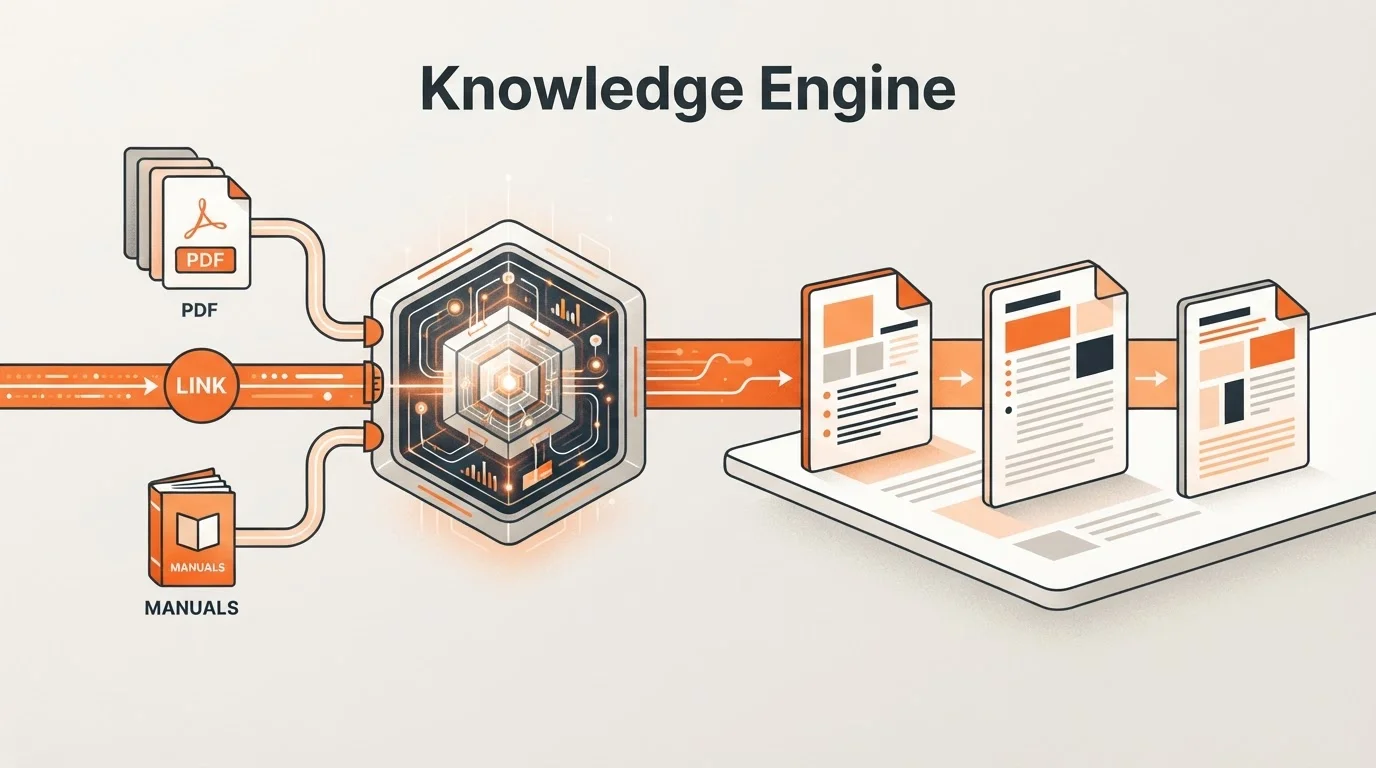
The most significant hurdle in scaling SaaS content is maintaining factual accuracy. A generalist writer rarely understands the nuances of a proprietary API or a specific workflow. The Blogged Knowledge Engine for Autonomous SaaS Blogs solves this by allowing users to provide public product sources, uploaded documents, pasted links, or a written product description. This means the autonomous writer starts every article with a deep, verified understanding of the software.
By ingesting your actual documentation, the platform transforms raw data into high-value, product-led content. This ensures that every article published is not just SEO filler, but a technically sound resource that helps users understand the value of your new features. It bridges the gap between the technical reality of the product and the educational needs of the potential customer.
Integrating Autonomous Content with Your Tech Stack
For content automation to be truly effective, it must be frictionless. Founders need a system that delivers articles directly to their audience without manual formatting or technical overhead. Blogged provides a range of integrations that allow SaaS teams to maintain their existing site architecture while automating the delivery layer. These integrations are designed to handle the heavy lifting of publishing so that founders can focus on building.
Whether your marketing site is built on a traditional CMS or a modern headless framework, the ability to collect consented visits and track conversions directly through these integrations is vital. This data-driven approach ensures that your content strategy is tied directly to your business goals, providing a clear view of how your blog contributes to user acquisition and feature adoption.
Publishing Workflows for Ghost and Webflow
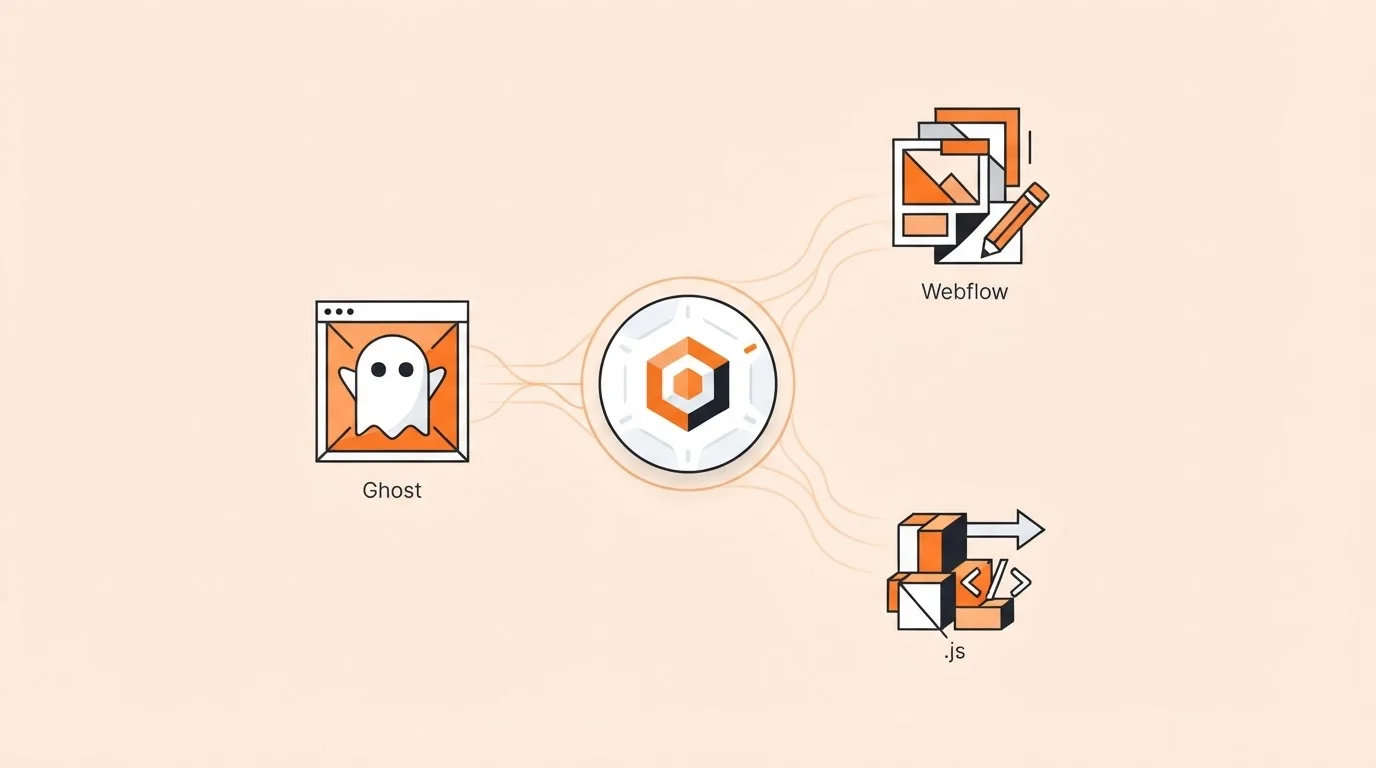
For teams using Ghost, the Ghost AI Blog Publishing integration manages content creation and review phases while Ghost remains the frontend engine that renders the reader experience. Users can create a custom integration in Ghost, copy its Admin API key, and verify their Ghost connection in Blogged to start the automated flow. This allows for a seamless transition from a verified draft in Blogged to a live post in Ghost.
Similarly, the Webflow CMS AI Blog Publishing integration allows teams to automate the population of their CMS collections. This ensures that every new feature launch is supported by a live, optimized page without a developer needing to touch the Webflow Designer. Both integrations support the collection of consented visits and configured conversions for verified articles, making it easier to measure the impact of your scaling efforts.
WordPress and Custom Framework Implementations
If your SaaS marketing site relies on a self-hosted WordPress environment, the WordPress AI Blog Publishing integration provides a direct connection. By using the Blogged Publishing plugin and an application password, teams can create and review articles in the Blogged editor and then deliver them directly to their WordPress website. This eliminates the need for manual copy-pasting and reformatting.
For teams utilizing modern frontend frameworks like Next.js, the Next.js AI Blog Publishing integration ensures that autonomous content can be pulled into a custom-built site. This allows founders to maintain the performance benefits of a static or server-rendered application while still benefiting from automated production and the ability to track user engagement through consented visits.
Collaborative Quality Control: Team Seats and Revisions

A common concern with automation is the potential loss of editorial control. SaaS founders address this by leveraging collaborative features that keep humans in the 'editor-in-chief' role. Because every paid plan on Blogged includes unlimited team seats, founders can bring product managers and marketers into the review loop without additional costs. This ensures that the technical authority remains high while the production volume scales.
Product managers can quickly verify the technical accuracy of a generated draft, while the content manager focuses on brand voice and strategic internal linking. Depending on the complexity of the content, teams can utilize different revision limits. Plans include options for 1 revision per article for high-volume updates or up to 3 revisions per article for deeper whitepapers and pillar content. This structure ensures that while the research and drafting are autonomous, the final polish reflects the team's expertise.
Frequently Asked Questions
Q: Does autonomous blogging negatively impact SEO rankings?
No, it is designed to enhance them. By focusing on both SEO and GEO (Generative Engine Optimization), platforms like Blogged structure content to satisfy both traditional search algorithms and modern generative AI models. The key is providing high-quality, product-specific data via the Knowledge Engine to ensure the output is useful and unique.
Q: How much time can a founder expect to save?
While specific savings vary, automating the research, drafting, and publishing phases typically eliminates hours of manual work per article. This allows founders to redirect their energy from managing writers and CMS formatting to high-level growth strategy and product development.
Q: Can autonomous blogging platforms handle complex technical documentation?
These platforms are designed for product-led blog content rather than raw documentation. However, the Knowledge Engine can ingest technical docs to create accessible, benefit-driven articles that explain features to a broader audience while linking back to the primary technical resources.
Q: Is the content completely human-free?
No. The platform handles the heavy lifting of production, but humans remain in the review and approval loop. This ensures that every piece of content published meets the brand's standards for voice, tone, and technical accuracy.
Get practical updates on saas content scaling new features case study
Receive new articles and practical insights by email.
Scaling content production is no longer a luxury for SaaS startups; it is a requirement for maintaining relevance in a fast-moving market. By adopting autonomous blogging, founders can ensure that their marketing efforts are as agile as their development cycles. This approach eliminates the 'content debt' that often plagues growing companies, allowing every new feature to reach its full potential through search and AI discovery.
Tools like Blogged provide the infrastructure needed to transform product knowledge into a continuous stream of discoverable content. Whether you are publishing to Ghost, WordPress, or a custom Next.js site, the ability to automate the research-to-publishing pipeline empowers you to focus on what you do best: building a world-class product. The dream of a blog that drives organic growth on autopilot is now a functional reality for SaaS founders worldwide.