
On this page
Organic growth is the lifeblood of B2B SaaS, yet it presents a fundamental paradox for most founders. In the early stages, you are the only one who truly understands the nuances of your product, the specific pain points of your users, and the gaps in the competitive landscape. However, the exact time required to translate that expertise into a high-ranking blog is the time you need to be spending on your product roadmap. This conflict often leads to a 'stagnant blog'—a handful of posts published months ago that fail to move the needle on domain authority or lead generation.
Autonomous blogging offers a solution to this bottleneck by shifting the focus from manual writing to strategic knowledge management. By leveraging a platform like Blogged, founders can transform their existing technical documentation and product insights into a self-sustaining content engine. This approach doesn't just produce words on a page; it builds a product-led content strategy that aligns with how modern search engines and AI discovery tools evaluate authority.
This guide breaks down the blueprint for achieving significant organic traffic growth through automation. By grounding AI in your unique product facts and integrating it directly into your CMS, you can build a discovery engine that works as hard as your software does.
The SaaS Growth Bottleneck: The High Cost of Manual Content
For many startups, the content production cycle is a series of broken starts. A founder might commit to writing one article per week, only to have that commitment derailed by a critical bug or a major feature launch. When content is tied to manual labor, consistency suffers. Search engines prioritize 'freshness' and topical authority, meaning an irregular publishing schedule often leads to a plateau in keyword rankings and traffic.
Beyond the time investment, there is a significant financial trade-off. Outsourcing to traditional content agencies involves heavy management overhead and high monthly retainers. Furthermore, external writers often struggle to grasp the technical intricacies of a specialized SaaS product. This results in 'thin' content that lacks the depth required to convert sophisticated B2B buyers or rank for high-intent keywords.
Autonomous blogging replaces this manual toil with a governed loop. Instead of starting from a blank page, the system uses your defined content pillars and target keywords to identify opportunities. By automating the research, writing, and optimization phases, founders can maintain a high-frequency publishing schedule that signals constant activity and expertise to search engines.
Building the Knowledge Engine: Grounding AI in SaaS Reality
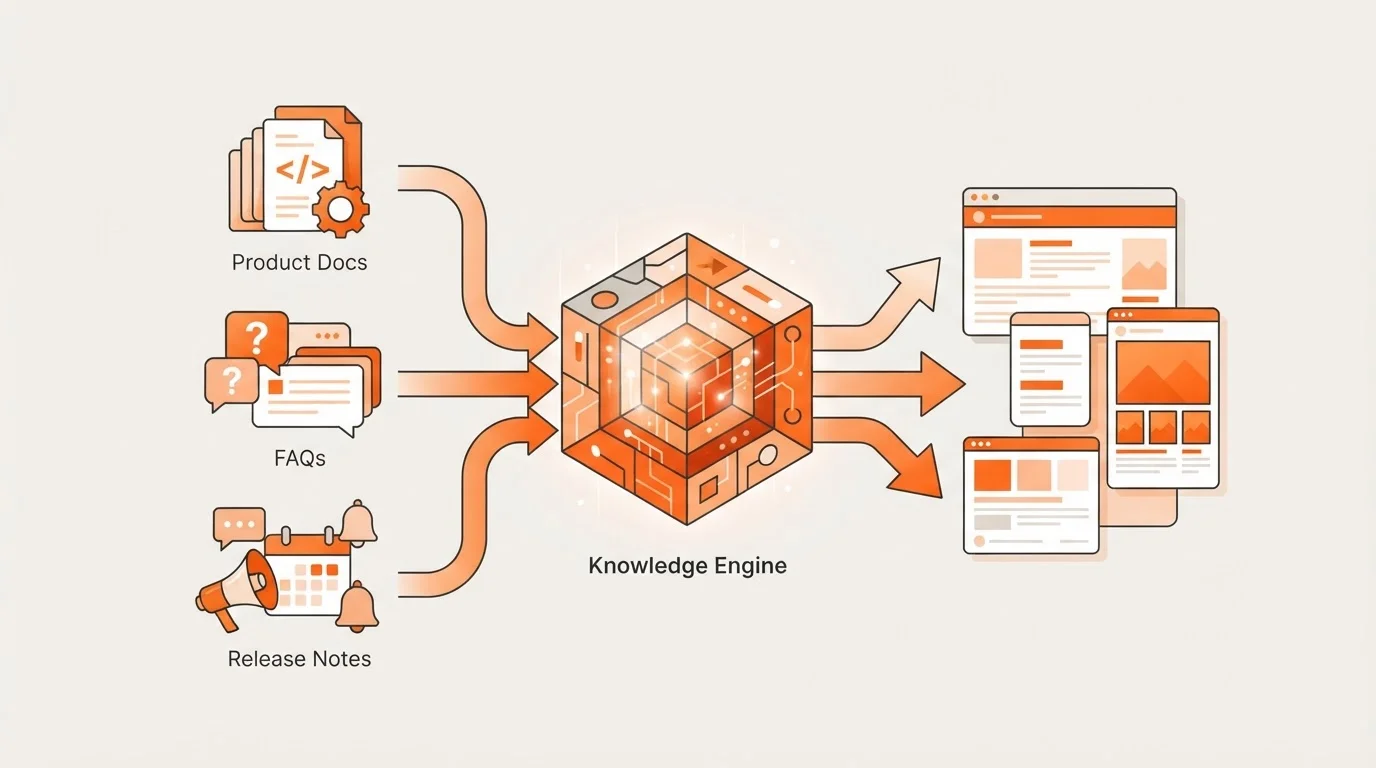
The primary risk of using generic AI tools for blogging is the lack of specific context. Without grounding, AI tends to hallucinate features or use generic industry jargon that provides no value to the reader. To build a successful organic strategy, the content must be deeply rooted in your product’s unique reality. This is where the Blogged Knowledge Engine becomes essential.
Success in autonomous blogging starts with what you feed the system. By providing the platform with your existing documentation, you ensure that every generated post is factually accurate. This process transforms your internal assets into public-facing discovery tools. Effective sources for the Knowledge Engine include:
- Public Product Documentation: Detailed guides that explain your software's technical mechanics.
- Feature Release Notes: Information on recent updates that keep the blog current and relevant.
- Customer Support FAQs: Real-world user questions that identify the most common search intents.
- Competitor Analysis: Documentation outlining your unique value propositions and differentiators.
Blogged allows you to provide these sources through pasted links, uploaded documents, or direct product descriptions. This grounding ensures the content doesn't just target a keyword, but actually solves a user's problem using your product as the definitive solution.
From Documentation to Discovery: The Power of Product-Led Content
Product-led content is not just about writing about your features; it is about demonstrating your product’s value within the context of the reader’s challenges. For a SaaS founder, this means every article should serve two purposes: it must satisfy a search engine's requirements and it must educate a potential customer on how your tool works.
When your blog is grounded in your Knowledge Engine, the articles naturally become more technical and specific. Instead of a generic post about 'How to Improve Productivity,' an autonomous system grounded in your project management SaaS might produce 'How to Use Automated Dependencies to Reduce Project Lag.' The latter targets a much more qualified lead—someone looking for a specific technical solution rather than general advice.
This specificity is also vital for GEO (Generative Engine Optimization). As AI-driven search engines like Perplexity or SearchGPT become more prevalent, they look for authoritative, factual sources to cite in their answers. By publishing grounded, high-quality content, you increase the likelihood that these AI engines will recommend your SaaS as the answer to a user's complex query.
Seamless CMS Integration: Automating the Publishing Loop
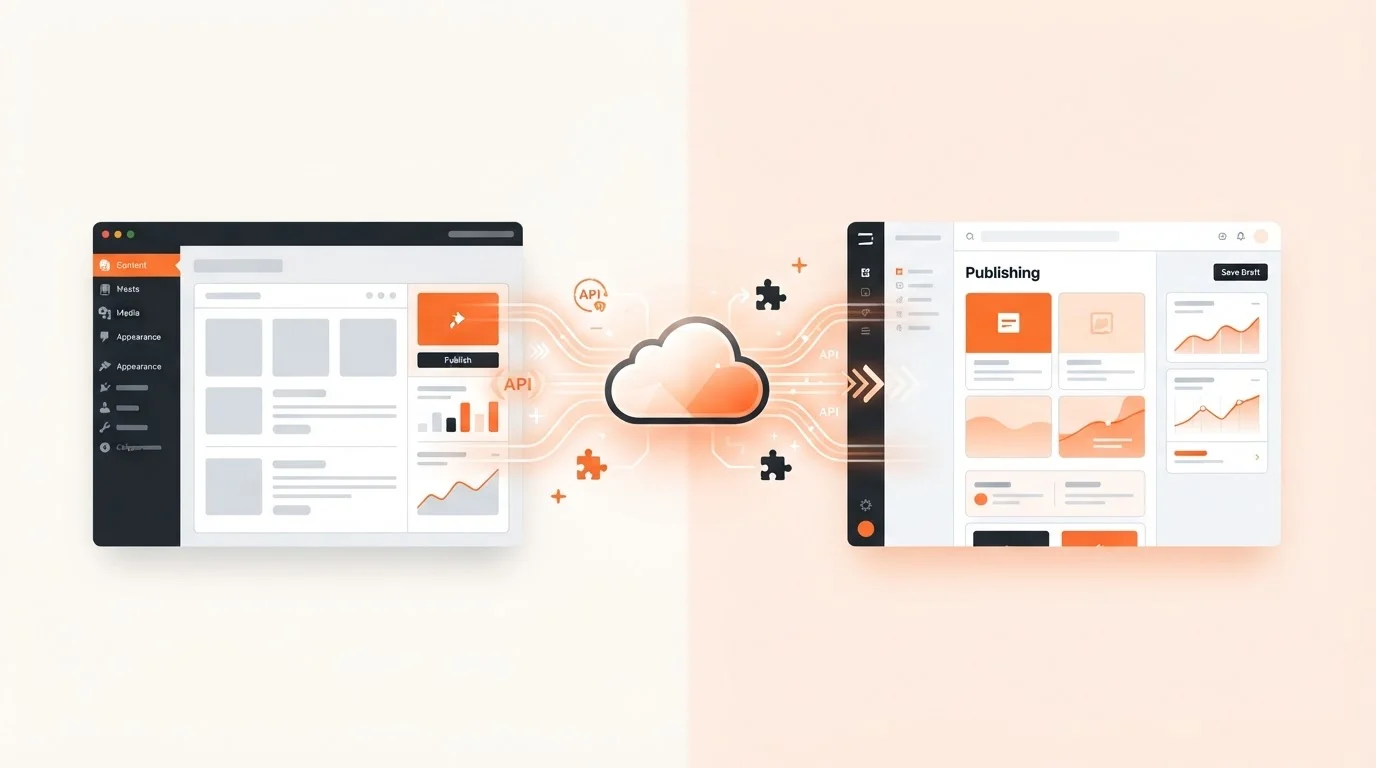
Technical friction is often the final hurdle that prevents consistent blogging. If a founder has to manually copy-paste content into a CMS, format images, and set up metadata every week, the system will eventually fail. The key to sustainable growth is a 'zero-touch' publishing workflow that fits into your existing tech stack.
Blogged provides native integrations that handle the heavy lifting of delivery. For teams using WordPress, the WordPress AI Blog Publishing integration connects via the Blogged Publishing plugin and an application password. This allows the platform to deliver fully formatted, SEO-optimized articles directly to your dashboard. This isn't just a text transfer; it includes internal linking and optimization that would otherwise take hours of manual effort.
Other integration paths cater to various SaaS architectures:
- Ghost AI Blog Publishing: Connects via an Admin API key to manage content review while Ghost handles the front-end reader experience.
- Webflow CMS: Enables the collection of consented visits and configured conversions for verified articles, making it easy to track lead generation in real-time.
- Next.js: A developer-friendly option that uses destination-scoped server keys to fetch approved releases, perfect for custom-built SaaS front-ends.
These integrations ensure that the blog remains a core part of the digital infrastructure rather than a disconnected marketing experiment.
Governance and Review: The Human-in-the-Loop Model
Autonomous doesn't mean 'out of control.' For a SaaS brand, maintaining a specific tone and authority is non-negotiable. The most successful founders use an autonomous strategy not to replace their voice, but to amplify it. This is achieved through a structured review process where the founder or a team member acts as the final editor.
Blogged includes 1 revision per article, allowing you to refine the output before it goes live. This 'human-in-the-loop' approach provides the best of both worlds: the efficiency of AI-driven research and writing combined with the strategic oversight of a human expert. You can use the built-in editor to add specific founder quotes, internal anecdotes, or timely industry commentary that adds a layer of 'Expertise' (the E in E-E-A-T) that search engines crave.
By spending just a few minutes reviewing a pre-optimized, pre-researched draft, you can maintain a publishing volume that would be impossible to achieve manually. This consistent output builds domain authority over time, as search engines recognize your site as a reliable source of fresh, product-specific information.
Measuring Growth: Beyond Basic Traffic Metrics
While increasing organic visitors is the primary goal, the true success of an autonomous blogging strategy is measured in lead quality. Because the content is product-led and grounded in actual documentation, the visitors you attract are more likely to be in the 'consideration' or 'decision' phase of the buyer journey. They aren't just looking for information; they are looking for a tool.
SaaS teams should focus on several key indicators of success:
- Topical Authority Growth: Track how many keywords you rank for within your specific niche or 'content pillar.'
- Trial/Demo Conversion Rates: Use the integration's ability to track configured conversions to see which articles are driving actual sign-ups.
- Customer Success Efficiency: Monitor how often support teams can link to blog articles to answer user questions, saving manual support time.
- Domain Authority: Watch for a steady increase in your site's overall authority as the 'freshness' and volume of your blog signals reliability to search engines.
This growth engine becomes a self-reinforcing loop. The more high-quality content you publish, the more authority you build, which in turn makes it easier for new content to rank higher and attract more qualified leads.
Frequently Asked Questions About Autonomous Blogging for SaaS
Q: Will search engines like Google penalize my site for using AI-generated content?
No. Search engines prioritize the helpfulness, accuracy, and quality of content, not the tool used to create it. By using Blogged’s Knowledge Engine to ground your content in actual product facts, you avoid the low-quality, generic AI content that search engines might ignore.
Q: How much technical setup is required to start autonomous blogging?
The setup is designed to be developer-light. For platforms like WordPress or Ghost, you can be integrated in minutes using a plugin or an API key. Even for custom Next.js sites, the integration is handled through standard server-side keys.
Q: Can I ensure the blog post matches my brand's specific tone of voice?
Yes. You can define your brand voice within the platform, and because you have the ability to review every article and request a revision, you maintain full editorial control over the final output.
Q: What kind of product knowledge should I provide?
The best results come from a mix of technical documentation, FAQ pages, and recent release notes. This allows the system to write about your product with the same depth as an internal team member.
Get practical updates on saas founder organic traffic growth autonomous blogging
Receive new articles and practical insights by email.
Putting Your SaaS Growth on Autopilot
The transition from manual blogging to an autonomous, product-led engine is a strategic shift that frees SaaS founders to focus on their core mission: building great software. By treating your product knowledge as the primary source of truth and automating the research and publishing loop, you create a discovery engine that works 24/7 to find your next customer.
Success in organic growth isn't about working harder at writing; it's about building a better system. With the right grounding in your unique product data and a seamless integration into your CMS, you can scale your traffic and authority without scaling your workload. It is time to stop letting your blog sit stagnant and start letting it drive the growth your product deserves.