
On this page
For SaaS founders, achieving consistent organic discovery is a critical growth milestone that often remains out of reach due to engineering constraints. Building a modern software platform requires intense focus on product architecture and user experience, which frequently leaves the company's blog neglected and search visibility stagnant. Most startups struggle to scale their technical content because the manual process of researching, writing, and optimizing articles is simply too resource-intensive for a lean team. By deploying an autonomous blogging platform, founders can transform their internal product knowledge into discoverable content that drives organic acquisition without sacrificing developer hours. This guide explores how to implement an automated content system to build long-term search engine and AI discovery engine (GEO) visibility while maintaining deep technical accuracy.
The Bottleneck: Why Manual Content Operations Stagnate Growing Startups
Many SaaS companies find themselves at a crossroads where they have a valuable product but no efficient way to tell the world about it. Traditional content marketing relies on a fragmented, manual workflow that involves hiring expensive freelancers or diverting time from the core product team. These operations often fail because they lack the technical depth required to capture high-intent users or the consistency needed to build topical authority. Without a frequent and structured publishing cadence, organic discovery remains flat, making the company overly reliant on expensive paid advertising channels.
The Resource Conflict in Modern SaaS Teams
Technical content creation is one of the most significant time-sinks for a growing software company. A single high-quality article often requires hours of research, technical drafting, and SEO optimization to be effective. For a founder or a lead engineer, these hours represent a direct trade-off against shipping new features or fixing critical bugs. This friction leads to a 'boom and bust' content cycle where a blog is updated only once every few months, which is insufficient for modern search algorithms.
Identifying Inefficiencies in the Traditional Content Pipeline
When SaaS teams map out their content workflow, they often discover that ideation and keyword research consume a disproportionate amount of time. Manually sorting keywords and coordinating between marketing and engineering teams creates a bottleneck that limits publishing velocity. Furthermore, generalist copywriters often fail to grasp the nuances of complex software, resulting in 'fluff' content that fails to demonstrate product value to sophisticated B2B buyers. Moving away from this manual model requires a system that can bridge the gap between technical documentation and search-friendly prose.
Scaling Organic Reach with Autonomous SEO and GEO Engines
The shift toward autonomous blogging allows SaaS founders to treat content as an automated asset rather than a recurring chore. Platforms like Blogged are designed to handle research, planning, optimization, and publishing on autopilot, ensuring the blog grows even when the team is focused elsewhere. By integrating with existing technical stacks, these engines turn product specifications and documentation into highly discoverable, product-led articles. This approach ensures that every post serves a dual purpose: ranking for relevant search terms and proving the software's ability to solve specific user problems.
Building a Product Knowledge Engine for Technical Precision
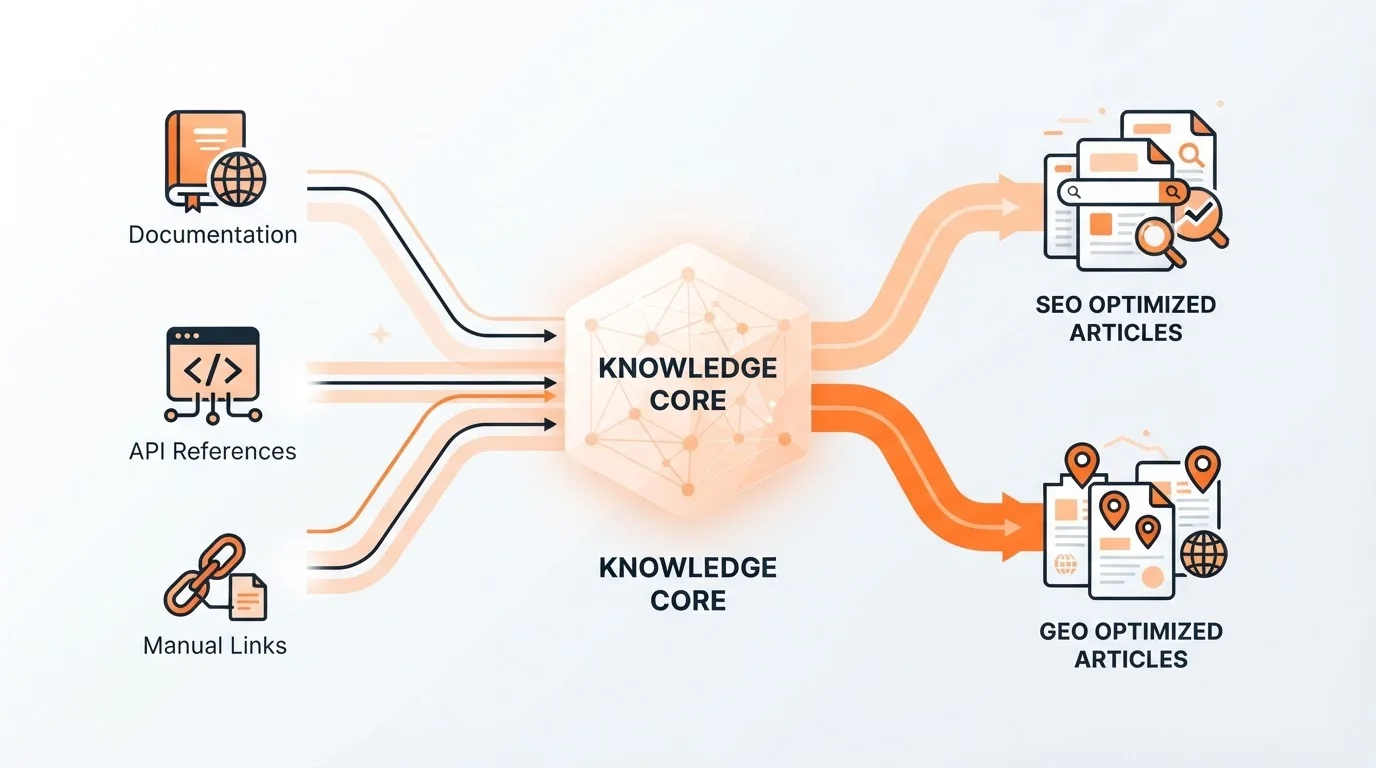
Autonomous blogging is only effective if it avoids generic filler text and maintains technical integrity. Blogged utilizes a Knowledge Engine for Autonomous SaaS Blogs that ingests public product sources, uploaded documents, and API references to ground every article in fact. Users can organize these facts by product entity and facet, granting the platform a structured understanding of how the software functions. This foundational layer ensures that the content remains deeply relevant to the target audience and technically accurate enough to earn the trust of professional readers.
Full Autopilot: Maintaining Consistency Without Oversight
Consistency is the primary driver of topical authority in modern search and generative AI discovery environments. With the Full Autopilot feature, founders can establish strategic 'Content Directions' and allow the system to refill a Topic Queue autonomously. This removes the weekly anxiety of brainstorming titles or managing editorial calendars, as the platform continuously identifies market intent and maps it against the core knowledge base. The result is a durable content plan that expands the company's search footprint every day without manual intervention.
Integrating Content Pipelines into Professional Web Infrastructures
For an autonomous system to be truly valuable, it must integrate seamlessly with the company's existing website architecture. Whether a SaaS is built on a legacy CMS or a modern headless framework, the publishing process should be frictionless and invisible to the end user. Leading platforms provide native handshakes that allow the founder to maintain control over the reader experience while offloading the underlying production work to the AI engine.
Get practical updates on saas organic discovery boost case study
Receive new articles and practical insights by email.
Native Ghost and WordPress Publishing Workflows
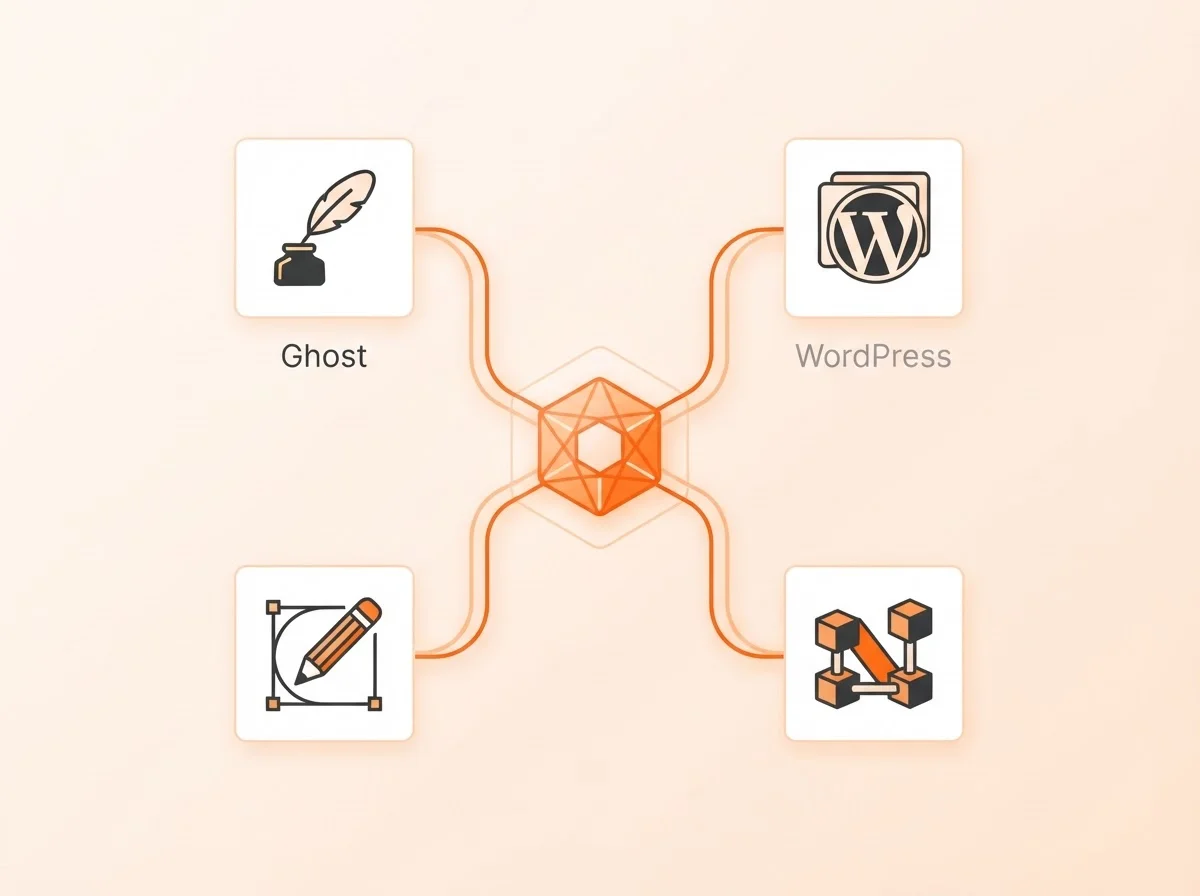
For teams using Ghost, the platform supports a direct connection through a custom integration and Admin API key, allowing articles to be reviewed internally and published instantly to the live site. Similarly, the WordPress AI Blog Publishing integration connects to self-hosted sites using a dedicated plugin and application password. These integrations ensure that content is rendered natively on the company's domain, preserving all SEO benefits while providing a fast, uncompromised reader experience.
Support for Modern Headless and Decoupled Stacks
Startups using modern frontend frameworks like Next.js or site builders like Webflow require more technical flexibility. The use of a signed Webhook and Content API allows these teams to collect consented visits and track configured conversions for every article. This technical flexibility ensures that the autonomous content pipeline can expand alongside the software's evolution, without requiring custom backend development or complex engineering sprint reallocations for marketing tasks.
Measuring Success: The Impact of Product-Led Content on Growth
Success in organic discovery is measured by the quality of the audience as much as the volume of traffic. Product-led content outperforms generic high-volume publishing because it connects the reader's technical search query directly to a feature within the SaaS platform. By tracking Search Console performance alongside on-site searches and CTA outcomes, founders can see exactly how the blog drives lead growth and customer acquisition. This data-driven approach allows for periodic strategic audits, where teams can update their central knowledge repository to further optimize for the highest-converting topic clusters.
Efficiency Through Collaborative Human-in-the-Loop Governance
While the autonomous engine handles the heavy lifting of research and drafting, human oversight remains vital for brand alignment. The platform includes an editing dashboard where the team can review, edit, and approve every post before it goes live. Because plans include unlimited team seats, founders can invite product managers and engineers to verify factual precision without incurring extra costs. This collaborative framework ensures that the content pipeline remains synchronized with weekly software releases and marketing pivots.
Frequently Asked Questions About Autonomous SaaS Blogging
Q: How does the platform maintain technical accuracy for niche features?
The system uses a Knowledge Engine that ingests your official documentation and technical files, organizing facts by product entity to ensure articles are accurate and product-led.
Q: Does the platform support multiple CMS environments?
Yes, it offers native integrations for Ghost, WordPress, Webflow, and Next.js, as well as a Content API for custom headless setups.
Q: Can we customize the content strategy once it is on autopilot?
Absolutely. You can define specific Content Directions, target audience personas, and primary keyword groups that guide the autopilot as it refills your topic queue.
Q: How do we track the ROI of the autonomous content?
The platform allows you to track Search Console performance, reader feedback, and lead outcomes to measure the direct impact on your organic acquisition funnel.
Scaling organic discovery in the competitive SaaS market does not have to be a resource drain on your engineering team. By leveraging autonomous blogging, founders can build a high-authority content machine that runs in the background while they focus on product innovation. Embracing a product-led, automated strategy ensures your SaaS remains discoverable in both traditional search engines and emerging AI discovery platforms, providing a long-term competitive advantage for your growth pipeline.