
On this page
Organic growth is the holy grail for SaaS founders, yet it remains one of the most difficult channels to master while building a product. The promise of compounding traffic and low-cost customer acquisition is often eclipsed by the sheer volume of work required to sustain a high-quality blog. For most early-stage teams, the choice is binary: either the founder spends weekends writing articles, or the blog sits dormant for months.
InnovateCo, a hypothetical project management SaaS, found itself in this exact position. Their product was gaining traction, but their organic reach was stagnant. They had deep technical expertise and a clear understanding of their users' pain points, but no system to transform that knowledge into discoverable content. By adopting an autonomous blogging strategy, they shifted from manual content creation to a product-led growth engine that runs on autopilot.
This article examines the transition from sporadic blogging to a fully autonomous content system. We will explore how leveraging product documentation, direct CMS integrations, and AI-driven SEO allows founders to reclaim their time while building a sustainable inbound funnel. If you are a founder struggling to maintain a content schedule, this framework provides a blueprint for scaling your visibility without increasing your headcount.
The Founder’s Dilemma: Growth vs. Development
Every SaaS founder faces a resource allocation problem. In the early stages, the founder is often the primary developer, the customer success lead, and the head of marketing. While paid acquisition can provide a temporary boost, it lacks the long-term ROI of organic search. However, SEO requires consistency—a cadence that is almost impossible to maintain when a critical bug or a major feature launch demands your full attention.
InnovateCo’s founder, Alex, realized that their sporadic publishing schedule was hurting their authority. A blog post every three months does not signal expertise to search engines or potential customers. The cost of this inconsistency was high: a slow trickle of traffic, low keyword rankings, and a heavy reliance on expensive PPC campaigns. To break this cycle, Alex needed a way to decouple content production from his personal schedule.
The primary bottleneck was not a lack of ideas, but a lack of execution capacity. InnovateCo had thousands of pages of internal documentation, API guides, and customer support logs. The knowledge existed, but there was no efficient way to synthesize it into SEO-friendly articles that addressed top-of-funnel search intent. The solution required a platform that could ingest this raw data and produce high-quality content with minimal human oversight.
Why Traditional Content Solutions Failed
Before turning to autonomous blogging, InnovateCo explored traditional alternatives. Each presented a different set of challenges that were incompatible with a fast-moving SaaS environment. Understanding these pitfalls is essential for any founder evaluating their content strategy.
1. The In-House Hire: Hiring a full-time content marketer was financially unfeasible for a bootstrapped startup. Beyond the salary, the management overhead of onboarding someone who truly understands a technical project management tool was too high.
2. Generalist Freelancers: Generalist writers often lack the technical depth required for product-led content. Alex found himself spending hours rewriting drafts because the freelancers didn't understand the nuances of their project management workflows. This effectively meant the founder was still doing the work, just with an added layer of communication.
3. Content Agencies: While agencies offer consistency, they are often prohibitively expensive for startups. Furthermore, their processes are frequently slow, requiring weeks of back-and-forth for a single batch of articles. InnovateCo needed a solution that moved at the speed of their development cycles.
The Autonomous Shift: How Blogged Transformed the Workflow
InnovateCo decided to pilot Blogged, an autonomous SEO and GEO blogging platform designed specifically for SaaS founders. The goal was to build a system that could research, plan, write, and publish content without requiring Alex to open a text editor. The transition focused on three core pillars: knowledge ingestion, autonomous planning, and direct publishing.
Leveraging the Knowledge Engine
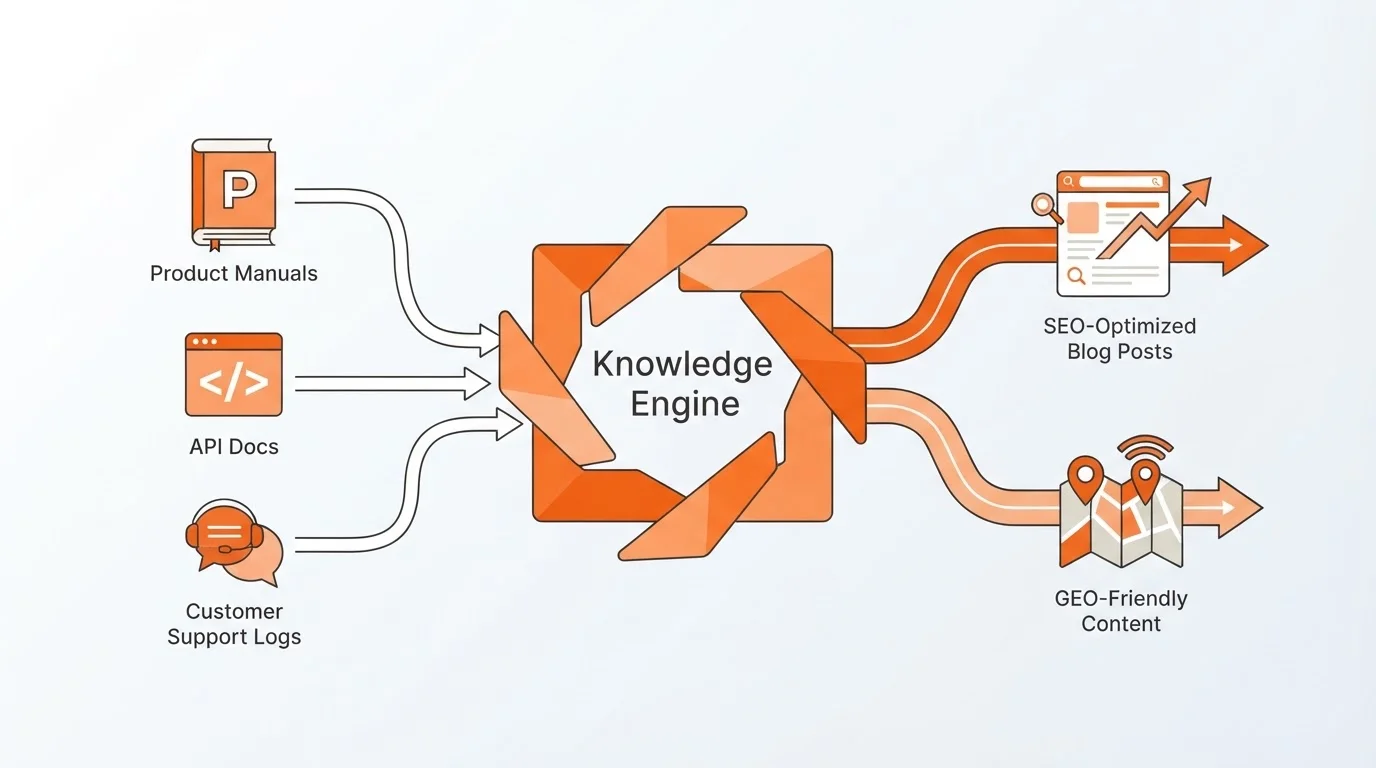
The most significant advantage of an autonomous system like Blogged is its ability to learn from your specific product. InnovateCo utilized the Blogged Knowledge Engine, which allows founders to provide public product sources, uploaded documents, or pasted links as the foundation for all content.
Instead of the AI hallucinating generic project management advice, it was fed InnovateCo’s actual user manuals and feature specifications. This ensured that every article was technically accurate and deeply rooted in the product’s unique value proposition. By transforming internal product knowledge into discoverable content, the platform created a direct link between what the team was building and what potential users were searching for.
Autonomous SEO and GEO Optimization
Content in 2026 is no longer just about ranking on page one of Google; it is about being discovered by AI-driven search tools. Blogged optimizes for both SEO (Search Engine Optimization) and GEO (Generative Engine Optimization). This means the content is structured to be indexed by traditional search bots while also being formatted for inclusion in AI overviews and large language model responses.
For InnovateCo, this meant their content started appearing in conversational search queries like "How do I automate task dependencies in a remote team?" The platform handled the technical heavy lifting—interlinking related articles, optimizing metadata, and ensuring the content followed the latest search algorithm best practices—allowing the founder to stay focused on the product roadmap.
Direct Integration: Streamlining Content Deployment
A content strategy is only as good as its delivery. One of the biggest friction points for SaaS founders is the manual process of moving a draft from a document into a CMS, formatting it, adding images, and hitting publish. InnovateCo eliminated this entire workflow through native integrations.
Blogged connects to self-hosted WordPress through the Blogged Publishing plugin and an application password. This allows for a seamless handoff: once an article is generated and reviewed in Blogged, it is delivered directly to the WordPress site. For founders using other stacks, Blogged offers similar integrations for Ghost, Webflow, and Next.js.
These integrations don't just push text; they manage the entire reader experience. For instance, the Ghost integration allows founders to create and review content in Blogged while Ghost renders the final page. This ensures that the blog maintains the high-performance UI that modern SaaS users expect without adding technical debt to the marketing stack.
Results: Quantifying Organic Growth and Reclaimed Time
After six months of using Blogged, InnovateCo saw a dramatic shift in their marketing metrics. Because the platform runs on autopilot, they were able to maintain a consistent publishing cadence that was impossible to achieve manually. The results were measured across three key areas: traffic volume, lead quality, and founder productivity.
Get practical updates on saas founder organic growth autonomous blogging
Receive new articles and practical insights by email.
Impact Assessment: Manual vs. Autonomous Blogging
| Metric | Traditional Manual Blogging | Autonomous Blogging (Blogged) |
|---|---|---|
| Monthly Articles | 0.5 (Sporadic) | 8-12 (Consistent) |
| Founder Time Spent | 10-15 hours/month | < 1 hour/month (Review only) |
| Source Accuracy | Founder's Memory | Knowledge Engine (Docs/API) |
| Publishing Flow | Manual Copy-Paste | Direct CMS Integration |
| Optimization | Basic SEO | SEO + GEO (Generative Engine) |
Founder Focus and Time Savings
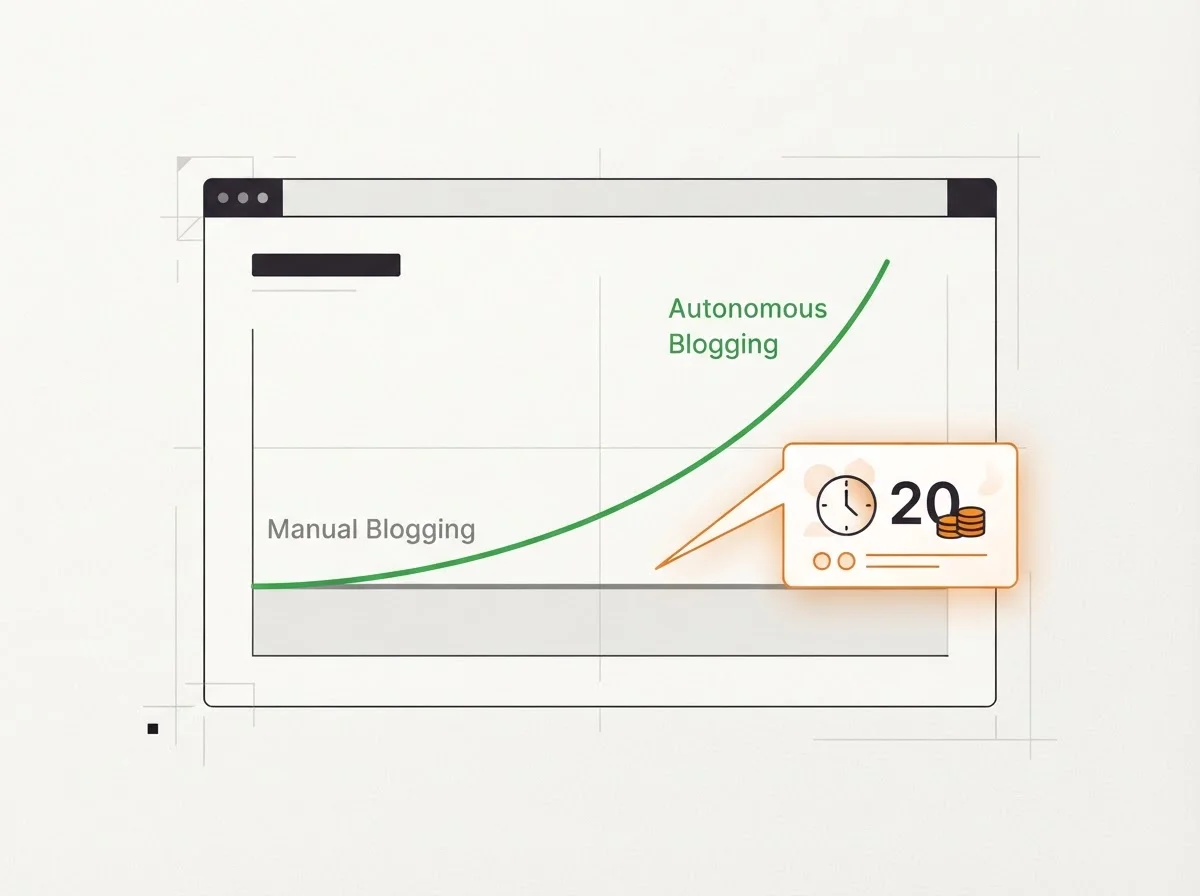
The most visceral impact for Alex was the reclamation of his time. Previously, writing a single technical post took roughly 6 hours, including research and SEO optimization. With Blogged, his involvement was reduced to a 10-minute review of the generated drafts.
Since Blogged includes 1 revision per article, the workflow is designed for efficiency. The founder provides the high-level knowledge sources, the AI generates the draft, and the founder provides one final polish. This lean review process ensured the content stayed true to the brand voice without becoming a time sink. Alex was able to reallocate over 20 hours per month to closing enterprise deals and managing the engineering team.
Improved Lead Quality through Product-Led Content
Unlike generalist content, the articles produced for InnovateCo were highly specific. By using the product’s API docs and manuals as sources, the blog focused on solving actual user problems using InnovateCo’s features.
This led to a higher conversion rate from reader to trial user. Because the content was "product-led," visitors weren't just learning about general industry trends; they were seeing how InnovateCo specifically solved their technical challenges. Using integrations for Ghost and Webflow, InnovateCo was able to collect consented visits and track conversions for their verified articles, giving them clear data on which topics were driving the most revenue.
Key Takeaways for SaaS Founders
The success of InnovateCo highlights a fundamental shift in how SaaS companies should approach content marketing. If you are looking to replicate their organic growth, consider the following strategic takeaways:
- Prioritize Consistency Over Perfection: Search engines reward a predictable publishing schedule. Use automation to ensure your blog never goes dark during busy development cycles.
- Feed the Machine Your Best Data: The quality of autonomous content is directly proportional to the quality of the sources you provide. Use your documentation, case studies, and internal notes to ground the AI in reality.
- Automate the Publishing Pipeline: Don't let your content die in a draft folder. Use direct integrations with WordPress, Ghost, or Webflow to eliminate the manual overhead of publishing.
- Focus on GEO, Not Just SEO: Ensure your content is structured for the future of search, where AI models are the primary gatekeepers of information.
- Maintain a Lean Review Loop: Use your reclaimed time for high-level strategy, but keep a human in the loop for a final quality check to ensure brand alignment.
Frequently Asked Questions
Q: How does autonomous blogging avoid producing generic AI content?
By using a Knowledge Engine, platforms like Blogged ground their writing in your specific product data, documentation, and unique value propositions, rather than relying on general training data. This ensures the output is product-led and technically accurate.
Q: Is it safe to publish AI-generated content for SEO?
Yes, search engines like Google have stated that they reward high-quality, helpful content regardless of how it is produced. The key is ensuring the content provides genuine value to the reader, which is achieved through human review and specific product knowledge sources.
Q: How much control do I have over the final article?
You retain full editorial control. You can review every draft, request revisions, and only publish once you are satisfied with the quality and brand voice. For example, Blogged includes 1 revision per article to help refine the output.
Q: What platforms does autonomous blogging integrate with?
Blogged offers native integrations for WordPress, Ghost, Webflow, and Next.js. This allows you to push content directly to your existing blog without manual formatting or technical overhead.
For SaaS founders, the competition for organic visibility is fiercer than ever. The old model of manual blogging is increasingly unsustainable for lean teams. InnovateCo’s success demonstrates that by embracing autonomous blogging, founders can transform their product knowledge into a powerful, self-sustaining growth engine.
By automating the research, writing, and publishing phases, you can ensure your SaaS stays visible to both search engines and AI discovery tools while you focus on what matters most: building a world-class product. Organic growth doesn't have to be a resource drain—with the right autonomous system, it can be your greatest competitive advantage.