
On this page
For most SaaS founders, product-market fit (PMF) is a moving target that feels impossible to pin down. You see flashes of it in a few demo calls or a handful of beta sign-ups, but concrete validation often requires months of manual outreach and expensive ad spend. The challenge isn't just building the product; it is proving that a specific market has a desperate need for your specific solution before your runway evaporates.
Traditionally, blogging was seen as a long-term SEO play—something you did after you found your audience. However, a new strategy is emerging: using autonomous blogging as a high-frequency probe to test market hypotheses in real-time. By transforming product knowledge into discoverable content, founders can see exactly which pain points resonate with searchers and AI discovery engines (GEO) before writing a single line of production code. This article examines the hypothetical journey of GrowthFlow, a SaaS startup that leveraged Blogged to shorten its validation cycle and pivot with data-backed confidence.
The Validation Bottleneck for Early-Stage SaaS
GrowthFlow, a hypothetical workflow automation platform for small businesses, faced a classic dilemma. The founders had three potential directions for their product: automated invoicing, AI-driven project summaries, or deep CRM integrations. Building all three would take a year. Building the wrong one would be fatal.
Manual market research was moving too slowly. Customer interviews provided qualitative depth but lacked the statistical significance to justify a total product pivot. The team needed a way to broadcast these three distinct value propositions to the world and see which one the market would actually 'buy' with their attention and clicks.
They faced three primary hurdles common to every lean SaaS team:
- Resource Scarcity: Every hour spent writing a blog post was an hour taken away from shipping the core product.
- Feedback Lag: Organic search usually takes months to mature, making it feel too slow for early-stage validation if handled manually.
- Content Inconsistency: Without a dedicated marketing team, their blog was often neglected, providing zero data on customer intent.
Rethinking Content as a Market Probe

Instead of viewing their blog as a simple diary, GrowthFlow's founders began viewing it as a laboratory. They realized that if they could publish high-quality, product-led content at scale, they could treat each article as a sensor.
They chose Blogged because it offered an autonomous approach to SEO and Generative Engine Optimization (GEO). Unlike traditional tools that require manual prompting for every post, Blogged's Knowledge Engine allowed them to feed the platform their raw product concepts and internal documentation. This ensured the content wasn't just generic filler, but specific, authoritative probes into their target niches.
Why Autonomous Blogging Beats Manual Research
Manual research is frequently biased by the person asking the questions. Search data, however, is honest. When a user types a specific problem into Google or asks an AI search engine for a solution, they are expressing an active pain point.
By using an autonomous platform, GrowthFlow could cover 50 different long-tail keywords related to their three product hypotheses simultaneously. They didn't have to choose which idea to test first; the automation allowed them to test all three in parallel. This 'shotgun approach' to validation provided a much broader dataset than a small handful of manual interviews could ever deliver. This allowed the founders to prioritize features based on actual search volume and user interest rather than gut feeling.
Implementing the GrowthFlow Validation Workflow
The implementation began by connecting GrowthFlow’s existing infrastructure to Blogged. Because the founders were already using a self-hosted WordPress site for their marketing front-end, they utilized the WordPress AI Blog Publishing integration. This setup uses an application password to allow the autonomous platform to push reviewed articles directly to the site through the Blogged Publishing plugin.
For SaaS teams using other stacks, the platform also supports Ghost AI Blog Publishing, which manages content creation while Ghost handles the reader experience. The flexibility of these integrations meant that GrowthFlow's engineering team spent less than thirty minutes on the initial setup, ensuring they stayed focused on their core codebase.
Feeding the Knowledge Engine
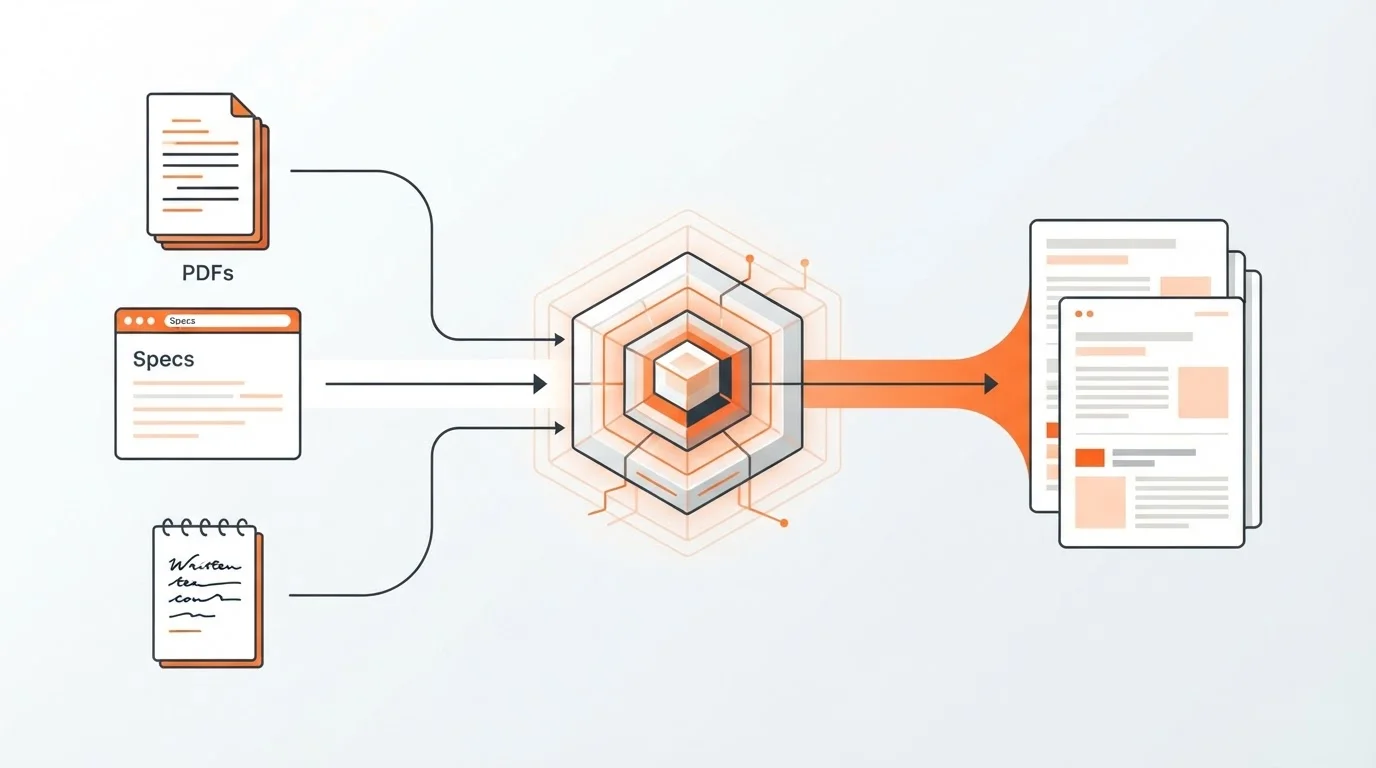
To ensure the content remained focused on their validation goals, the founders used the Knowledge Engine to upload their internal feature specs and competitive analysis. They provided:
- Public links to competitor documentation they wanted to differentiate from.
- Uploaded PDF whitepapers about the 'future of workflow automation.'
- A written description of their unique 'API-first' approach to invoicing.
This allowed Blogged to produce content that was deeply rooted in the product's actual capabilities. If a post about 'Automated Invoicing for Plumbers' started gaining traction, the founders knew it was because the specific value proposition they described in the Knowledge Engine was hitting a market nerve. The system transforms product knowledge into discoverable, product-led content that specifically addresses user pain points.
Measuring Market Signals and Closing the Loop
The true power of this strategy emerged when GrowthFlow began analyzing the data. Blogged's integrations, including Next.js and Webflow, allow users to collect consented visits and configured conversions for verified articles.
By setting up specific 'soft conversions'—such as sign-ups for a feature-specific waiting list—GrowthFlow could track which content clusters were actually driving intent. They used signed webhooks and the Content API to bridge the gap between their blog and their internal analytics dashboard.
They found that while their articles on 'AI Project Summaries' got decent traffic, the articles on 'Automated Invoiced Reminders' had a significantly higher conversion rate to their waiting list. This was a definitive market signal. The summaries were interesting, but the invoices represented a burning pain point for their target audience.
Results: Achieving Pivot-Level Confidence
Within three months of running their autonomous blog, GrowthFlow had enough data to make a major strategic decision. They pivoted their entire roadmap to focus exclusively on automated invoicing and collections, shelving the project summaries feature entirely.
Because they used autonomous blogging, they achieved this validation without diverting their lead engineer's time to write 'How-To' guides. The platform's ability to handle internal linking and SEO optimization meant that their validation engine was also building a long-term organic growth asset.
Furthermore, the platform's efficiency allowed them to maintain a consistent publishing schedule without the overhead of a large team. Since every paid plan includes unlimited team seats, their product managers and marketers could participate in the review and approval process without additional costs.
Step-by-Step Guide for SaaS Founders to Validate PMF
If you are currently building a SaaS and struggling to validate your direction, follow this framework to use autonomous blogging as your primary feedback loop:
- Define Your Hypotheses: Identify 2-3 core features or audience segments you are unsure about.
- Upload Your Knowledge: Use Blogged’s Knowledge Engine to provide the specific details of these hypotheses. Focus on providing accurate product data, such as feature specs or competitive differentiators.
- Connect Your CMS: Integrate with WordPress, Ghost, or your custom Next.js front-end. For Ghost, you simply create a custom integration in Ghost, copy its Admin API key, and verify the connection in Blogged.
- Set Up Conversion Goals: Don't just track views. Create specific calls-to-action (CTAs) for each feature hypothesis (e.g., 'Join the Invoicing Beta').
- Monitor the Clusters: Look for which content 'clusters' show the highest engagement and conversion rates.
- Iterate the Product: Use the 3 revisions per article to refine the messaging as you learn more from the market signals.
- Double Down: Once you see a clear winner in the data, shift your development resources to that feature.
Frequently Asked Questions
Q: Won't AI-generated content hurt my SEO?
Search engines and AI discovery engines (GEO) reward specific, helpful content. Blogged focuses on transforming your unique product knowledge into discoverable assets rather than just pumping out generic text. This product-led approach ensures high utility for the reader.
Q: How much work is required from me each week?
The system is designed to be autonomous. Once you set your knowledge sources, the Autopilot handles the research, writing, and publishing. Most founders spend very little time reviewing content before it goes live.
Q: Can I use this for multiple products?
Yes, but be mindful of your plan limits. For example, Blogged includes 2 pages as a baseline, but the article production is designed to scale with your growth needs.
Q: How do I track conversions if I'm using a headless CMS?
Blogged provides signed webhooks and a Content API that allow you to collect consented visits and track conversions even in custom, headless environments like Next.js.
Product-market fit validation doesn't have to be a slow, manual process. By treating your blog as an autonomous feedback loop, you can gather high-fidelity market signals while you focus on building. GrowthFlow's hypothetical success proves that when founders stop writing and start 'instrumenting' their content strategy, the path to PMF becomes a data-driven journey rather than a guessing game.
If you're ready to stop guessing and start validating, it's time to put your SaaS blog on Autopilot. By transforming product knowledge into discoverable content, you can drive organic growth and free yourself to build the core product.
Get practical updates on saas founder product market fit validation autonomous blogging
Receive new articles and practical insights by email.