
On this page
For a niche SaaS founder, the path to product-market fit (PMF) is rarely a straight line. It is a grueling cycle of building, testing, and iterating in a market where the target audience is specific and often hard to reach. The primary challenge isn't just building the software; it is generating enough market signals to know if what you are building actually solves a critical pain point. Traditional validation—manual outreach, cold emails, and expensive paid ads—often fails in niche markets because the cost to acquire a single data point is too high and the feedback loop is too slow. Founders often find themselves trapped in a cycle of guessing what features matter because they lack the volume of user interactions to prove otherwise.
Autonomous blogging offers a strategic shortcut to this discovery. By transforming your existing product knowledge into a continuous stream of discoverable, high-intent content, you can turn your blog into a market sensor. Instead of pushing your product toward an indifferent audience, you create a pull mechanism that attracts users searching for specific solutions. This organic interest serves as a high-fidelity signal for PMF. When your niche audience finds and engages with your content, it validates the demand for your solution before you spend months on engineering features nobody wants. This approach allows you to spend your time building while your blog generates the evidence you need to scale.
The Validation Gap: Why Niche SaaS Founders Struggle to Find Signal
Niche SaaS markets are defined by specificity. Whether you are building inventory software for independent bookstores or a CRM for maritime logistics, your audience has a very particular vocabulary and set of operational hurdles. In these environments, broad marketing tactics are inefficient. You aren't just looking for users; you are looking for "true believers" who face the exact problem your software solves. The difficulty lies in finding these people at scale without exhausting your limited capital or time.
The "Validation Gap" occurs when a founder has a functional product but lacks the volume of user interactions needed to confirm that the market is willing to pay and stay. Without this signal, you are flying blind. Many founders try to bridge this gap with paid acquisition, but for niche products, search ads and social media sponsored posts can be prohibitively expensive. You might spend significant capital only to realize your messaging was off or you were targeting the wrong sub-segment. The cost per click for high-intent niche keywords can drain a startup's budget before a single conversion occurs.
Content marketing is the logical alternative, but it presents its own bottleneck. Maintaining a high-quality, consistent blog while building a product is nearly impossible for a lean team. The research, writing, optimization, and distribution required to rank for niche keywords take dozens of hours per week—hours that a founder should be spending on product development and direct customer interviews. This is where the validation process often stalls: you need content to get signals, but you do not have the time to create the content. The resulting silence from the market is often misinterpreted as a lack of demand, when it is actually a lack of discovery.
Content as a Sensor: Using Organic Growth to Confirm Product-Market Fit
Organic growth is one of the most honest indicators of market pull. When users find your product through search engines, they are expressing a specific intent. This "pull" is the essence of PMF. It means the market is actively seeking your solution rather than you forcing it upon them. Autonomous blogging allows you to test for this pull systematically by casting a wide net of high-value articles across the niche's problem space.
Every article you publish is essentially a market hypothesis. For example, if you publish a series of guides on technical integrations and see a surge in traffic and demo requests from those specific pages, you have validated a specific value driver. Conversely, if your content about general industry trends receives zero traction, the market is telling you that those topics are not the primary pain points. These signals are more reliable than survey results because they represent real users spending their most valuable resource: their time. By observing which topics resonate, you can adjust your product roadmap to align with the areas of highest interest.
By leveraging autonomous blogging, you can deploy dozens of these "probes" across your niche market simultaneously. Instead of guessing which features to highlight on your landing page, you look at the engagement data. Which search queries are bringing people to your site? Which technical problems are they trying to solve? This data-driven approach to validation reduces the risk of building in a vacuum and ensures that your product roadmap is guided by demonstrated market interest rather than founder intuition alone.
The Blogged Knowledge Engine: Converting Documentation into Discoverability
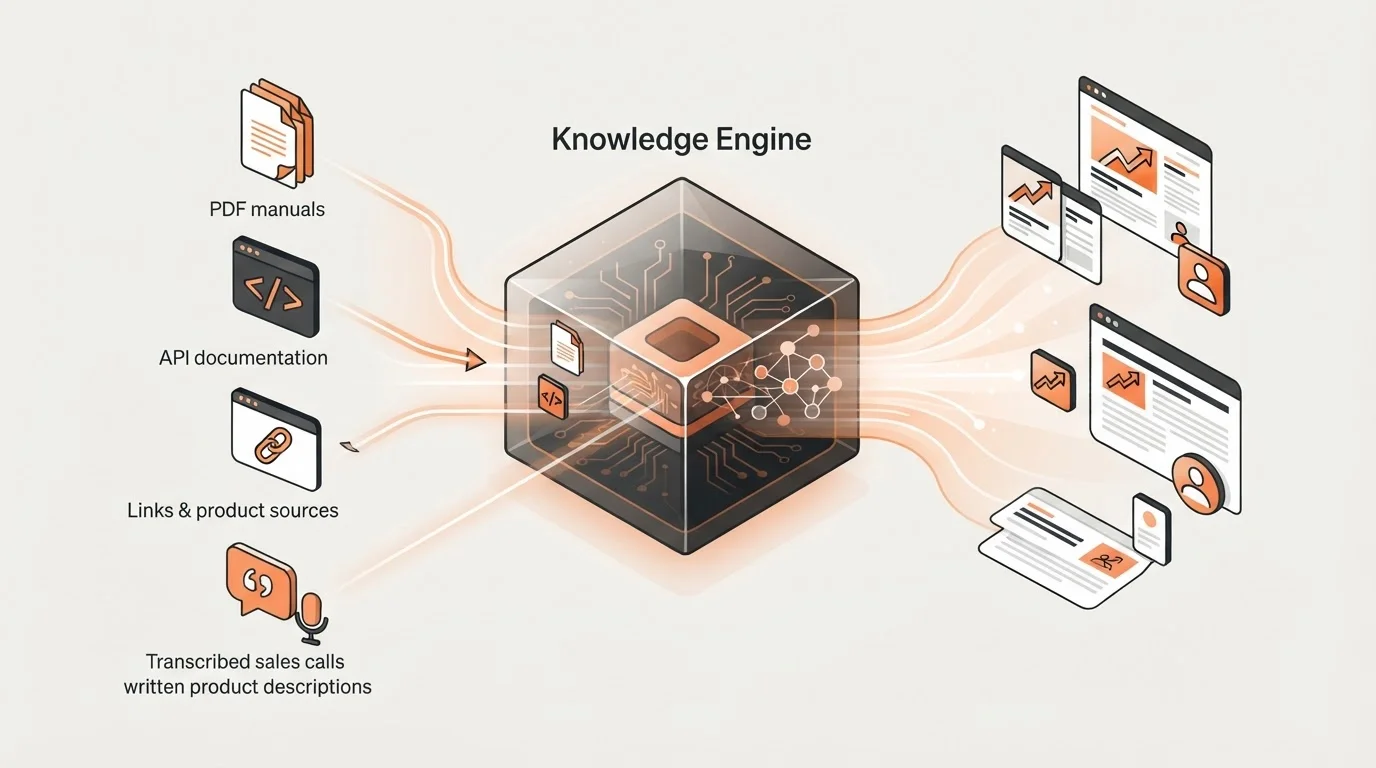
The most common barrier to starting a blog is the blank page. However, as a SaaS founder, you already have the information needed to create high-value content; it is just locked inside your technical documentation, FAQs, and product descriptions. Blogged solves this by utilizing a specialized Knowledge Engine designed for SaaS founders. This tool bridges the gap between technical specs and user-facing content without requiring the founder to become a full-time writer.
Blogged's Knowledge Engine for Autonomous SaaS Blogs feature lets users provide public product sources, uploaded documents, pasted links, or a written product description. This means you can feed the platform your existing user manuals, API documentation, or even a transcript of a sales call. The platform then parses this raw data to understand the nuances of your niche, your product’s unique value proposition, and the specific problems you solve. It essentially downloads your expertise and prepares it for distribution.
This capability ensures that the autonomously generated content is not generic filler. It is product-led content that accurately reflects your tool's capabilities. For a niche SaaS, this accuracy is vital. If a specialist reads a blog post that uses the wrong terminology, they will immediately lose trust in the software. By rooting the content in your actual product knowledge, Blogged maintains the authority and specificity required to convert professionals who are looking for serious solutions to complex problems.
Transforming Technical Specs into Intent-Based Articles
Once the Knowledge Engine understands your product, autonomous systems take over the research and planning. The platform identifies the search terms and questions your target audience is asking and creates, optimizes, and interlinks articles that answer these specific queries. This process effectively builds a web of information that captures users at various stages of their search journey.
By the time a prospect finishes reading an article generated from your documentation, they are not just informed; they understand exactly how your product solves their specific technical hurdle. This transition from "how-to" to "why-us" is the hallmark of effective product-led growth. For founders, this means your documentation is working for you 24/7, turning curious searchers into qualified leads while you focus on shipping new features. The consistency of this process ensures that your search authority grows steadily over time, creating a compounding asset for the company.
GEO vs. SEO: Adapting to the New Search Environment
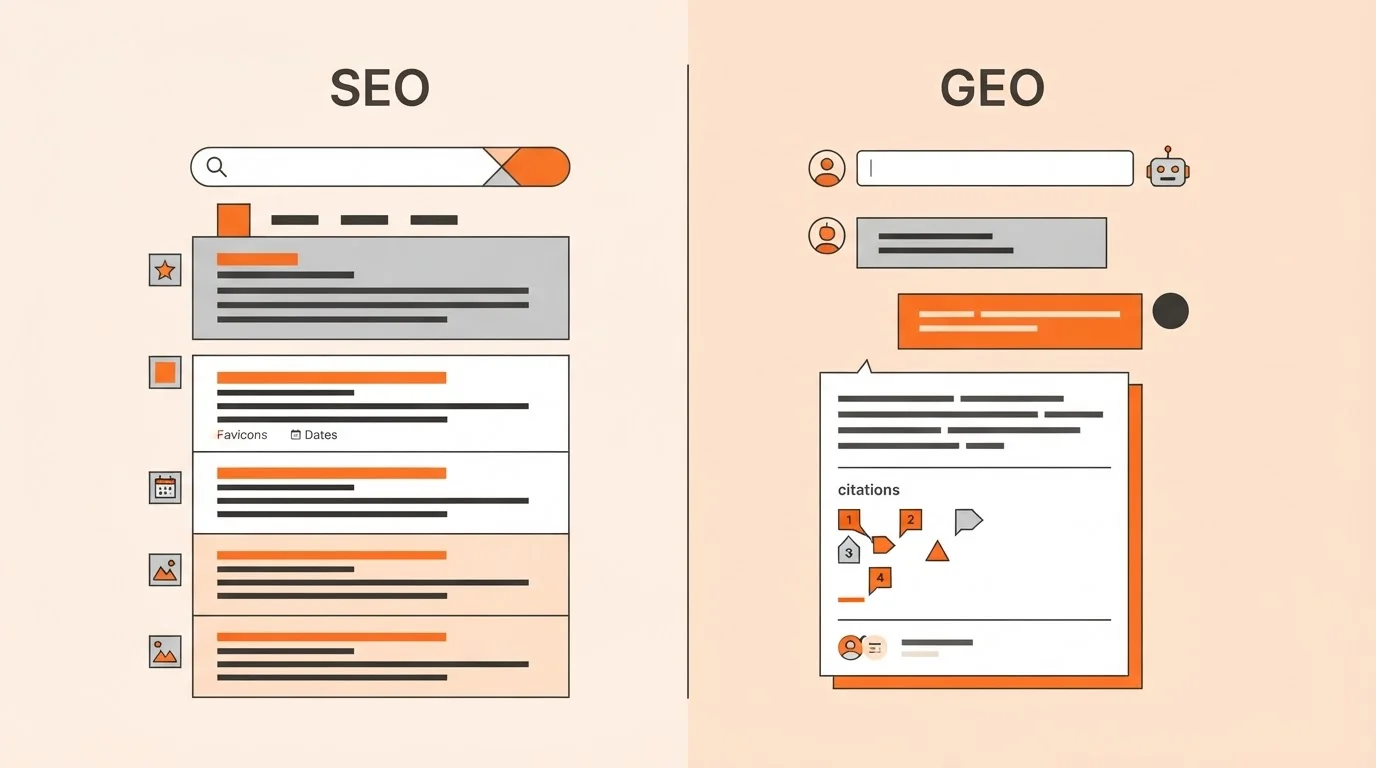
The search environment is shifting rapidly. While traditional SEO remains a cornerstone of organic growth, Generative Engine Optimization (GEO) is becoming equally critical as users increasingly turn to AI-powered search tools. These engines do not just look for keywords; they look for authoritative, specific, and useful content that can be synthesized into a direct answer for the user.
For a niche SaaS, being the source of truth for an AI-generated answer is a massive competitive advantage. If a user asks an AI for a specific niche solution and the engine cites your blog as the primary source, you have achieved instant authority. Blogged is built to handle both SEO and GEO, ensuring your content is optimized for the technical requirements of traditional search engines while maintaining the semantic depth required by generative AI engines.
This dual optimization is particularly effective for niche validation. Because niche markets have less "noise" and fewer massive competitors, specific, high-quality content can rank quickly. The faster you rank, the faster you get the data you need to confirm PMF. Autonomous blogging ensures you are present wherever your customers are searching, whether it is a search bar or an AI chat interface. By providing the "semantic fuel" these engines need, you position your SaaS as the definitive solution in your category.
Get practical updates on saas founder validate product market fit
Receive new articles and practical insights by email.
Streamlining the Workflow: From Product Documentation to Live Blog
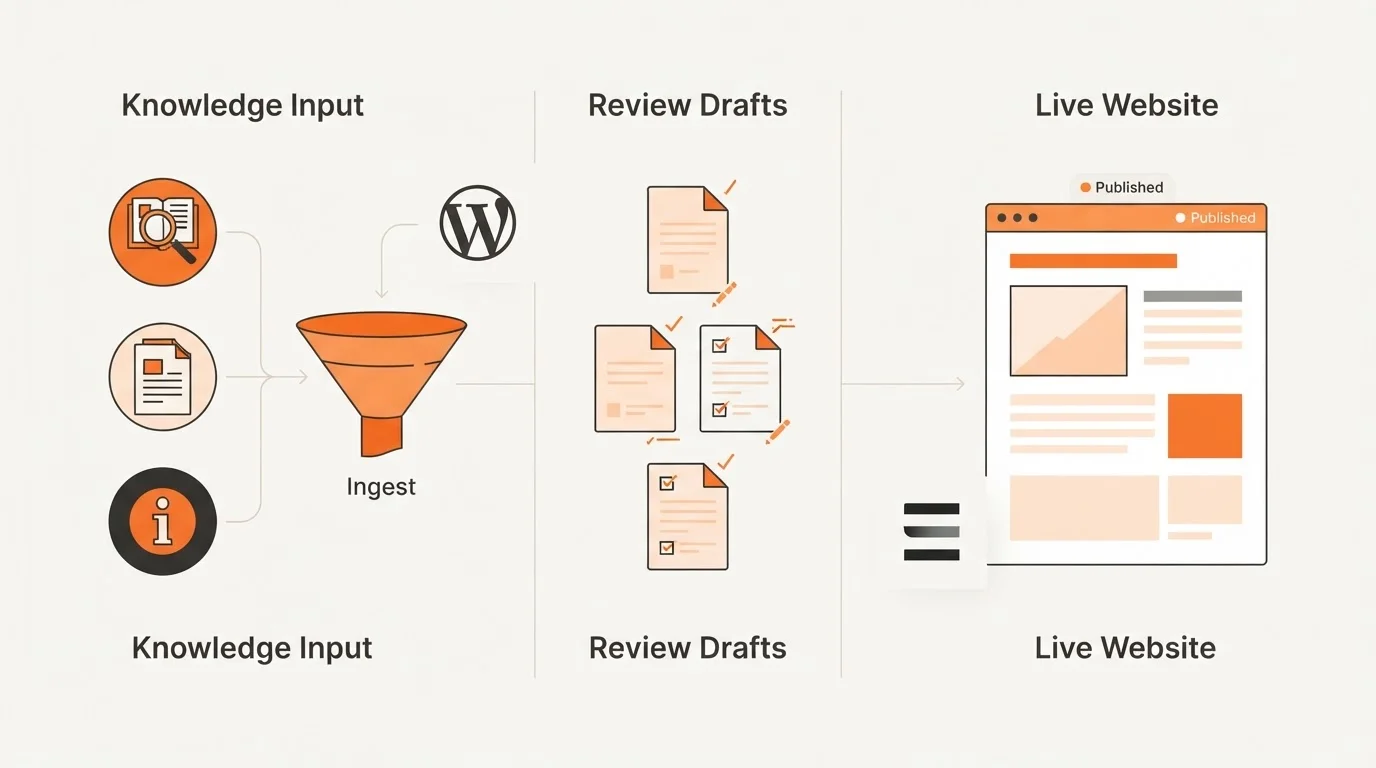
Speed is one of the few real advantages a startup has over established competitors. A manual content process can take weeks to move an article from a rough draft to a live URL. With Blogged, the workflow is designed to be frictionless, allowing you to focus on the "big picture" while the platform handles the execution. The process begins with a one-time setup of your knowledge base and an integration with your existing website infrastructure.
Blogged's WordPress AI Blog Publishing integration lets users create and review articles in Blogged, then deliver them to their WordPress website. Blogged connects to self-hosted WordPress through the Blogged Publishing plugin and an application password. For those using other platforms, the Ghost AI Blog Publishing integration manages content creation and review while Ghost renders the reader experience. These integrations ensure that content moves from the platform to your site without manual copy-pasting.
Once the integration is live, the cycle is simple: you provide the knowledge, the system generates drafts, and you review them for brand alignment. Blogged includes 1 revision per article, ensuring you can fine-tune the messaging without starting from scratch. To support growing teams, every paid plan includes unlimited team seats, allowing product managers and marketers to participate in the review process without additional costs.
Measuring Conversions and Market Interest
The ultimate goal of this content is to drive action. For validation, you are not just looking for pageviews; you are looking for conversions. These could be sign-ups for a beta, downloads of a whitepaper, or requests for a demo. Because Blogged integrates with your publishing platform's analytics, you can track which specific articles are driving the most conversions.
Blogged's integrations for Ghost, Webflow, and WordPress let users collect consented visits and configured conversions for verified articles. This is the difference between a blog that is a cost center and a blog that is a validation tool. If you find that articles about a particular integration or use case have a higher conversion rate than others, you have found your "wedge." This is the most valuable data a niche founder can have. It tells you exactly what the market is willing to act on. You can then double down on that feature in your product development, knowing that there is a hungry audience waiting for it.
Key Takeaways for SaaS Founders Validating Market Fit
Validation is not a one-time event; it is a continuous process of aligning your product with market needs. Autonomous blogging facilitates this by removing the manual labor from the discovery phase of marketing. Here are the core principles to keep in mind as you build your organic validation strategy:
- Prioritize Specificity Over Volume: In a niche market, 100 visitors who are target customers are more valuable than 10,000 general visitors. Use your knowledge base to ensure your content speaks the specific language of your users.
- Automate the Routine, Control the Strategy: Let the platform handle the research and writing, but stay involved in the review process. The ability to make revisions ensures that the content always reflects your vision and current product capabilities.
- Use Content to Test Hypotheses: Treat every new topic or keyword cluster as an experiment. If the market does not respond to a certain angle, pivot your content—and potentially your product focus—to an area with more natural pull.
- Integrate for Efficiency: Use native integrations like the Blogged WordPress plugin or Ghost API to ensure that your validation probes are published as quickly as possible. The faster you publish, the faster you learn.
- Build a Knowledge Foundation: Treat your documentation as a marketing asset. The better your documentation, the better your autonomous blog will be at converting technical users.
Frequently Asked Questions
Q: How much product knowledge do I need to provide for the blog to be accurate?
You do not need a finished manual to see results. You can start with a basic product description, a few links to your existing site, or even a few uploaded documents. Blogged's Knowledge Engine uses whatever you provide to build a foundation for its research and content generation.
Q: Does autonomous blogging help with SEO for very competitive niche keywords?
Yes. By focusing on long-tail, high-intent keywords that generic tools often miss, autonomous blogging allows you to build topical authority. This makes it easier to rank for the more competitive terms over time as your site's overall search authority grows.
Q: Can I control the tone and brand voice of the generated articles?
Absolutely. While the generation is autonomous, you have control over the review process. Blogged includes 1 revision per article, allowing you to adjust the tone, add specific insights, or ensure the call-to-action aligns with your current sales goals before anything goes live.
Q: How do I know if the content is actually helping me find product-market fit?
Look at the conversion data. Use the analytics provided by integrations like Ghost, Webflow, or WordPress to track which articles are leading to product sign-ups or demo requests. A steady conversion rate from organic search is one of the strongest indicators that you are solving a real problem for a real audience.
Q: Does this replace the need for customer interviews?
No, autonomous blogging complements interviews. It provides you with data on what potential users are searching for, which helps you ask better, more targeted questions during your qualitative 1-on-1 customer interviews. It ensures your interviews are spent on depth rather than basic discovery.
Conclusion
Achieving product-market fit is the most significant milestone in the life of a SaaS company. For niche founders, the challenge is obtaining high-quality market signals without burning through limited resources or founder time. Autonomous blogging bridges this gap by turning your product knowledge into a powerful, automated discovery engine that works even when you are focused on the codebase.
By leveraging tools like Blogged, you can establish an organic presence that attracts your ideal customers, validates your value proposition, and provides the data needed to iterate your product with confidence. Instead of struggling to find time to write, you can focus on building the features that your organic data proves the market wants. The result is a faster path to PMF, lower customer acquisition costs, and a more sustainable foundation for long-term growth. In the competitive SaaS landscape, the winner is not just the one who builds the best product, but the one who listens to the market most effectively.