
On this page
SaaS founders can validate new product features faster by using autonomous blogging as a real-time market discovery engine rather than just a marketing channel. Instead of committing months of engineering resources to build a prototype, founders use platforms like Blogged to transform potential feature concepts into discoverable, product-led content. By feeding the autonomous system raw product knowledge—such as problem statements, proposed use cases, and benefit facets—the system generates optimized articles that attract organic traffic and AI discovery interest. Analyzing engagement metrics like time-on-page, on-site searches, and lead conversion rates for early-access waitlists provides objective market signals before a single line of feature code is written. This approach effectively bridges the gap between a founder's hypothesis and actual market demand.
For lean SaaS teams, the cost of building the wrong feature is the primary threat to survival. Traditional validation methods like user interviews are qualitative and often subject to confirmation bias, while beta programs require a functional product that is expensive to develop. Autonomous blogging introduces a scalable way to "fail fast" or "scale fast" by letting search intent and Generative Engine Optimization (GEO) dictate which feature directions resonate with the target audience. By leveraging an autonomous workflow, founders can test multiple product directions simultaneously without diverting their focus from core product architecture.
The High Cost of Untested Development in the SaaS Lifecycle
The traditional SaaS development cycle is often linear: an idea moves from a roadmap to design, then into a sprint, and finally to a launch. It is only after the launch that most founders gain true visibility into whether the market finds the feature valuable. This build-first mentality carries a significant opportunity cost; every hour spent on a low-adoption feature is an hour stolen from building the functionality that drives growth. Founders need a way to test the water for five different ideas without the overhead of shipping five prototypes.
Manual content creation is rarely the answer to this problem because it requires the founder or a high-level product manager to spend hours researching and writing. When a team is focused on shipping code, the blog often becomes a ghost town, or it is filled with generic industry news that fails to provide specific product insights. Autonomous blogging solves this by taking the raw product facts that already exist in internal briefs and turning them into high-quality content that specifically addresses user pain points. This allows the team to gather data on which "problem-solving" narratives attract the most high-intent visitors.
This shift toward content-led validation relies on the concept of the Product Concept MVP. If a proposed feature cannot attract organic interest or drive early sign-ups through deep, informative content, it is unlikely to succeed as a built product. By using a platform like Blogged, founders can treat their blog as a laboratory for demand, using the Knowledge Engine to organize facts by product entity and facet to ensure the content is technically accurate and useful to sophisticated B2B buyers.
A Workflow for Feature Validation: The GrowthFlow Framework
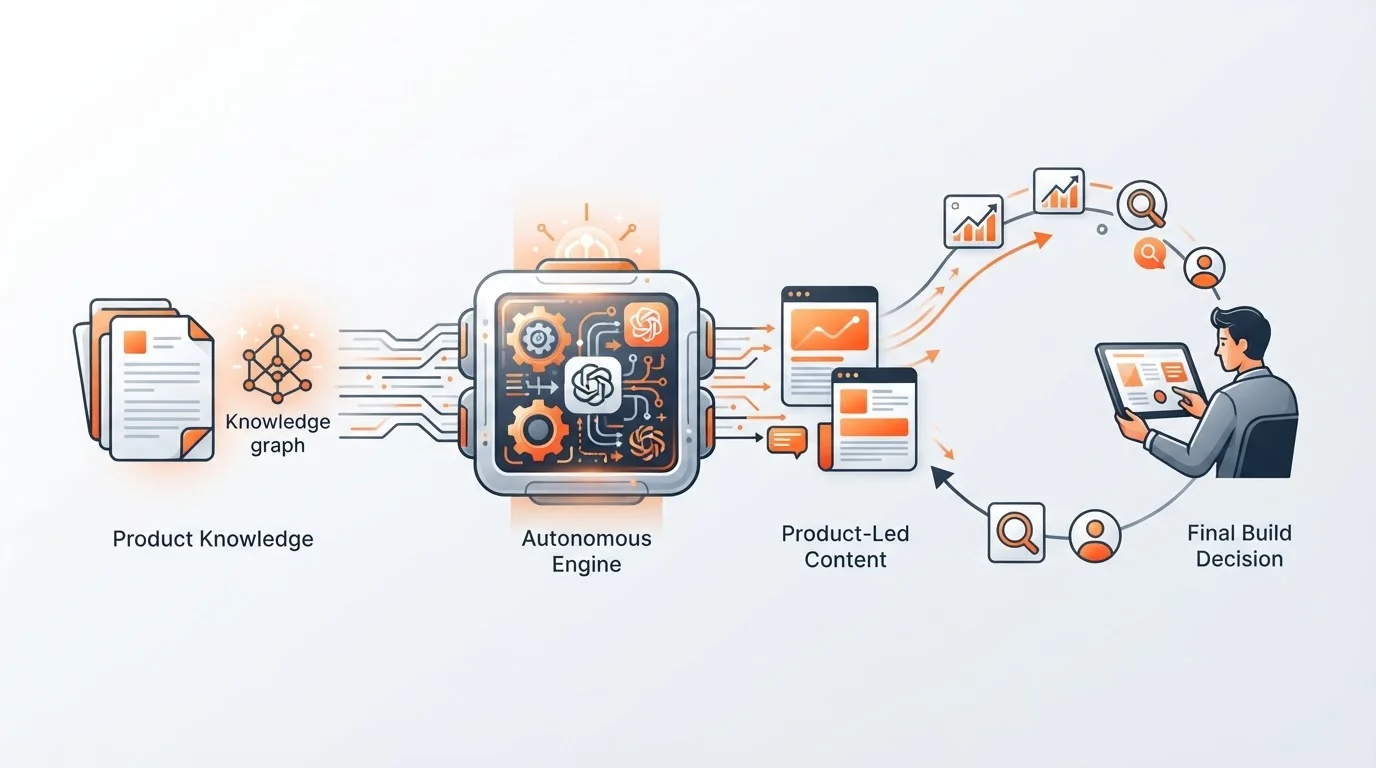
GrowthFlow, an illustrative example of a scaling SaaS, faced a roadmap dilemma: should they prioritize predictive analytics or deep-dive reporting? Instead of guessing, they used an autonomous blogging strategy to gather market feedback. They treated their roadmap not as a list of tasks, but as a list of Content Directions to be tested through autonomous publishing. By feeding their internal feature briefs into the system, they could see which concepts actually generated traffic and conversions.
This workflow involves three primary stages within the Blogged ecosystem:
- Fact Ingestion: The team provides public product sources, uploaded documents, or written descriptions of the hypothetical feature to the Knowledge Engine. This ensures the AI understands the specific utility and target persona of the feature.
- Autopilot Execution: The system builds a durable content plan and refills a topic queue from approved Content Directions. This ensures a consistent cadence of articles that test different angles of the feature, such as ROI benefits versus workflow efficiency.
- Intent Measurement: By monitoring search performance and lead growth, the founders can see which features users are actively searching for and which ones they are willing to provide their email addresses to learn more about.
This method allows the engineering team to remain focused on the current stable build while the autonomous system acts as a scout, exploring the market to find the next high-value opportunity. GrowthFlow was able to identify that their audience had a significantly higher interest in workflow automation than in deep reporting, allowing them to pivot their development resources toward the feature with the highest proven demand.
Building a Knowledge-Led Validation Engine
The foundation of successful autonomous blogging is the quality of the underlying data. Blogged’s Knowledge Engine for Autonomous SaaS Blogs allows users to provide a variety of sources to train the system, including pasted links and uploaded product documents. This is critical for validation because the AI must go beyond generic marketing fluff to explain the technical "how" of a new feature. When the system organizes facts by product entity and facet, it creates a structured understanding that mirrors the product’s architecture.
For founders, this means the validation process is only as good as the information they provide. If you are testing a new integration, you can feed the system the documentation for that third-party API. The autonomous system then researches how users typically struggle with that API and writes articles explaining how your proposed integration would solve those specific hurdles. This level of specificity is what attracts high-intent traffic from search engines and generative AI systems.
Furthermore, the system is designed for Generative Engine Optimization (GEO). As more users turn to AI search tools and large language models (LLMs) to find software solutions, your feature concepts need to be discoverable in those environments. Fact-based, product-led content is highly prioritized by these systems because it provides specific answers to complex user queries. By using an autonomous platform, you ensure your hypothetical features are being "read" and "understood" by the AI engines that influence modern SaaS buyers.
Technical Implementation: Integration for High-Velocity Feedback
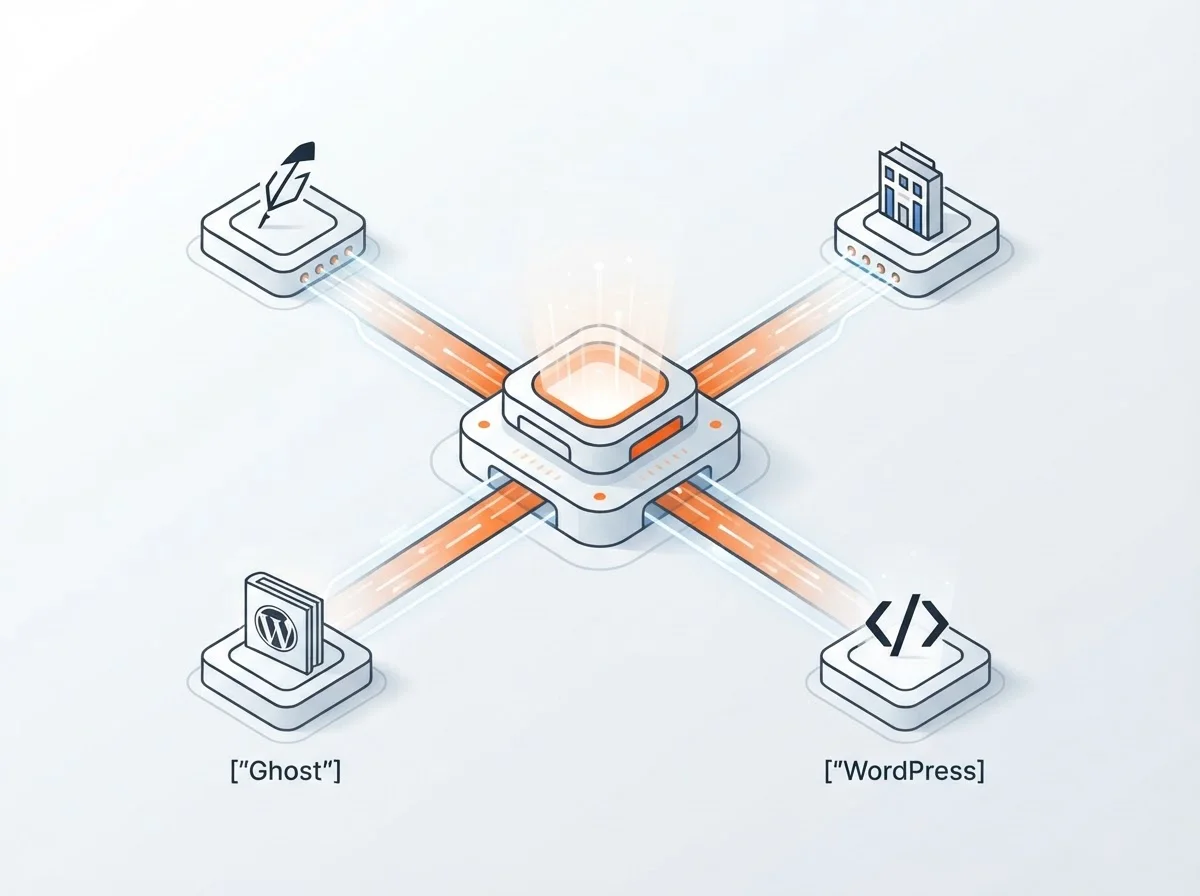
A validation engine is only useful if it doesn't create new technical friction for the team. Blogged integrates directly with the most common SaaS content stacks to automate the publishing process. For teams using Ghost, the Ghost AI Blog Publishing integration manages content creation and review while Ghost renders the reader experience. This setup allows founders to collect consented visits and configured conversions for verified articles, providing the raw data needed for product decisions.
For those on a WordPress stack, the WordPress AI Blog Publishing integration connects to self-hosted sites via a dedicated publishing plugin and an application password. This allows reviewed articles to be delivered directly to the CMS, maintaining a high-velocity blog without the need for manual copy-pasting or formatting. The platform also supports Webflow CMS, Next.js, and even signed webhooks for custom-built frontends, ensuring that no matter the stack, the content can reach the audience.
Operational efficiency is further supported by the platform’s team structure. Since every paid plan includes unlimited team seats, product managers, marketers, and founders can all participate in the review and approval process. While the system allows for 3 revisions per article, the goal of a validation engine is to maintain speed. By setting clear Content Directions and letting the Autopilot manage the topic supply, a lean team can maintain a sophisticated blog that serves as a 24/7 research department.
Get practical updates on saas founder validate new product features autonomous blogging
Receive new articles and practical insights by email.
Measuring Market Signals and Leading Indicators
Once the autonomous content is live, the focus shifts to data analysis. Blogged allows users to track Search Console performance, lead growth, and reader feedback directly. For feature validation, three specific metrics are most indicative of market demand:
- Search Intent Depth: Are users finding these articles through long-tail queries that describe a specific problem? This indicates that the proposed feature addresses a real-world pain point.
- CTA and Lead Outcomes: How many users are clicking the "Request Early Access" or "Join the Waitlist" buttons? This is the ultimate signal of desirability and willingness to engage.
- On-Site Searches: If users are searching for the feature name or related keywords on your own blog, it shows that your existing customer base is looking for that specific solution.
By comparing these metrics across different feature topics, founders can create a data-driven priority list for their roadmap. If one category of content is consistently driving higher engagement and more lead growth, it provides the "green light" for engineering. Conversely, if a feature concept attracts no organic interest despite professional content optimization, it serves as a warning that the market might not be ready for that specific solution, saving the company from a costly development mistake.
Frequently Asked Questions
Q: How does this differ from traditional SEO?
Traditional SEO focuses on ranking for high-volume keywords. Validation-focused blogging uses autonomous systems to create deep, product-led content that tests specific problem-solution hypotheses, often targeting long-tail intent and generative search engines (GEO) to find high-intent buyers.
Q: Is the content high enough quality for B2B readers?
Yes, because the platform uses your specific product knowledge as the source of truth. By organizing facts into entities and facets, the AI produces specific, technical content rather than generic fluff, which is essential for building trust with SaaS buyers.
Q: What if I decide not to build a feature after publishing content about it?
This is a normal part of the discovery process. You can frame the content as an exploration of a new solution or use CTAs like "Vote for this feature" or "Join the research group." This manages expectations while still gathering valuable data.
Q: How much time does it take to manage the system?
The system is designed for Autopilot. Once the initial Knowledge Engine is set up and Content Directions are approved, the founder’s role is primarily to review the performance data and refine the roadmap based on market signals.
Transforming Content into a Product Discovery Engine
In the competitive SaaS landscape, speed and precision are the ultimate advantages. Validation doesn't have to be a slow, manual process that drains your engineering resources. By adopting an autonomous blogging strategy, you can transform your product knowledge into a discoverable engine that provides real-time market feedback.
Whether you are testing a new module, exploring a potential pivot, or simply trying to prioritize a crowded roadmap, the signals generated by organic search traffic and CTA engagement provide the clarity needed to build with confidence. The winners in SaaS are not always those who build the most features, but those who build the right features the fastest. Autonomous blogging is the tool that makes that speed possible, freeing you to focus on building the product while the system handles the discovery.