
On this page
Building a successful SaaS is rarely about having one perfect idea. It is about the continuous discovery of high-value problems within specific, underserved niches. For many founders, identifying these new market opportunities involves a mix of expensive consultants, speculative ad spend, or late-night intuition. These traditional methods are often reactive and too slow to capture fast-moving trends. By the time a formal market report highlights a sector, the cost of acquisition has usually skyrocketed. To break through growth plateaus, founders need a faster way to test demand without diverting engineering resources from their core product roadmap.
Autonomous content serves as a strategic market sensor. Instead of viewing a blog as a simple marketing expense, founders can use it as a probe to broadcast product capabilities into dozens of potential industries simultaneously. By leveraging an autonomous SEO and GEO platform, you can transform technical documentation and product specs into discoverable assets. These assets signal where the highest concentration of high-intent customers actually lives. This guide explores the framework for using autonomous blogging to discover and validate new SaaS market segments with precision, moving from guessing where demand might be to observing where it actually arrives.
The SaaS Discovery Gap: Why Traditional Research Often Fails
Most SaaS founders fall into the trap of reactive market research. They look at competitor movements, high-level industry trends, or feedback from existing customers to decide where to expand next. While useful, these are often lagging indicators. If a competitor has already established a presence in a niche, the opportunity is no longer blue ocean. If an existing customer asks for a feature, they are already using your tool in a way that may not reflect the broader market’s untapped needs.
The cost of manual experimentation is a significant barrier to entry. Writing a series of deep-dive articles to test a niche—such as 'Project Management for Clinical Trials' versus 'Project Management for Architecture Firms'—requires dozens of hours of subject matter research. If that niche proves to be a dead end, that time is permanently lost. This high risk of failure often leads to a 'safe' marketing strategy that focuses only on generic categories, missing the high-conversion, low-competition sub-niches that drive explosive growth.
To find these opportunities, founders need a system that operates on autopilot. The goal is to create a persistent presence across diverse use cases while you focus on the product roadmap. By automating the research, writing, and publishing lifecycle, you can explore market adjacencies at a scale that manual teams cannot match. This approach allows you to gather real-world data on which specialized audiences are searching for your specific solutions before you commit a single line of specialized code.
Building a Market Sensor with Autonomous Blogging
An autonomous market sensor works by reversing the traditional marketing funnel. Instead of picking a single target and then creating content, you create product-led content across a wide range of relevant themes. You then monitor which clusters attract the most high-intent traffic and conversions. This requires a platform that handles the heavy lifting of research and optimization without constant human intervention.
The foundation of this strategy is transforming your internal knowledge into discoverable content. When you use a platform like Blogged, you aren't just generating generic text. You are training a system on your specific documentation, technical specifications, and product vision. This ensures that every piece of content published—whether it targets construction managers or financial analysts—is technically accurate and deeply rooted in what your SaaS actually does.
This process allows you to test ten different 'hypothetical' markets simultaneously for the same effort as a single manual campaign. If articles targeting a specific niche start to gain traction in search results and AI discovery, you have validated demand with actual user behavior. This data-driven validation is far more reliable than speculative surveys because it reflects how users search for solutions in their natural digital environment.
The Knowledge Engine: Grounding Discovery in Product Truth
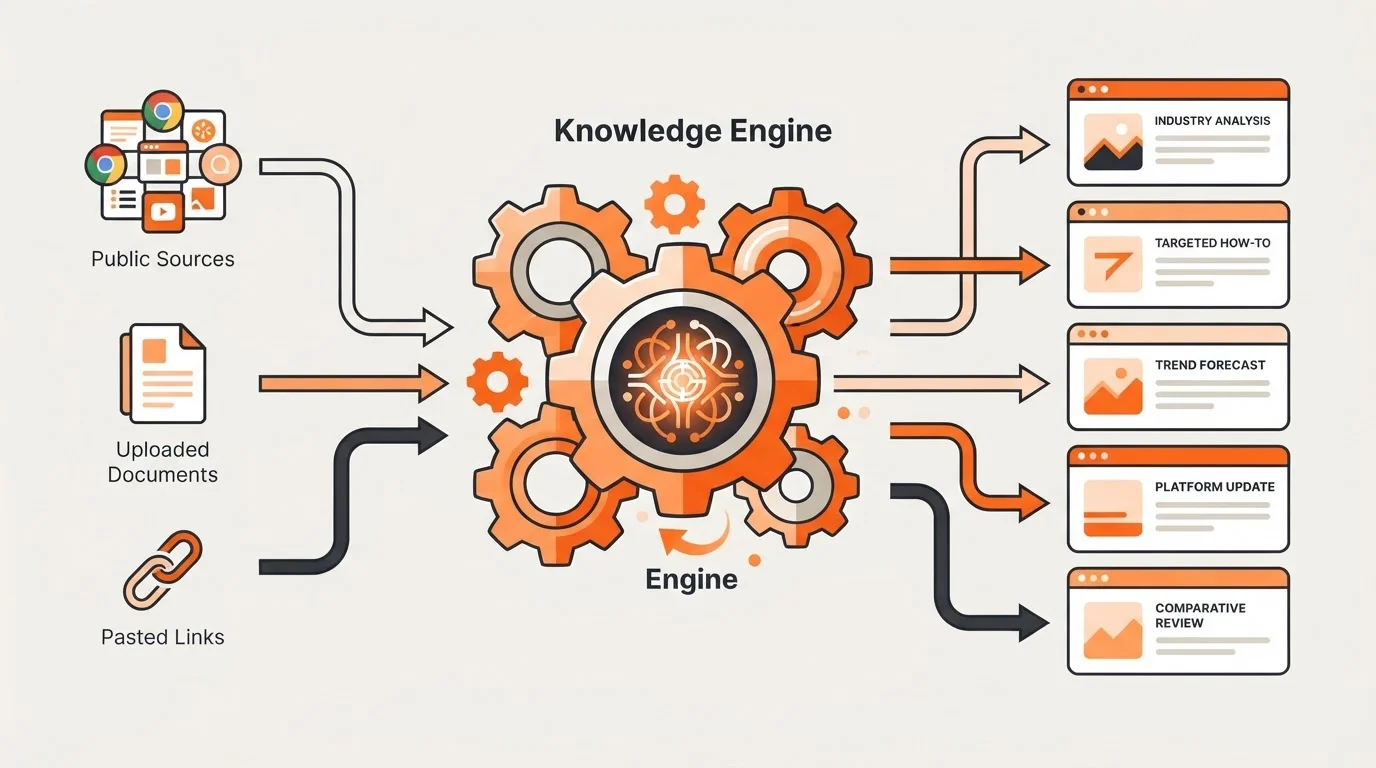
The most common failure of AI-driven content is a lack of depth. To identify a real market opportunity, content must solve a specific problem for a specific persona. Generic content will never attract the niche signals needed for validation. This is why the Knowledge Engine for Autonomous SaaS Blogs is a critical component for founders.
Founders can provide the system with public product sources, uploaded internal technical documents, pasted links to documentation, or a detailed written product description. By feeding these sources into the system, you ensure the autonomous blog understands the nuances of your software. For example, if your tool has a unique file-versioning system, the Knowledge Engine can explain how that specific feature solves a bottleneck for structural engineers versus how it helps creative directors.
This product-led approach is what drives organic growth through SEO and GEO. When the system identifies a gap in the market, it creates specific, useful content that positions your product as the natural solution. Because Blogged includes 3 revisions per article, founders can maintain full editorial control, sharpening the message as the market sensor begins to return results and identifying which value propositions resonate most with different sectors.
Deploying to the Edge: Multi-Platform Integration Strategy
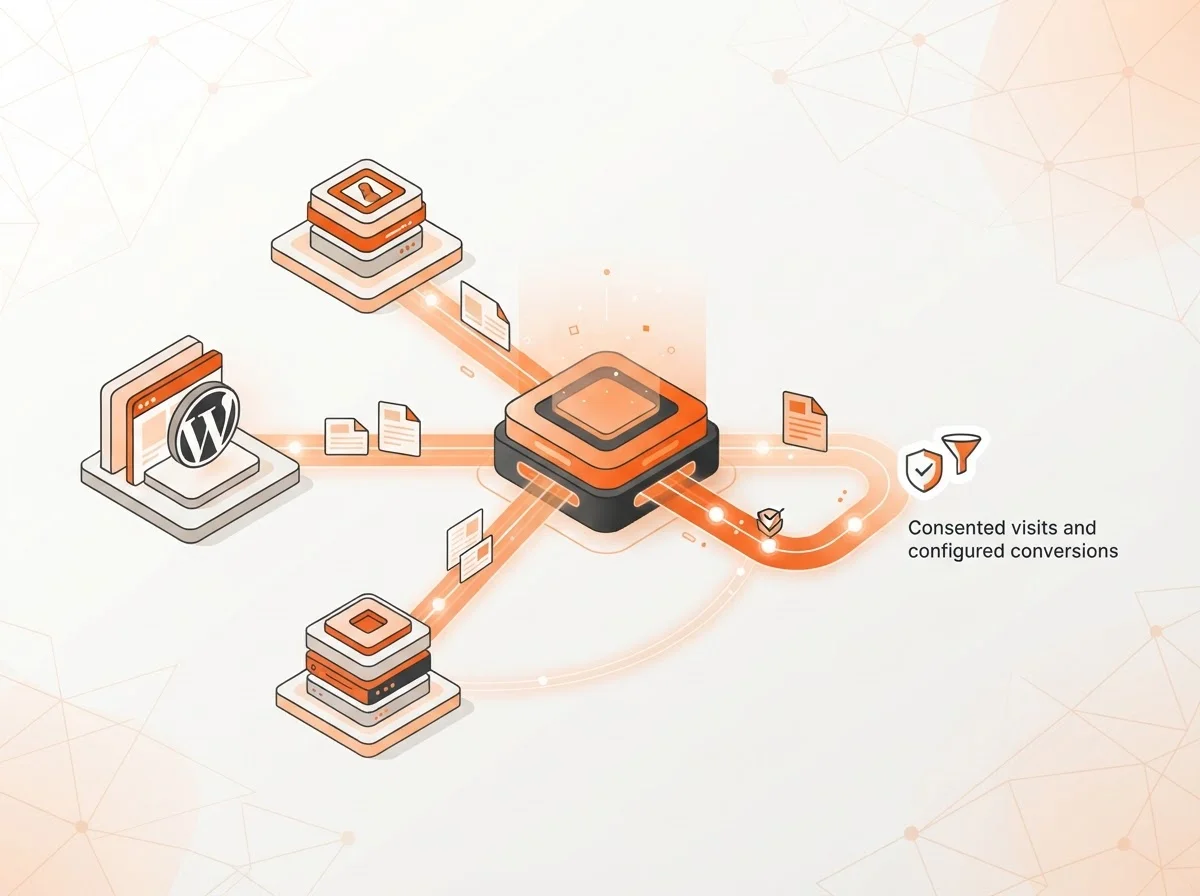
To effectively sense a market, your content needs to be where your potential customers are searching. A single blog on a hidden subdomain is rarely enough to capture the diverse signals required for market opportunity analysis. A multi-channel approach allows you to test different demographics across different platforms and stack configurations.
For many SaaS companies, the primary marketing site is the first point of contact. Using the WordPress AI Blog Publishing integration, founders can create and review articles within Blogged and deliver them directly to their site. For those running self-hosted instances, connecting via the Blogged Publishing plugin and an application password provides a seamless bridge. This integration is particularly powerful because it allows you to collect consented visits and configured conversions for every verified article.
If you see a sudden spike in conversions from a specific niche—such as legal professionals or logistics managers—you have immediate, high-confidence data to support a market expansion. This real-time feedback loop ensures that your marketing efforts are always aligned with where the market is actually moving.
Expanding Reach with Ghost, Webflow, and Next.js
To reach specialized audiences, you may need to branch out beyond a standard blog setup. For developer-focused niches or high-end thought leadership, the Ghost AI Blog Publishing integration is often the preferred choice. By creating a custom integration in Ghost and verifying the Admin API key, founders can manage content creation in Blogged while Ghost renders a premium, high-speed reader experience.
For founders who prefer modern, headless stacks, the Next.js AI Blog Publishing and Webflow CMS integrations offer similar benefits. These platforms allow you to collect consented visits and configured conversions, giving you a unified view of how your content is performing across different market segments. By spreading your 'sensor' across multiple platforms, you reduce the risk of being blinded by the demographics of a single channel.
This multi-platform strategy ensures that the market signals you collect are broad enough to identify scalable opportunities. Whether a user is searching on a mobile device through an AI engine or browsing a technical forum that links to your blog, the autonomous system ensures your product knowledge is present and discoverable.
Validating Demand through Organic and GEO Signals
Success in autonomous market discovery is measured by the quality of signals, not just the volume of traffic. A million views from the wrong people is worth less than a hundred views from a high-intent niche lead. When your autonomous blog is running on autopilot, you must look at specific metrics within your performance dashboard to validate a new opportunity.
First, monitor Search Console performance for long-tail keywords you didn't explicitly target. These 'accidental' rankings are often the strongest indicators of an underserved niche where users are desperately looking for a solution like yours. Second, analyze on-site search patterns. When users arrive from a specific article, what else are they looking for? If readers coming from a construction-focused post are searching for 'offline mode' or 'safety compliance,' they are telling you exactly what features you need to build to win that market.
Third, track CTA and lead outcomes. By analyzing which clusters of content drive the most lead growth, you can calculate the potential ROI of a specific industry before you hire a dedicated sales team. This data-driven approach allows you to identify new market opportunities with the confidence of a seasoned researcher but the speed of an autonomous system.
The Rise of GEO in Modern Market Discovery
In the era of AI-driven search, traditional SEO is expanding to include Generative Engine Optimization (GEO). AI search engines like Perplexity and ChatGPT look for specific, authoritative answers to complex user queries. An autonomous blog that produces specific, product-led content is significantly more likely to be cited as a source by these engines.
When your SaaS is recommended by an AI engine as the best solution for a specialized problem—such as 'collaborative design for remote architects'—that is a powerful market signal. It indicates that your content is authoritative enough to influence the AI's recommendation engine. This provides an additional layer of validation; if AI engines are connecting your product to a specific niche, the market is likely ready for your solution.
By optimizing for both traditional search and AI discovery, you ensure that your market sensor is capturing every possible signal from the digital ecosystem. This dual approach maximizes your visibility and provides a more comprehensive view of where your product-market fit is strongest.
Operationalizing Discovery for the Modern SaaS Team

The ultimate benefit of autonomous blogging is that it frees the founder to focus on building the product. The problem with manual content creation is the 'stop-and-start' cycle. A founder might write three great articles during a slow week but then go dark for a month during a major launch. This inconsistency kills organic growth and makes it impossible to collect reliable market data.
An autonomous system ensures that your blog stays active every single week. Because the platform handles the full lifecycle of research, planning, writing, optimization, and publishing, the heavy lifting is done for you. For a growing team, this is even more efficient as every paid plan includes unlimited team seats. This allows product managers and marketers to participate in the review process without additional costs.
By setting the blog on autopilot, you transform it from a manual chore into a persistent strategic asset. Every article published is a new sensor in the market, gathering data and building authority while you sleep. This allows you to scale your content efforts as your product grows, ensuring you are always one step ahead of the next market shift.
Frequently Asked Questions
Q: How long does it take to see signals from a new market niche?
While traffic patterns vary, organic signals often begin to surface as the system builds authority in specific long-tail categories. By publishing consistently across multiple themes, you gather the data needed to identify trends sooner than manual methods.
Q: Can I use this for a brand-new SaaS product with no existing blog?
Yes. In fact, it is highly effective for new products because it helps you find your initial 'beachhead' market. By feeding your product description into the Knowledge Engine, you can test various use cases from day one.
Q: How much technical knowledge is required to set up the integrations?
Very little. For WordPress, you use a dedicated plugin and an application password. For Ghost, you simply copy an Admin API key. The platform is designed for founders who need to move fast without deep developer involvement.
Q: Does the autonomous system handle internal linking between niche articles?
Yes. The system handles research, writing, optimization, and interlinking. Proper internal linking is essential for market discovery as it helps search engines understand the relationship between your product and the niche problems you solve.
Q: What if I want to change the direction of my market sensing?
You can update your sources in the Knowledge Engine at any time. If you decide to move from testing healthcare to testing fintech, simply update your documentation and links, and the autopilot system will adjust its research and planning accordingly.
Identifying new market opportunities is the engine of long-term SaaS growth. You no longer have to rely on slow, speculative research or expensive ad campaigns to find your next high-growth niche. By leveraging an autonomous blogging platform, you can turn your product knowledge into a high-speed market sensor that identifies demand, validates use cases, and drives organic growth.
Whether you are using WordPress, Ghost, or Webflow, the strategy remains the same: broadcast your product’s truth, monitor the organic signals, and scale what works. Stop manual blogging and start autonomous discovery. Let your content find your next growth engine while you focus on building the product that serves it.
Get practical updates on saas founder identify new market opportunities case study
Receive new articles and practical insights by email.