
On this page
For SaaS founders, the most expensive mistake isn't a slow release or a minor bug in production; it is spending months of engineering time building a feature that nobody actually wants. Traditional validation methods—surveys, interviews, and early prototypes—often arrive too late or provide data that reflects user interest rather than genuine intent. To solve this, growth-stage startups are increasingly turning their content strategy into a proactive research engine.
In this guide, we examine a strategic workflow—modeled on a hypothetical company, InnovateCo—that successfully integrates autonomous blogging into the product development lifecycle. By treating blog posts as "smoke tests" for new features, a team can move from assumption-based roadmaps to data-driven execution. Using Blogged, founders can transform internal technical specifications into discoverable, product-led content that measures market demand before a single line of code is written.
The Bottleneck: Why Traditional Feature Validation Fails the Speed Test
Many SaaS companies face a common scaling problem: a roadmap overflowing with "good ideas" while the development team is already stretched thin. The traditional validation cycle—concept, prototype, beta testing, and finally, launch—can take months. By the time a founder gathers real-world usage data, market conditions may have shifted, or the problem they were solving may have evolved.
Surveys and interviews, while helpful, frequently suffer from social desirability bias. Users often say they want a feature because it sounds useful in theory, but their actual behavior—the willingness to click, sign up, or change their workflow—tells a different story. Founders need a way to measure this intent at scale without committing engineering resources or slowing down the core product build.
A blog can serve as a high-fidelity testing ground. If a detailed, educational post about a proposed feature generates organic traffic and conversions, it serves as a verified signal of demand. However, manually writing deep-dive product content for multiple feature hypotheses every month is often impossible for a small team. This is where autonomous systems bridge the gap between product strategy and market feedback.
Phase 1: Transforming Technical Specs into Content with the Knowledge Engine
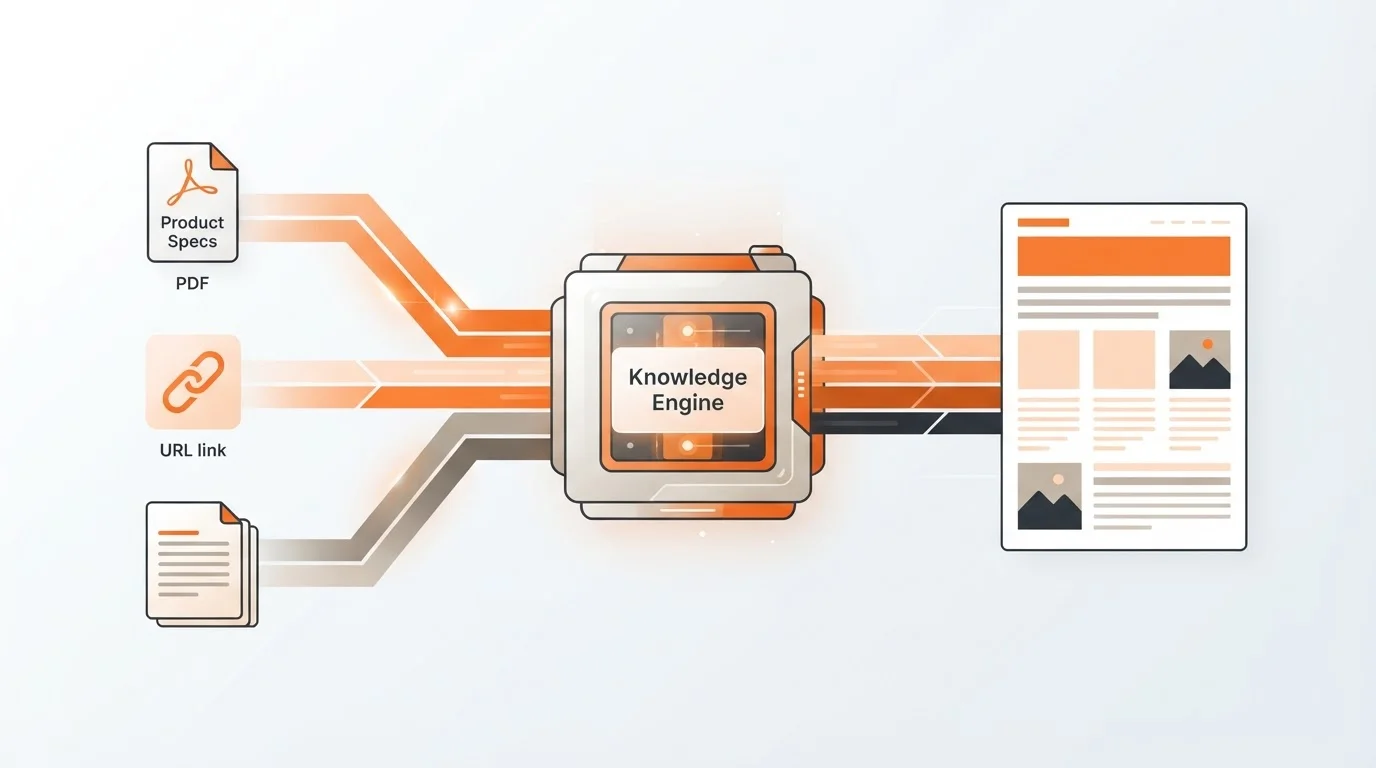
The first step in a content-led validation strategy is bridging the gap between internal product documents and external marketing. Blogged's Knowledge Engine for Autonomous SaaS Blogs allows founders to feed feature hypotheses directly into the content generation process. This eliminates the friction of explaining complex technical concepts to a freelance writer who may lack deep product context.
Product teams can provide input in several ways. For some features, they might upload internal design documents or product specifications. For others, they can simply paste links to competitor feature pages or provide a written product description of the problem they intend to solve. Because the Knowledge Engine supports public sources, uploaded documents, and direct text input, a SaaS can ingest its most proprietary ideas securely.
Once the knowledge is ingested, the autonomous system begins planning and drafting articles. These are not generic marketing pieces; they are deep, product-led articles that explain the how and why of a proposed feature. This allows the company to see how their technical concepts translate into a value proposition for the end-user long before development begins.
Phase 2: Collaborative Review Cycles with Unlimited Team Seats
A primary concern for founders when using autonomous content is maintaining technical accuracy and a consistent brand voice. A streamlined review process addresses this by involving the right stakeholders at the right time. Blogged's paid plans include unlimited team seats, allowing product managers, lead engineers, and founders to participate in the review and approval process without additional licensing costs.
Each draft generated by the Autopilot system can be routed to a relevant stakeholder for verification. Depending on the specific plan, users have access to either one or three revisions per article, ensuring the final output is polished. While engineers check for technical feasibility, founders ensure the messaging aligns with the long-term vision.
This collaborative oversight means the autonomous system handles the heavy lifting—researching, drafting, and SEO optimization—while the human team acts as the final editorial gatekeeper. This workflow allows a company to move from a raw technical idea to a published, high-quality blog post in a fraction of the time it previously took to brief a human writer.
Phase 3: Real-World Testing via Multi-Platform Integrations
To gather valid data, the content must live where the audience already is. A robust strategy utilizes direct integrations to push validation posts to existing infrastructure. For example, if a main marketing site runs on Ghost, the Ghost AI Blog Publishing integration manages content creation and review while Ghost's rendering engine handles the reader experience. Users can create a custom integration in Ghost, copy the Admin API key, and verify their Ghost connection in Blogged for a seamless setup.
For secondary documentation sites or dedicated feature blogs, the WordPress AI Blog Publishing integration is often the preferred choice. By connecting to a self-hosted WordPress site through the Blogged Publishing plugin and an application password, founders can deliver articles directly to their audience without manual copy-pasting.
This multi-channel approach ensures that feature hypotheses are exposed to different segments of the user base. Whether a reader is looking for a tutorial on Ghost or browsing a product update on WordPress, the founder is capturing data. Organizations using Webflow can also utilize the Webflow CMS AI Blog Publishing integration to ensure every touchpoint is part of the broader validation experiment.
Get practical updates on saas founder validate new product features case study
Receive new articles and practical insights by email.
Phase 4: Measuring Intent with Conversion Tracking
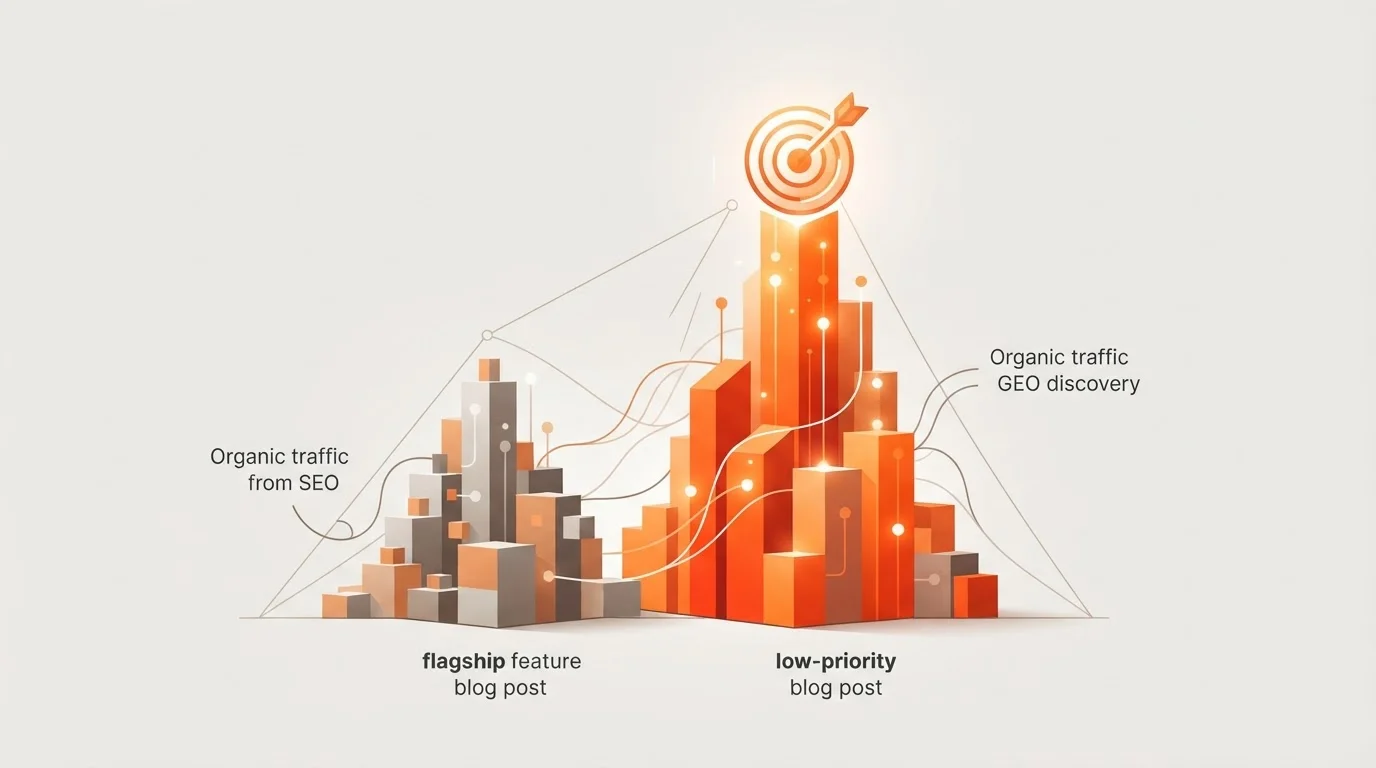
The most critical piece of this strategy is the data. Page views are a vanity metric; for feature validation, founders need evidence of intent. Blogged allows users to collect consented visits and configured conversions for verified articles across its Ghost, Webflow, Next.js, and WordPress integrations.
By configuring specific conversion goals—such as a user clicking a "Join the Beta" button or signing up for a waitlist—the product team can see exactly which articles drive high-intent behavior. This provides a clear, quantitative signal of market demand. If a post about a "low-priority" feature generates a significantly higher conversion rate than a supposed "flagship" feature, the founder has the data needed to pivot the roadmap.
This organic traffic arriving through SEO and GEO discovery represents users actively looking for a solution to the problem described. Identifying these high-demand areas allows a team to prioritize the features that will actually drive growth, shelving low-interest ideas before spending a single dollar on engineering.
Strategic ROI: How Content Speeds Up Product-Market Fit
Integrating autonomous blogging into the product cycle offers several quantifiable benefits that extend beyond simple marketing metrics. It transforms the blog from a cost center into a strategic research asset.
Reduced Development Waste: By identifying low-interest features early through "smoke test" content, teams can avoid building tools that don't resonate with the market. This saves hundreds of engineering hours that can be redirected toward core product improvements.
Faster Feedback Loops: The time from a product hypothesis to market feedback is significantly reduced when you don't have to wait for a full MVP build to see how users react to a value proposition.
Sustained Organic Growth: While validating features, the autonomous system simultaneously builds SEO and GEO authority. Every validation post serves as a long-term asset that drives traffic, even if the feature itself is delayed or modified.
Enhanced Investor Confidence: During funding rounds, founders can present a data-backed roadmap. Instead of just showing a list of planned features, they can show a list of concepts that have already demonstrated market demand through content conversions.
Common Questions About Autonomous Feature Validation
Q: Won't publishing articles about unreleased features confuse our users?
Not if you frame them correctly. Use these articles to discuss the "Future of [Category]" or frame them as Request for Comments (RFCs). Clear CTAs like "Sign up for early access" signal to users that the feature is in the planning or development stage.
Q: How does this help with SEO if the features aren't built yet?
It builds topical authority. By the time you actually launch the feature, you already have a ranked, high-authority page with existing traffic, giving your product launch a significant head start in search results.
Q: Can we use this for B2B Enterprise SaaS?
Yes. In fact, it is even more valuable for B2B. You can use autonomous content to target long-tail, problem-specific keywords that enterprise buyers search for when looking for specialized solutions, allowing you to validate niche feature sets for specific industries.
Q: Is the content truly autonomous or do I need to edit everything?
It is autonomous with human oversight. The system handles the research and writing, but you should use your included revisions to ensure your specific product nuances and technical details are perfectly captured.
Building the Right Product with Autonomous Content
Content is more than just a way to fill a social media queue; it is a vital tool for SaaS product discovery. By leveraging autonomous blogging, founders can step away from the manual labor of content creation and focus on what they do best: building the product.
Validating features through content de-risks your roadmap, ensures you are building for your actual audience, and creates a sustainable organic growth engine all at the same time. If you are struggling to balance the need for consistent content with the demands of your development cycle, it is time to put your blog on Autopilot.