
On this page
For the majority of SaaS founders, the most significant barrier to organic growth isn't a lack of vision or product-market fit; it is the content bottleneck. You are building a product that solves technical problems, yet the very activity that drives high-intent traffic—publishing consistent, product-led content—is often the first thing to fall by the wayside. The reality of scaling a blog while simultaneously managing a product roadmap, customer success, and fundraising is inherently unsustainable for small teams. Manual content creation requires a constant cycle of research, writing, SEO optimization, and administrative work that distracts from the core mission of building software. This guide provides a blueprint for founders to break this cycle by leveraging autonomous blogging to achieve a significant organic leads boost. By shifting from manual production to an autonomous system grounded in product knowledge, founders can finally align their organic visibility with their product's actual potential.
The SaaS Content Bottleneck: Why Manual Scaling Fails
Organic lead generation is the lifeblood of sustainable SaaS growth, yet most founders treat it as a secondary chore because of the sheer manual effort required. The traditional approach involves either writing posts personally—which leads to founder burnout—or hiring expensive freelancers who often lack the technical depth to describe your software accurately. When content is generic, it fails to convert sophisticated B2B buyers who are looking for specific solutions to technical problems. Furthermore, the administrative overhead of manual blogging is often underestimated. Marketing teams frequently spend significant portions of their workweek on non-creative tasks like formatting posts in a CMS, managing internal link structures, and optimizing metadata for search engines. This inefficiency is a silent killer of growth. Search engines and modern discovery tools reward topical authority and consistent publishing, both of which are difficult to maintain when every article requires hours of manual labor. To compete in a crowded SaaS market, founders need a way to maintain a high publishing cadence without sacrificing the product-led nuance that makes their software unique.
Grounding Content in the Knowledge Engine
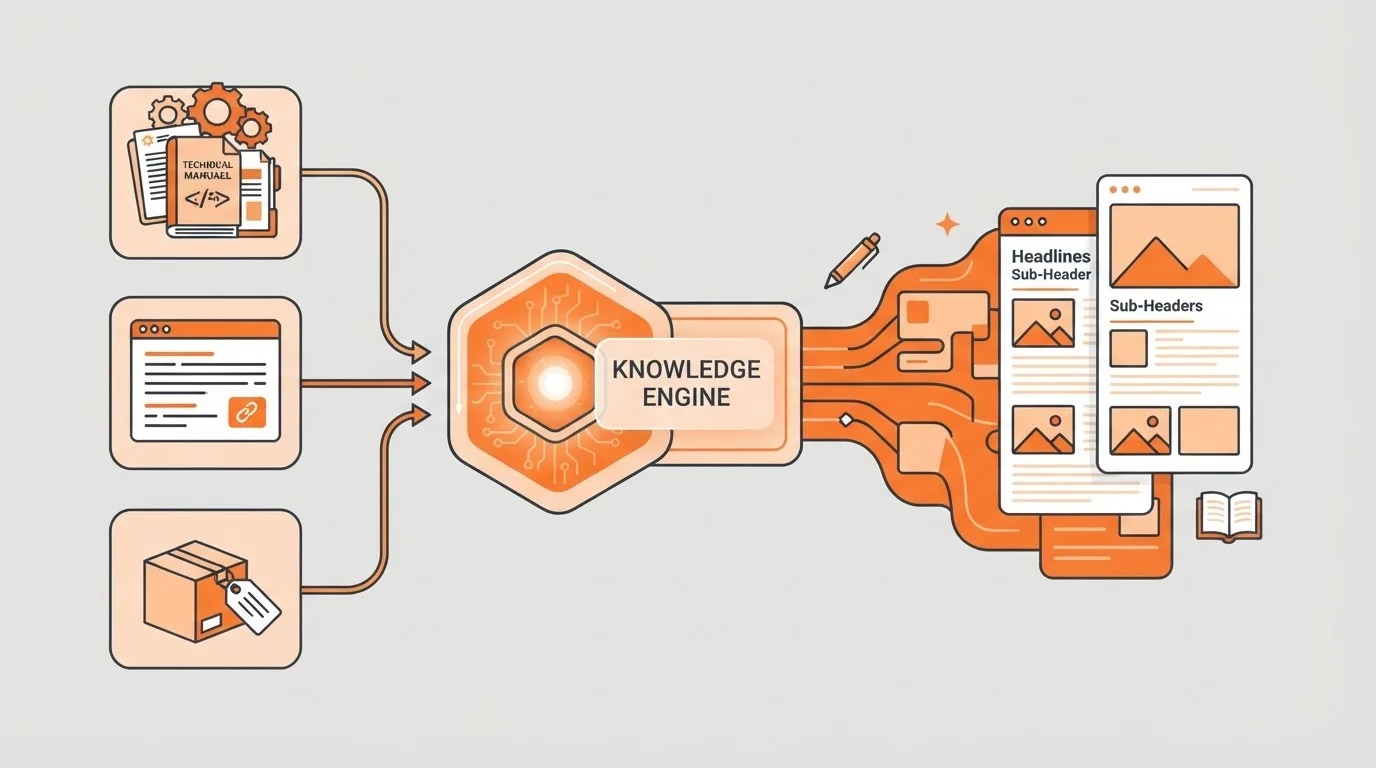
The primary weakness of standard AI writing tools is their tendency to produce hallucinations or generic advice. For a SaaS company, generic content is worse than no content; it signals to potential customers that you do not truly understand the problem space. This is where the concept of a Knowledge Engine becomes critical for autonomous growth. Blogged uses a Knowledge Engine for Autonomous SaaS Blogs that allows you to provide direct, factual inputs about your product. Instead of relying on the general knowledge of a language model, the system is grounded in your specific reality. Founders can provide public product sources, upload technical documentation, paste links to existing high-performing pages, or provide a written product description. This ensures that every article generated is not just SEO-friendly, but product-led. When the autonomous engine writes about a technical problem, it references your specific features and unique value proposition. This grounding transforms the blog from a general information portal into a powerful sales enablement tool that speaks directly to your target persona's pain points.
Eliminating AI Hallucinations with Product Facts
The Knowledge Engine acts as a guardrail, ensuring that the autonomous system does not invent features your software doesn't have. By feeding the engine your latest documentation and release notes, you ensure that the content remains technically accurate as your product evolves. This is particularly important for B2B SaaS, where buyers often look for specific API capabilities, integration supports, or security compliance details. An autonomous system that understands your product architecture can write authoritatively about how your solution fits into a customer's existing tech stack. This level of detail is what separates a high-converting lead magnet from a high-bounce blog post. It allows founders to scale their expertise without having to write every word themselves, ensuring the brand voice remains consistent across dozens of articles.
The Shift from SEO to Generative Engine Optimization (GEO)
Traditional Search Engine Optimization (SEO) is evolving into Generative Engine Optimization (GEO). While ranking on the first page of search results remains a priority, a growing number of professional researchers now use AI-powered synthesis tools to find software solutions. These generative engines do not just provide lists of links; they synthesize information and recommend specific products based on the authority and semantic depth of their content. If your blog consists of thin, keyword-stuffed articles, these models are unlikely to cite your software as a recommended solution. Blogged is built to handle this shift by focusing on semantic structure and factual density. By producing deep, authoritative content that covers the niche nuances of your industry, you increase the likelihood that your SaaS is cited as a source by generative engines. This new layer of discoverability is essential for founders who want to capture leads at the very beginning of the research phase.
Building Topical Authority Automatically
Topical authority is achieved when a website covers a subject so comprehensively that discovery algorithms view it as a primary source of truth. For a SaaS founder, this means publishing articles that cover not just your product, but the entire ecosystem around the problem you solve. Autonomous blogging allows you to map out hundreds of related sub-topics and publish them at a cadence that would be impossible manually. The system handles internal linking, ensuring that search engines can easily crawl and understand the relationship between different technical concepts on your site. This structured approach to content improves your visibility for high-intent keywords while simultaneously building the trust necessary for GEO discovery. By consistently delivering value across a wide range of relevant topics, you establish your brand as a leader in its category.
The Technical Bridge: Seamless Autonomous Publishing
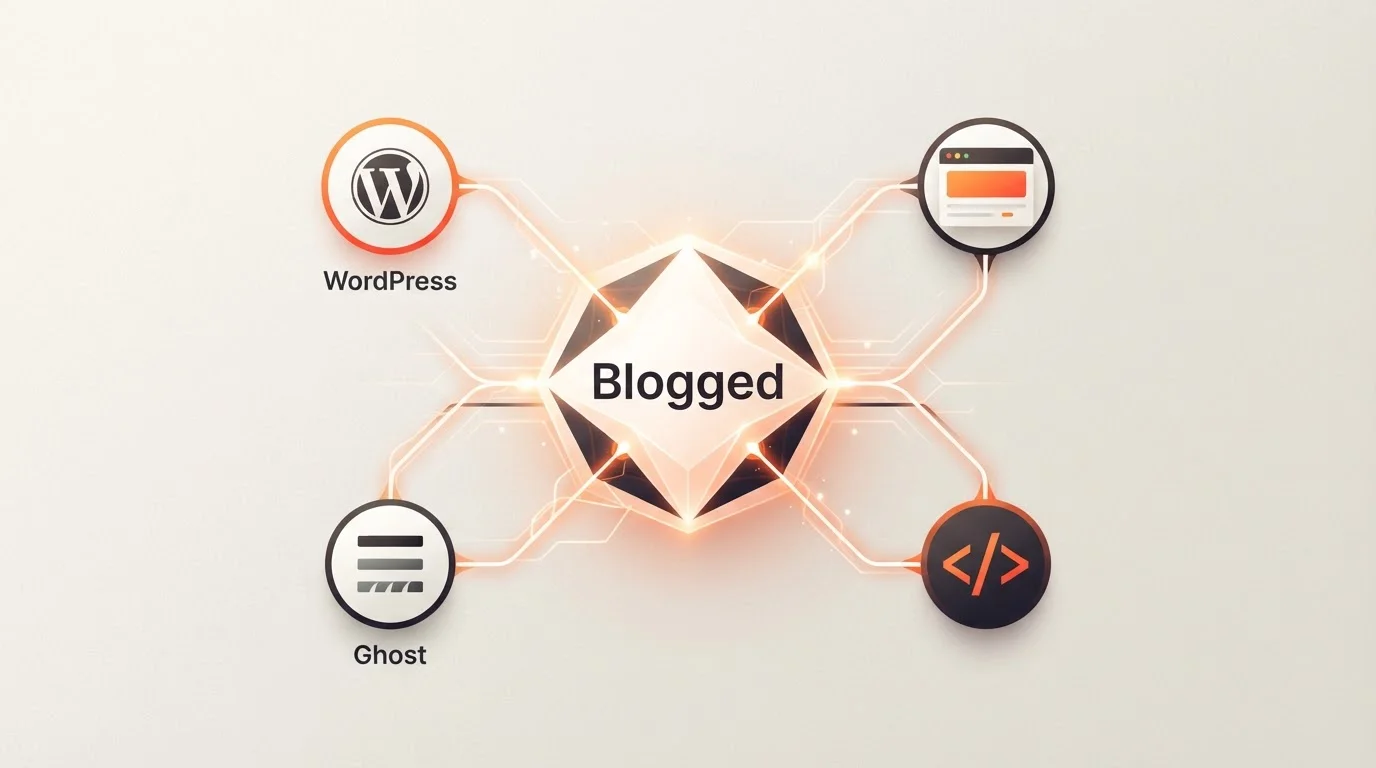
One of the largest drains on a founder's time is the technical management of the blog itself. Autonomous blogging is not just about writing; it is about the entire lifecycle of the content, including research, planning, optimization, and publishing. Blogged offers seamless technical integrations to ensure this process happens on Autopilot without manual intervention. For teams using WordPress, the platform connects to self-hosted sites through a dedicated Blogged Publishing plugin and an application password. This allows for direct delivery of articles that are already formatted and optimized. For those using Ghost, the integration manages content creation and review while Ghost handles the reader experience. Users simply create a custom integration in Ghost and verify the connection with an Admin API key. Beyond just publishing the text, these integrations allow founders to collect consented visits and track configured conversions for verified articles, providing clear data on lead generation performance.
Support for Modern Web Stacks
Not every SaaS uses a traditional CMS, and autonomous blogging must be flexible enough to accommodate modern development environments. Blogged supports custom stacks like Next.js via a Signed Webhook and Content API, allowing developers to maintain full control over the frontend while automating the content pipeline. There is also a dedicated Webflow CMS integration that enables the same level of automated publishing and conversion tracking. By eliminating the copy-paste friction that often prevents founders from publishing, these integrations ensure that the blog remains active even during busy development cycles. This technical automation ensures that your organic growth engine never stops running, even when your team is focused on hitting the next product milestone.
Scaling Authority without Scaling Costs
Traditional marketing agencies or content teams scale linearly with cost; if you want twice the content, you usually have to pay twice the price. Autonomous blogging breaks this linear relationship. Because the system handles the heavy lifting of research and drafting, your existing team can do more with less. Blogged facilitates this by including unlimited team seats on its paid plans. This allows product managers, marketers, and developers to participate in the review and approval process without incurring additional per-seat fees. The workflow is designed for efficiency: the system produces a high-quality draft, and your team provides the final human-in-the-loop verification. With features like 3 revisions per article and the ability to manage separate static pages for About Us or Contact information, the platform functions as a full website management solution. This allows a small team to maintain a publishing cadence that would normally require a full-scale editorial department, resulting in a significantly lower cost-per-lead over time.
Frequently Asked Questions
Q: How does autonomous blogging differ from generic AI writing tools?
Generic AI tools require constant prompting and often lack specific context about your product. Blogged uses a Knowledge Engine to ground content in your actual documentation, links, and product descriptions, ensuring the output is product-led and accurate.
Q: Can I review content before it goes live?
Yes. The workflow is designed so that you or your team can review, request up to 3 revisions, and verify every article before it is published to your CMS.
Q: Does this work with my specific website platform?
Blogged supports a wide range of integrations, including a WordPress plugin, a Ghost Admin API integration, and a Webflow connection, as well as a Content API and Signed Webhooks for custom stacks like Next.js.
Q: How does the Knowledge Engine stay updated?
You can update your knowledge sources at any time by providing new URLs, documents, or descriptions. This ensures the autonomous engine is always aware of your latest feature launches and product updates.
Q: Is there a limit on how many team members can use the platform?
No. Blogged includes unlimited team seats on its paid plans, allowing your entire team to collaborate on the content review process without extra costs.
Get practical updates on saas founder organic leads boost case study
Receive new articles and practical insights by email.
Winning the Organic Growth Race
The path to a significant organic leads boost for your SaaS doesn't require a massive marketing budget or a team of writers. It requires a shift in how you leverage your existing product knowledge. By adopting an autonomous blogging strategy, you can transform your blog from a neglected task into a high-performance growth engine. You have already done the hard work of building a valuable product; now, let the technology you've mastered help you tell that story to the world. With Blogged running your blog on Autopilot—handling everything from research and SEO to interlinking and publishing—you can stop worrying about the content bottleneck and return your focus to what matters most: building and scaling your SaaS.