
On this page
Organic growth is the gold standard for SaaS customer acquisition, yet it is often the first strategy to fail during the scale-up phase. Founders possess deep domain expertise and a product that solves concrete problems, but the manual effort required to communicate that value to search engines is immense. Traditional blogging requires a relentless cycle of keyword research, drafting, editing, and publishing—a process that often takes four to six hours per post. For a lean engineering or product team, this resource drain leads to the 'invisible product' trap, where a great solution remains hidden from the users who need it most. This guide explores a new paradigm: autonomous blogging. By leveraging platforms designed to ingest and organize product-led knowledge, founders can move away from manual content creation and toward a self-sustaining growth engine that prioritizes both Search Engine Optimization (SEO) and the emerging field of Generative Engine Optimization (GEO).
The SaaS Content Paradox: Why Traditional Blogging Stagnates
Most SaaS startups hit a ceiling where organic traffic flatlines despite product improvements. This stagnation usually stems from a content bottleneck. When a founder or product manager is responsible for the blog, the cadence is irregular. When the task is outsourced to generic freelancers, the content often lacks the technical nuance and product-specific context required to convert a sophisticated B2B audience. Generic AI writing assistants have only complicated this issue. While they can produce text quickly, they lack 'durable context,' often hallucinating features or pricing that do not exist in your actual software. For a technical SaaS, these inaccuracies are more than just embarrassing—they are a liability that erodes user trust and search authority.
The High Cost of Content Inconsistency
Inconsistency in publishing signals to search engines that your site is no longer an active authority in your niche. Without a regular cadence, your topical authority decays, and you lose ground to competitors who may have a worse product but a more consistent content output. Furthermore, customer acquisition becomes dangerously dependent on paid advertising, which scales linearly with cost rather than exponentially with effort. To break this cycle, SaaS teams need a system that runs on Autopilot, handling the research, planning, and optimization of product-led content without requiring constant founder intervention.
Transforming Product Knowledge into Discoverable Assets
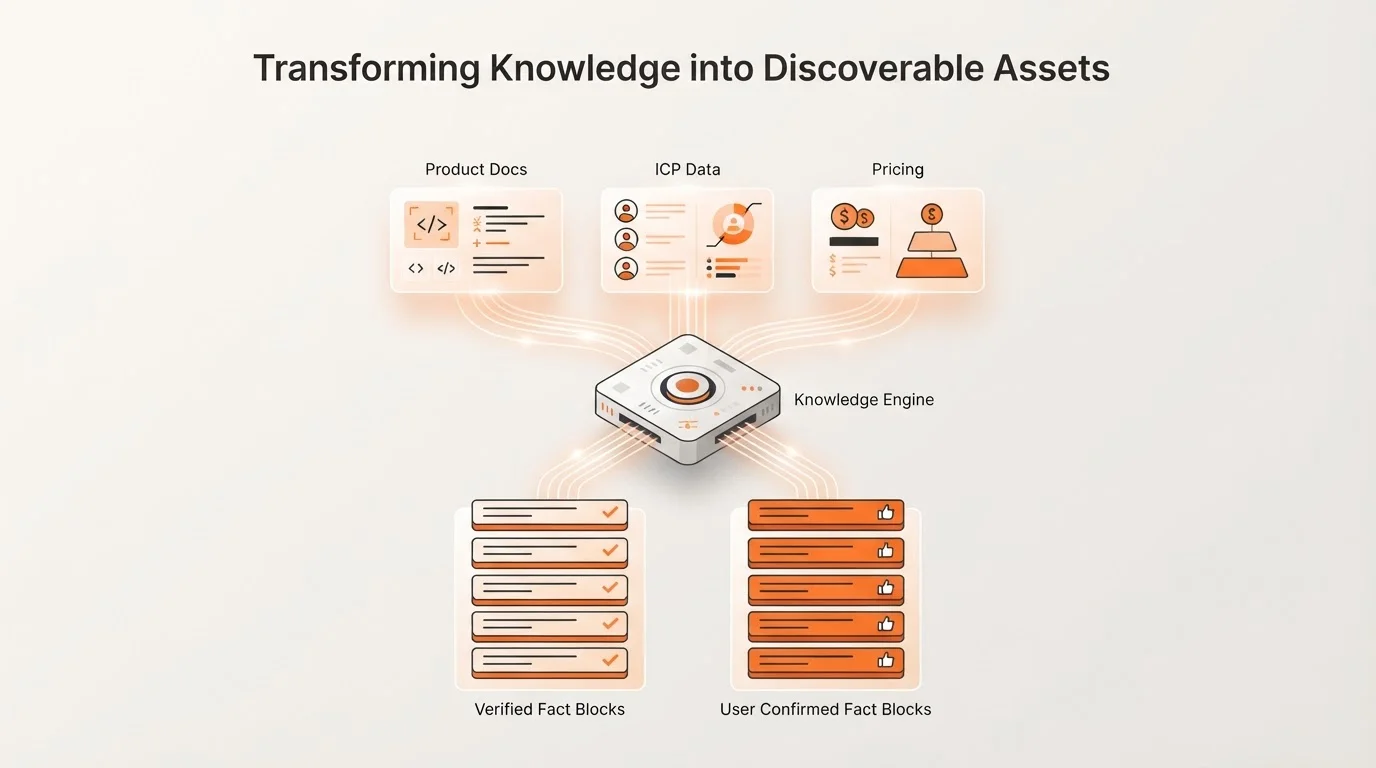
The core of a successful autonomous blogging strategy is the transition from 'writing articles' to 'managing knowledge.' Instead of starting with a blank page for every post, founders can utilize a Knowledge Engine to centralize their product context. This includes technical documentation, Ideal Customer Profiles (ICPs), positioning statements, and pricing details. By feeding this raw data into an autonomous platform like Blogged, the system creates a structured database of 'bounded facts.' These facts serve as the ground truth for every article, ensuring that the content is not just readable, but technically sound and brand-aligned.
The Power of Bounded Facts and Provenance
Unlike general-purpose LLMs that draw from a broad and often inaccurate web-based training set, an autonomous SaaS blog relies on facts with clear provenance. Within the Blogged Knowledge Engine, users can manage facts with eight distinct statuses, such as 'verified' or 'user_confirmed.' This ensures that if your software updates a feature or changes its pricing structure, the content system can reconcile those conflicts and update its output accordingly. This level of control allows founders to trust the automation, knowing the output is rooted in their specific product reality rather than generic industry fluff.
Implementing an Autonomous SEO Strategy
Moving to an autonomous model requires a shift in how you plan your content. Rather than choosing individual keywords, you define 'Content Directions'—strategic pillars that represent your product's core value propositions. These directions act as a compass for the autonomous system, ensuring it explores relevant topics, competitor comparisons, and user 'how-to' guides. Once these directions are established, the platform can automatically refill a Topic Queue, maintaining a consistent publishing schedule that builds long-term topical authority.
SEO vs. GEO: Preparing for the Future of Search
While traditional SEO focuses on ranking in Google’s blue links, the rise of AI-driven search—often called Generative Engine Optimization (GEO)—requires a different approach. AI discovery engines prioritize structured, factually grounded content that they can easily parse and summarize. By using an autonomous platform that handles both SEO and GEO research, SaaS founders ensure their product is discoverable not just in search results, but in AI-generated overviews. This dual optimization approach is critical for maintaining visibility as user search behavior shifts toward conversational AI interfaces.
Maximizing Internal Authority with Intelligent Interlinking
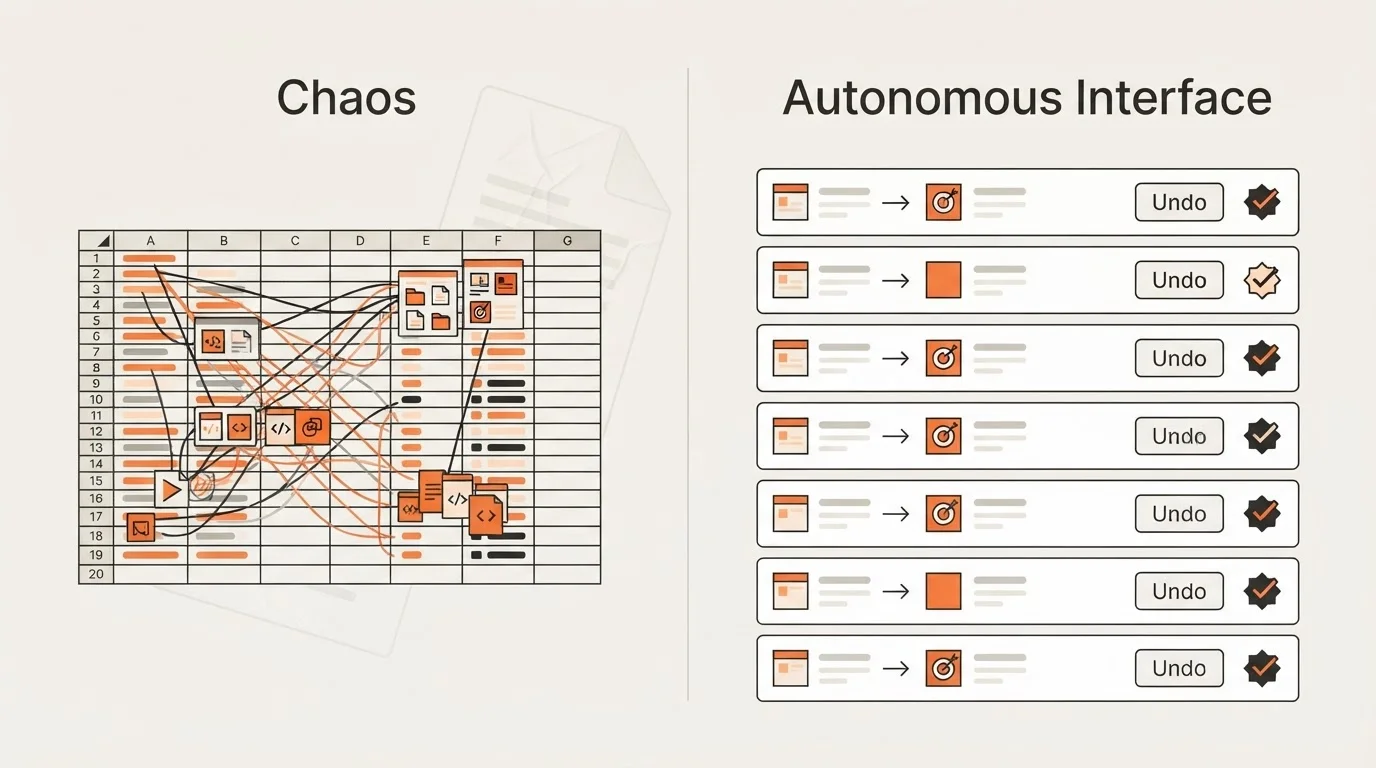
A critical component of any ranking boost is a strong internal linking structure. Internal links distribute 'link equity' across your site, helping search engines discover new pages and understand the relationship between different topics. However, manual interlinking is notoriously difficult to maintain as a blog grows. An autonomous blogging platform solves this by including an internal linking tool that verifies potential link destinations. It explains why a specific link fits a section and allows the editor to review or undo the link within the interface. This ensures that every new post strengthens the overall architecture of the blog, driving higher rankings for core product pages.
Full Autopilot vs. Assisted Workflows
Founders have different preferences for how much control they want to maintain. Blogged supports two primary workflows to accommodate this. In Assisted mode, the system generates high-quality drafts based on your Knowledge Engine and waits for a manual review before publishing. This is ideal for founders who want to add a personal touch or final polish. In Full Autopilot mode, the system manages the entire loop—research, writing, optimization, interlinking, and publishing—on a specified cadence. This 'hands-off' approach is designed for rapid scaling, allowing the blog to grow consistently even while the team is focused on product launches or fundraising.
Measuring Success: Beyond the Ranking Boost
While a significant boost in search rankings is the primary goal, the true ROI of autonomous blogging is measured in resource recovery and lead quality. By automating the content loop, founders reclaim dozens of hours per month that would otherwise be spent managing freelancers or struggling with drafts. This time can be reinvested into product innovation and customer success. Furthermore, because the content is 'product-led' and based on verified knowledge, the leads it generates are often higher quality. Readers aren't just finding a generic article; they are finding a solution that speaks directly to their pain points using the specific language of your SaaS.
Tracking and Transparency
Transparency is vital when using automation. Blogged allows users to track Search Console performance, lead growth, and reader feedback directly through its dashboard. This visibility ensures that you can see exactly how the autonomous content is performing and adjust your Knowledge Engine or Content Directions to optimize results. It transforms the blog from a 'black box' of manual effort into a transparent, data-driven growth channel.
Frequently Asked Questions
Q: How does autonomous blogging maintain factual accuracy?
It uses a Knowledge Engine that ties every claim to a source and a verification status, such as 'verified' or 'user_confirmed,' preventing the hallucinations common in generic AI.
Q: Can my team collaborate on the blog?
Yes. Blogged includes unlimited team seats on all paid plans, allowing product managers and marketers to review or edit content without additional costs.
Q: What is the difference between SEO and GEO?
SEO (Search Engine Optimization) focuses on ranking in traditional search results, while GEO (Generative Engine Optimization) focuses on visibility within AI-driven discovery engines.
Q: Do I lose control over what is published?
No. You can choose between Full Autopilot for maximum hands-off growth or Assisted mode, which requires your approval for each post before it goes live.
Scaling a SaaS blog no longer requires a choice between founder-led quality and agency-led volume. Autonomous blogging offers a middle path: high-quality, product-led content that scales through intelligent systems. By treating your blog as a technical asset driven by a Knowledge Engine, you can turn your product expertise into a self-sustaining organic growth engine. For founders who are ready to stop writing and start growing, the transition to an autonomous SEO and GEO strategy is the most efficient path to long-term market authority.
Get practical updates on saas seo ranking boost case study
Receive new articles and practical insights by email.