
On this page
For most SaaS founders, the goal of a blog isn't just to accumulate traffic; it is to build a conversion pipeline. However, as a content library grows, the connective tissue—internal links—often becomes the first point of failure. Manual interlinking is time-consuming, prone to human error, and difficult to maintain as product features evolve. Blogged addresses this challenge by automating the interlinking process, ensuring that product-led content is consistently and strategically connected. By transforming product knowledge into a structured data layer, Blogged ensures your content isn't just a collection of articles, but a high-performance SEO architecture that guides users toward a purchase.
The Strategic Role of Internal Linking in Product-Led SEO
In the context of SaaS SEO, internal links serve two masters: search engine crawlers and the human user journey. When links are placed thoughtfully, they distribute page authority (or "link equity") across your domain, signaling to Google which pages are high-value pillars. This structure helps search engines discover new content faster and understand the topical hierarchy of your site.
For the user, internal linking facilitates a natural progression from problem-awareness to solution-discovery. If a reader is learning about a specific workflow bottleneck, a strategic link to a feature page or a related case study keeps them engaged within your ecosystem. This engagement reduces bounce rates and increases pages per session—metrics that search engines interpret as signals of high content quality.
Maintaining this strategy at scale requires coordination across teams. Blogged includes unlimited team seats, supporting scalable operations where multiple contributors can collaborate without administrative friction. Furthermore, as privacy standards evolve, Blogged ensures that content delivery respects user intent. The platform lets users connect approved tags with Do Not Track (DNT), Global Privacy Control (GPC), and specific consent behaviors, ensuring your technical SEO remains compliant while you grow.
The Power of the Knowledge Engine
A capable knowledge management system is the prerequisite for effective interlinking. Blogged’s Knowledge Engine for Autonomous SaaS Blogs organizes product, competitor, and keyword knowledge into "bounded facts" with clear provenance and freshness controls. This structured approach ensures that when the AI suggests a link, it is drawing from a verified source of truth rather than making generic associations. By mapping out core content pillars and identifying key product features within this engine, founders can ensure their interlinking strategy is grounded in actual product reality.
The Manual Bottleneck: Why SaaS Content Libraries Decay
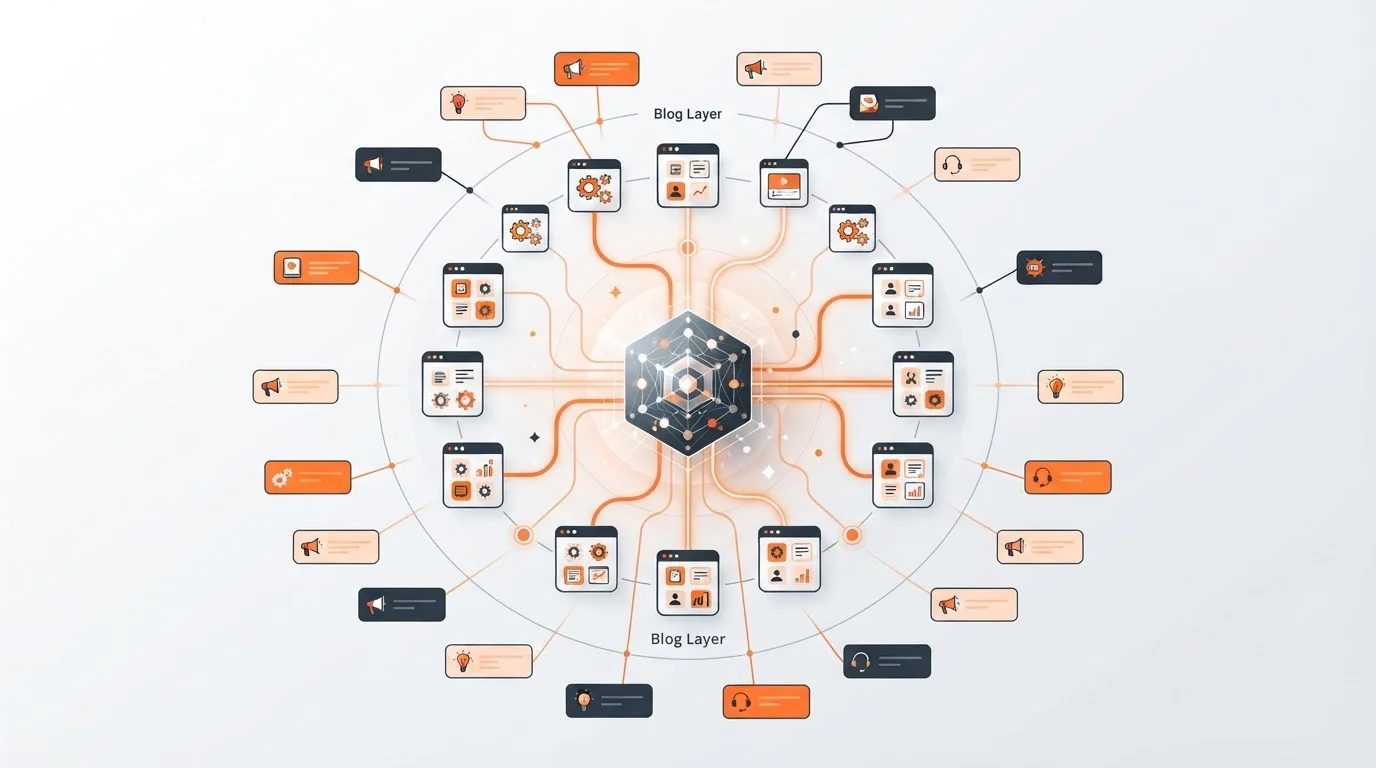
As you publish more content, the complexity of manual interlinking grows exponentially. Content teams often spend hours auditing old articles to find relevant spots for new links, a process that is frequently skipped in the rush to publish. This leads to "orphan pages"—articles with zero internal links that search engines struggle to index and users never find.
Beyond the time commitment, manual linking often suffers from terminology drift. One writer might refer to a feature as "Advanced Analytics" while another calls it "Reporting Tools." Without a centralized system, these internal links become fragmented and fail to reinforce the primary keywords you want to rank for. Blogged's Autonomous Blog Publishing for SaaS solves this by automating the publishing loop, ensuring new content is immediately integrated into the existing structure.
To manage this context, Blogged lets users organize their product description, ICP, positioning, and facts in one place. This allows the platform to reuse specific context across all SaaS content, reducing ambiguity and ensuring that every internal link uses the correct anchor text and points to the most relevant destination.
How Blogged’s AI-Driven Interlinking Works
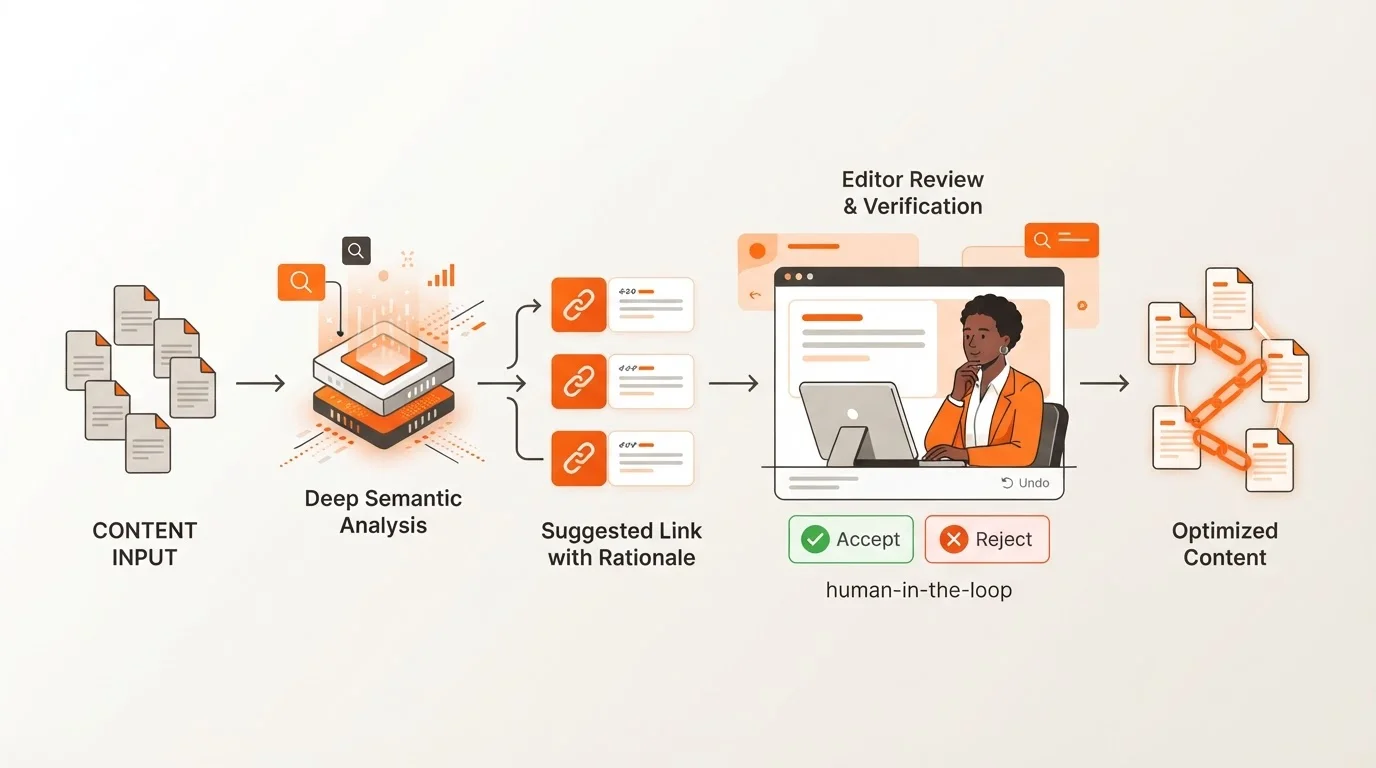
Blogged moves beyond simple keyword matching to perform deep semantic analysis. The system analyzes the intent of a paragraph and matches it to the most relevant internal destination, whether that is another blog post, a documentation page, or a specific product feature facet. This intelligence ensures that links feel natural to the reader rather than forced for SEO.
When a link is suggested, the Blogged editor provides full transparency. It verifies the destination, shows why it fits a specific section, and allows the editor to accept, reject, or undo the link without leaving the post. This keeps the human-in-the-loop while removing the tedious research phase of internal linking.
To maintain quality control, the platform allows for structured revisions. Blogged includes 1 revision per article, giving founders the opportunity to refine the AI's suggestions and ensure the tone perfectly matches their brand voice. This balance of automation and manual oversight is critical for high-stakes B2B SaaS content where accuracy is non-negotiable.
Connecting Product Features to Content Automatically
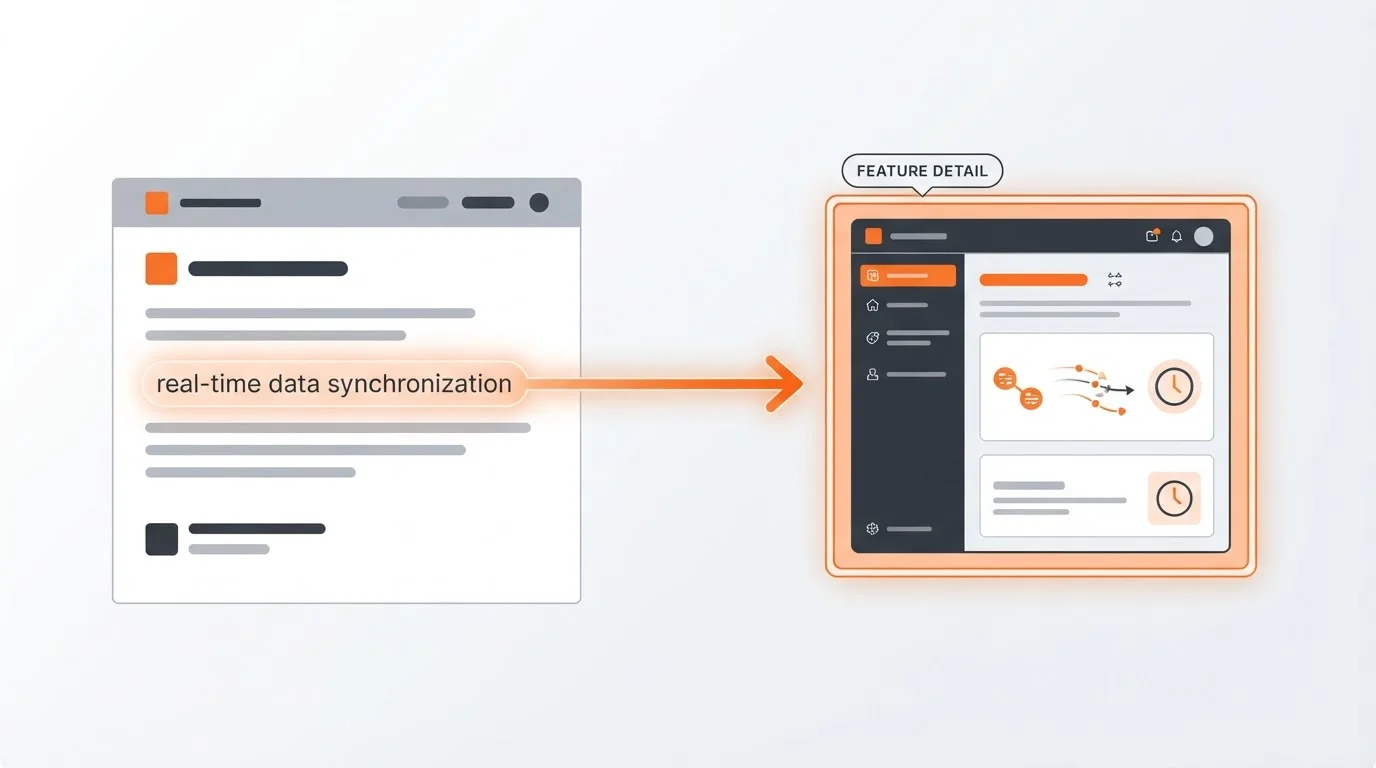
The core of product-led SEO is the ability to connect a user's pain point directly to a product solution. Blogged achieves this by allowing users to organize facts by product entity and facet. For example, if a blog post mentions "real-time data synchronization," the system doesn't just link to your homepage; it links to the specific section of your product page that details that feature.
This granularity ensures that link equity is concentrated on the pages that drive the most commercial value. By building a durable content plan that allows Full Autopilot to refill the topic queue from approved directions, you ensure a steady stream of linkable assets. Every new piece of content becomes a new opportunity to point back to your core features, creating a web of authority that is difficult for competitors to replicate.
While textual links are the primary driver, visual context matters too. Blogged lets users manage a private SaaS product asset library with review queues and approvals. This ensures that the screenshots and diagrams supporting your interlinked content are as high-quality and consistent as the text itself.
Boosting Authority and Future-Proofing for AI Search
Strategic interlinking is no longer just for Google; it is increasingly vital for Generative Engine Optimization (GEO). Large Language Models (LLMs) and AI search engines use the connective structure of your site to understand the relationships between concepts. If your site clearly links "User Onboarding" to "Activation Rates" and "Product Tours," AI systems are more likely to cite your domain as an authority on those interconnected topics.
According to industry standards for B2B SaaS, it is critical to structure each page for both search and conversion by interlinking them from day one. This proactive approach prevents the need for massive, expensive SEO audits down the line. By using smart interlinking to distribute authority, you can ensure that even your long-tail integration pages or niche use-case articles receive enough internal support to rank well.
A Checklist for Smart Interlinking
To maximize the impact of automated interlinking, founders should follow these steps:
- Identify Pillar Content: Designate your most comprehensive guides as pillars. These should receive the highest volume of internal links.
- Audit for Orphans: Use tools to identify pages with zero incoming links and use Blogged to find relevant insertion points.
- Map the Buyer Journey: Ensure top-of-funnel educational posts link vertically to mid-funnel solution pages.
- Refine Anchor Text: Avoid generic phrases like "click here." Use descriptive, keyword-rich anchor text that tells the user (and the AI) exactly what to expect at the destination.
Measuring the Impact of Interlinking on Organic Growth
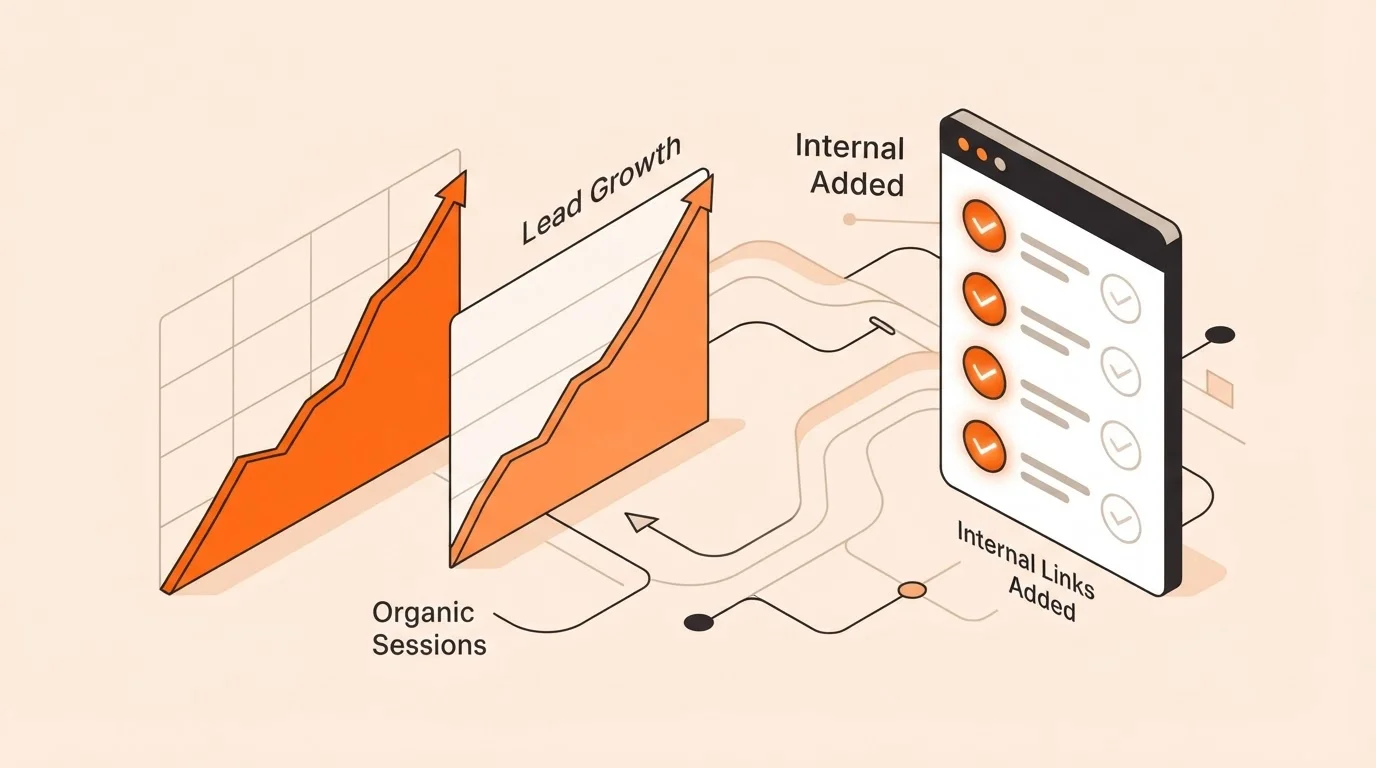
The ultimate validation of an interlinking strategy lies in the data. Blogged provides integrated tracking that allows users to monitor Search Console performance, homepage engagement, and CTA outcomes in a single view. By establishing a baseline before automating your links, you can quantify the improvements in your organic footprint.
Key metrics to watch include:
- Indexation Depth: Are more of your sub-pages being discovered and indexed by search engines?
- Conversion Rate per Article: Is the click-through rate (CTR) from educational content to product feature pages increasing?
- Lead Growth: Is the overall volume of leads generated from organic traffic trending upward?
Because Blogged lets you track lead outcomes and reader feedback, you can see exactly which internal paths are most effective at converting a curious reader into a product user. This feedback loop allows you to refine your knowledge base, ensuring the AI has the best possible "facts" to work with as it continues to build your site's architecture.
Frequently Asked Questions
Q: Does Blogged allow me to manually override suggested links?
Yes. The Blogged editor allows you to verify, accept, or reject every internal link suggestion, ensuring you maintain full editorial control.
Q: How does automated interlinking help with Generative Engine Optimization (GEO)?
By creating clear semantic relationships between topics through descriptive anchor text, you provide the structural data LLMs need to categorize your site as a topical authority.
Q: Can I link to external documentation or help centers?
Absolutely. You can define your own internal and external "trusted sources" within the Knowledge Engine so the AI knows which destinations are approved for linking.
Q: What happens if I change a feature name in my product knowledge base?
Blogged’s centralized context management allows you to update product facts in one place, ensuring that future content and link suggestions reflect the most current terminology.
Get practical updates on product led content interlinking
Receive new articles and practical insights by email.
Effective product-led content interlinking is the difference between a static blog and a dynamic growth engine. While the manual effort required to maintain a perfect link structure is a significant hurdle for busy SaaS founders, Blogged provides the automation and intelligence needed to scale without compromise. By turning your product knowledge into a structured asset, you ensure every article works to build authority, prevent orphan pages, and drive users toward conversion. Strategic interlinking isn't just an SEO tactic—it’s the architecture of your brand’s discoverability.