
On this page
Organic growth is the most resilient engine for a B2B SaaS, yet it often imposes a heavy operational tax on the founding team. The struggle is not just writing content, but sustaining the research, optimization, and publishing cycles every week while simultaneously building a product. For companies that serve local service industries, this challenge is compounded by the need to rank for hyper-local queries across dozens of distinct cities.
Traditional content strategies frequently fail to scale in these environments. While producing a single high-quality post is manageable for a small team, creating 50 variations of that post tailored to specific geographic markets is a resource drain that most early-stage startups cannot justify. This operational bottleneck often forces founders to choose between a broad, generic national strategy or a slow, manual local rollout that loses momentum.
Autonomous GEO blogging changes this calculation by transforming product knowledge into discoverable, product-led content on autopilot. By grounding AI in actual technical documentation, founders can establish authority in hundreds of local markets without expanding their marketing headcount. This success story examines how NicheFlow, a hypothetical service-scheduling SaaS, used Blogged to automate their local search presence and secure a competitive advantage.
The Local Growth Trap: Why Manual Content Fails SaaS Founders
NicheFlow provides specialized scheduling software for trades like plumbing and HVAC maintenance. While the product was effective, their organic search presence was initially restricted to broad, highly competitive terms like "scheduling software." Competing at this level meant fighting against established industry giants with multimillion-dollar marketing budgets, leading to high customer acquisition costs and low visibility among their core users.
The team identified that their highest-intent prospects were not searching for generic tools, but for localized solutions like "scheduling software for plumbers in Austin" or "best booking app for electricians in Portland." These local keywords represented a significant growth opportunity due to lower competition and higher conversion potential. However, the manual execution required to capture this traffic was beyond the capacity of their lean marketing team.
To reach their expansion goals, NicheFlow estimated they needed unique, localized content for at least 50 major metropolitan areas. Researching local industry nuances and manually drafting unique articles for every city was unsustainable. Every hour spent on manual content production was an hour taken away from high-level strategy or product development, creating a significant opportunity cost for the founders.
The Compounding Cost of Content Debt
Beyond the immediate labor costs, NicheFlow faced the issue of content debt. As local trends shifted or new product features were released, updating hundreds of geographically specific articles manually proved impossible. This led to a library of outdated posts that failed to provide value to readers, effectively wasting the initial time investment.
Without an automated system, the team was trapped in a cycle of reactive content production. They were unable to maintain the consistent publishing cadence required to build long-term SEO authority. This lack of consistency signaled to search engines that the site was less authoritative, further suppressing their rankings in the very markets they aimed to dominate.
Implementing Autonomous GEO Blogging with Blogged
Recognizing the need for a scalable alternative, NicheFlow adopted an autonomous GEO blogging strategy. They required a platform that could handle the heavy lifting of research, SEO optimization, and publishing while ensuring that every piece of content remained deeply rooted in their specific product value. They chose Blogged to run their SaaS blog on autopilot.
The critical differentiator for NicheFlow was the ability to ingest product knowledge directly into the content generation process. Search engines and AI discovery tools reward useful, specific content rather than generic volume. By feeding their internal product documentation into an autonomous system, NicheFlow ensured that every article—regardless of its geographic focus—remained factual and professional.
Grounding Authority in the Knowledge Engine
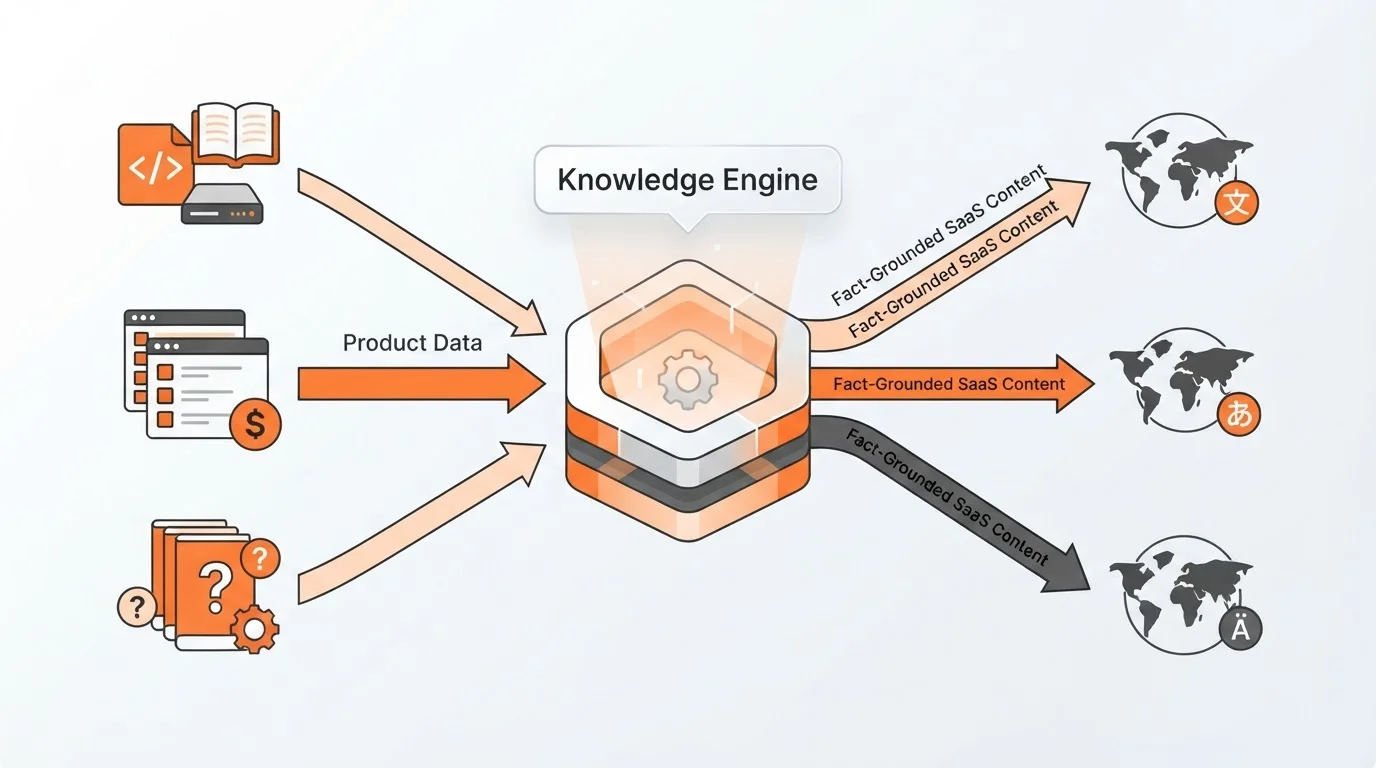
A central feature of the implementation was the Knowledge Engine for Autonomous SaaS Blogs. This tool allows founders to provide public product sources, uploaded documents, pasted links, or a written product description to guide the AI's output. For NicheFlow, this meant they could upload their technical specifications and customer profiles once, ensuring the platform understood exactly how their software solved problems for local service providers.
This context layer prevents the AI from making generic claims or inventing non-existent features. Instead, the platform uses the SaaS company's actual pricing, limits, and integrations to craft compelling narratives for each local market. This ensured that a plumber in Miami saw the same accurate product benefits as a salon owner in Seattle, but framed within their specific regional context.
Strategic Execution: Scaling to 50+ Cities
NicheFlow's implementation began with a granular mapping of their target geographies. Rather than attempting a massive national campaign immediately, they prioritized cities with high densities of their ideal customer profiles. By focusing on these high-value hubs, they could validate the autonomous GEO blogging approach in environments where the ROI would be most visible.
The strategy involved creating content clusters around specific local keywords, such as "[City Name] [Industry] Booking Software." Because Blogged handles the entire pipeline—from topic selection and research to internal linking—NicheFlow was able to launch dozens of these clusters simultaneously. This allowed them to compete in 50+ markets without hiring additional writers or SEO specialists.
Direct Publishing and Seamless CMS Integration
To eliminate the friction of manual uploads, NicheFlow utilized Blogged's deep CMS integrations. For their self-hosted WordPress site, they connected via the Blogged Publishing plugin and a WordPress application password. This enabled the platform to deliver verified, optimized articles directly to their blog, formatted and ready for the reader.
For SaaS teams using other platforms, the workflow is equally streamlined. The Ghost AI Blog Publishing integration allows users to create a custom integration in Ghost, copy the Admin API key, and verify the connection in Blogged. This direct link ensures that founders spend their time reviewing and approving content rather than managing technical debt or manual formatting.
Measurable Results: Local Authority and High-Intent Traffic
The shift to autonomous blogging delivered immediate improvements in NicheFlow's search visibility. Within the first quarter of deployment, their localized articles began appearing on the first page of search results for specific niche queries. A business owner searching for "scheduling software for dentists in Denver" was now directed to a dedicated post that addressed their specific regional and industry needs.
This hyper-targeted traffic proved to be significantly more valuable than general national traffic. Visitors arriving from GEO-targeted articles were already searching for a solution in their area, making them more likely to engage with the product. The content served as a consistent educational resource, answering prospect questions before they reached out to the sales team.
Get practical updates on saas geo blogging success story
Receive new articles and practical insights by email.
Attribution and Performance Gatekeeping
One of the most valuable aspects of the new workflow was the ability to track performance and maintain quality control. Using Blogged's integration with platforms like Ghost or Webflow, NicheFlow could collect consented visits and configured conversions for verified articles. This data-driven approach allowed the team to see which geographic markets were most responsive.
Quality was maintained through built-in performance gates. Blogged includes 3 revisions per article, allowing the NicheFlow team to fine-tune the localized narrative before it went live. This collaborative review process ensured that the speed of automation never compromised the professional tone of the brand.
The Founder's Framework for Local Dominance
The success of the NicheFlow model offers a repeatable blueprint for other SaaS founders looking to capture local market share. The key is moving from a high-effort, manual production model to a governed, autonomous system. To replicate these results, founders should follow a structured approach to GEO blogging.
5 Steps to Scale Local SaaS Content
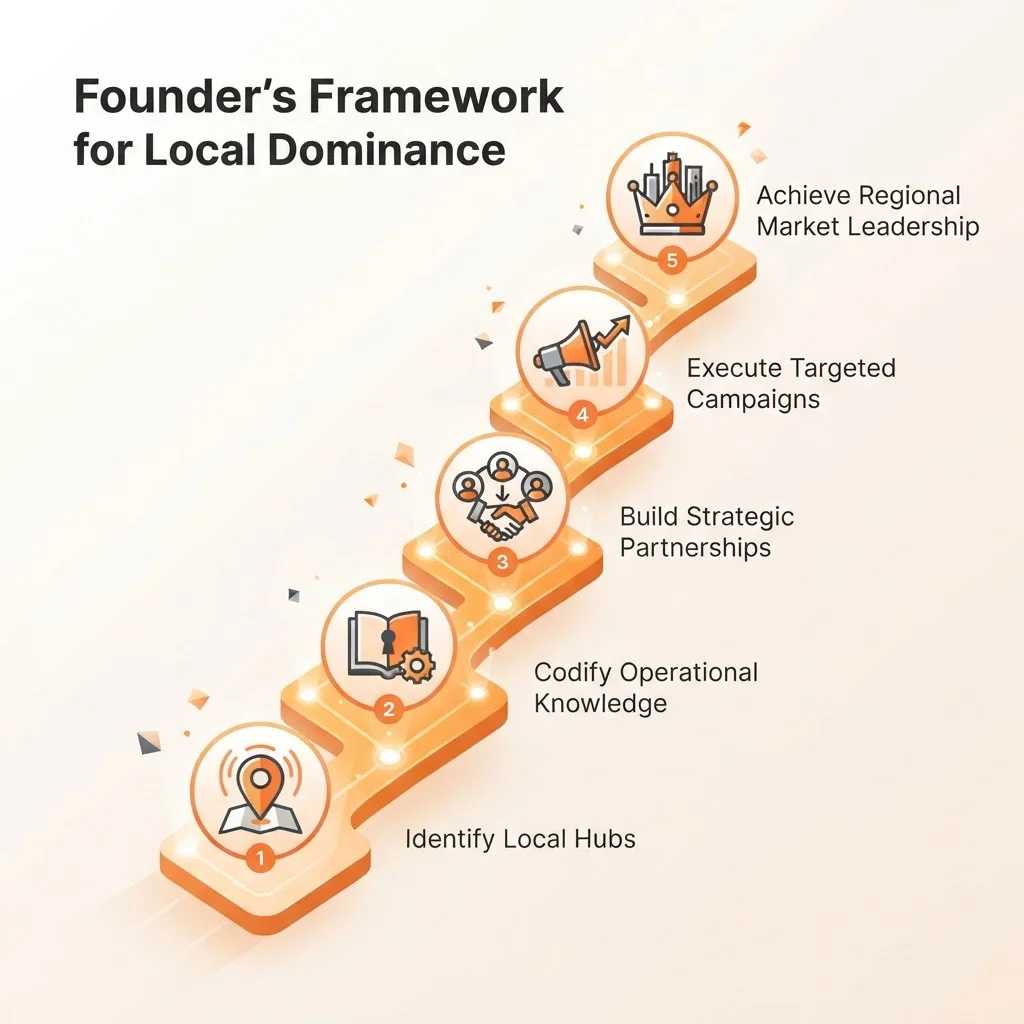
- Identify High-Density Hubs: Start by listing the top 20-50 cities where your target customers are most active. Use existing customer data to find geographic clusters.
- Codify Product Knowledge: Centralize your product's unique selling points, technical constraints, and pricing in a Knowledge Engine. This ensures the AI remains on-brand and factual.
- Automate the Publishing Pipeline: Connect your CMS (WordPress, Ghost, Webflow, or Next.js) to an autonomous platform to remove the manual bottleneck of copying and pasting drafts.
- Set Up Performance Gates: Configure a review process. With 3 revisions available per article, ensure a subject matter expert verifies the technical claims before publication.
- Monitor and Reinvest: Track which geographic markets respond best using conversion data. Use these insights to launch deeper, industry-specific sub-campaigns in winning locations.
Future-Proofing for AI Search (GEO)
As search behavior evolves toward AI agents like SearchGPT and Gemini, the importance of high-quality, product-led content continues to grow. These models prioritize content that is factual, structured, and authoritative. By using an autonomous system grounded in real product data, NicheFlow ensured their content was ready for both traditional search engines and the new wave of AI-driven discovery.
Autonomous GEO blogging is not just about ranking; it is about becoming the definitive answer for a specific user in a specific location. When an AI agent is asked for the "best booking software for HVAC teams in Chicago," NicheFlow's optimized, factual content provides the necessary evidence for the AI to recommend their product. This transition from SEO to GEO (Generative Engine Optimization) is critical for long-term SaaS survival.
Collaborating at Scale
As NicheFlow expanded their content volume, they leveraged the fact that every paid plan on Blogged includes unlimited team seats. This allowed their product managers to verify technical specifications while the marketing team focused on strategic expansion. This collaborative environment ensured that quality remained high even as publishing volume tripled.
With the manual burden of writing removed, the founding team was able to focus on building their product, confident that their organic growth engine was operating efficiently in the background. The NicheFlow story demonstrates that for SaaS founders, automation is the only sustainable way to achieve local search dominance.
Frequently Asked Questions
Q: How does autonomous GEO blogging differ from standard AI writing?
Unlike generic AI writing, autonomous GEO blogging is grounded in your specific product knowledge and local market data via a Knowledge Engine. This ensures every claim is factual rather than just generating plausible text.
Q: Does this work for technical B2B SaaS products?
Yes. Because the system can ingest technical documentation and private source files, it can write accurately about complex integrations, APIs, and enterprise features that general AI models might misinterpret.
Q: How much time does it actually save a founder?
By automating research, internal linking, and publishing, most users reduce their content management time to less than 30 minutes of review time per week.
Q: Is the content optimized for both Google and AI search engines?
Yes. The output is structured to satisfy traditional SEO requirements while providing the high-quality, factual citations that AI discovery engines require for Generative Engine Optimization (GEO).
The story of NicheFlow highlights a critical truth for modern SaaS founders: you cannot manually write your way to the top of hundreds of local markets. To dominate search and capture niche audiences, you need a system that transforms your product knowledge into discoverable content on autopilot.
By leveraging autonomous GEO blogging, NicheFlow turned a resource-intensive challenge into a scalable growth engine. They moved from being invisible in local search results to being the authoritative voice for their industry across dozens of cities. For founders ready to stop writing and start growing, autonomous SEO and GEO blogging is the most efficient path to long-term organic success.