
On this page
For SaaS founders, scaling beyond a primary market is often met with a harsh reality: international expansion is not a simple matter of translation. It is a complex orchestration of cultural nuance, local search intent, and technical SEO signals. Traditional methods—hiring agencies, managing freelancers, or relying on basic machine translation—frequently result in high costs and low organic visibility. Autonomous geo blogging offers a transformative solution, automating the research, creation, and optimization of geographically targeted content. This guide explores the roadmap for saas international geo blogging success through the lens of a hypothetical company, GlobalReach, demonstrating how platforms like Blogged can turn product knowledge into a global lead-generation engine. By leveraging autonomous workflows, founders can stop managing translation spreadsheets and start capturing global market share.
The Scaling Bottleneck: Why Manual Localization Fails Startups
GlobalReach, a hypothetical high-growth SaaS provider in the project management space, hit a wall when attempting to penetrate non-English speaking markets. While their English content performed exceptionally well, their attempts to reach audiences in Germany, Japan, and Brazil were stalling. The team realized that simply translating words was insufficient for capturing local search intent or building trust with international users. They were facing critical bottlenecks common to growing startups.
First, there was the prohibitive resource intensity. Managing a global content strategy traditionally requires a massive team to research keywords in multiple languages, write culturally relevant articles, and optimize for local search engines. Second, they suffered from a loss of product accuracy. When using external translation services, the specific nuances of their software—unique features, terminology, and use cases—were often lost. This resulted in generic content that failed to demonstrate the product's value.
Finally, the technical management overhead was daunting. Correctly implementing technical signals like hreflang tags and managing multi-region CMS instances was an operational burden. GlobalReach needed a way to scale their international SEO without sacrificing the product-led focus that drove their initial success. They required a solution that could maintain factual accuracy while adapting to the unique cultural demands of each new territory.
The Localization vs. Translation Gap
The primary error most founders make is treating international SEO as a translation project. In the SaaS world, localization handles the experience, while translation merely handles the message. For example, a project manager in Berlin searches for solutions using different terminology and experiences different pain points compared to one in Tokyo. By failing to localize for search intent, content remains practically invisible to the search engines those users actually use. Successful international SEO requires understanding the geographic search context (GEO), ensuring that articles answer the specific questions local users are asking in their native tongue.
Why Founders Choose Autonomous Geo Blogging

In their search for a scalable alternative, the hypothetical GlobalReach discovered Blogged, an autonomous SEO and GEO blogging platform designed specifically for SaaS founders. Unlike generic AI writing tools that produce shallow text, Blogged offers a structured approach to transforming product knowledge into discoverable, localized content. The platform runs a SaaS blog on autopilot, handling everything from research and writing to SEO, GEO, and internal linking.
GlobalReach's strategy revolved around core pillars provided by the platform. They leveraged the Knowledge Engine, which allows founders to provide public product sources, uploaded documents, pasted links, or written descriptions to ground the system in factual product truth. This ensures every localized article accurately represents the software. They also prioritized a Product-Led Strategy, where the platform generates content highlighting the product as the solution to the reader's problems.
By prioritizing factual grounding over generic generation, the system avoids the hallucinations that often plague automated content. For a SaaS founder, the ability to maintain factual product integrity across multiple languages is the difference between a high-converting blog and a brand-damaging liability.
Automation with Structured Control
For a SaaS founder, the biggest fear of automation is a loss of quality. Blogged addresses this by acting as an "Autopilot" rather than a black box. The platform handles the heavy lifting of research and SEO but provides a structured environment for review. With unlimited team seats available on paid plans, product managers can participate in the review process without additional costs. This allows for a final human touch to verify technical accuracy and cultural sensitivity before an article goes live.
Hypothetical Implementation: Deploying a Multi-Regional Strategy
GlobalReach's hypothetical rollout was strategic and phased. They leveraged the ability to handle multiple languages and regional nuances simultaneously, beginning with their top five non-English markets. The workflow followed a clear path that any founder can replicate: seeding the knowledge, connecting the stack, and deploying regional streams.
First, they focused on seeding the Knowledge Engine. The team provided technical documentation and feature release notes into Blogged. This ensured the autonomous system understood their specific project management tool. Next, they focused on connecting publishing channels. By using the Ghost AI Blog Publishing integration, they could manage content creation and review while Ghost rendered the reader experience. For their WordPress-based resource centers, they used the Blogged Publishing plugin and an application password to deliver content directly.
Finally, they configured regional content streams. This allowed the system to generate articles tailored to the unique search behaviors and cultural contexts of project managers in those specific regions. The result was a streamlined operation where content was researched, written, and published without the founder needing to oversee every individual word.
Technical Integration for Verified Growth
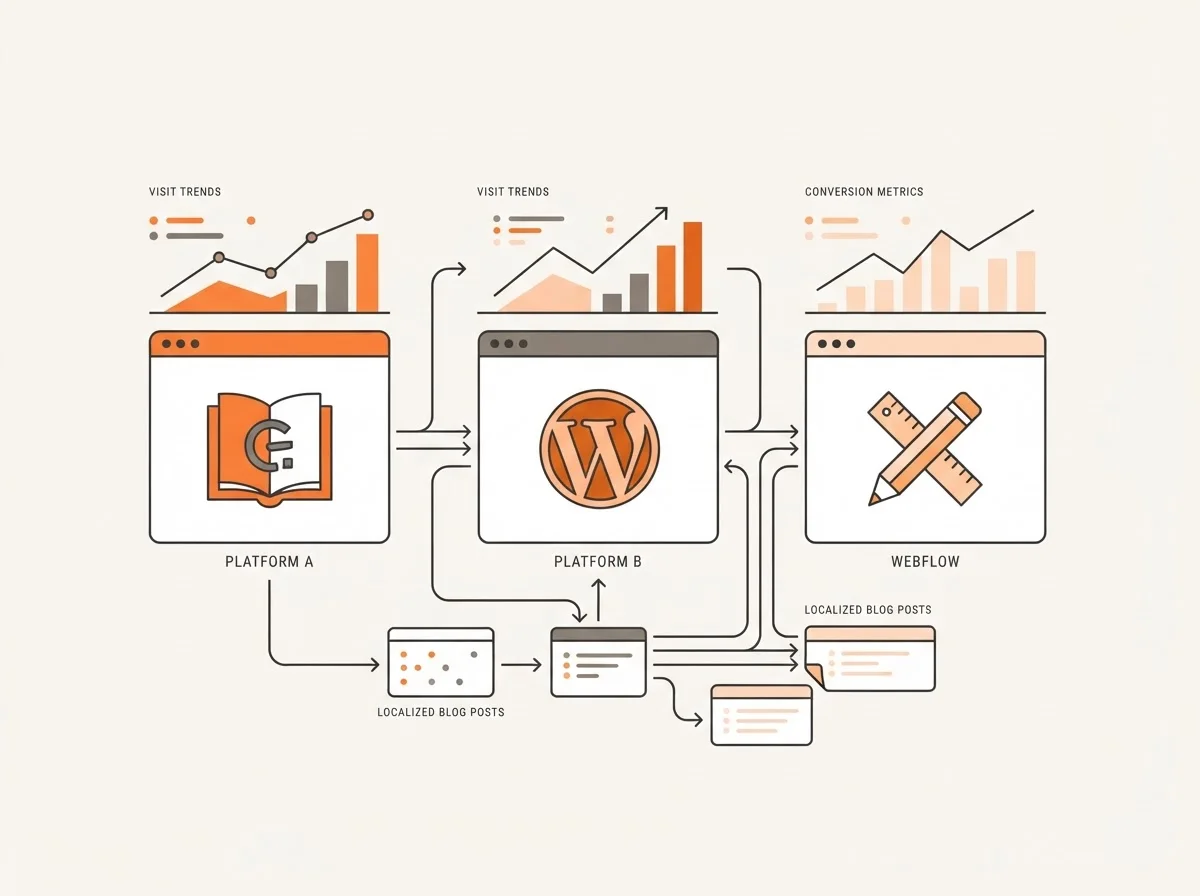
One of the standout benefits of this approach is the ability to track performance across a diverse tech stack. Whether using the Webflow CMS AI Blog Publishing integration or the Next.js AI Blog Publishing integration, founders can collect consented visits and configured conversions for verified articles. This data is critical for proving the ROI of international expansion to stakeholders. Instead of guessing if the content works, the integration provides direct visibility into how localized articles contribute to user acquisition and trial signups.
Key Takeaways for SaaS Founders Scaling Globally
The hypothetical success of GlobalReach provides a blueprint for other SaaS founders looking to scale internationally. Achieving saas international geo blogging success requires a combination of the right technology and a strategic shift in mindset. First, you must prioritize knowledge over volume. Success in modern SEO and AI discovery rewards specific, useful content. Use a platform that prioritizes grounding content in your product's unique value proposition.
Second, you must automate the entire process, not just the writing. The real bottleneck isn't just generating text—it's the keyword research, the SEO optimization, the internal linking, and the publishing. Choose a tool that runs the entire cycle on autopilot to free up your time for product development. Third, integrate for efficiency. Don't create new content silos. Use direct integrations for platforms like WordPress, Ghost, or Webflow to keep your workflow streamlined and your data centralized.
Finally, remember to focus on local intent. Go beyond simple word-for-word translation. Ensure your content addresses the specific pain points and search queries of users in each target region. Every piece of content should lead the reader back to how your SaaS solves their problem, ensuring that traffic translates into actual business growth.
The Compounding Value of Content
Autonomous blog posts are a permanent asset. Unlike paid ads, which stop generating leads the moment the budget is cut, localized, SEO-optimized articles continue to drive traffic month after month. The compounding effect of publishing consistent, high-quality content at scale creates a competitive moat. For a SaaS founder, this means building an organic growth engine that works around the clock, capturing global markets while they focus on building the next great feature.
Frequently Asked Questions about SaaS International Geo Blogging
Q: How does autonomous geo blogging differ from simple machine translation?
Machine translation only changes the language of the text. Autonomous geo blogging researches local search intent, identifies regional keywords, and adapts the content structure to resonate with specific cultural contexts, ensuring it ranks in local search engines like Google.de or Google.jp.
Q: Is the content generated by autonomous platforms actually accurate?
Yes, if the platform uses a Knowledge Engine. By feeding the system your official documentation and links, the AI is grounded in your product's specific facts. This prevents generic writing and ensures the content is product-led and accurate.
Q: Do I still need a human to review the content?
While automation handles the vast majority of the research and production, a final human review is recommended for cultural nuance. Most platforms provide a review interface and support unlimited team seats to make this process efficient for small teams.
Q: Which CMS platforms work best with autonomous blogging?
Systems that offer direct API integrations are ideal. Blogged, for example, integrates with Ghost, WordPress, Webflow, and Next.js, allowing for direct publishing and conversion tracking.
Get practical updates on saas international geo blogging success
Receive new articles and practical insights by email.
Scaling a SaaS company internationally is a significant challenge, but the barrier to entry has never been lower. The hypothetical journey of GlobalReach demonstrates that with the right autonomous tools, founders can transform their product knowledge into a global content powerhouse. By embracing saas international geo blogging success strategies, you can drive organic traffic, generate high-quality leads, and build lasting brand authority across the globe. The choice for founders is no longer between quality and scale—with autonomous geo blogging, you can achieve both while keeping your focus where it belongs: on your product.