
On this page
For the majority of SaaS founders, the path to content-market fit is obstructed by the high opportunity cost of manual content creation. While founders possess deep product expertise, they rarely have the bandwidth to transform that knowledge into the discoverable assets required to drive organic acquisition. This friction creates a significant lag between the development of a useful tool and the moment it becomes discoverable by the audience that needs it. Content-market fit occurs when your organic material consistently aligns with the search intent of your ideal customers, serving as a validated channel for user acquisition. Achieving this requires moving beyond sporadic, generic blog posts toward a high-velocity, product-led content strategy. In this analysis, we will examine how a hypothetical startup, InnovateCo, models the transition to autonomous blogging to bridge this expertise-visibility gap. By decoupling content production from the founder's limited hours while maintaining 'product truth,' SaaS teams can accelerate their feedback loops and find their organic audience with far greater efficiency than traditional editorial workflows allow.
The Content-Market Fit Bottleneck: Why Manual Blogging Stalls SaaS Growth
Content-market fit is as vital as product-market fit, yet it is often neglected in early-stage growth discussions. In a SaaS context, content-market fit means your blog is no longer just a collection of articles but a functional growth engine that answers technical pain points and converts visitors into trials. Most startups fail to reach this point because they treat content as a secondary administrative task. They often follow a fragmented path: hiring generalist freelance writers who lack product depth, suffering through long review cycles, and publishing only once or twice a month. This low velocity is the primary enemy of market validation. When you only publish eight articles a quarter, it takes over a year to gather enough search data to know if your messaging resonates with actual user intent. This slow feedback loop represents a significant burn of time and resources without a clear organic direction. To determine if your SaaS is currently trapped in this bottleneck, audit your production cycle. If publishing a single post requires multiple rounds of founder intervention or more than two weeks to go from idea to live URL, your process is not scalable. For growth-minded founders, the solution is not to write more themselves, but to implement a system that transforms their existing product knowledge into discoverable content autonomously.
The Technical Architecture of Autonomous Blogging
The transition to an autonomous growth strategy requires a stack that prioritizes product-led content over surface-level AI filler. Generic AI writers often produce 'thin' content because they lack access to the specific technical nuances of a unique software product. This is where a specialized platform like Blogged changes the trajectory. By focusing on transforming product knowledge into SEO and GEO-optimized content, the system ensures that every post is factually grounded. Integration is the first step in this architectural shift. Founders need a solution that fits into their existing infrastructure without requiring heavy developer lift. For those using the WordPress ecosystem, the WordPress AI Blog Publishing integration allows for a seamless workflow where articles are created and reviewed within the platform and then delivered directly to the site. This connection is established through the Blogged Publishing plugin and an application password, removing the 'copy-paste' friction that often kills a team's motivation to publish consistently. This infrastructure allows the founder to move from the role of 'writer' to 'editor-in-chief,' spending minutes on review rather than hours on drafting.
Native Integrations for Diverse SaaS Tech Stacks
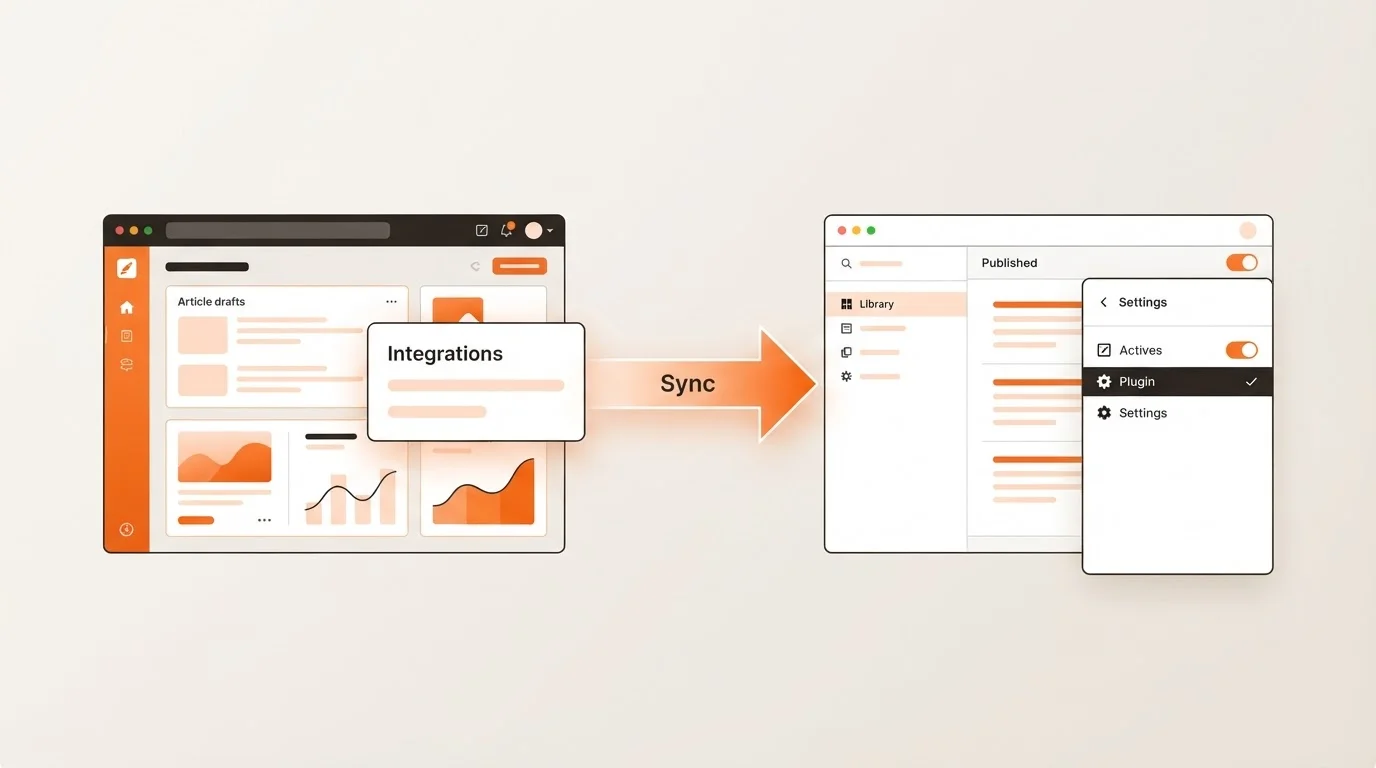
Flexibility across different architectures is essential for a growing SaaS. Teams that prefer a minimalist or headless approach often utilize the Ghost AI Blog Publishing integration. This setup allows the autonomous platform to manage content research, creation, and internal linking while Ghost handles the actual reader experience and front-end rendering. To establish this, users simply create a custom integration in Ghost, copy its Admin API key, and verify their Ghost connection within the platform. For those building on modern web frameworks, the Next.js AI Blog Publishing integration provides an even deeper layer of strategic value. Beyond just publishing, this integration allows founders to collect consented visits and configured conversions for verified articles. By turning the blog into a laboratory for data collection, founders can see exactly which topics lead to feature exploration or signup. This level of insight is critical for fine-tuning content-market fit, as it moves the strategy from 'guessing what people read' to 'knowing what people do' after reading.
Strategic Implementation: Grounding Automation in Product Truth
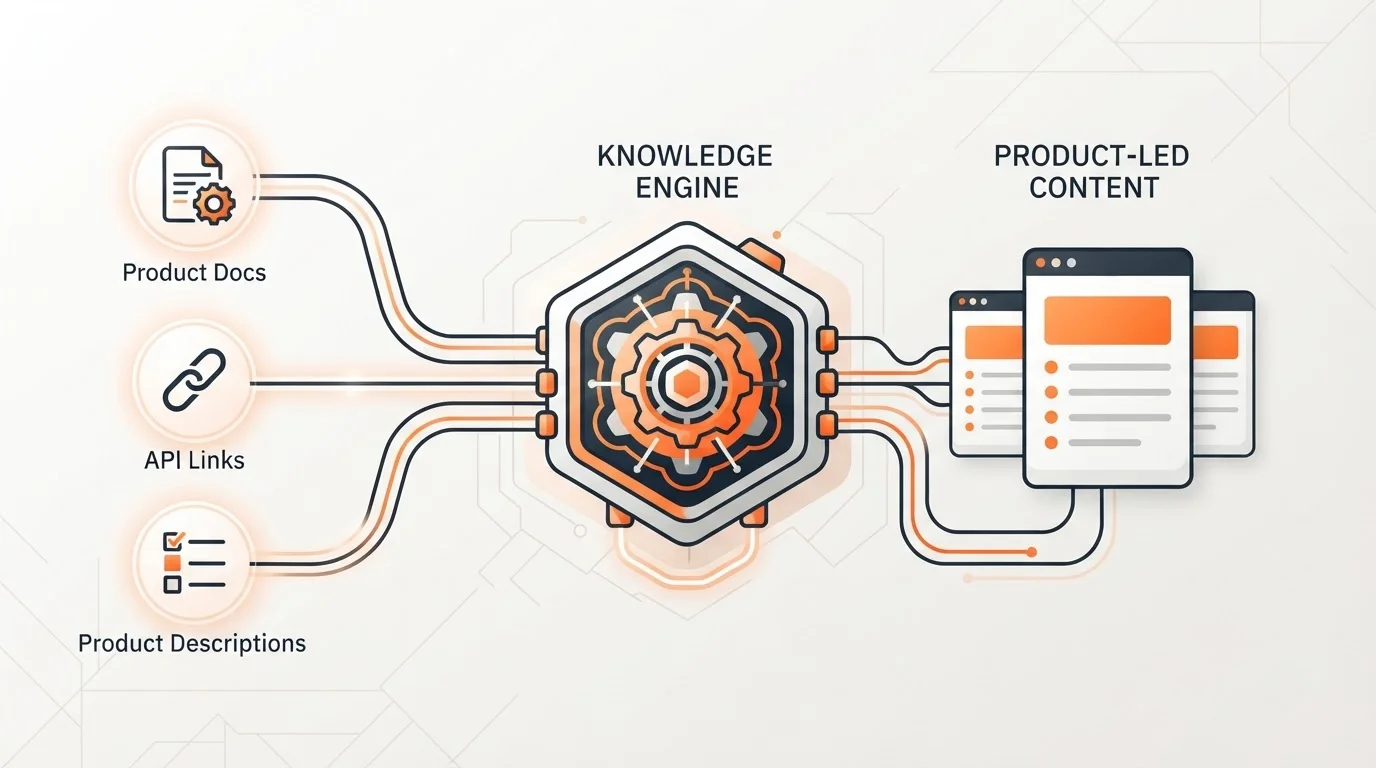
The true power of an autonomous system lies in the quality of the data it consumes. To ensure that content provides real value to technical users, founders must utilize a dedicated Knowledge Engine for Autonomous SaaS Blogs. This feature allows the system to ingest public product sources, uploaded documents, pasted links, or a written product description. By feeding the engine API documentation, customer support logs, and internal feature wikis, the resulting content becomes an extension of the product itself. Instead of publishing high-level industry fluff, the system generates articles that explain how to solve specific problems using your tool's unique features. This shift toward product-led content is the most effective way to capture high-intent traffic. When a potential customer searches for a solution to a complex technical problem, they aren't looking for a general overview; they are looking for the specific steps provided by a product that understands their context. By grounding the AI in these 'product truths,' the content remains accurate, authoritative, and aligned with the software's actual capabilities, which is the foundation of long-term organic authority.
A Workflow Designed for Rapid Iteration
Once the knowledge base is established, the focus shifts to velocity. Content-market fit is a numbers game; the more high-quality 'hooks' you have in the search results, the faster you can identify which clusters drive the most business value. An autonomous workflow allows a small team to move from publishing twice a month to several times per week. The new cycle looks like this: First, identify a cluster of high-intent keywords relevant to your product's core features. Second, let the autonomous engine handle the research, SEO optimization, and internal linking. Third, perform a quick 15-minute review to ensure brand voice consistency and technical accuracy. Finally, publish and track results using integrated analytics. This high-velocity approach allows you to test five times more topics in a month than a traditional team could in a year. You might discover that while you thought your audience wanted 'Industry Trends,' they are actually searching for 'API Integration Guides.' This insight allows you to pivot your content strategy in real-time, achieving content-market fit in a fraction of the usual time while your developers focus on the product roadmap.
Measuring Success: Beyond Traffic to Configured Conversions
In the SaaS world, traffic is a vanity metric unless it converts. The goal of finding content-market fit is to identify the intersection of high volume and high conversion. By using integrations for Next.js, Webflow, and WordPress, founders can track consented visits and configured conversions specifically for their blog posts. This data allows for the calculation of a true ROI for every topic cluster. For example, you might find that while a general 'What is SaaS' post brings in more raw visitors, a deep-dive comparison guide between your product and a legacy competitor has a much higher conversion rate to free trial signups. This granular data proves that the autonomous system is effectively aligning with search intent. Furthermore, the platform's focus on GEO (Generative Engine Optimization) ensures that your content is structured for the next generation of search. As AI-powered search engines and LLMs become primary discovery tools, having your product documentation and blog posts serving as their primary sources is the new frontier of market validation. Content that is structured precisely for these engines captures 'Zero-Click' visibility, positioning your SaaS as the definitive answer to user queries across all discovery platforms.
Scaling Growth with Unlimited Team Collaboration
Scaling an organic growth engine shouldn't mean a linear increase in overhead or seat costs. A significant advantage for growing teams is that every paid plan on Blogged includes unlimited team seats. This allows founders to involve product managers, customer success leads, and even engineers in the review and approval process without worrying about per-user fees. This democratization of content creation ensures that the blog reflects the collective expertise of the entire organization. By bringing in different perspectives, the content stays fresh and technically sound, further reinforcing its authority. This collaborative environment, powered by an autonomous engine, transforms the blog from a marketing silo into a company-wide asset that compounds in value over time. As more pages are indexed and internal links are automatically optimized, the 'authority halo' of the site grows, lifting the rankings of even the oldest posts and creating a sustainable, low-maintenance acquisition channel.
Frequently Asked Questions
Q: How does autonomous blogging handle technical accuracy for complex SaaS products?
The system uses a Knowledge Engine to ground the content in your actual documentation, API links, and product descriptions. This prevents the 'generic' quality typical of standard AI and ensures every article is technically aligned with your software's features.
Q: Does AI-generated content negatively impact SEO rankings?
Search engines prioritize utility and specificity. By using an autonomous platform that focuses on product-led content and GEO optimization, you provide high-value answers that meet modern search standards, often outperforming generic human-written content.
Q: How much time will I need to spend managing the blog?
Most founders spend less than 30 minutes a week reviewing and approving drafted content. The platform handles research, writing, SEO, and internal linking on autopilot.
Q: Can I connect this to my existing website stack?
Yes. There are native integrations for WordPress, Ghost, Webflow, and Next.js, as well as a signed Webhook and Content API for custom architectures, allowing you to deliver content directly to your current site.
Get practical updates on saas founder faster content market fit case study
Receive new articles and practical insights by email.
Building a Resilient Organic Growth Engine
The journey to content-market fit doesn't have to be a multi-year struggle defined by inconsistent publishing and high freelance costs. By embracing an autonomous, product-led strategy, SaaS founders can transform their specialized knowledge into a dynamic growth engine that scales without increasing headcount. The key lies in grounding automation in 'product truth' and leveraging high-velocity publishing to identify what the market truly values. As the search environment shifts toward generative discovery, the ability to produce factually accurate, structured content at scale becomes a significant competitive advantage. For founders, the choice is clear: spend your limited hours writing drafts, or spend them building your product while an autonomous system ensures that your expertise is discoverable by the world. The result is a more agile path to market validation, a sustainable source of high-intent leads, and a blog that compounds in value every single week.