
On this page
For a SaaS founder, content is a secondary thought that demands primary attention. You know that sustainable organic growth requires a steady stream of expert-level articles, yet the time required to research, write, and optimize that content is time taken away from building your core product. This tension creates a content bottleneck where blogs stagnate, reader engagement remains low, and SEO potential is wasted. However, a new category of autonomous blogging platforms is changing the math. By shifting from manual writing to an autonomous strategy, founders can transform their existing product knowledge into a high-conversion engine without the overhead of a full content agency.
The SaaS Content Paradox: Why Quality Engagement is Hard to Scale
Most SaaS founders realize that generic SEO content no longer moves the needle. Search engines and the emerging Generative Engine Optimization (GEO) landscape now reward product-led content—articles that solve specific user problems by demonstrating how a product works in the real world. Yet, creating this content manually is an operational challenge for lean teams. When a team is focused on shipping features, the blog often ends up with infrequent, surface-level posts that fail to resonate with the Ideal Customer Profile (ICP).
Low engagement usually stems from three core issues: a lack of technical depth, inconsistent publishing cadences, and poor internal navigation. When content feels like it was written by someone who has never touched the software, bounce rates soar. Founders often find that their manual efforts produce 'filler' that readers ignore. To fix this, you need a way to scale your own expertise without being the one to write every single word.
The solution is a transition from manual execution to strategic oversight. By using an autonomous SEO and GEO blogging platform, you can automate the heavy lifting of research and interlinking while maintaining the factual authority required to build trust with a technical audience. This shift allows you to focus on high-level content directions rather than syntax and word counts.
Phase 1: Grounding Content in a Bounded Knowledge Engine
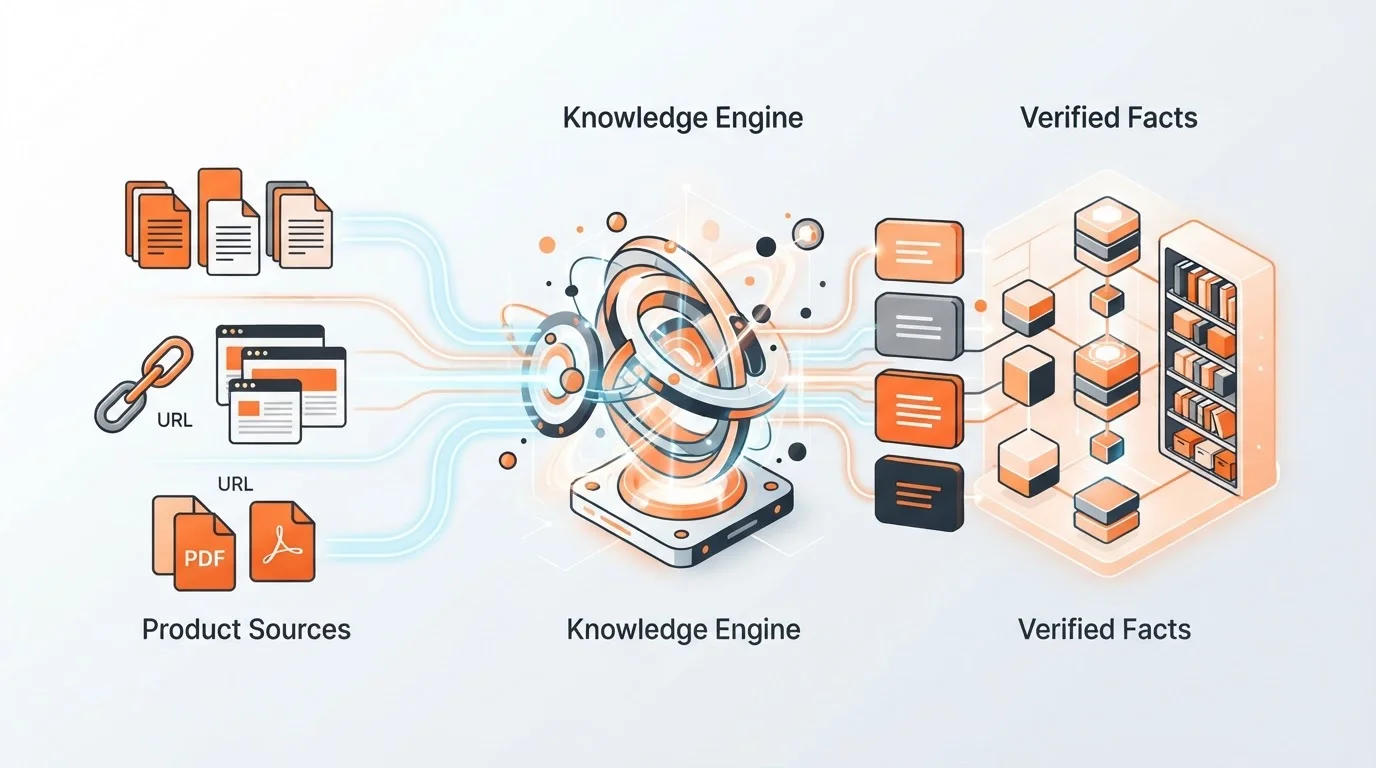
High engagement begins with accuracy. Standard AI writing tools often struggle with SaaS content because they lack access to your product's specific, evolving facts. This leads to hallucinations or generic descriptions that alienate sophisticated B2B buyers. To overcome this, successful founders utilize a Knowledge Engine to ensure every article is grounded in specific product truths. This approach allows you to provide public product sources, uploaded documents, pasted links, or a written product description to define the boundaries of what the system can say.
By organizing facts by product entity and facet, you ensure that the platform understands the nuances of your SaaS. For example, if your pricing changes or you ship a new integration, you simply update the knowledge base, and future content reflects those changes automatically. This organization of product descriptions, ICPs, and positioning limits ensures that the content isn't just informative—it is authoritative. When a reader finds an article that accurately describes a technical solution and links it correctly to a feature, they stay on the page longer, directly boosting engagement metrics.
The Importance of Fact Provenance
In a technical environment, citing your sources matters. An autonomous platform like Blogged organizes knowledge into bounded facts with provenance and verification states. This means the system doesn't just 'know' a fact; it knows where that fact came from—whether it was a documentation page, a technical brief, or a founder's note. This level of conflict control prevents outdated information from appearing in new posts, which is essential for maintaining trust as your product scales. When readers see consistent, accurate information across your blog, they are more likely to view your brand as a reliable authority in your space.
Phase 2: Maximizing Time-on-Page Through Autonomous Interlinking
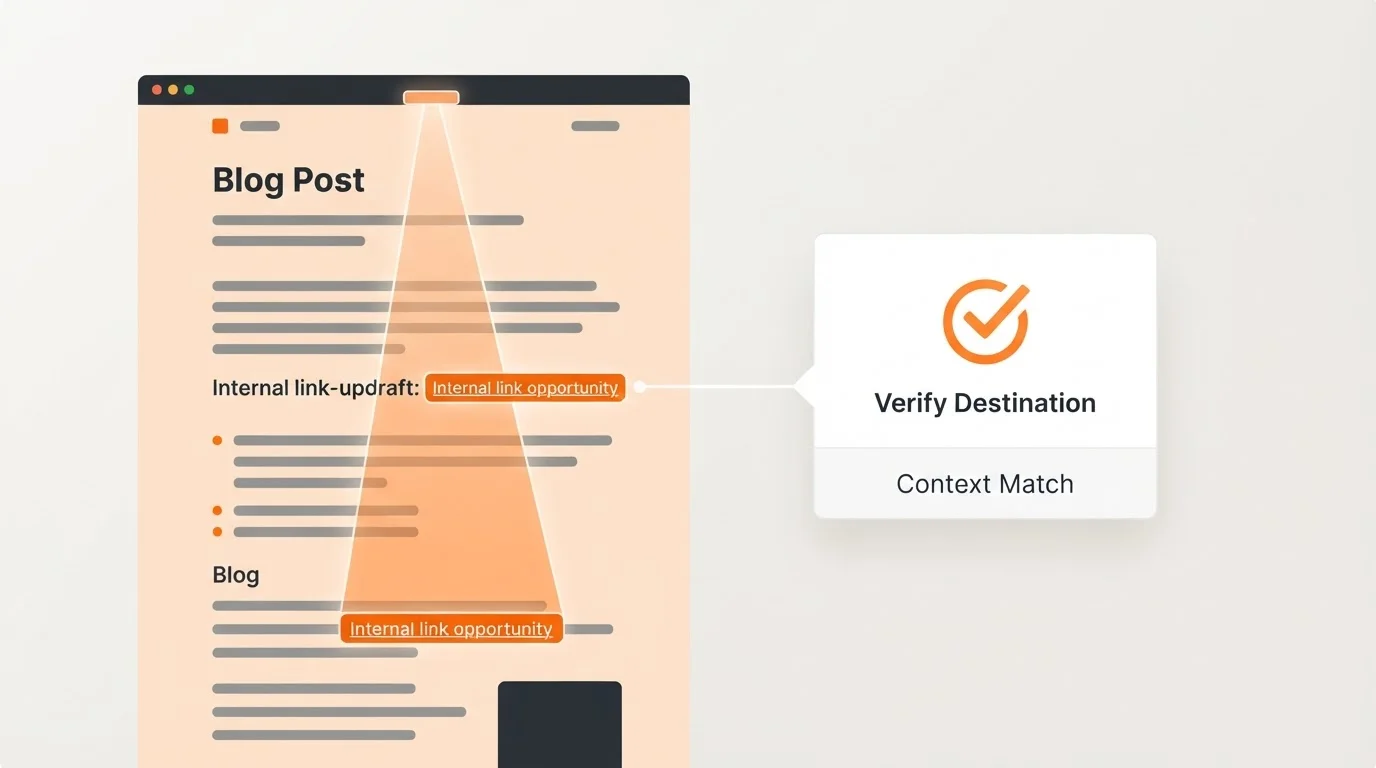
One of the most significant contributors to content engagement is a strong internal linking strategy. Most SaaS blogs suffer from 'dead-end' articles where a reader finishes a post and leaves the site because there is no clear next step. To combat this, you can use autonomous internal linking tools to create a web of relevant content that keeps users moving through your marketing funnel. The system analyzes your existing content and identifies natural opportunities to link to other relevant posts or specific product pages.
Critically, this isn't just about adding links at random. The platform verifies the destination, shows why it fits a specific section, and allows the editor to insert or undo the link without leaving the post. This creates a seamless reader experience where every article serves as a gateway to another relevant topic. By guiding readers to other high-value pages, you reduce your bounce rate and increase the average pages per session. Furthermore, this interlinking strengthens your site’s profile for AI search engines, making it easier for them to understand the relationship between your different product features.
Phase 3: GEO vs. SEO—Optimizing for the Next Generation of Search
The way users find SaaS products is shifting. While traditional SEO remains vital, Generative Engine Optimization (GEO) is becoming equally important. AI-driven search tools look for specific, authoritative answers to complex questions. If your blog is filled with generic fluff, it won't be cited as a source by these AI engines. Autonomous blogging platforms that focus on 'useful and specific' content over 'volume alone' are better positioned for this shift.
By leveraging a platform that understands both SEO and GEO, you ensure your content is discoverable across all platforms. This includes optimizing for how AI models process information, ensuring your product's unique value propositions are clearly articulated in a way that machine-learning algorithms can easily parse and recommend. This dual-optimization strategy ensures that your content engagement isn't just coming from one source, but is diversified across traditional search engines and AI discovery tools alike.
Get practical updates on saas content engagement case study
Receive new articles and practical insights by email.
Managing Visual Assets for Technical Authority
Engagement is also a visual game. Technical readers often skim articles looking for screenshots, diagrams, or product videos that prove the software can actually do what the text claims. However, managing these assets is often a manual chore that founders skip to save time. Using a private SaaS product asset library allows you to centralize these visuals, ensuring they are ready for deployment across any post.
A robust asset library includes review queues, visible approvals, and alt text management. This ensures that every image served in an article is optimized for both accessibility and engagement. High-quality visuals break up long walls of text, making the content more digestible and increasing the likelihood that a reader will reach your call to action. By pairing verified product screenshots with clear, descriptive text, you provide the 'proof' that B2B buyers need before they sign up for a trial.
Strategy Over Syntax: Reclaiming the Founder's Time
The ultimate goal of autonomous blogging is to move the founder from the role of 'writer' to 'editor-in-chief.' Instead of spending hours staring at a blank cursor, your focus shifts to setting content directions and refining high-level strategy. You can build a durable SaaS content plan and publish on your own defined cadence, while the Autopilot feature refills your topic queue based on your approved directions.
Quality control remains a priority in this workflow. You can utilize revision systems—typically offering 1 to 3 revisions per article depending on your plan—to fine-tune the AI’s output. This human-in-the-loop approach ensures the final word always aligns with your brand voice, while the AI handles the repetitive research, writing, and optimization tasks. Because paid plans often include unlimited team seats, you can involve product managers and marketers in the review process without additional overhead, ensuring the blog stays updated as new features are shipped.
Frequently Asked Questions
Q: How does autonomous blogging maintain factual accuracy for complex SaaS products?
Platforms like Blogged use a Knowledge Engine that bounds the AI to your specific product facts, documentation, and URLs. It organizes these into facts with provenance and conflict controls to ensure the content reflects your actual product capabilities.
Q: Does an autonomous platform replace the need for a marketing team?
No, it empowers them. Your team shifts from manual execution to strategic oversight, focusing on defining Content Directions and reviewing output rather than spending days on initial drafts.
Q: How does the internal linking tool work?
The system identifies natural opportunities to link to other relevant posts or product pages based on the context of the writing. It verifies the destination and allows the editor to approve or undo the link to ensure a high-quality reader experience.
Q: Can I control the publishing frequency?
Yes. You can define your own publishing cadence and build a content plan. The Autopilot feature can then refill your topic queue automatically based on your approved strategy.
Boosting content engagement isn't about writing more; it's about writing smarter. For SaaS founders, the path to organic growth lies in transforming existing product knowledge into a discoverable asset through autonomous blogging. By grounding your content in a verified Knowledge Engine, utilizing autonomous interlinking to keep readers on-site, and optimizing for the next generation of AI search, you can build a high-performing blog that works as hard as your software does. It is time to move beyond the manual content bottleneck and start scaling your influence on autopilot.