
On this page
SaaS founders frequently navigate a high-stakes binary: spend months manually validating a new feature through customer interviews and beta tests, or ship immediately and hope the market responds. Both paths carry significant risks—either the risk of missing a market window or the risk of wasting precious engineering hours on a feature no one wants. However, a third path is emerging for lean teams: using autonomous blogging to validate product concepts at the speed of search.
By leveraging Blogged, an autonomous SEO and GEO blogging platform, founders can transform their internal product knowledge into discoverable, product-led content. This approach allows a company to act like a hypothetical research engine, attracting highly targeted users to "test-drive" concepts through educational articles and waitlist CTAs before a single line of production code is written. This guide explores how to move from a slow, manual feedback loop to a dynamic, data-driven engine that informs your roadmap with objective market signals.
Whether you are a solo founder or leading a scaling team, using autonomous content to achieve faster product-market fit is about more than just marketing; it is about building a smarter, more responsive development cycle. By automating the heavy lifting of research, writing, and optimization, your team can focus exclusively on analyzing market demand and iterating on the product itself.
The Challenge: The High Cost of Manual Validation
Traditional feature validation is a bottleneck. It often relies on two primary methods: direct user interviews and manual prototype testing. While qualitative interviews provide deep insights, they are inherently unscalable and prone to selection bias. You are often talking to your most vocal users, rather than the silent majority or the "non-users" who haven't yet found a reason to sign up.
The manual content gap further slows this process. To validate a new concept, your marketing team must write guides, your product team must draft technical explainers, and your sales team must solicit interest. This internal coordination can take weeks. During this time, the market continues to evolve, and competitors may move faster. Furthermore, without organic discoverability, your validation efforts stay trapped in an echo chamber of existing followers.
To maintain a competitive edge, founders need to validate at the speed of modern search and AI discovery. This requires a system that puts hypothetical features in front of the world to see what resonates. The goal is to reach a state where search data and engagement metrics, rather than intuition, dictate the priority of your roadmap, all while keeping your developers focused on their core builds.
Moving from Prototypes to Product-Led Content
The core realization for modern SaaS teams is that content is a highly efficient proxy for a feature. If a specific problem-solving article generates high engagement and specific clicks on a "Coming Soon" or "Join the Waitlist" button, the market is sending a clear signal of demand. This is the essence of product-led content.
By using an autonomous platform, you can launch "validation campaigns" for multiple features simultaneously. Instead of waiting for a developer to build a prototype, you can use the Knowledge Engine for Autonomous SaaS Blogs to feed raw product ideas into your growth engine. By providing public product sources, uploaded documents, or written descriptions, you enable the platform to produce high-quality content that mirrors your future product vision.
This strategy allows you to test market appetite in real-time. If the content attracts traffic and conversions, you have the data needed to justify the engineering spend. If it fails to gain traction, you have saved your team from a costly development mistake without ever having to pull a developer away from the current sprint.
The Knowledge Engine: Fueling Content with Product Truth
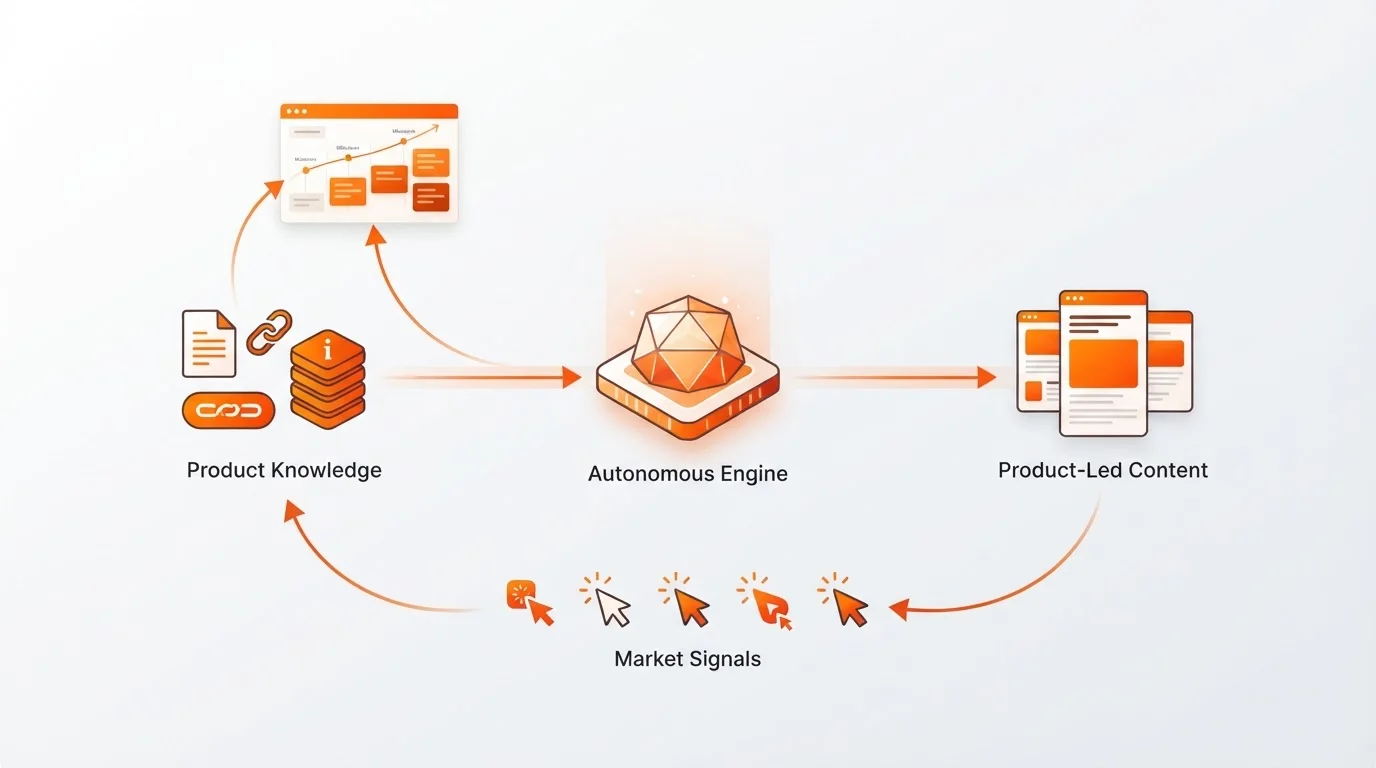
One of the primary concerns with automated content is accuracy. SaaS products are complex, and generic AI often fails to capture the nuance of a specific technical solution. This is where the Blogged Knowledge Engine changes the equation for founders.
Rather than relying on generic internet data, the platform allows you to upload your unique "product truth." You can feed the system your PRDs (Product Requirement Documents), internal meeting notes, competitive research, and even links to your current documentation. This ensures the autonomous writer has a deep, accurate understanding of the proposed feature's value proposition and technical constraints.
Because the platform handles the research, planning, and SEO independently, it can produce a cluster of articles that cover the same feature from multiple angles—how it solves a specific problem, how it compares to existing workflows, and why it matters for specific industries. This multi-angled approach provides a broader dataset for validation, ensuring that you aren't basing your roadmap decisions on a single, isolated post.
Seamless Publishing with WordPress and Ghost Integrations
Speed of validation is only possible if the publishing process is frictionless. If a founder has to manually format, optimize, and interlink every post, the "autonomous" benefit is lost. Modern platforms solve this through native integrations with popular CMS stacks.
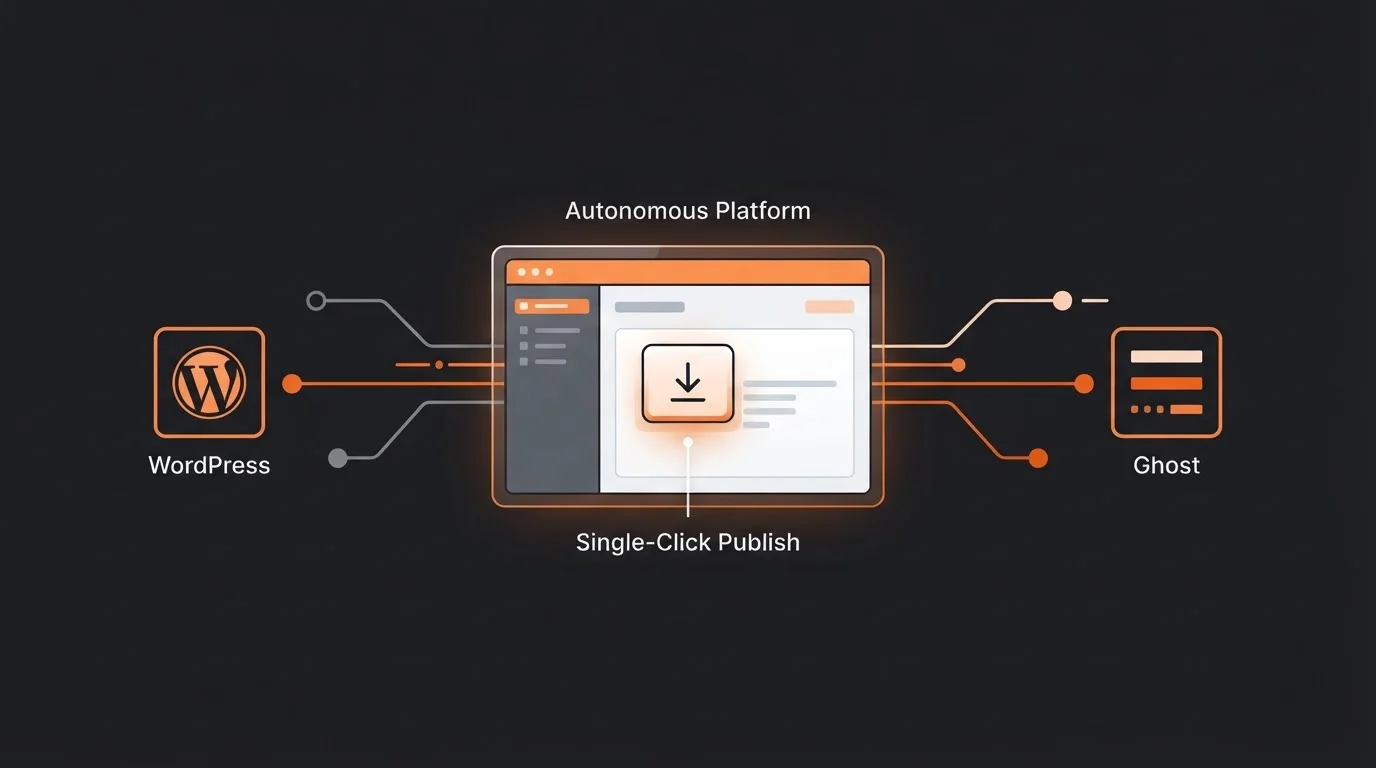
For example, the WordPress AI Blog Publishing integration allows users to create and review articles within the autonomous platform and then deliver them to their live site with a single click. For self-hosted WordPress sites, the connection is handled via a dedicated plugin and an application password, ensuring a secure and reliable link.
Similarly, the Ghost integration manages the content creation and review process while Ghost renders the reader experience. A key feature for validation is the ability to collect consented visits and configured conversions for verified articles. By tracking exactly which articles lead to high-intent actions, founders can objectively rank their priorities. If a proposed integration receives significantly more interest than a UI overhaul, the roadmap naturally aligns with the highest potential ROI.
A Step-by-Step Framework for Content-Led Validation
To successfully integrate autonomous blogging into your development lifecycle, you should follow a systematic workflow. This ensures that every piece of content serves a strategic purpose in your product validation journey.
1. Centralizing Product Knowledge: Start by gathering all internal documentation for the features you are considering. This includes everything from rough sketches in a notepad to detailed competitive analysis. Upload these to your knowledge base to ground the AI in your specific technical context.
2. Setting Targeted Objectives: Define what success looks like for each validation campaign. This might be a specific number of sign-ups for a beta list or a high engagement rate on technical explainers. These objectives help the planning phase focus on keywords with high commercial intent rather than just general traffic.
3. Collaborative Review: Despite the autonomy, quality control is vital. Modern platforms include unlimited team seats on their plans, allowing product managers to check for technical accuracy and marketers to ensure the brand voice is consistent. This internal alignment happens in minutes rather than days.
4. Measuring Conversion Signals: Each article should include specific, trackable calls to action. By using integrated conversion tracking, you can see which "hypothetical" features are actually driving user intent. This creates a data-backed hierarchy for your development team, reducing the influence of the "loudest voice in the room" and replacing it with market-validated data.
Measuring What Matters: Signals Over Noise
When validating features through a blog, it is easy to get distracted by vanity metrics like page views. While traffic is important for SEO, it is not a direct indicator of feature demand. Instead, focus on high-intent actions that signal a willingness to use the product.
Track metrics such as time on page for technical documentation—this shows if users are truly trying to understand the solution. Monitor click-through rates on "Notify Me" buttons and examine the specific questions users leave in the comments section. These qualitative and quantitative data points provide a holistic view of market demand.
Furthermore, by using Generative Engine Optimization (GEO), you can see how AI-driven search engines and discovery tools categorize your product ideas. If AI overviews begin to associate your brand with a specific problem-solving capability before you've even fully launched the feature, you have achieved a level of market positioning that traditionally takes years of manual marketing to build.
Frequently Asked Questions
Q: How does autonomous blogging differ from standard AI writing tools?
Standard AI tools require manual prompting and management for every post. Autonomous platforms like Blogged manage the entire lifecycle—research, planning, SEO, interlinking, and publishing—based on your product knowledge, requiring only your final approval.
Q: Can I trust an AI to represent my product's technical details accurately?
Yes, if you use a platform with a dedicated Knowledge Engine. By feeding the system your specific documents and links, you ensure the content is grounded in your unique product truth rather than generic internet data.
Q: Does this replace the need for qualitative user interviews?
No. Autonomous blogging acts as a high-volume filter. It identifies which ideas have the most market pull, allowing you to focus your expensive qualitative interview time on the most promising concepts.
Q: Which CMS platforms are supported for autonomous publishing?
Platforms like Blogged integrate natively with WordPress, Ghost, Webflow, and Next.js, allowing for a seamless flow from content creation to a live reader experience.
Get practical updates on saas feature validation case study
Receive new articles and practical insights by email.
For SaaS founders, speed and certainty are the ultimate competitive advantages. Shifting from manual, slow-moving validation to an autonomous content-led strategy allows you to test more ideas, fail cheaper, and scale faster. By transforming your product knowledge into a discoverable engine for growth, you don't just save time—you build a product that the market has already asked for through its search behavior.
If you are ready to stop guessing and start grounding your roadmap in real-world demand, it is time to put your product knowledge on autopilot. Start building your autonomous blog today and let the market tell you exactly what to build next.