
On this page
Organic growth for modern SaaS companies no longer depends solely on a list of blue links. The rise of AI Overviews, Perplexity, and ChatGPT has introduced a new survival requirement: Generative Engine Optimization (GEO). Founders today face a brutal choice: spend dozens of hours every month writing technical content to stay visible, or let their brand vanish from the conversational search results where buyers now spend their time. For many lean teams, the manual burden of research, writing, and SEO is simply unsustainable alongside product development.
GrowthEngine, a hypothetical SaaS startup, illustrates the strategic shift required to bridge this gap. By moving away from manual content creation and adopting an autonomous blogging strategy, they transformed their technical knowledge into a self-sustaining engine. This allowed them to rank in traditional search engines while simultaneously securing high-conversion citations in AI-generated answers. Their experience provides a blueprint for any founder looking to optimize their content for AI search presence without losing focus on their core product.
The Evolution of Search: From Keywords to Generative Citations
The search environment is undergoing its most significant shift since the advent of mobile browsing. Traditional SEO focused on matching keywords and building backlink profiles to satisfy a crawler's ranking algorithm. While these factors still matter, AI-powered answer engines operate differently. They act as synthesis layers, scanning the web to provide direct, conversational answers to complex user prompts.
To appear in these AI summaries, your content must possess 'Information Gain.' This means providing unique facts, data, or perspectives that aren't already saturated across the web. AI models are trained to ignore redundant content and prioritize sources that add new value to the conversation. For a SaaS company, this means generic marketing fluff is essentially invisible to the engines driving the future of search discovery.
Understanding Generative Engine Optimization (GEO)

Generative Engine Optimization (GEO) is the practice of structuring and grounding content so that Large Language Models (LLMs) can easily identify it as an authoritative source. Key factors in GEO include entity clarity—how well the model understands what your product does—and citation authority. If an AI engine cannot clearly link a solution to a specific problem through your content, it will not cite your brand in its response.
Modern searchers are asking multi-part questions, such as 'Which SaaS onboarding tool integrates with Slack and supports SOC2 compliance for mid-market teams?' Traditional keyword-stuffed articles rarely provide the density of information required to answer such specific queries. GEO requires a shift toward fact-dense, structured content that provides the exact technical specifications and use-case data these models look for.
The Strategic Shift: The GrowthEngine Hypothetical Workflow
The hypothetical team at GrowthEngine realized that their biggest growth bottleneck was the 'founder's treadmill.' They had the product knowledge, but they lacked the time to turn that knowledge into consistent, high-quality blog posts. By implementing an autonomous blogging platform like Blogged, they shifted their role from being the primary writers to being the strategic editors of their own growth engine.
This autonomous approach allowed them to maintain a consistent publishing schedule of several posts per week without increasing their headcount. Instead of starting with a blank document, they utilized a system that could research their industry, plan a content calendar based on high-intent search terms, and write technical articles that were pre-optimized for both SEO and GEO.
Bridging the Knowledge Gap with Grounded AI
One of the greatest risks of using basic AI tools for blogging is the 'hallucination' factor—where the AI makes up technical details about your product. To avoid this, GrowthEngine utilized Blogged's Knowledge Engine. This feature allowed them to ground the autonomous writing process in their actual product specifications by providing public product sources, uploaded documents, pasted links, or written descriptions of their SaaS.
By feeding the Knowledge Engine their technical documentation and internal FAQs, they ensured that every article produced was technically accurate. This grounding is what allowed them to capture AI search real estate. When AI search engines looked for factual answers about SaaS onboarding workflows, GrowthEngine's blog stood out as a reliable, data-rich source that the models were confident in citing.
Technical Integration: Connecting the Autonomous Blog to the Stack
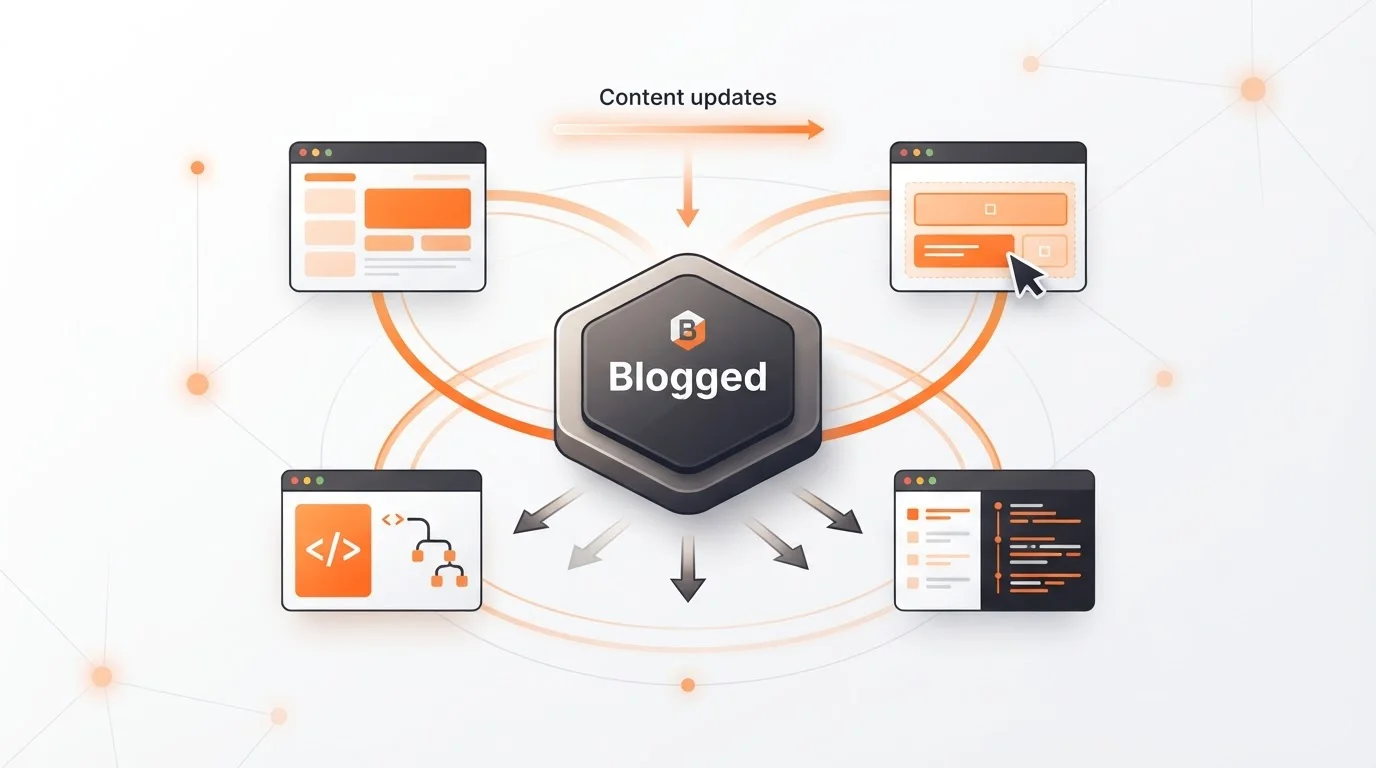
For an autonomous content strategy to be effective, it must integrate seamlessly with the existing SaaS marketing stack. The GrowthEngine team needed a solution that could publish directly to their site without manual copy-pasting. Blogged supports a variety of native integrations that allow for this hands-off workflow across popular content management systems (CMS).
For teams using self-hosted WordPress, Blogged connects through a specialized publishing plugin and an application password. This setup enables users to create and review articles within the Blogged dashboard and then deliver them directly to their WordPress website. This keeps the technical overhead low while maintaining full control over the final presentation of the content.
Get practical updates on saas optimize content ai search presence
Receive new articles and practical insights by email.
Integrating with Webflow, Ghost, and Next.js
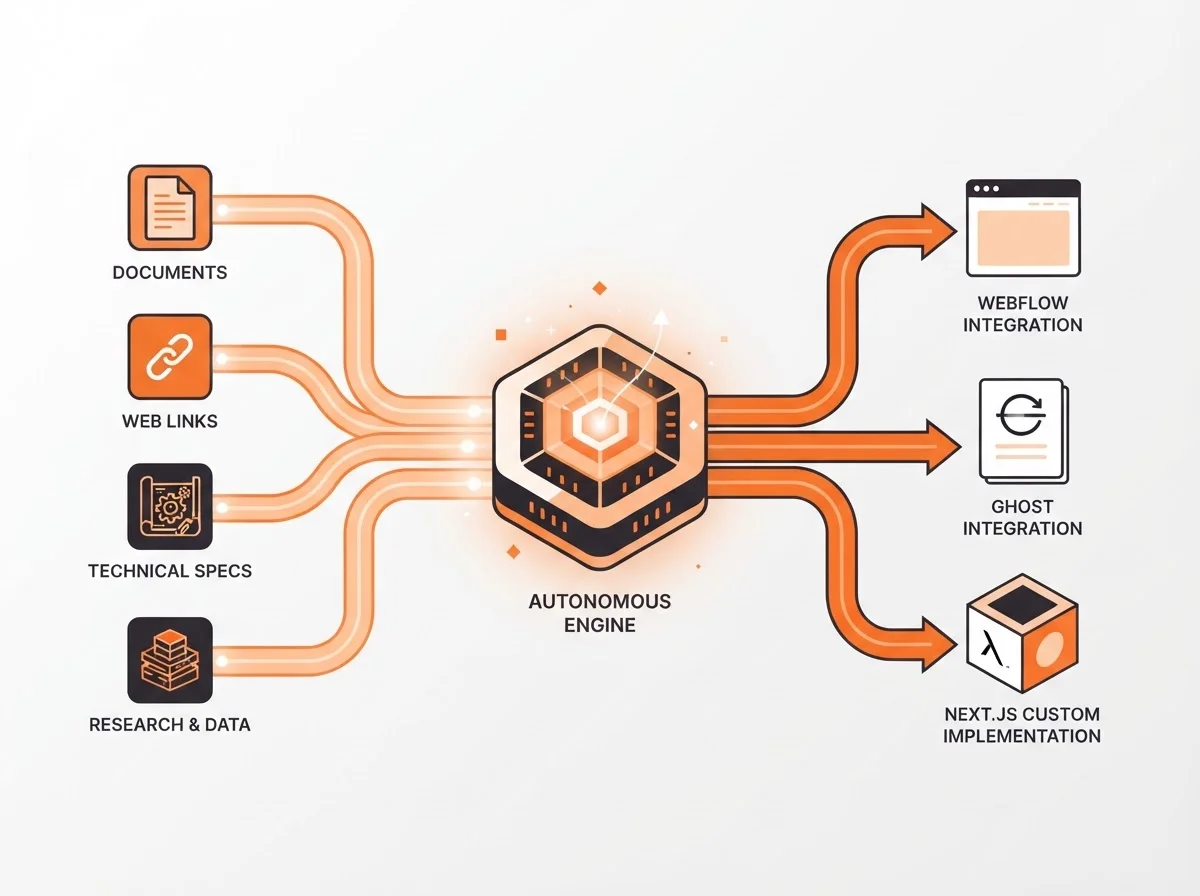
GrowthEngine eventually migrated their front-end to a custom build, but they were able to keep their autonomous engine running. For Webflow users, the integration allows for the collection of consented visits and configured conversions for verified articles, ensuring that the blog isn't just a traffic source but a lead generation tool. Similarly, the Ghost integration manages content creation and review while Ghost renders the reader experience, requiring only an Admin API key for verification.
For more technical teams building on modern frameworks, the Next.js AI Blog Publishing integration allows for a deeply custom implementation. By using signed webhooks and a Content API, SaaS companies can pull their autonomously generated content into their own custom-built frontend, maintaining total brand consistency while the background processes of research and writing stay on autopilot.
Maximizing ROI: Pricing and Team Scaling
One of the primary objections to content automation is the cost relative to quality. However, when compared to the expense of a specialized SEO agency or a full-time content writer, autonomous blogging offers immediate ROI. Blogged provides three main tiers to accommodate different growth stages: the Starter plan at $99/month (30 posts), the Growth plan at $169/month (60 posts), and the Ultra Growth plan at $229/month (90 posts).
Scaling the strategy doesn't require scaling the budget for tools. Every paid plan includes unlimited team seats, allowing founders to invite product managers, engineers, and marketers to the review process. This collaborative environment ensures that while the heavy lifting of writing is automated, the final output always receives a human check for brand voice and strategic alignment. The Starter plan includes 1 revision per article, while the Ultra Growth plan allows for up to 3 revisions, providing flexibility for technical refinement.
5 Actionable Steps to Optimize Your SaaS for AI Search
If you are ready to reclaim your time and dominate the next generation of search, follow these five steps based on the GrowthEngine strategy:
- Ground Your Content in Product Data: Use a Knowledge Engine to provide technical specs, documentation, and specific use cases. AI models cite the most detailed and accurate sources.
- Optimize for Information Gain: Avoid generic 'How-to' guides that repeat common knowledge. Focus on unique product insights that provide new value to the LLM's training set.
- Maintain High Publishing Velocity: AI search results favor fresh, relevant information. Use an autonomous scheduler to ensure your site is updated multiple times per week without manual effort.
- Use Structured Data for Extraction: Ensure your blog uses clear headings and schema. AI engines scan for structured information to answer specific user queries efficiently.
- Monitor Citations, Not Just Clicks: In the age of AI search, being the 'source of truth' for an AI overview is more valuable than a raw click. Track how often your product is mentioned as a recommended solution in conversational engines.
Frequently Asked Questions
Q: How much does it cost to automate a SaaS blog with Blogged?
Blogged offers three main tiers: the Starter plan at $99/month (30 posts), the Growth plan at $169/month (60 posts), and the Ultra Growth plan at $229/month (90 posts). All paid plans include unlimited team seats.
Q: Does Blogged support my CMS?
Yes, Blogged has native integrations for Webflow, WordPress, Ghost, Next.js, and Lovable, along with signed webhooks for custom applications.
Q: Can I review the content before it goes live?
Absolutely. Every plan allows for manual review and approval. You can also take advantage of article revisions—Starter includes 1 revision per article, while Ultra Growth includes 3 revisions.
Q: How does this help with AI search specifically?
Blogged is designed for both SEO and GEO (Generative Engine Optimization). It structures content and implements schema in a way that makes it easier for AI models to cite and ground their answers in your product data.
The Future of SaaS Growth is Autonomous
Optimizing for AI search presence is no longer a luxury; it is a fundamental requirement for SaaS companies that want to remain discoverable. As search volume shifts toward conversational interfaces, the founders who succeed will be those who treat their blog as a repeatable, autonomous system rather than a manual chore. By using tools like Blogged to transform product knowledge into discoverable content, you can reclaim your focus and spend your time building the next great feature while your blog drives the growth. The era of the manual content treadmill is over—it's time to put your growth on autopilot.