
On this page
Maintaining a consistent brand voice is one of the steepest challenges for SaaS founders as they scale. When you move from writing every post yourself to managing a revolving door of freelancers and agencies, your brand's unique personality often gets lost in translation. For InnovateCo, a rapidly growing SaaS provider, this friction became a bottleneck that threatened their market authority. As their publishing volume increased, their brand identity began to fracture, resulting in a blog that felt like a collection of disjointed voices rather than a cohesive resource.
By transitioning to an autonomous blogging strategy, InnovateCo didn't just increase their output; they unified their voice across more than 100 articles while eliminating the manual review cycles that were draining their leadership team. This success wasn't achieved by simply using generic AI, but by implementing a centralized Knowledge Engine to enforce brand guidelines and product intelligence at scale. For founders who feel their blog has become a patchwork of generic advice, this case study provides a blueprint for reclaiming brand identity through automation.
You will learn the specific workflow InnovateCo used to feed product intelligence into an autonomous system, the technical integrations that bridged their content stack, and the measurable impact on their organic growth. By the end of this guide, you will understand how to transform your product knowledge into discoverable, product-led content without sacrificing the authoritative tone that built your company.
The Challenge: The Hidden Cost of Content Scaling
As InnovateCo’s product gained traction, their marketing team faced a classic dilemma: they needed high content velocity to stay competitive in search rankings, but their brand voice was fracturing. To hit their publishing targets, they relied on a fragmented mix of in-house staff, freelance contributors, and external agencies. Each writer brought a slightly different interpretation of the brand's tone, leading to a blog that lacked a single, reliable perspective.
This inconsistency wasn't just an aesthetic problem; it was an operational burden. The marketing team was forced into endless manual reviews, spending hours rewriting drafts to align with the company's preferred terminology and authoritative-yet-approachable tone. As the content library crossed the 50-article mark, this process became unsustainable. Every new piece of content added to the library increased the risk of brand dilution, making it harder for potential customers to connect with the core InnovateCo message.
The Breakdown of Content Governance
Founders often underestimate the cost of manual content governance. At InnovateCo, the leadership team found themselves bogged down in copyediting rather than focusing on product strategy. They realized that to reach 100+ articles without losing their identity, they needed a system that could embed brand guidelines directly into the creation process, rather than trying to fix them after the fact.
The challenge was two-fold: they needed to maintain factual accuracy regarding their complex features and ensure that every article—regardless of the topic—sounded like it was written by the same expert team. Traditional outsourcing failed because it lacked a "memory"; every new writer required a fresh onboarding process that rarely yielded perfect results. InnovateCo needed a way to centralize their product knowledge so that it could be applied consistently across a high volume of content.
Strategic Pivot: Selecting a Platform for Brand Control
InnovateCo recognized that they needed an autonomous solution that could ingest their specific product knowledge and output content that mirrored their founding team's expertise. After evaluating various tools, they chose Blogged because of its focus on product-led content and its technical flexibility. Unlike generic LLMs that pull from the general internet, Blogged was designed to bridge the gap between product documentation and discoverable content.
A primary requirement was the ability to integrate with their existing technical stack. InnovateCo utilized a self-hosted WordPress instance, and they needed a solution that wouldn't require a complex migration or constant manual copy-pasting. Blogged connects to self-hosted WordPress through the Blogged Publishing plugin and an application password, ensuring a secure and seamless bridge between the content generation engine and their live site.
Flexible Infrastructure for Growing SaaS Brands
They also valued the platform's multi-channel potential. While WordPress was their primary home, InnovateCo wanted the option to expand to other ecosystems without changing their entire workflow. The Blogged Ghost AI Blog Publishing integration offered a compelling alternative: it manages creation and review within the Blogged platform while Ghost handles the reader experience.
This architectural decision allowed InnovateCo to centralize their "brand brain" in one place while maintaining the freedom to publish wherever their audience lived. Whether they were using WordPress, Ghost, or a Next.js frontend, the source of truth for their content remained the same. This technical foundation gave the team the confidence to scale, knowing that their infrastructure wouldn't break as their content volume hit triple digits.
Implementation: Feeding the Knowledge Engine
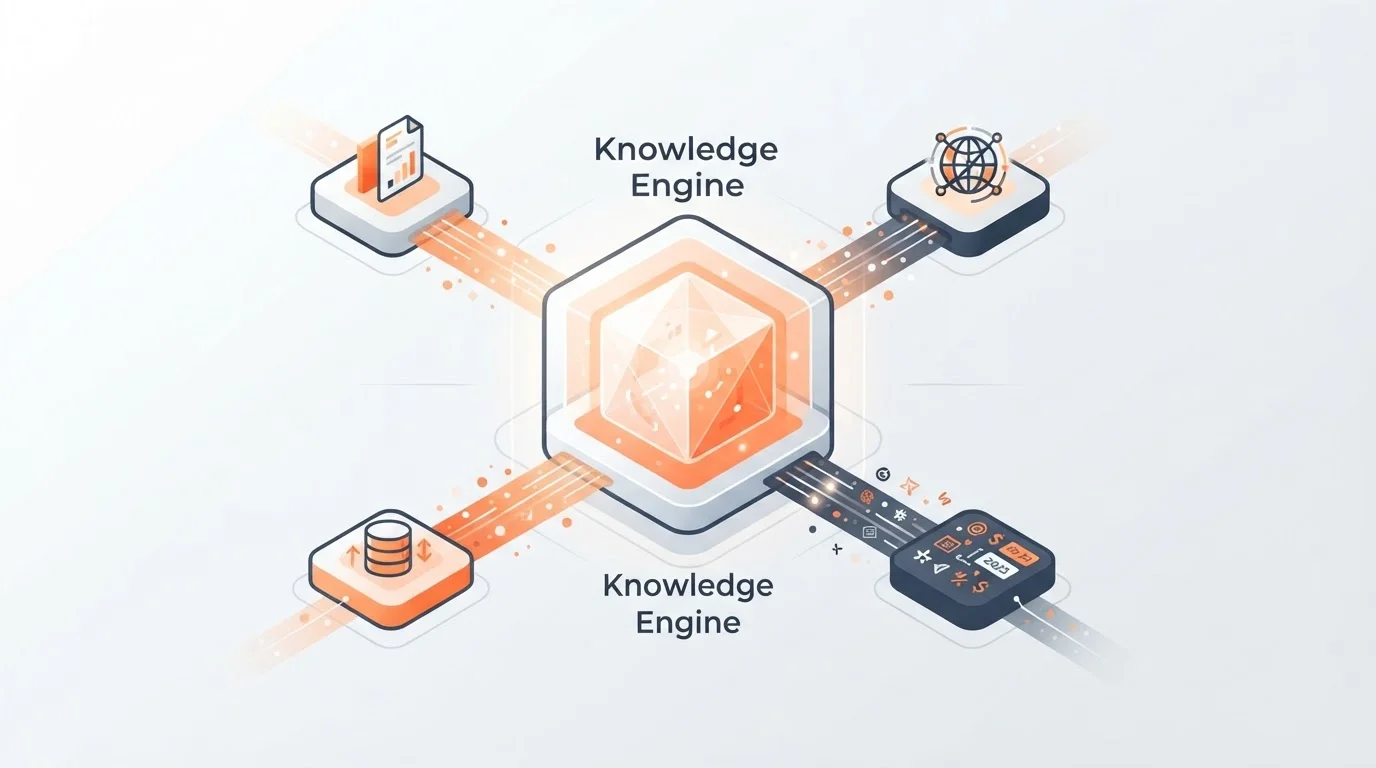
The breakthrough for InnovateCo came from how they utilized Blogged’s Knowledge Engine for Autonomous SaaS Blogs. Rather than giving the AI a generic prompt, they treated the platform as a new team member that needed to be onboarded with deep context. They provided the engine with a comprehensive set of inputs that defined their product's unique value proposition.
The Knowledge Engine allowed InnovateCo to provide public product sources, uploaded documents, pasted links, and written descriptions. This ensured that the autonomous system wasn't guessing how their product worked; it was using their actual documentation to build every article. By feeding these assets into a centralized repository, they created a single source of truth that informed every piece of content the platform generated.
Asset Consolidation and Tone Calibration
InnovateCo followed a three-step process to ensure their voice remained consistent:
- Asset Consolidation: They uploaded their internal style guides and technical documentation to ensure the AI used correct industry terminology.
- Source Integration: They provided links to their help center and product pages, allowing the engine to pull real-time product facts.
- Tone Definition: They utilized the written description feature to explicitly define their persona—authoritative, empathetic, and solution-oriented.
This proactive enforcement meant that the first drafts were inherently aligned with their brand. The engine used the provided product intelligence to shape its output, ensuring that even complex technical topics were explained in a way that resonated with InnovateCo's specific target audience.
Workflow Efficiency: Managing the Review Process
Automation did not mean InnovateCo removed humans from the loop; it meant they moved them to a strategic oversight role. To maintain high standards, they established a structured review protocol. Because Blogged includes 1 revision per article, the team could request specific adjustments to refine the output, ensuring that every piece met their exact requirements before going live.
This shift transformed the marketing team's day-to-day operations. Instead of spending hours in the weeds of sentence-level editing, they focused on high-level content strategy. The ability to request a revision allowed them to fine-tune the AI's understanding of particularly nuanced topics, effectively training the system to become more accurate over time.
Unlimited Collaboration Without the 'Seat Tax'

Collaboration was further facilitated by the platform's generous team settings. Since every paid Blogged plan includes unlimited team seats, InnovateCo invited product managers, marketers, and legal reviewers into the platform without worrying about per-user costs. This allowed for a cross-functional review process that was previously impossible due to budget constraints.
Product managers could quickly verify technical claims, while the legal team could approve compliance-heavy articles in the same interface. By centralizing these stakeholders, InnovateCo reduced the friction in the publishing pipeline. The result was a streamlined assembly line where content moved from "generated" to "published" in a fraction of the time it previously took to manage a single freelance writer.
The Results: 100+ Articles with a Unified Identity
The impact of this autonomous strategy was immediate and measurable. Within a few months, InnovateCo successfully published over 100 articles, all maintaining the same authoritative voice they had struggled to sustain manually. A post-implementation audit revealed that their brand voice consistency had improved across the entire library, even as the volume of content grew exponentially.
The benefits extended beyond internal efficiencies. By maintaining a high volume of quality, on-brand content, they significantly improved their organic growth. Blogged's autonomous SEO and GEO capabilities ensured that their content wasn't just readable, but discoverable. They were able to capture a larger share of their target audience's search queries by transforming their product knowledge into a vast, interlinked library of useful resources.
Key Takeaways for Founders
If you are looking to replicate InnovateCo's success, start by documenting your product intelligence before you automate. An autonomous platform is only as effective as the data it receives. Prioritize systems that offer a Knowledge Engine capable of ingesting your specific assets, as generic writing tools will always result in a generic voice.
Secondly, treat your content as a long-term asset. The more data and feedback you provide—whether through link integration or using your 1 included revision per article—the more accurately the system will mirror your perspective. Scaling to 100+ articles is no longer a matter of hiring more writers; it is a matter of building a better system for content governance.
Frequently Asked Questions
Q: Can an autonomous platform really capture specific product details?
Yes. The Blogged Knowledge Engine is designed to ingest public product sources, uploaded documents, pasted links, and written product descriptions. This allows the system to generate content based on your specific documentation rather than generic internet data.
Q: How much time does it actually take to set up the Knowledge Engine?
The initial setup involves uploading your brand assets and links. Once these are in the system, the engine uses that context for every subsequent article it generates, significantly reducing setup time for future content.
Q: Do I still need to edit the articles myself?
While the AI handles the heavy lifting, a final human review is recommended for quality assurance. Blogged supports this by including 1 revision per article, allowing you to fine-tune the output before it is published to your CMS.
Q: What CMS platforms does Blogged integrate with?
Blogged offers native integrations for WordPress, Ghost, Webflow, and Next.js. For WordPress, it uses a dedicated plugin and application password to deliver content directly to your site.
Get practical updates on saas brand voice consistency case study
Receive new articles and practical insights by email.
Scale Your SaaS Voice Without the Friction
InnovateCo's journey demonstrates that autonomous blogging is the most effective way for SaaS founders to achieve consistent brand voice at scale. By moving away from fragmented manual creation and toward a centralized system driven by product intelligence, they were able to publish 100+ high-quality articles that reinforced their brand authority rather than diluting it.
For SaaS founders who are tired of the constant cycle of hiring, training, and editing, the message is clear: the future of organic growth is not just about writing more—it's about automating smarter. By leveraging your product knowledge through an autonomous platform, you can build a discoverable, authoritative brand that grows as fast as your product.