
On this page
For most solo SaaS founders, organic growth is the ultimate double-edged sword. On one hand, it represents the most sustainable way to build a high-margin business; on the other, it requires a level of consistency that few one-person operations can maintain without sacrificing product development. Between coding new features and managing infrastructure, the company blog frequently falls by the wayside, becoming a collection of outdated announcements rather than a lead generation tool.
Quick answer: Achieving sustainable organic growth as a solo founder requires moving beyond manual writing to autonomous, product-led content. By leveraging a platform like Blogged, founders can transform existing knowledge—such as documentation, FAQs, and feature sets—into discoverable content that ranks for both traditional SEO and modern AI discovery (GEO). This approach allows the founder to remain focused on building the product while a self-driving engine handles the research, writing, optimization, and publishing.
This guide examines the transition from manual content creation to autonomous growth, highlighting the strategic shifts and technical workflows that allow solo operations to maintain a professional publishing cadence and build long-term domain authority.
The Solo Founder Content Gap: Why Manual Blogging Scales Poorly
Solo founders operate under a fundamental resource constraint. Marketing is frequently the task that consumes disproportionate amounts of time, often pulling them away from core business operations during critical development cycles. When you are the only person at the company, every hour spent researching keywords or editing a blog post is an hour stolen from the product roadmap.
This leads to a cycle of inconsistent publishing. A founder might write several posts during a quiet week, only to stop entirely when a bug report or feature request takes priority. Traditional SEO rewards consistency and domain depth; search engines favor sites that publish high-quality, relevant content on a predictable schedule. For a solo operation, maintaining that cadence manually is rarely sustainable. The cost of inaction isn't just a lack of new traffic; it is the stagnation of your existing organic presence while competitors continue to publish.
The Opportunity Cost of Traditional Solutions
Hiring a traditional SaaS content marketing agency is often a prohibitive expense for bootstrapped founders, frequently costing thousands of dollars per month. Conversely, managing freelance writers requires significant time spent on briefing, fact-checking, and ensuring the technical nuances of the SaaS product are accurately represented.
Without a way to automate this process, founders are often left with a low-volume strategy that fails to capture long-tail search queries. This lack of coverage means potential users searching for specific solutions never find the product. Autonomous blogging bridges this gap by providing agency-level output without the overhead, allowing the founder to stay in the "builder" mindset.
The Shift to Autonomous Blogging: SEO and GEO
The breakthrough for modern founders is the emergence of autonomous blogging—an end-to-end system that handles the entire content lifecycle. This goes beyond simple text generation; it is a "Knowledge-to-Traffic" pipeline where product expertise is ingested and automatically converted into search-optimized assets.
This new era of blogging addresses two distinct discovery channels:
- SEO (Search Engine Optimization): Ranking in traditional search results for intent-driven queries where users look for solutions.
- GEO (Generative Engine Optimization): Ensuring your product is cited and recommended by AI-powered tools such as Perplexity, ChatGPT (Search), and Google’s AI Overviews.
Modern buyers are increasingly using AI to synthesize complex B2B comparisons. If your content doesn't exist in a format these engines can parse, your brand remains invisible. Autonomous platforms like Blogged solve this by creating product-led content that explicitly states relationships and entities, making the SaaS product highly citable for AI agents.
The Strategy for Significant Organic Growth
Scaling organic traffic as a solo founder requires a system that functions without constant manual intervention. By implementing an autonomous content strategy, you transform your blog from a stagnant liability into a primary lead generation engine. This strategy is typically built on three distinct phases of automation.
Phase 1: Ingesting Product Knowledge
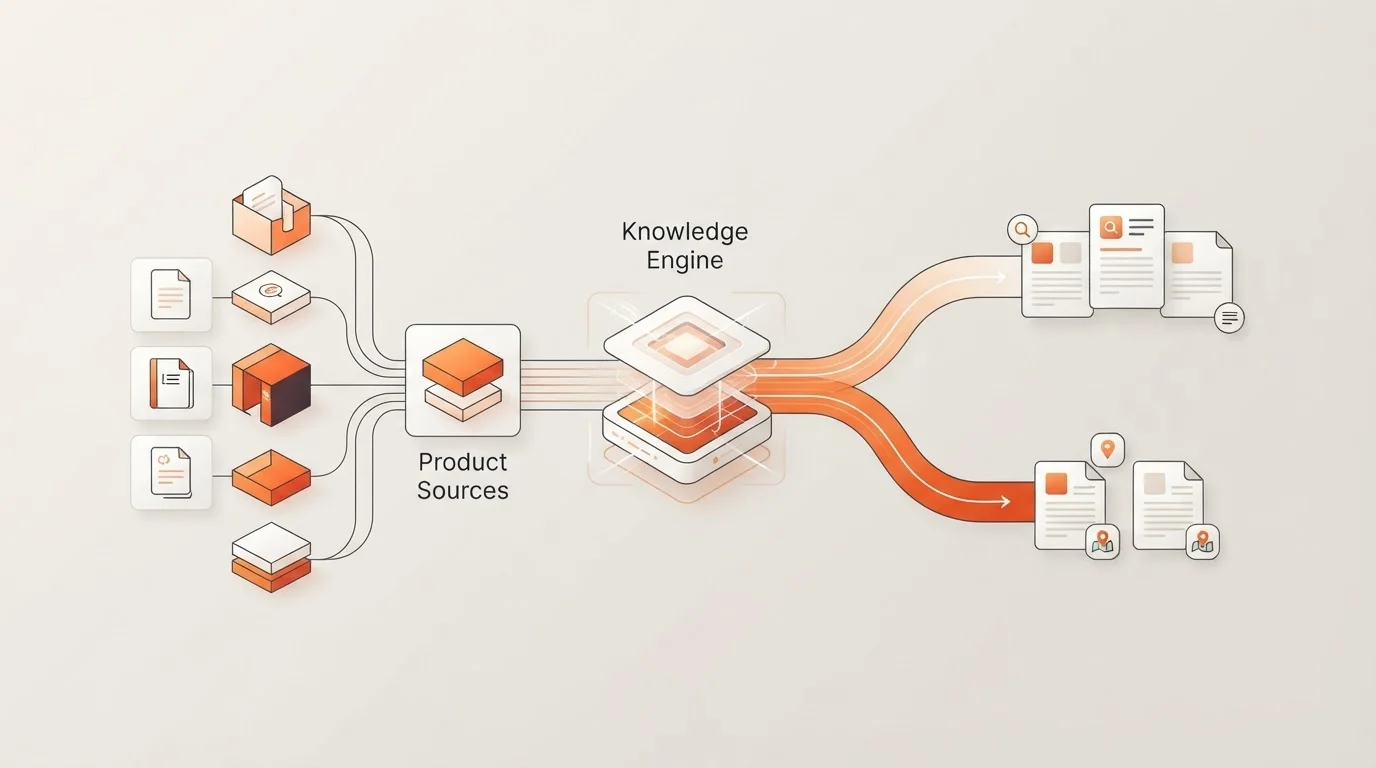
The foundation of a successful autonomous blog is the quality of the input. Instead of writing prompts from scratch, founders utilize the Blogged Knowledge Engine. This feature allows the platform to ingest public product sources, uploaded documents (like technical whitepapers or PDF guides), and pasted links to competitor comparisons.
By centralizing this data, the platform understands the specific vocabulary and technical capabilities of the SaaS. This ensures that every generated post is factually accurate and aligned with the actual product features, rather than producing generic marketing fluff.
Phase 2: Execution on Autopilot
With the knowledge base established, the system moves into Autopilot mode. This handles the heavy lifting of a full marketing team, including identifying high-intent topics based on core features, automatically managing header structures and metadata, and creating a web of internal links between articles.
This interlinking is crucial for SEO as it distributes domain authority and keeps users engaged on the site. For a solo founder, this allows for a consistent publishing schedule of several high-quality articles per week—a volume that would traditionally require dozens of hours of manual labor.
Phase 3: The Strategic Human-in-the-Loop Review
Autonomy does not mean a lack of control. Successful founders maintain a "Human-in-the-Loop" approach, dedicating a small amount of time each week to review drafts. Because the system is powered by the Knowledge Engine, the heavy lifting is already done. The founder simply checks for technical nuances or brand-specific phrasing. This review process ensures that growth is driven by high-utility, trustworthy content that accurately reflects the product's value proposition.
Technical Implementation: Integrating with the SaaS Stack
A common objection for solo founders is the "integration tax"—the time required to make a new tool work with an existing website. Blogged addresses this through native integrations that fit into modern SaaS development workflows, ensuring that content not only gets published but also tracks real business outcomes.
WordPress and Ghost Integrations
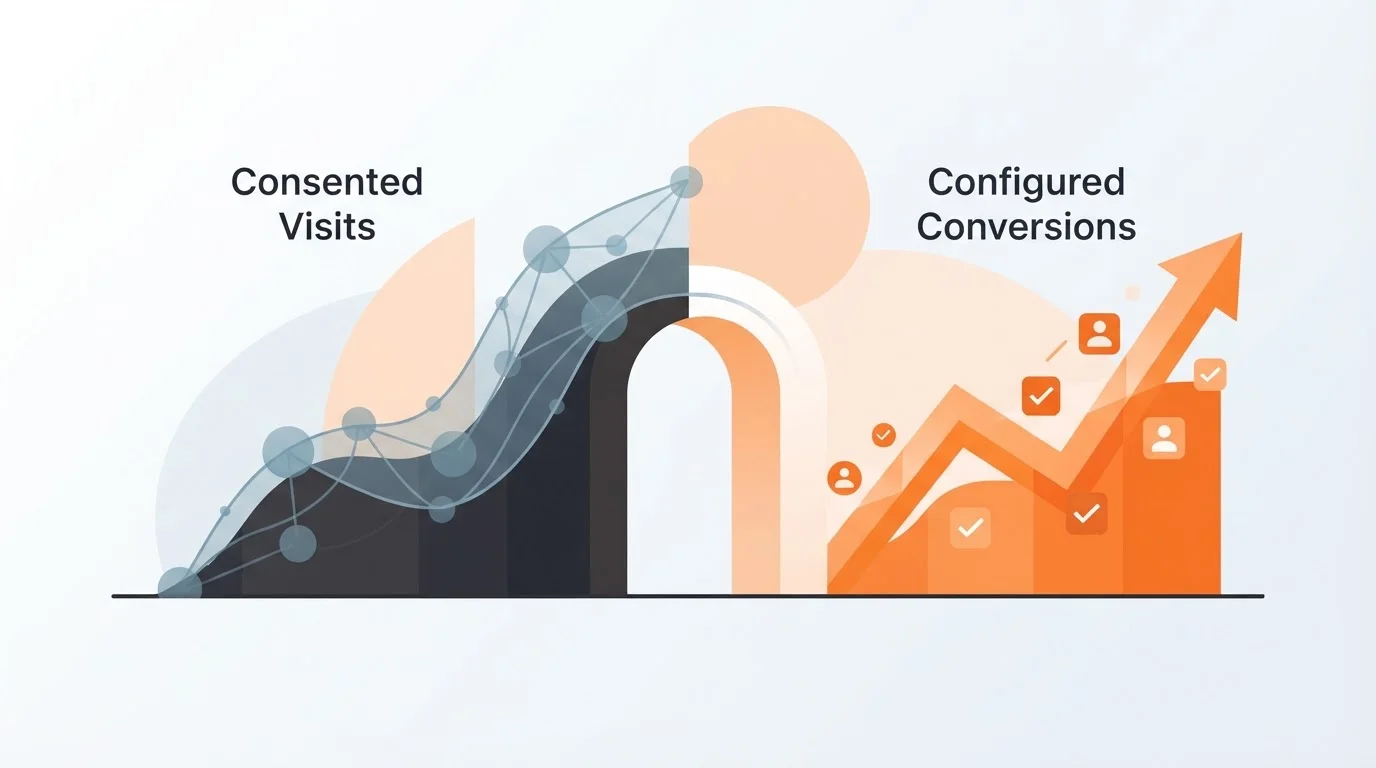
For founders using WordPress, the integration allows for the creation and review of articles within the Blogged platform, which are then delivered directly to the website. This connection is established through the Blogged Publishing plugin and an application password. Importantly, this integration lets users collect consented visits and configured conversions for verified articles.
Founders using Ghost can create a custom integration by copying an Admin API key into Blogged. This allows the platform to manage content creation and review while Ghost handles the reader experience, providing a seamless bridge between automated production and professional rendering.
Next.js and Webflow for Product-Led Growth
For more technical setups, Blogged provides a Next.js integration and a Webflow CMS integration. These are particularly valuable because they are designed to track how blog readers actually interact with the SaaS product. Like the other integrations, they allow founders to collect consented visits and configured conversions for verified articles. This means you aren't just tracking page views; you are measuring how many readers click through to sign up for a trial or a demo, providing clear proof of content ROI.
Custom API and Webhooks
For founders with bespoke websites or unique frontends, Blogged offers a Content API and signed webhooks. This allows for the ingestion of verified articles into any system, ensuring that autonomous blogging is accessible regardless of the underlying framework. Even with a custom setup, the system maintains the ability to track consented visits and conversions, keeping the focus on growth metrics.
The ROI of Product-Led Content Automation
When evaluating the success of autonomous blogging for a solo operation, the ROI is measured in two primary ways: financial efficiency and reclaimed time.
Financial ROI: By using an autonomous platform instead of an agency, a founder can save thousands of dollars per month. The cost of a specialized SaaS marketing program is significant; automation provides a way to maintain a high-quality blog at a fraction of that cost. Furthermore, every paid plan includes unlimited team seats, allowing for future growth without increasing software costs.
Time ROI: Transitioning from manual content creation to a review-based workflow can reclaim hundreds of hours per year. In a solo operation, this time is typically redirected toward major feature releases or customer acquisition strategies. Beyond the hours saved, the autonomous content library becomes a compounding asset. Unlike paid advertising, which stops delivering traffic once the budget is exhausted, an optimized blog continues to rank and attract users indefinitely, creating a sustainable growth floor for the business.
Practical Evaluation: Is Your SaaS Ready for Automation?
While autonomous blogging is powerful, its effectiveness depends on the stage of your SaaS. Consider these criteria before implementing a full automation strategy:
- Knowledge Availability: Do you have existing documentation, technical guides, or a detailed product description? The Knowledge Engine requires high-quality inputs to produce high-quality outputs.
- Growth Stage: If you have found Product-Market Fit (PMF) and need to scale distribution, automation is the logical next step. If you are still in the early stages of daily pivots, manual content may be better for testing different market angles.
- Integration Needs: Ensure the platform supports your CMS. Blogged integrates with WordPress, Webflow, Ghost, and Next.js, covering the majority of SaaS marketing stacks.
- Review Capacity: Are you willing to spend 15 to 30 minutes a week reviewing content? The most successful founders use AI as a highly efficient assistant, not a ghostwriter that goes unmonitored.
Frequently Asked Questions
Q: How does autonomous blogging differ from using ChatGPT?
ChatGPT is a text editor; an autonomous platform like Blogged is a full marketing department. It doesn't just write; it researches high-intent keywords, plans the content calendar, optimizes for SEO/GEO, handles internal linking, and publishes directly to your CMS. It uses a structured Knowledge Engine to ensure factual accuracy based on your specific product data.
Q: Will automated content affect my search rankings?
Google's search quality guidelines focus on the usefulness and accuracy of content rather than the tool used to create it. By using your own technical documentation as the source, you produce high-utility content that search engines reward.
Q: How many revisions are included in Blogged?
Depending on your plan, Blogged includes either 1 or 3 revisions per article, allowing you to fine-tune content to your specific brand voice during the review process.
Q: Can I add my team to the platform later?
Yes. Every paid plan includes unlimited team seats, so you can add product managers or marketing contributors to the review and approval process as your company scales.
Get practical updates on saas solo founder organic growth
Receive new articles and practical insights by email.
The success of a solo SaaS founder is determined by their ability to delegate tasks to systems rather than people. By building a scalable engine that turns product knowledge into discoverable assets, you move from being a bottleneck to a strategist. You stop worrying about what to write and start focusing on what to build next.
If your organic growth is currently flat because you lack the time to maintain a consistent blog, it is time to put your content on autopilot. Ready to scale your SaaS blog without the manual grind? Start Blogged Free and see how the Knowledge Engine transforms your documentation into a growth engine.