
On this page
For many SaaS founders, organic growth is often perceived as a luxury that requires more time than they can afford to give. It is the most sustainable acquisition channel available, yet it remains elusive because it demands a relentless commitment to content production. Most early-to-mid-stage teams find themselves in a cycle of sporadic 'hero' articles followed by months of silence. This inconsistency leads to unpredictable traffic and missed revenue targets. The problem is rarely a lack of product knowledge; rather, it is the friction of manual execution. A founder knows their product better than anyone, but the process of researching keywords, drafting long-form content, optimizing for search, and managing cross-platform publishing is a full-time role. When forced to choose between shipping a new feature and writing a blog post, the product development almost always takes priority. This creates a content bottleneck that prevents even the most innovative products from being discovered by their ideal customers. To achieve predictable organic growth, founders must move away from reactive marketing and toward autonomous content production. By leveraging systems that transform internal product knowledge into discoverable assets, founders can build an organic engine that runs in the background. This article explores how autonomous blogging systems work, the technical integrations required to scale, and the tangible impact on market authority and acquisition.
The SaaS Founder Content Paradox: Why Growth Stalls
Most SaaS companies start with high energy for marketing. The founder writes the initial vision posts, the technical lead documents a few use cases, and the blog looks promising for a month or two. However, as the product gains traction, a specific paradox sets in: the more successful the product becomes, the less time the core team has to talk about it. This is where organic growth stalls. Search engine algorithms and modern Generative Engine Optimization (GEO) models reward consistency and topical authority. When you stop publishing, search engines lose the active signals of your relevance. Your rankings for high-intent keywords begin to decay, and competitors who maintain a steady cadence begin to capture your share of voice. The cost of this inconsistency is not just lost traffic; it is the rising Customer Acquisition Cost (CAC) that comes from relying too heavily on paid advertisements to fill the lead gap. Many founders attempt to solve this by hiring external agencies or freelance writers. While this might solve the volume problem, it frequently introduces a quality problem. External writers rarely understand the specific nuance of a SaaS product. They often produce generic lists that fail to demonstrate the product unique value proposition. This results in high bounce rates because the content feels disconnected from the actual software. To achieve growth that is both predictable and scalable, a SaaS needs a solution that is both frequent and deeply product-led.
Defining the Shift to Autonomous Content Production
Transitioning from manual content creation to autonomous production is not about removing the human element from your brand. Instead, it is about automating the entire content lifecycle: research, planning, writing, optimization, interlinking, and publishing. For a founder, the goal is to extract the 'product brain'—the technical documentation, sales decks, and feature lists—and convert it into a library of discoverable assets without manual intervention. Autonomous platforms like Blogged address this by acting as a direct extension of your product team. Rather than starting every article from a blank page, the system utilizes a specialized Knowledge Engine to understand your product's specific value. This ensures that every piece of content published is product-led, meaning it naturally weaves your software solution into the narrative of solving a user problem. This approach shifts the founder's role from a primary writer to an editor-in-chief. You provide the strategic oversight and product facts, while the system handles the heavy lifting of SEO optimization and technical distribution. Predictability emerges from the ability to maintain a content calendar that does not break when your development team enters a high-pressure sprint. When the production pipeline is automated, organic traffic becomes a measurable stream rather than a series of unpredictable spikes. This allows you to forecast growth with the same precision you use for your engineering roadmaps.
The Knowledge Engine: Grounding Content in Product Fact
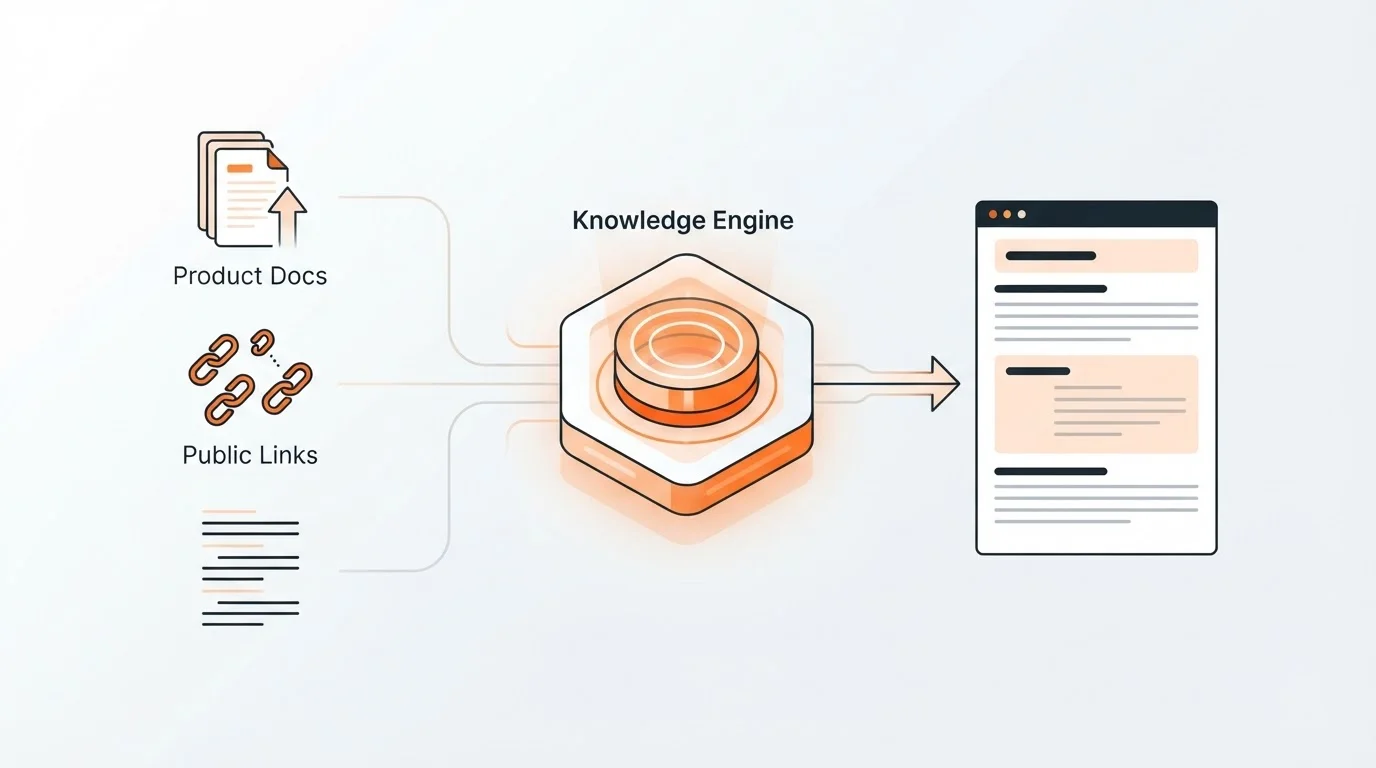
The foundational step in any autonomous strategy is the ingestion of accurate product data. A high-quality autonomous system does not guess what your product does; it learns from your existing assets to prevent the hallucinations common in generic AI writing tools. Blogged Knowledge Engine allows founders to provide product context through four primary methods: public product sources, uploaded documents, pasted links, or a written product description. By providing these specific sources, you restrict the AI to the actual facts about your software. For example, you can upload technical specifications or link to your documentation site to ensure the system understands your specific feature set. This grounding ensures that the resulting articles serve as both magnets for search engines and effective sales enablement tools. Your blog becomes a reflection of your most up-to-date product state, automatically updating its narrative as new features are documented and fed into the engine. This technical depth is what separates product-led content from generic SEO filler. When the content is grounded in real-world use cases and actual product capabilities, it builds trust with potential customers who are looking for specific solutions to their pain points.
Building the Infrastructure for Predictable Publishing
Success with autonomous growth is heavily dependent on how well your content system integrates with your existing tech stack. A siloed content tool often becomes another chore for the team to manage. A truly autonomous system must publish directly to your CMS, handle internal linking, and track performance without manual exports. For most SaaS founders, the choice of a Content Management System (CMS) is a long-term decision. Whether you use WordPress, Ghost, or Webflow, your automation platform must meet your team where they already work. By automating the final mile of publishing, you can reclaim hours every week that would otherwise be spent on formatting headers, uploading images, and managing meta-tags. This technical automation ensures that your blog stays active regardless of your personal schedule. When the system is integrated correctly, the flow from content generation to a live, optimized post is seamless, allowing you to focus on building your product while the organic engine builds your audience.
Streamlining WordPress and Ghost Workflows
For teams using traditional CMS platforms, the integration process should be near-instant to maintain momentum. Blogged WordPress AI Blog Publishing integration allows users to create and review articles within the Blogged dashboard and deliver them directly to their website. This is achieved by connecting to self-hosted WordPress sites through the Blogged Publishing plugin and an application password, ensuring a secure and streamlined connection. This setup allows the founder to maintain total control over the site aesthetic while the AI handles the drafting and SEO heavy lifting. Similarly, for those using the minimalist Ghost platform, the integration manages the content creation and review process while Ghost handles the reader experience. Founders can create a custom integration in Ghost, copy the Admin API key, and verify the connection in Blogged to start the automated flow. In both cases, the platform manages the complexity of the content lifecycle, while your chosen CMS handles the front-end delivery to your readers.
Managing Webflow and Custom Headless Stacks
Modern SaaS teams often prefer Webflow for design flexibility or Next.js for high-performance frontend experiences. In these technical environments, content is more than just text; it is a set of data that must be tracked and managed. The Webflow CMS AI Blog Publishing integration enables founders to not only publish content but also collect consented visits and configured conversions for every verified article. This level of data is critical for proving the return on investment (ROI) of your content strategy. For custom-built SaaS sites, utilizing the Signed Webhook and Content API allows for a comprehensive integration across diverse environments. This means your autonomous content can live within a React, Next.js, or Nuxt frontend while still benefiting from the centralized management of an autonomous platform. This technical flexibility ensures that your content strategy can evolve alongside your product architecture without requiring a total rewrite of your publishing workflow.
Get practical updates on saas founder predictable organic growth
Receive new articles and practical insights by email.
Predictable Growth Through Conversion Tracking
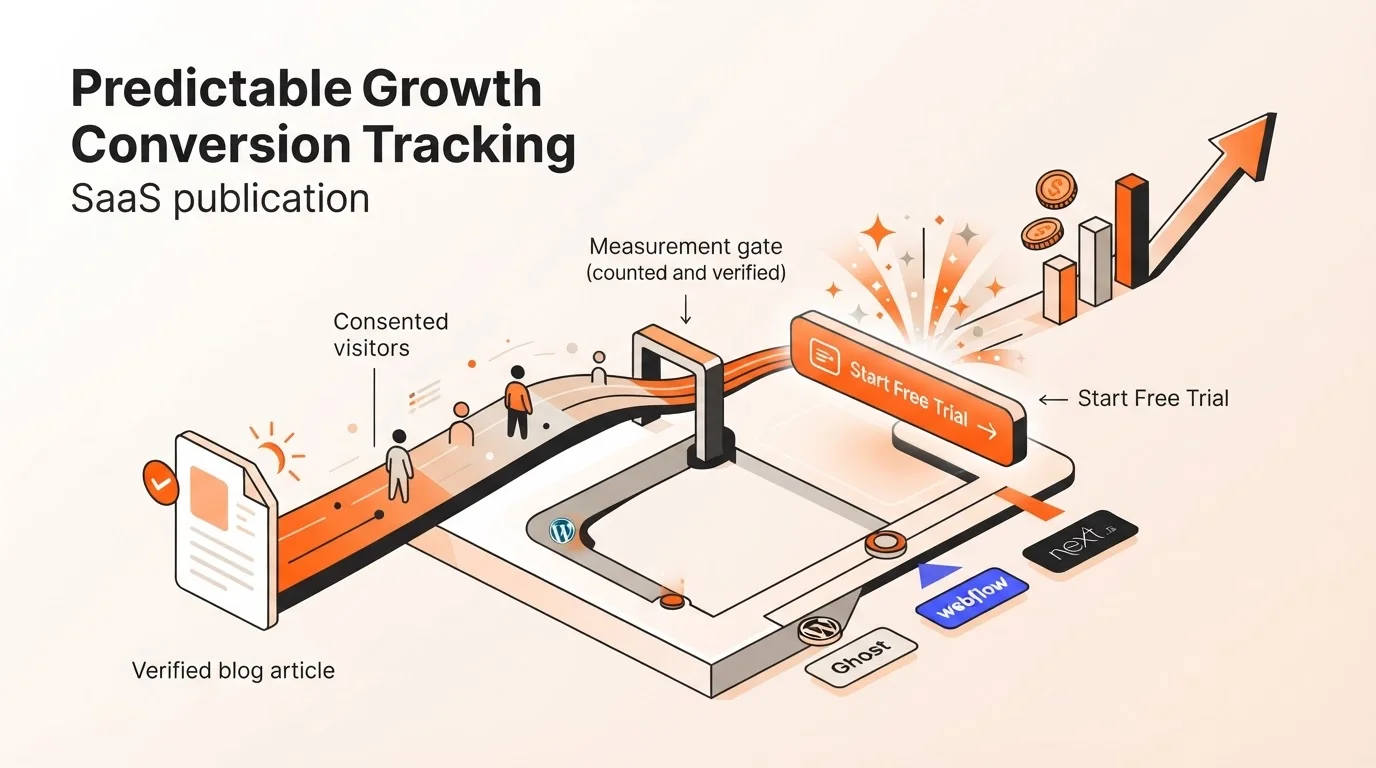
One of the primary benefits of an integrated autonomous system is the ability to move beyond vanity metrics like page views. To achieve predictable growth, founders need to understand how their content contributes to the bottom line. Blogged allows users to collect consented visits and configured conversions for verified articles across its major integrations, including WordPress, Ghost, Webflow, and Next.js. A configured conversion might be a click on your 'Start Free Trial' button or a newsletter signup. When you can see which specific automated articles are driving signups, your blog stops being a marketing expense and becomes a predictable revenue driver. This data-driven approach allows you to refine your strategy based on what actually works for your specific audience. Instead of guessing which topics are valuable, you can use the conversion data to double down on the content themes that lead to product adoption. This creates a feedback loop where your organic growth becomes increasingly efficient over time.
The Human-AI Review Process: Ensuring Quality at Scale
A common hesitation for founders considering automation is the fear of losing their unique brand voice or producing robotic content. The key to successful autonomous blogging is not removing the human element, but shifting it to the final stage of the production process. An effective workflow involves the AI handling the research, structural SEO, and initial drafting, while the founder or product manager provides the final technical review. Blogged supports this collaborative approach by offering unlimited team seats on its paid plans. This allows your product managers, marketers, and developers to participate in the review process without incurring additional costs. Depending on your chosen plan, the platform includes either 1 or 3 revisions per article. This ensures there is ample opportunity to tweak the tone, update specific technical details, or add a personal insight before the article goes live. By moving the founder's role to the review stage, you ensure high content quality while significantly reducing the time commitment required for each post.
Topical Authority and the Competitive Moat
Predictable organic growth is built on the foundation of topical authority. In the manual world, most founders only have the bandwidth to target the most competitive, high-volume keywords. This often pits them against established giants with massive marketing budgets. Autonomous production allows you to rank for a much wider array of long-tail keywords by maintaining a high volume of specific, high-quality content. By covering every niche pain point and use case your product solves, you create a moat of content that competitors cannot easily replicate. This consistency sends a signal of stability and expertise to both traditional search engines and generative AI discovery models. When a user asks a complex question related to your industry, a site with deep, product-led content is more likely to be cited as the definitive authority. This constant presence in search results builds brand familiarity and trust long before a potential customer ever clicks through to your pricing page.
Strategic Implementation Roadmap for SaaS Founders
To successfully implement an autonomous growth strategy, founders should follow a structured approach to ensure the system is aligned with their product goals. 1. Audit Your Product Knowledge: Gather your best internal documentation, sales presentations, and technical specs. The quality of your autonomous output is a direct reflection of the data you feed into the Knowledge Engine. 2. Choose Your Technical Integration: Ensure your automation platform talks directly to your CMS. Whether you use the WordPress plugin, Ghost API, or Webflow integration, the goal is to eliminate manual copying and pasting. 3. Establish a Consistent Cadence: Determine a publishing frequency that your team can comfortably review. Consistency is more important than raw volume. 4. Configure Conversion Tracking: Set up your conversion events so you can measure how many signups are coming from your verified articles. 5. Monitor and Refine: Use the integrated analytics to see which topics are driving the most conversions and adjust your future content planning accordingly. By following this blueprint, you can stop worrying about the 'blank page' and start focusing on your product, knowing your organic growth engine is running on autopilot.
Frequently Asked Questions
Q: How much time does content automation actually save a SaaS founder?
While savings vary by team, moving from manual drafting to an autonomous platform allows founders to shift from spending hours writing to spending minutes on a final review. This reclaims significant time for core product development.
Q: Does AI-generated content rank well in modern search engines?
Yes, provided it is high-quality and serves user intent. Google's guidelines focus on the helpfulness and expertise of the content rather than the specific tools used to create it. Blogged specifically optimizes for both SEO and GEO (Generative Engine Optimization).
Q: Can I use autonomous blogging with a custom React or Next.js site?
Yes. Through the Signed Webhook and Content API, Blogged can integrate with virtually any custom tech stack, allowing you to publish and track conversions on headless architectures.
Q: How do I ensure the content stays technically accurate for my SaaS?
The Knowledge Engine is designed for this purpose. By grounding the AI in your specific documents, links, and descriptions, you prevent generic hallucinations and ensure the content reflects your real features.
Q: How many team members can I involve in the review process?
Every paid Blogged plan includes unlimited team seats, so you can involve your entire marketing, product, and engineering teams in the quality control process without extra costs.
Achieving predictable organic growth is no longer a matter of manual effort; it is a matter of smart system design. For the SaaS founder, the path to market authority lies in transforming internal product knowledge into a continuous stream of discoverable, helpful content. By automating the research, writing, and publishing lifecycle, you can break the content bottleneck and reclaim your time. This allows you to build a sustainable acquisition channel that grows alongside your product, ensuring that your software is discovered by the people who need it most.