
On this page
Building a SaaS product is an exercise in resource allocation. For most founders, the priority is clear: ship features, fix bugs, and support customers. Marketing often takes a backseat, specifically the high-effort task of maintainng a blog. While organic search remains one of the most cost-effective ways to acquire users, the manual effort required to research keywords, write articles, and optimize for search engines is often unsustainable for lean teams. This article examines the success of a hypothetical SaaS startup, [Company Name], which solved this dilemma by shifting to an autonomous, product-led blogging strategy.
[Company Name] faced a common plateau. Their product was excellent, and early users were happy, but their organic lead flow was stagnant. The internal team lacked the bandwidth to produce the deep, technical content required to establish authority in their niche. By implementing an autonomous platform designed to handle the entire content lifecycle, they were able to transform their existing product knowledge into a lead-generating asset without hiring a massive marketing department.
The results highlight a shift in how SaaS companies approach growth. Instead of choosing between development and distribution, [Company Name] used technology to scale their story. This approach demonstrates how autonomous blogging can serve as a force multiplier for founders who need to stay focused on building while their content engine works in the background to capture organic demand.
The SaaS Founder Content Struggle: Why Manual Blogging Fails
Most SaaS founders understand that content marketing is a long-term compounder. However, the reality of execution often leads to what we call the 'Ghost Town Blog.' A few articles are published during launch week, followed by months of silence as the team shifts back to product development. This inconsistency is the primary reason why organic growth feels like an impossible goal for early-stage companies.
Traditional content marketing requires three distinct skill sets: deep product expertise, SEO strategy, and high-quality writing. Finding a single individual who possesses all three is rare and expensive. Outsourcing to generic content agencies often results in 'fluff' articles that lack the technical depth potential customers expect. When an article fails to solve a specific user problem or demonstrate product value, it fails to convert, regardless of how much traffic it attracts.
Beyond the writing itself, the operational overhead of SEO is immense. Founders must stay updated on changing search algorithms and the rise of Generative Engine Optimization (GEO). They must manage internal linking, optimize metadata, and ensure every post includes relevant product screenshots. For a founder already working eighty-hour weeks, these tasks are often the first to be neglected. The cost of this inaction is high; while your blog remains dormant, competitors are capturing the search intent of your ideal customers.
[Company Name] reached a breaking point where their paid acquisition costs were rising, but their organic presence was non-existent. They realized that to achieve sustainable growth, they needed a system that didn't rely on their manual intervention. They needed a way to extract the 'hidden' knowledge within their product documentation and turn it into discoverable content that spoke directly to their users' pain points.
Defining Product-Led Content in the Age of AI
The secret to [Company Name]'s turnaround was a pivot toward product-led content. Unlike traditional content marketing, which often targets high-volume, generic keywords, product-led content focuses on the specific problems your SaaS solves. It positions your product as the natural solution within the narrative of the article. This approach ensures that every visitor is not just a reader, but a potential lead who is already interested in your specific functionality.
In the current search environment, generic content is being commoditized by AI. Search engines and AI discovery tools now reward useful, specific content that demonstrates first-hand experience and deep expertise. For a SaaS, that expertise lives in your documentation, your feature list, and your customer support logs. The challenge is extracting that data at scale. This is where autonomous systems differentiate themselves by acting as a bridge between technical product data and editorial-quality blog posts.
Autonomous blogging isn't just about generating text; it is about strategic alignment. It involves researching what competitors are doing, identifying gaps in the market, and planning a content calendar that addresses the full marketing funnel. By automating these processes, [Company Name] ensured that their blog wasn't just active, but strategically aligned with their product roadmap and sales goals.
The Autonomous Engine: How [Company Name] Scaled Production
To solve their content bottleneck, Company Name] implemented Blogged, an [autonomous SEO and GEO blogging platform built specifically for SaaS. The core of this transition was moving away from the blank page and toward a data-driven content pipeline. By leveraging a specialized tool, they were able to automate the research, writing, and publishing steps that previously consumed their entire marketing budget.
The implementation began with the Knowledge Engine. [Company Name] provided the system with their product descriptions, documentation links, and existing marketing materials. This allowed the platform to understand the nuances of their software, ensuring that every generated article was technically accurate and reflected their brand voice. This phase is critical; without a solid knowledge base, any automated content risks being generic or, worse, factually incorrect.
Once the knowledge base was established, the team set their Content Directions. Instead of coming up with individual topics every week, they defined broad themes related to their product's core value propositions. The system's Autopilot then took over, researching trending keywords and refilling a topic queue that was always ready for review. This ensured a consistent publishing cadence, which is one of the most important signals for search engine ranking.
Leveraging the Knowledge Engine
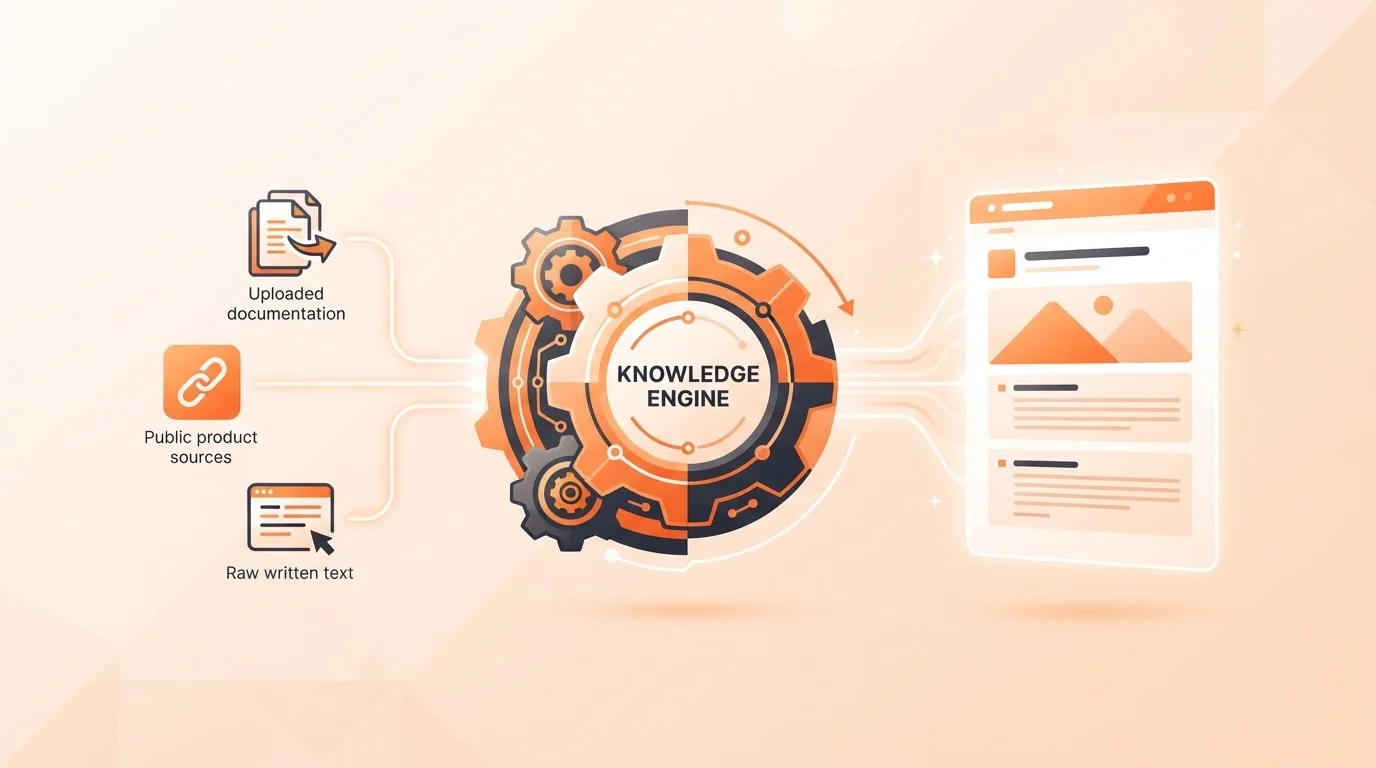
The ability to feed a system raw product data is a game-changer for technical founders. Blogged's Knowledge Engine for Autonomous SaaS Blogs feature lets users provide public product sources, uploaded documents, pasted links, or a written product description. For [Company Name], this meant they could upload their latest API documentation and have the system automatically generate tutorials and use-case guides that were perfectly synced with their software's capabilities.
This process eliminates the 'knowledge transfer' gap. In a traditional setup, a founder would have to spend hours briefing a writer on how a new feature works. With an autonomous system, the documentation is the brief. This ensures that the content is as up-to-date as the code, which is essential for maintaining trust with a technical audience.
Planning with Autopilot and Content Directions
Consistency is the foundation of organic lead growth. Company Name] utilized the Autopilot feature to maintain a steady stream of content without having to manage a calendar manually. Blogged lets users build a durable [SaaS content plan, publish on their cadence, and let Full Autopilot refill a short Topic queue from approved Content Directions. This meant the team could review and approve topics in minutes once a month, rather than brainstorming every Monday morning.
By setting clear 'Content Directions,' the company ensured that the autonomous engine stayed within the guardrails of their brand strategy. They could direct the system to focus on 'Enterprise Security' one month and 'Developer Productivity' the next, allowing their organic strategy to pivot alongside their product focus.
Technical Integration: Delivering Content to the Stack
A content engine is only effective if it integrates seamlessly with your existing website. [Company Name] needed a solution that wouldn't require a complete overhaul of their technical stack. Whether a SaaS uses a traditional CMS or a modern headless framework, the publishing process must be frictionless to maintain speed.
For companies using established platforms, the integration is often a matter of simple configuration. Blogged's WordPress AI Blog Publishing integration lets users create and review articles in Blogged, then deliver them to their WordPress website. For self-hosted installations, Blogged connects to self-hosted WordPress through the Blogged Publishing plugin and an application password, ensuring a secure and reliable link between the content engine and the live site.
Company Name] also explored the flexibility offered to developers. For those using different frameworks, Blogged's Ghost [AI Blog Publishing integration manages content creation and review while Ghost renders the reader experience. This allows teams to maintain their preferred front-end aesthetics while benefiting from a backend that handles the heavy lifting of SEO and GEO optimization.
Get practical updates on saas founder organic lead growth success story
Receive new articles and practical insights by email.
Next.js and Webflow Integrations

For startups prioritizing site speed and modern architecture, integration with frameworks like Next.js is vital. Blogged's Next.js AI Blog Publishing integration lets users collect consented visits and configured conversions for verified articles. This level of tracking is essential for founders who need to prove the ROI of their content efforts by seeing exactly how many leads are coming from specific blog posts.
Similarly, for teams that prefer no-code or low-code environments, Blogged's Webflow CMS AI Blog Publishing integration lets users collect consented visits and configured conversions for verified articles. These integrations ensure that no matter how the site is built, the content is optimized for both human readers and search crawlers, with built-in analytics to measure the results.
Measuring Success: How Organic Leads Transformed [Company Name]
The true test of any marketing strategy is the impact on the bottom line. For [Company Name], the goal wasn't just to increase 'vanity metrics' like page views, but to drive qualified trials and demos. By focusing on product-led content, they were able to attract users who were actively searching for the specific solutions their software provided.
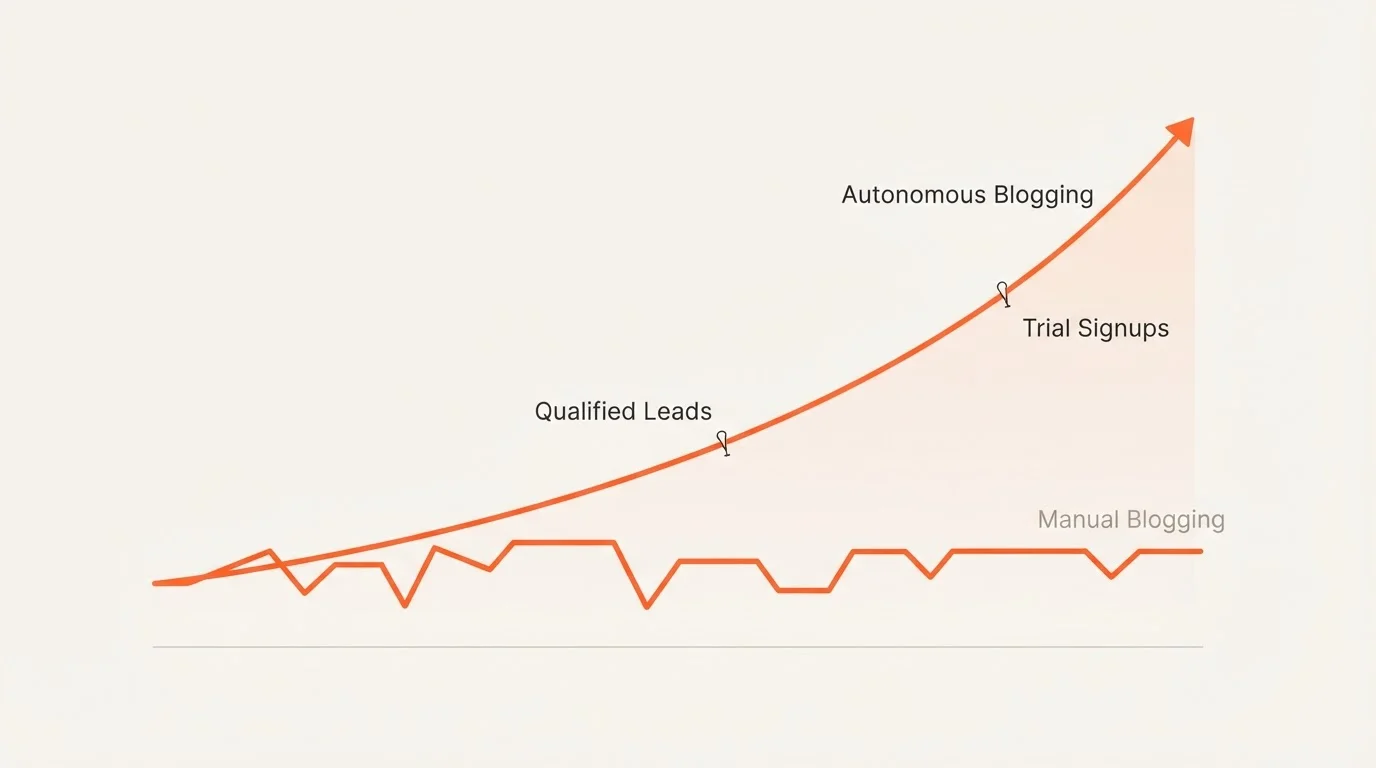
Within a few months of implementing their autonomous strategy, they observed a significant increase in organic leads. These leads were often higher quality than those coming from paid search because they had been 'nurtured' by a detailed article that addressed their specific pain points. The cost per acquisition (CPA) dropped as the cumulative effect of their blog started to kick in, providing a steady stream of traffic that didn't require an ongoing ad spend.
To manage this growth, the company relied on the platform's built-in tracking. Blogged lets users track Search Console performance, homepage engagement, on-site searches, CTA and lead outcomes, lead growth, and reader feedback. This data-driven approach allowed them to see exactly which 'Content Directions' were yielding the best results, enabling them to double down on the topics that were actually moving the needle.
Lessons for SaaS Founders: Replicating the Success
The success of [Company Name] provides a roadmap for other founders looking to escape the content struggle. The first lesson is that your product knowledge is your greatest marketing asset. Don't let it sit idle in internal docs; use an autonomous engine to turn it into public-facing content that helps potential customers find you.
Second, prioritize consistency over perfection. A blog that publishes high-quality, product-led content once a week will always outperform a blog that publishes one 'perfect' post every six months. Let an autonomous system handle the cadence so you can focus on the big-picture strategy.
Third, ensure your tracking is integrated from day one. Knowing which articles lead to signups is the difference between a 'hobby blog' and a growth engine. Use integrations that support conversion tracking, whether you are on WordPress, Ghost, or Next.js.
Finally, remember that organic growth is a compounding asset. The articles [Company Name] published in their first month are still driving leads today. By automating the production of these assets, they built a sustainable marketing machine that scales alongside their product without requiring a proportional increase in headcount.
Frequently Asked Questions
Q: How does autonomous blogging handle technical accuracy for complex SaaS products?
The quality of the output depends on the input. By using a platform with a dedicated Knowledge Engine, you can feed it your documentation, API specs, and product descriptions, ensuring the system understands the technical nuances of your software before it starts writing.
Q: Is AI-generated content bad for SEO?
Search engines like Google have stated that they reward high-quality, helpful content regardless of how it is produced. The key is ensuring the content provides real value, uses your unique product insights, and is properly optimized for both SEO and GEO.
Q: How much control do I have over what gets published?
Autonomous platforms like Blogged are designed to act as a partner, not a replacement. You define the 'Content Directions,' review the topics in the queue, and can edit or approve every article before it goes live on your site.
Q: Can I use this with my existing WordPress or Ghost blog?
Yes. Most professional autonomous platforms offer native integrations. For example, Blogged connects to WordPress via a plugin and application password, or to Ghost via an Admin API key, allowing you to manage everything from one dashboard while your content lives on your preferred CMS.
[Company Name]'s journey from a stagnant blog to a thriving lead-generation engine proves that SaaS founders don't have to choose between building and marketing. By embracing autonomous product-led blogging, they were able to leverage their internal expertise and transform it into a discoverable, organic asset. This shift not only saved them hundreds of hours of manual work but also created a durable marketing channel that continues to grow. For any founder looking to scale their organic reach while keeping their team lean, the move to an autonomous content engine is no longer just an option—it is a competitive necessity.