
On this page
Organic growth for SaaS founders usually comes at a high price: either thousands of dollars in monthly agency fees or dozens of hours spent writing. The traditional content marketing playbook—which relies on high-volume, generic industry articles—is increasingly failing to convert traffic into trials. As AI-driven discovery engines like Perplexity and SearchGPT begin to summarize basic "how-to" guides, the only content that remains defensible is that which is deeply rooted in your specific product logic. A product-led content strategy solves this by centering your product as the primary vehicle for solving a user's problem within the narrative itself. Instead of waiting until the final paragraph to mention your software, you weave your features, workflows, and unique technical insights into the core of every article. This approach doesn't just attract visitors; it generates Product Qualified Leads (PQLs) who already understand your tool's value before they ever sign up. This guide outlines a strategic framework for founders to transform internal product knowledge into discoverable, high-converting organic content. By leveraging autonomous systems and a structured knowledge engine, you can build a compounding growth channel that runs on autopilot while you focus on shipping code.
What is Product-Led Content and Why it Matters for SaaS Organic Growth
Product-led content (PLC) is a strategy where your software is the central solution to the problems discussed in your marketing materials. Unlike traditional SEO, which often aims for broad awareness traffic by discussing industry trends, PLC focuses on utility and outcome. It assumes the reader has a problem and demonstrates—through screenshots, logic, and workflows—exactly how your product solves it. For SaaS companies, this is critical because search behavior is shifting toward Generative Engine Optimization (GEO). To be cited by AI discovery engines, your content must provide specific, verifiable utility that an LLM cannot simply hallucinate or scrape from a generic competitor. Deep product knowledge is your most defensible asset in this new search era. Beyond search visibility, product-led content drives higher efficiency in customer acquisition. By educating users on your specific features during the discovery phase, you reduce time-to-value and lower support overhead. Users who enter your funnel through PLC are typically more informed, leading to higher trial-to-paid conversion rates and improved long-term retention.
Tracking the Metrics That Matter
To assess the effectiveness of product-led content, founders should look beyond vanity metrics like page views. Instead, evaluate lead outcomes, lead growth, and homepage engagement. Tracking Search Console performance alongside on-site searches provides a clear picture of what potential users are actually looking for within your ecosystem. Platforms like Blogged allow founders to monitor these indicators directly, including Search Console performance, lead outcomes, and reader feedback. By linking content directly to lead growth, you can identify which product features are driving the most commercial interest. This data-driven approach ensures your content strategy evolves in lockstep with user demand.
From Product Knowledge to Discoverable Content: A Strategic Framework
The greatest challenge for most founders is not a lack of knowledge, but a lack of time to extract it. A structured framework is necessary to turn technical expertise into a discoverable content library. This starts by identifying the core differentiators of your software—the specific features that solve pain points better than the competition. Once identified, these insights must be mapped to a funnel that serves the entire customer journey. Top-of-funnel (TOFU) content might address broad problems, while bottom-of-funnel (BOFU) content focuses on specific feature comparisons and "how-to" tutorials. The goal is to create a single source of truth for your product information that can be accessed and repurposed by your content engine.
The Product Asset Library
A capable PLC strategy requires an organized repository of screenshots, feature descriptions, and use-case examples. Managing a private SaaS product asset library ensures that your content is always accurate and consistent. Blogged facilitates this by allowing users to manage asset libraries with review queues, visible approvals, undo, bulk decisions, alt text, provenance, and safe archiving. This system prevents the freshness crisis, where your blog features old UI screenshots that no longer match the current version of your product. By maintaining a centralized library, you ensure that every article published across your CMS—whether it is WordPress, Ghost, or Webflow—uses the most up-to-date visual evidence of your product's value.
The PLC Workflow: Problem to Product
Effective product-led content follows a consistent five-step logic. First, you identify a problem by clearly stating a specific challenge your target persona faces. Second, you introduce the solution concept by explaining the general methodology for solving that challenge. Third, you showcase product functionality by detailing how your specific features implement that solution using step-by-step guides. Fourth, you explain the benefit by articulating the measurable outcome a user gains, such as time saved or revenue increased. Finally, you provide a call to action that guides the reader to a trial or demo where they can experience that specific value immediately. This framework ensures that every piece of content serves as sales enablement while still providing genuine educational value to the reader.
Integrating Product-Specific Facts into Your Content Engine
Integrating hard product facts into your content is what separates an authoritative SaaS blog from a generic marketing site. This involves more than just listing features; it requires weaving verified technical logic into the narrative. When your content explains why a feature was built a certain way, it builds deep trust with technical audiences. For example, if your SaaS provides a data analysis tool, don't just say it's "fast." Detail how your specific integration handles concurrent data streams or how your API minimizes latency. These technical specifics are what GEO engines prioritize when they look for expert content to cite in AI summaries. Unique product facts are the raw fuel for organic discovery.
Automating the Knowledge Transfer
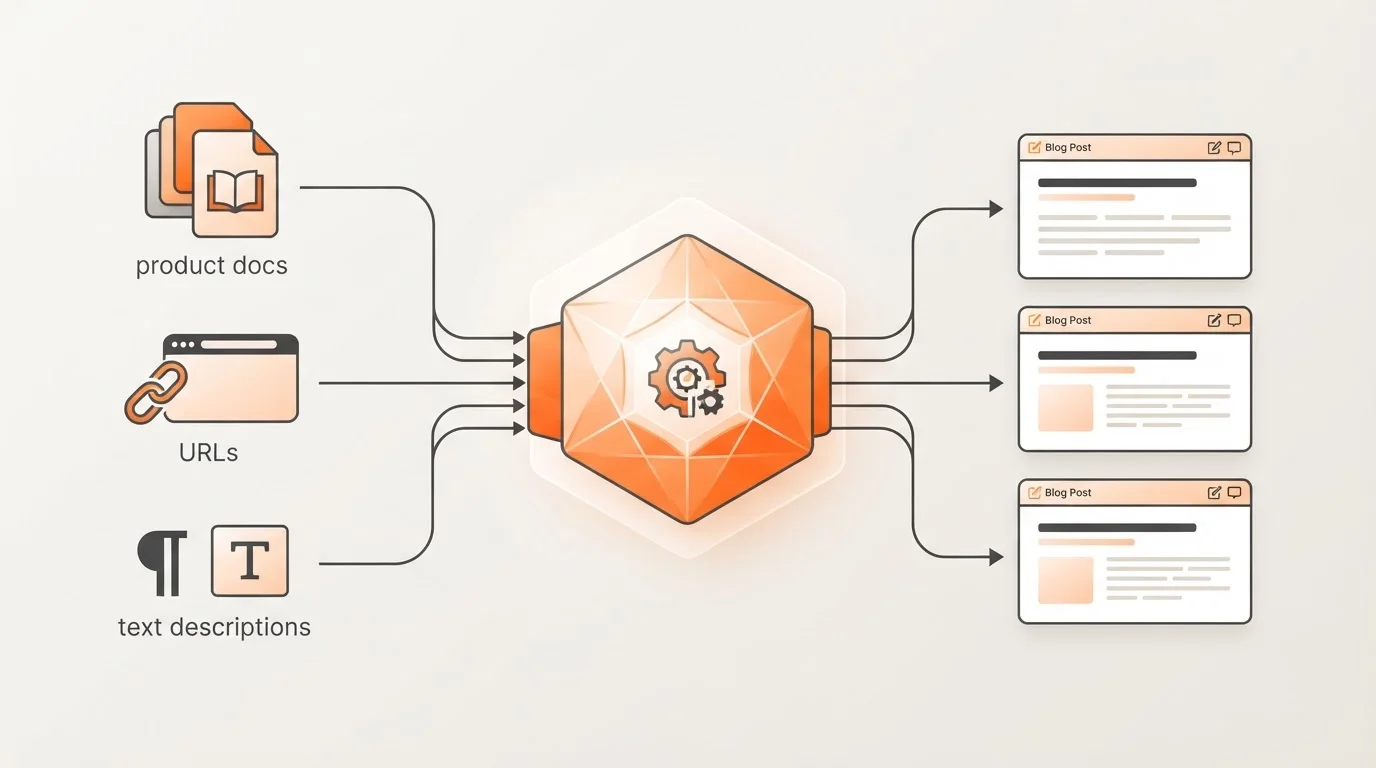
Founders can automate the extraction of these facts by using a Knowledge Engine. By providing your content platform with public product sources, uploaded documents, or even a simple written description of a new feature, you create a grounding mechanism for AI. Blogged's Knowledge Engine allows you to paste links or upload product docs, ensuring the platform understands your SaaS at a deep level before writing. This prevents the common problem of AI hallucinations, where a tool invents features your product doesn't actually have. Grounding your content in reality is non-negotiable for maintaining brand authority and ensuring your blog stays ahead of generic AI-generated noise.
Measuring the Impact: How Product-Led Content Drives User Acquisition
The ultimate success metric for a product-led content strategy is user acquisition. Unlike traditional marketing, where the journey from blog reader to user is often long and fractured, PLC creates a direct path. When a reader sees a solution to their problem inside an article, the transition to a trial feels like the natural next step, not a sales pitch. Key performance indicators (KPIs) for this strategy include Product Qualified Leads (PQLs), which are users who sign up after consuming content that demonstrates a specific feature. You should also monitor trial conversion rate and search visibility for solution-specific keywords—rankings for queries that include both a problem and a product category. Scaling these results requires a balance of volume and accuracy. Many founders worry that increasing content output will lead to a drop in technical quality. However, by using unlimited team seats on a content platform, you can involve product managers and engineers in the review process without increasing software costs. Blogged includes unlimited team seats on its plans, allowing your entire team to participate in the review and approval workflow, ensuring that every article published is technically sound.
Blogged's Role in Automating Your Product-Led Content Strategy
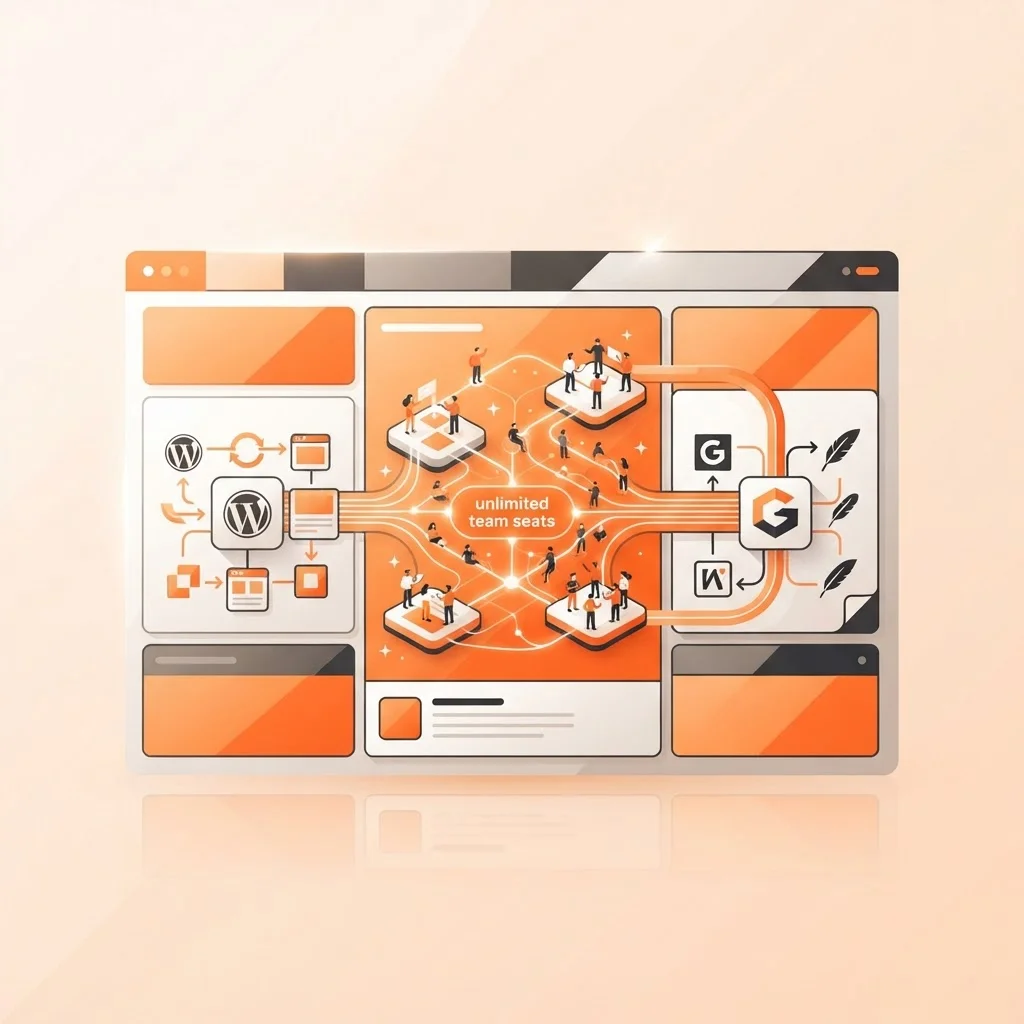
For a SaaS founder, the goal is to have the blog grow as fast as the product without requiring constant manual intervention. Automation is the bridge between a strategy and a result. An autonomous platform handles the heavy lifting—research, planning, writing, and SEO optimization—while you maintain control over the final output. Blogged runs your SaaS blog on Autopilot, transforming product knowledge into discoverable content. It doesn't just write; it integrates directly with your existing infrastructure. Through the WordPress AI Blog Publishing integration, you can create and review articles in Blogged and deliver them to your site automatically via the Blogged Publishing plugin and an application password. Similar integrations exist for Ghost, which uses an Admin API key, as well as Webflow and Next.js, ensuring your content reaches your audience wherever they are. Blogged is listed at $99 per month and manages the entire lifecycle of your blog. From internal linking to image optimization, every step is designed to drive organic growth through SEO and GEO. This allows you to treat your content as a compounding asset that earns attention and trust every single week, even while you are focused on the next sprint.
Frequently Asked Questions
Q: What is the primary goal of product-led content?
The primary goal is to convert curious visitors into engaged users by demonstrating the product's value directly within the educational narrative, rather than just selling it at the end.
Q: How can SaaS founders identify relevant product knowledge for content creation?
Founders should look at their product roadmap, frequent customer support tickets, and sales team feedback. Identifying the features that solve the most common how-to questions provides the best foundation for discoverable content.
Q: How does Blogged ensure technical accuracy in the content it generates?
Blogged uses its Knowledge Engine to ground the AI in your specific product facts. By providing the platform with documentation, links, or descriptions, you ensure it only writes about features that actually exist in your software.
Q: Can I keep my existing CMS design while using autonomous blogging?
Yes. Blogged integrates with popular CMS platforms like WordPress and Ghost. It manages the content creation and optimization, while your chosen CMS handles the reader experience and site design.
A product-led content strategy offers a powerful, sustainable pathway for SaaS founders to achieve organic growth. By moving away from generic SEO and toward a model that leverages deep product knowledge, you build a brand that search engines trust and AI discovery tools cite. The key to long-term success lies in a systematic approach: extracting technical expertise, grounding it in a knowledge engine, and automating the publishing process to maintain consistency. Embracing automation through platforms like Blogged allows you to overcome the common hurdles of resource allocation and content decay. By turning your product features into discoverable assets, you position your SaaS as the definitive solution to your users' needs, driving both traffic and conversions on autopilot.