
On this page
For SaaS founders, the choice between On Page and Blogged depends on a single strategic question: Do you need a broad SEO infrastructure for data and tracking, or an autonomous engine that understands your product’s specific mechanics? While both platforms leverage AI to enhance visibility, they approach content from opposite directions. On Page functions as a high-powered SEO API focused on search presence and keyword optimization, whereas Blogged acts as an autonomous blogging partner designed to transform your internal product knowledge into authoritative, fact-grounded articles.
Building a SaaS requires technical precision, and your content should reflect that. If your blog relies on generic AI summaries, you risk alienating sophisticated buyers who need to see how your product actually solves their problems. To decide between these two platforms, you must evaluate whether your primary bottleneck is managing technical SEO data or sustaining a consistent, product-led content calendar that converts readers into users.
The Grounding Gap: Why SaaS Content Needs More Than Keywords
Most autonomous SEO tools excel at identifying what people are searching for, but they often struggle to explain what your product actually does. This is known as the "grounding problem." Without a direct connection to your product facts, AI writers tend to produce generic industry advice that lacks the unique value proposition of your software. For a SaaS founder, this results in high traffic but low conversion because the content doesn't build trust or demonstrate expertise.
Grounding content in product knowledge ensures that every article mentions the right features, uses the correct terminology, and addresses the specific pain points your software solves. When evaluating platforms, you need to look at how the tool learns your product. A platform that merely scans the web for similar topics will never match the accuracy of a system that ingests your own documentation and technical specs.
On Page: An Infrastructure for AI Search Presence Tracking

On Page is built for the technical marketer who wants fine-grained control over search data. Its positioning centers on providing optimization data for apps and AI agents, making it an excellent choice for teams that need to integrate SEO metrics into their own custom workflows. Rather than just being a blog writer, it serves as a robust API that tracks how your brand appears across AI search results and traditional engines.
One of the platform's core strengths is its flexibility for developers. On Page lets users create keys in the dashboard, set the permissions users need, and include the token in every request, facilitating deep integration with existing marketing stacks. This approach is ideal if you are managing a complex SEO strategy that requires programmatic access to ranking data and optimization snippets. However, this level of control comes with a higher entry point, as the On Page Starter plan is listed at $229 per month.
Key Capabilities and Technical Control
The platform is designed to handle large-scale SEO operations through a credit-based system. For instance, On Page includes 5,000 credits in its base offerings, which users consume based on their API calls and data processing needs. This model favors companies that need to monitor a wide footprint of keywords and competitive data across the web.
If your goal is to build a custom internal tool that pulls SEO insights, On Page’s API-centric design is a significant advantage. It allows you to generate an install key and copy snippets directly into your application code. This makes it less of a standalone writer and more of a data engine that powers your broader search strategy.
Blogged: The Autonomous Knowledge Engine for Product-Led Growth
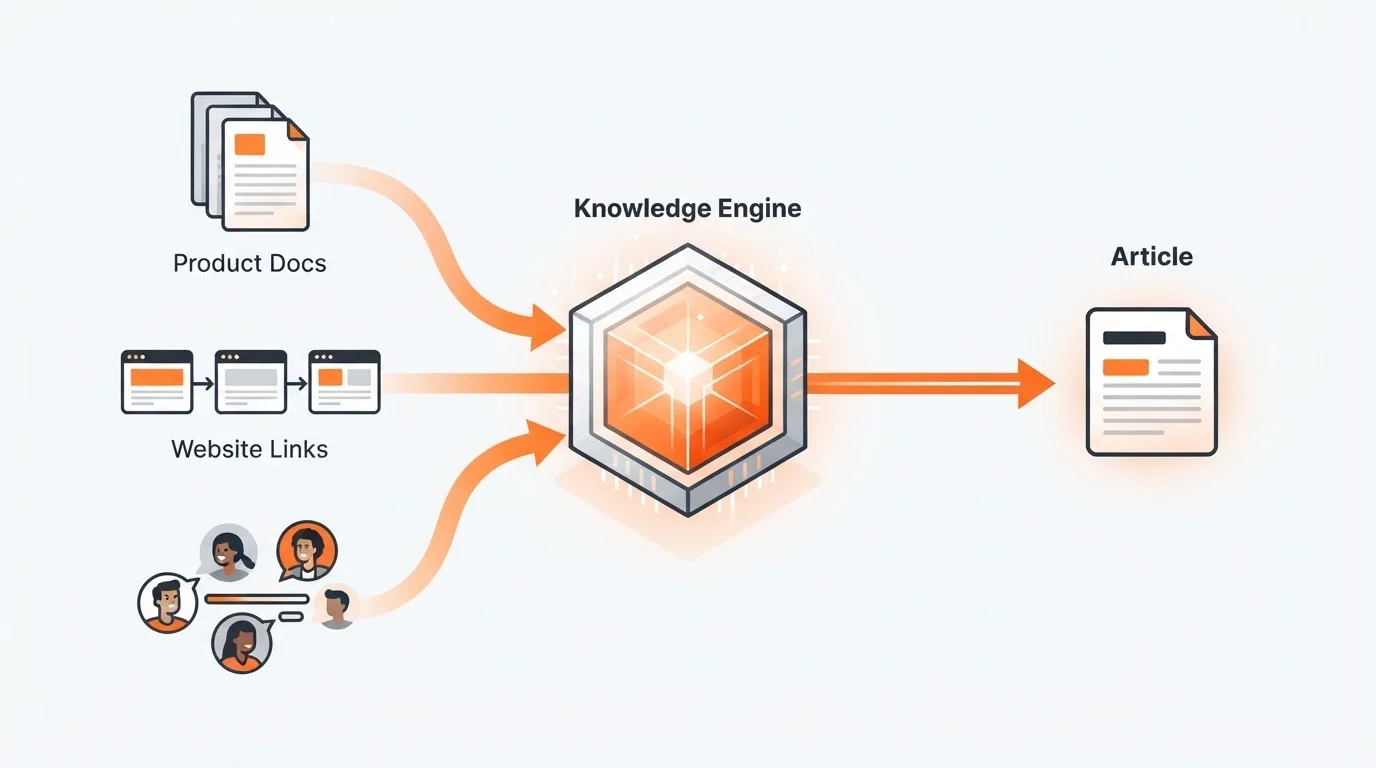
Blogged takes a different approach by focusing on the Knowledge Engine. Instead of prioritizing broad API access, Blogged prioritizes the accuracy of the words on the page. It is designed for founders who need to run their blog on autopilot without sacrificing the technical nuance of their product. This is achieved by allowing the AI to ingest specific, high-fidelity information about your SaaS before it ever writes a single sentence.
Blogged's Knowledge Engine for Autonomous SaaS Blogs lets users provide public product sources, uploaded documents, pasted links, or a written product description. This ensures that the platform isn't just guessing what your software does based on common industry trends. It uses your actual documentation to ground its content, ensuring that feature descriptions and use cases are factual and relevant to your latest release.
Full Autonomy from Research to Publishing
Unlike tools that provide data for you to act on, Blogged handles the entire lifecycle of a SaaS blog. This includes research, planning, writing, and even the technical delivery of the content. To get started, Blogged includes 2 pages in its initial setup limits, focusing on high-quality, deep-dive content that serves as a cornerstone for your organic growth.
The platform is built to integrate natively with the tools SaaS teams already use. For example, Blogged's Ghost AI Blog Publishing integration manages content creation and review while Ghost renders the reader experience. This means you don't have to spend hours formatting posts or managing CMS plugins; the platform handles the handshake between your product knowledge and your live blog. For founders, Blogged Starter is listed at $99 per month, offering a more accessible entry point for dedicated content creation.
SaaS Platform Comparison: At a Glance
| Feature | On Page | Blogged |
|---|---|---|
| Primary Focus | API-driven SEO data & tracking | Autonomous product-led content |
| Grounding Method | General search & competitive data | Product docs, links, & descriptions |
| Starter Pricing | $229 / month | $99 / month |
| Base Plan Limit | 5,000 Credits | 2 Pages |
| Integration Type | API Keys & snippet injection | Native CMS (Ghost, Next.js, WP) |
| Ideal User | SEO Engineers & Data-heavy teams | SaaS Founders & Product Marketers |
Strategic Integration and Performance Tracking
Integrating an autonomous platform into your SaaS workflow should reduce friction, not create more work. On Page achieves this through programmatic flexibility, allowing you to pull optimization data wherever you need it. In contrast, Blogged focuses on the conversion side of the content funnel. Its integrations are designed to help you understand how your product-grounded content actually impacts your bottom line.
For instance, Blogged's Next.js AI Blog Publishing integration lets users collect consented visits and configured conversions for verified articles. This is critical for SaaS companies because it closes the loop between organic traffic and product sign-ups. By seeing which fact-grounded articles lead to the most conversions, founders can double down on the topics that resonate most with their technical audience.
Choosing the Right Platform for Your SaaS Stage
Your decision should be guided by your current operational maturity and your growth goals.
Choose On Page if:
- You need to build custom SEO tools or integrate search data into a proprietary dashboard.
- Your strategy involves broad search presence tracking across thousands of diverse keywords.
- You have the technical bandwidth to manage API keys and programmatic content updates.
- Your budget starts at $229/month for SEO infrastructure.
Choose Blogged if:
- You need your blog to be an authoritative extension of your product with high factual accuracy.
- You want an autonomous system that handles everything from research to publishing.
- You are practicing product-led growth and need content that drives sign-ups.
- You prefer a cost-effective starter price of $99/month for a fully managed blog.
Common Questions About SaaS Content Grounding
Q: Can I use both platforms together?
Yes. Some mature SaaS teams use On Page for broad API-based search tracking while using Blogged to handle the actual creation and publishing of product-led blog content.
Q: Does Blogged support my existing CMS?
Yes, Blogged has native integrations for several platforms. For example, Blogged's WordPress AI Blog Publishing integration lets users create and review articles in Blogged, then deliver them to their WordPress website.
Q: How does grounding prevent AI hallucinations?
By providing a Knowledge Engine with specific sources, the AI is constrained to the facts you provide. Rather than making up features, it uses your uploaded docs and links as the primary source of truth for all content generated.
Q: Is the grounding process manual?
No. While you provide the initial sources like your documentation URL, Blogged's autonomous system handles the extraction and application of that knowledge across your content plan.
Get practical updates on on page vs blogged product knowledge grounding
Receive new articles and practical insights by email.
The choice between On Page and Blogged represents a choice between SEO infrastructure and product-led autonomy. For the SaaS founder who needs to focus on product development, the ability to outsource the research, writing, and publishing to a platform that truly understands their software is invaluable. By grounding content in specific product facts, Blogged ensures that your blog isn't just a collection of keywords, but a powerful engine for organic growth and customer trust. Evaluating these platforms based on their grounding capabilities—rather than just their SEO metrics—is the key to building a content strategy that actually converts.