
On this page
Organic growth is the most sustainable way to scale a SaaS company, yet it often falls to the bottom of the priority list for early-stage founders. The paradox is simple: you need content to drive traffic, but the time required to research, write, and optimize that content is better spent shipping features or closing deals. This creates a content gap where growth plateaus while competitors with dedicated marketing teams dominate search rankings. Autonomous blogging offers a solution by decoupling the growth engine from the founder's manual labor. Instead of writing articles from scratch, founders can now use platforms that transform existing product knowledge into high-quality, product-led content. This article explores how a SaaS founder can implement an autonomous blogging strategy to achieve consistent growth through both Search Engine Optimization (SEO) and the emerging field of Generative Engine Optimization (GEO).
The Founder's Growth Paradox: Why Traditional Blogging Fails
Traditional content marketing is a resource-intensive endeavor that rarely aligns with the lean operations of a growing SaaS. For most founders, the struggle to maintain a blog is rooted in three core barriers. First is the inconsistency of the publishing schedule. Search engines favor fresh, authoritative content, but founders often only find time to write once a month or when a major update occurs. This lack of cadence signals to crawlers that the site is stagnant, which prevents the compounding traffic effects of a well-maintained blog. Second is the technical expertise required for modern SEO. It is no longer enough to simply write a good article; you must also manage keyword research, meta-data, interlinking, and structured data to stay competitive. Third is the high cost of outsourcing. Hiring a high-quality technical writer who understands your product is expensive, while low-cost content mills often produce generic fluff that damages your brand authority. Autonomous blogging bridges this gap by providing a middle path: the scalability of automation combined with the technical depth of your own product documentation.
Anatomy of an Autonomous Blogging Engine
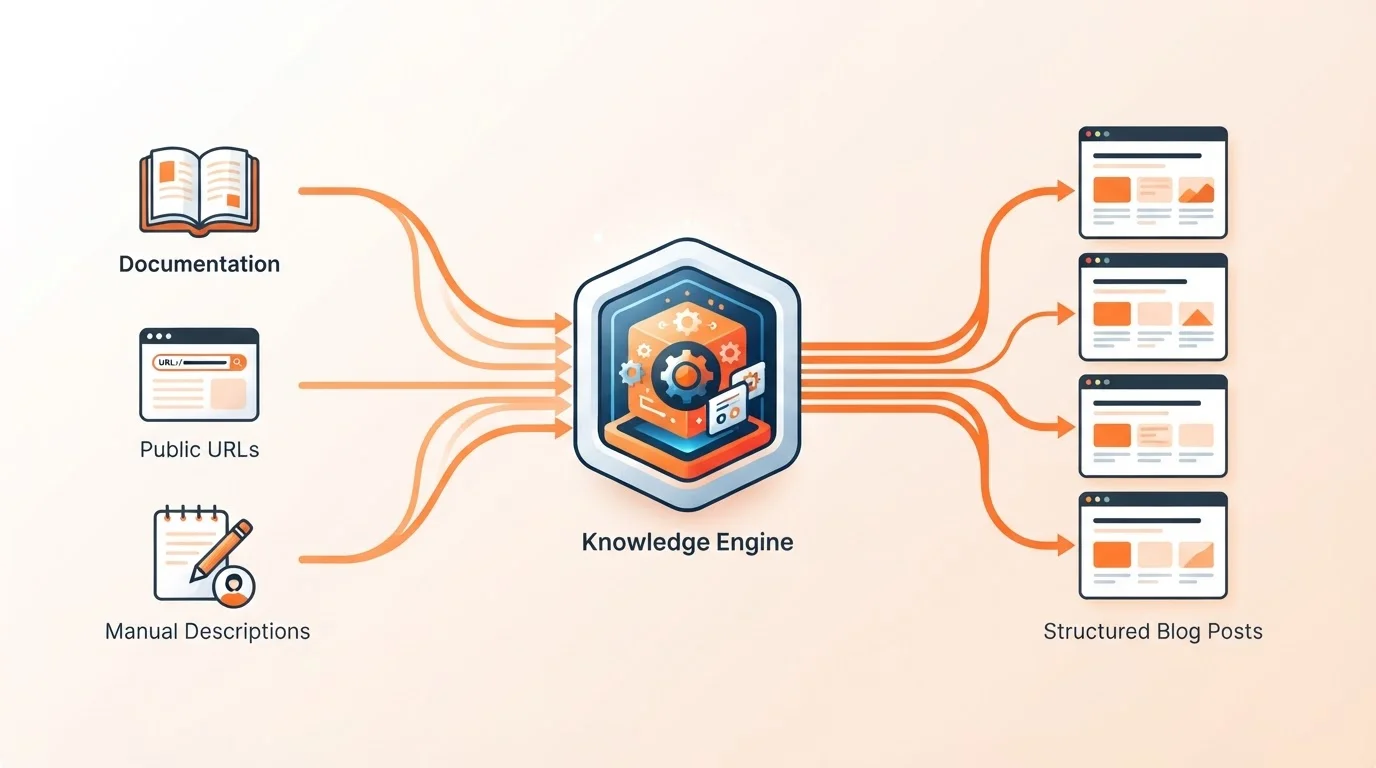
The shift toward autonomous blogging is driven by the evolution of the Knowledge Engine. Unlike basic AI tools that generate content based on generic prompts, a dedicated autonomous blogging platform like Blogged functions by ingesting specific data about your SaaS. This process allows the platform to 'learn' your product deeply. The Knowledge Engine for Autonomous SaaS Blogs allows users to provide public product sources, upload technical documents, paste links to help centers, or provide a written product description. By grounding the generation process in these technical assets, the platform ensures that every article is technically accurate and product-led. This means the content doesn't just talk about a general topic; it shows how your specific software solves a problem. This level of specificity is what differentiates useful content from generic AI noise, making it more valuable to both potential customers and search engines.
Hypothetical Workflow: The InnovateX Strategic Blueprint
To understand how autonomy works in practice, let us look at a hypothetical SaaS company called InnovateX, which builds specialized project management software. InnovateX has a wealth of internal knowledge, including user guides, feature roadmaps, and support documentation, but their blog is virtually empty. Their goal is to turn this latent knowledge into an organic traffic engine using an autonomous workflow. By following a structured implementation plan, a founder can move from a 'writer' role to a 'director' role, managing the overall strategy while the platform handles the execution.
Phase 1: Knowledge Ingestion and Training
The first step for InnovateX is to populate the Knowledge Engine. The founder uploads their existing user manuals and pastes links to their most successful support articles. Because Blogged can ingest multiple data sources, the platform starts to understand the nuanced terminology of 'Agile Mapping' and 'Visual Resource Allocation' specific to the InnovateX platform. This initial training ensures that the autonomous system doesn't hallucinate or provide generic advice that contradicts the product's actual functionality.
Phase 2: Defining Strategic Pillars
Rather than letting the system guess what to write about, the founder defines content pillars based on customer pain points. For InnovateX, these might include 'Developer Productivity,' 'Hybrid Team Collaboration,' and 'Resource Management.' These pillars guide the platform's research and planning process, ensuring that the generated content attracts high-intent visitors who are actually looking for the solution the SaaS provides.
Phase 3: The 15-Minute Review Cycle
Complete autonomy still requires strategic oversight. InnovateX implements a review workflow where the founder or a product manager spends 15 minutes each week reviewing drafts. Since Blogged includes 3 revisions per article, the team can quickly refine the tone or emphasis before the article goes live. This ensures the content maintains a human touch and remains aligned with the brand voice while the platform handles the heavy lifting of SEO optimization and publishing.
Get practical updates on saas founder organic growth autonomous blogging case study
Receive new articles and practical insights by email.
Technical Deep Dive: Integrating Your Content Stack
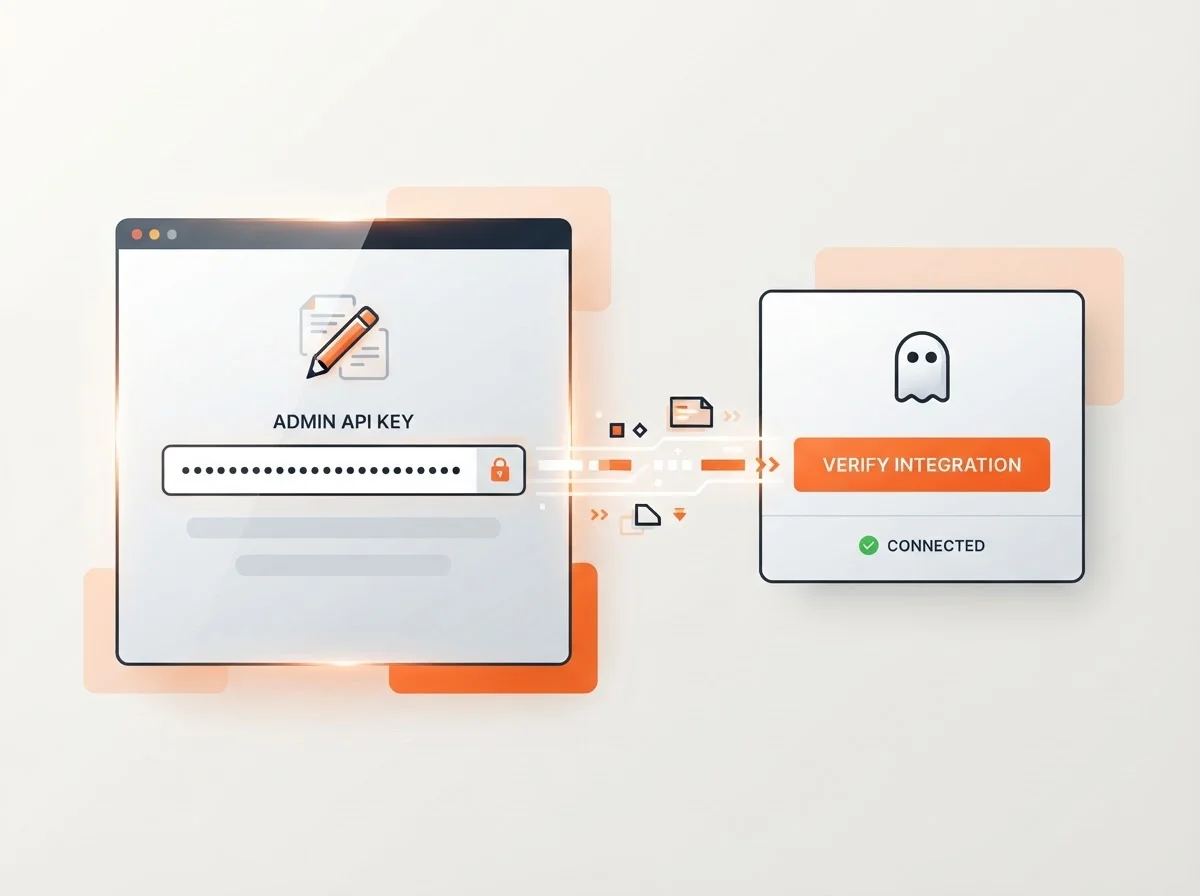
A major advantage of an autonomous system is its ability to integrate directly with your existing infrastructure, removing the manual work of formatting and uploading posts. Blogged offers deep integrations with the most common CMS platforms used by SaaS companies. For companies using Ghost, the integration is particularly streamlined. Users can create a custom integration in Ghost, copy the Admin API key, and verify their Ghost connection in Blogged. This allows the platform to manage the content creation and review cycle while Ghost handles the final rendering for the reader. This technical foundation ensures that once a strategy is set, the path from knowledge ingestion to live article is fully automated.
WordPress and Webflow Connectivity
For founders who prefer other platforms, the connectivity is equally robust. Blogged connects to self-hosted WordPress sites through the Blogged Publishing plugin and an application password. This allows for a seamless flow of articles from the review stage to the live site. Similarly, the Webflow CMS integration and the Next.js integration allow founders to not only publish content but also collect consented visits and configured conversions for every verified article. These integrations transform a simple blog into a data-driven growth channel that provides measurable ROI.
The GEO Frontier: Optimizing for the AI Era
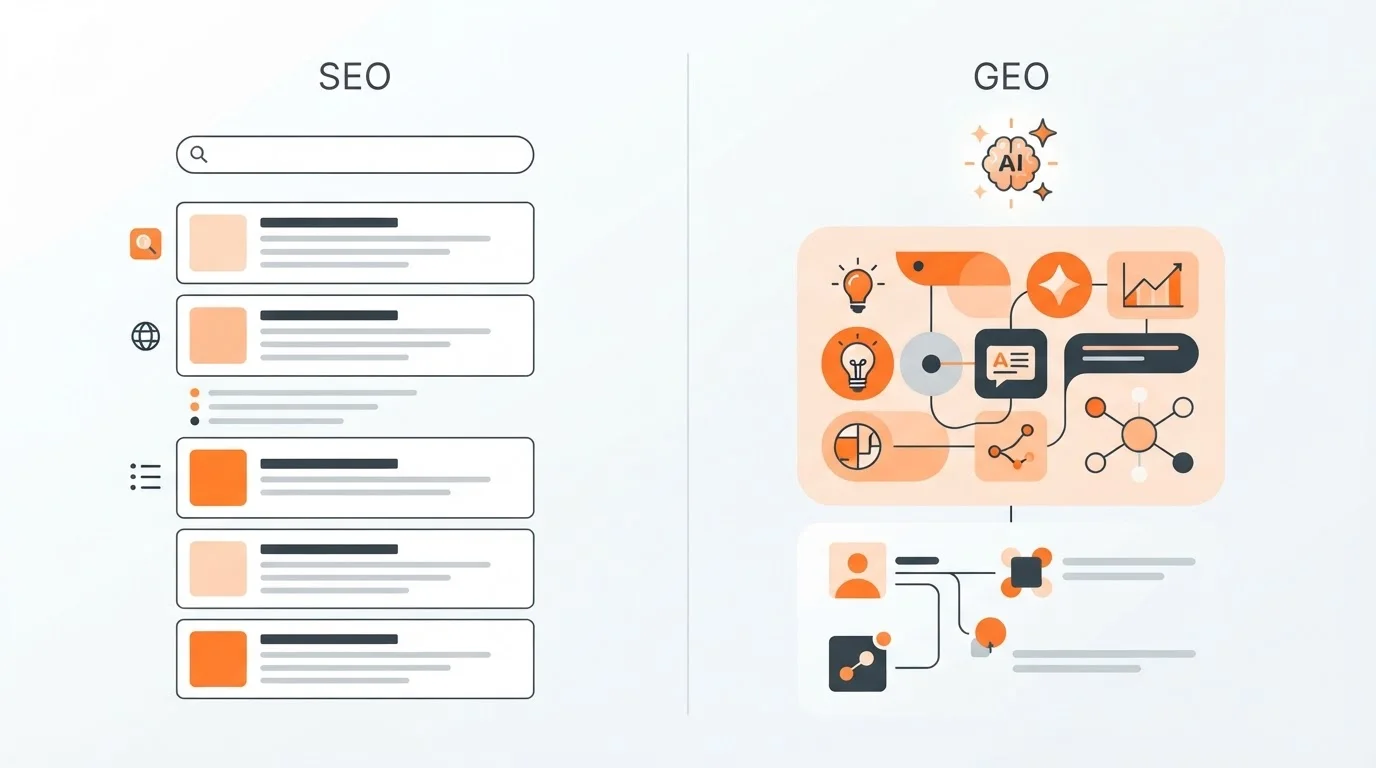
While traditional SEO remains important, SaaS founders must now also optimize for Generative Engine Optimization (GEO). Users are increasingly moving away from standard Google searches and toward AI-driven tools like SearchGPT, Perplexity, and Perplexity. GEO involves structuring your content so that it is easily discovered, understood, and cited by these AI agents. Autonomous blogging platforms are designed with this in mind, ensuring that every post uses entity-rich language and clear structured data. By appearing in 'AI Overviews' and chatbot responses, a SaaS can capture high-quality traffic from users who are looking for specific tool recommendations. This dual-focus on SEO and GEO ensures that your content is discoverable both now and in the future.
Scaling Success with Team Collaboration
As a SaaS grows, content management often moves from the founder to a small marketing or product team. To support this transition, Blogged includes unlimited team seats on its plans. This allows product managers, support leads, and marketers to participate in the review and approval process without additional costs. By involving different departments in the content review cycle, the company ensures that the blog reflects a 360-degree view of the product and its users. This collaborative approach, supported by automation, allows the content engine to scale without becoming a management bottleneck.
Frequently Asked Questions
Q: How much time should a founder expect to spend on an autonomous blog?
Initial setup takes a few hours to populate the Knowledge Engine and configure integrations. After that, most founders spend less than 20 minutes a week reviewing and approving drafts.
Q: Does autonomous content feel like generic AI writing?
No, because it is grounded in your specific product data. By using your own technical documentation and descriptions as the source material, the content is product-led and technically accurate, unlike generic prompts.
Q: Can I use this with my existing WordPress or Ghost site?
Yes, Blogged integrates directly with Ghost via API keys and with WordPress through a dedicated publishing plugin and application password.
Q: What is the benefit of 'consented visits' tracking?
It allows you to track how readers interact with your content and which articles are driving actual conversions, helping you refine your strategy based on performance data.
Q: How do revisions work in the platform?
Blogged includes 3 revisions per article, allowing you to fine-tune the output to meet your specific brand standards before publishing.
For the modern SaaS founder, organic growth does not have to be a choice between manual labor and expensive agencies. By implementing an autonomous blogging strategy, you can transform your product knowledge into a scalable, discovery-ready asset. Whether you are optimizing for traditional search engines or the new wave of AI discovery, the key is to leverage your technical expertise as the fuel for your growth engine. Stop struggling to find time to write and start using a system that works as hard as your code. The future of SaaS growth is autonomous, product-led, and driven by the deep integrations that connect your knowledge to your audience.