
On this page
Most SaaS founders view organic traffic as a high-intent, low-cost acquisition channel that they simply do not have time to build. The traditional path to SEO involves a grueling cycle of keyword research, brief writing, drafting, and manual publishing that eats into hours better spent on product development. When content creation is manual, it is often the first thing to be deprioritized during a sprint, leading to inconsistent traffic and stagnant rankings.
To achieve consistent organic traffic, founders are increasingly turning to autonomous content production. This shift transforms the founder’s role from a bottlenecked writer into a high-level editor, allowing a SaaS to maintain a professional blog that grows every week without manual intervention. By leveraging an autonomous strategy, you can turn your product documentation and industry knowledge into a discoverable organic engine that works 24/7.
The Manual Content Trap: Why SaaS Growth Stalls
In the early stages, many founders try to manage their own content marketing. While this ensures the content is technically accurate, it creates a feast-or-famine traffic cycle. You might publish three great articles during a quiet week, see a spike in visibility, and then go silent for a month while shipping a new feature.
Search engines value a steady publishing cadence and topical authority. When you stop publishing, your site’s freshness score drops, and competitors who are more consistent begin to outrank you for critical industry keywords. This inconsistency makes it impossible to forecast leads or customer acquisition costs (CAC) accurately.
Furthermore, generic AI-written content often fails to capture the unique nuances of a specialized software solution. Founders are faced with a difficult choice: spend twenty hours a week writing deeply technical posts or publish mediocre content that doesn't convert. To solve this, you need a system that understands your specific product while handling the operational heavy lifting.
The Hidden Cost of Founder-Led Writing

Every hour spent formatting a blog post or researching a keyword is an hour not spent on the product roadmap or talking to customers. For a SaaS founder, the opportunity cost of manual content is exceptionally high. An autonomous content production system reduces this burden, allowing you to focus on strategic growth while the SEO engine runs in the background.
The Solution: Moving to Autonomous Content Production
Autonomous content production is not just about generating text; it is about building an end-to-end pipeline that handles research, SEO, and publishing. The goal is to create a self-sustaining engine where the founder provides the "knowledge base," and the system handles the execution. This ensures that every article is not only search-optimized but also product-led.
By establishing a consistent publishing schedule, you build a predictable pipeline of traffic. This predictability is vital for SaaS businesses that rely on a steady stream of new trials and demos to hit revenue targets. A reliable content stream also positions your brand as a primary source of information in your niche, building trust with potential enterprise buyers.
Leveraging the Knowledge Engine
To keep content relevant, you must bridge the gap between product expertise and search visibility. Feature-rich platforms like Blogged use a Knowledge Engine that allows you to provide public product sources, upload documents, or paste links. This ensures the autonomous system writes with an insider’s perspective on your SaaS, addressing specific user pain points and showcasing your unique value proposition.
Strategic Implementation: Integrating with Your Existing Tech Stack
For an autonomous strategy to work, it must integrate seamlessly with the tools you already use. Efficiency is lost if you have to manually copy-paste content between platforms. Modern autonomous blogging systems are designed to push content directly to your Content Management System (CMS), maintaining your site's speed and design integrity.
Whether you use a traditional CMS or a modern headless framework, the publishing workflow should be hands-off. You should be able to review a draft, click a button, and see it go live with all SEO metadata, internal links, and images intact. This "one-click" or fully autopilot delivery is what allows a lean team to compete with much larger marketing departments.
WordPress and Ghost Integrations
For those on WordPress, you can use the Blogged Publishing plugin combined with an application password to deliver content directly to your site. This streamlines the pipeline from creation to the reader. Similarly, Ghost users can create a custom integration, copy the Admin API key, and verify the connection to manage content creation and review in one place while Ghost renders the final reader experience.
Tracking Growth with Next.js and Webflow
SaaS companies built on modern stacks like Next.js or Webflow require more than just publishing; they need data. Using specific integrations for these platforms allows you to collect consented visits and configured conversions for verified articles. This data-driven approach lets you see exactly which automated posts are driving signups, allowing you to refine your content strategy based on actual ROI.
Measuring the ROI of Automated Organic Growth
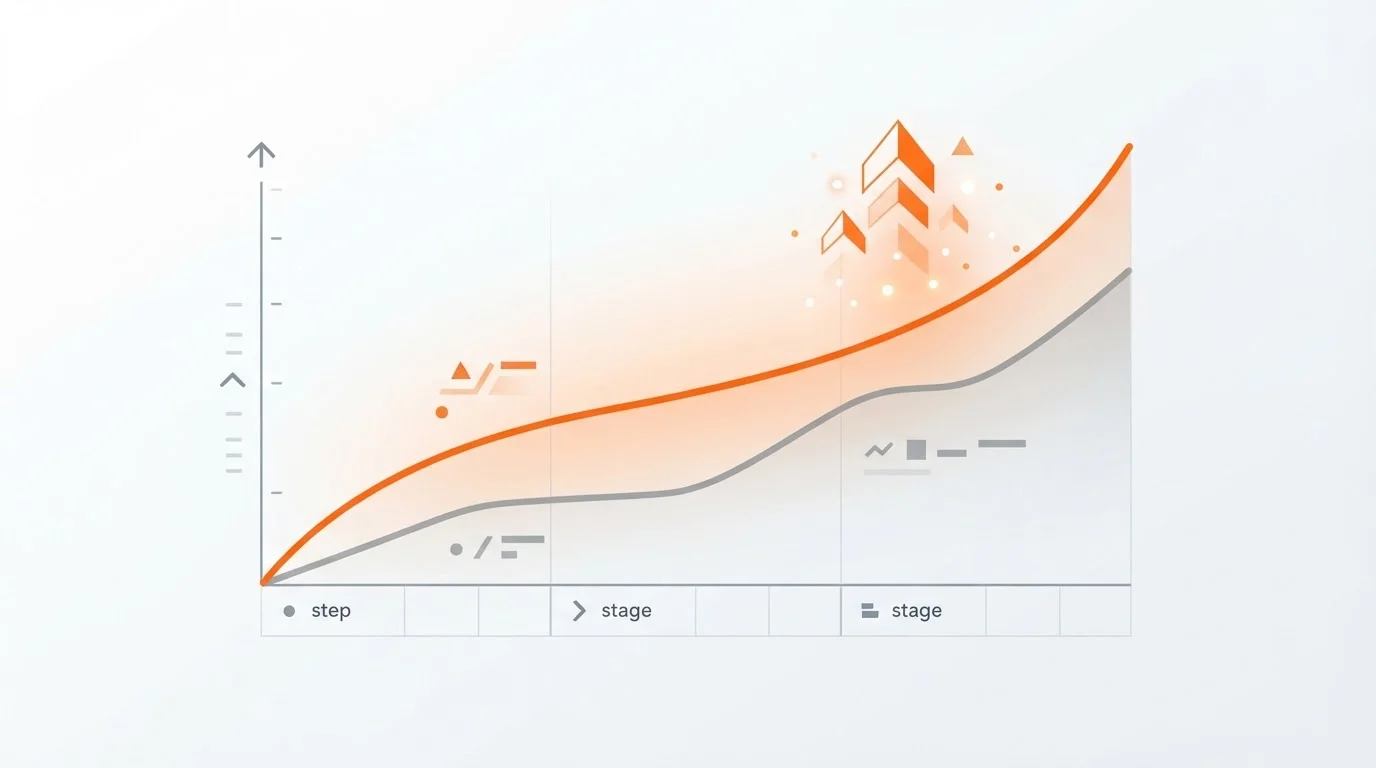
Success in an autonomous strategy is measured by the stability and quality of your traffic. You are looking for a gradual upward trend in non-branded organic traffic—visitors who find you by searching for the problems your SaaS solves, rather than searching for your brand name directly.
To track this effectively, you should establish a baseline for your current organic sessions and keyword rankings. After three months of consistent automated publishing, compare these metrics against your starting point. You will typically see improved SEO visibility, reflected in a higher number of ranking keywords and a more stable average position in search results.
Key Metrics for SaaS Founders
- Monthly Organic Sessions: Look for a reduction in traffic volatility.
- New Organic Users: Track the influx of prospects who haven't interacted with your brand before.
- Keyword Ranking Stability: Monitor core keywords to ensure your topical authority is growing.
- Conversion Rates: Analyze how many blog visitors are converting into trial users through your configured conversion tracking.
Future-Proofing Your SaaS Growth Strategy
As your SaaS scales, your content needs will become more complex. Autonomous blogging provides the infrastructure to expand into new areas without hiring a massive content team. This includes exploring adjacent niches or even expanding into global markets through multilingual content generation.
The future of organic growth lies in GEO (Generative Engine Optimization). As search engines evolve into AI-powered discovery engines, they reward websites that provide deep, specific, and useful information. By maintaining a high-quality autonomous blog, you ensure your product remains discoverable in both traditional search results and new AI-driven search interfaces.
Frequently Asked Questions
Q: How much time does it take to set up autonomous content production?
Setting up a system like Blogged typically takes less than an hour, including connecting your CMS and populating the Knowledge Engine with your product information.
Q: Does automated content hurt SEO rankings?
No, as long as the content is high-quality, product-led, and provides real value to the reader. Search engines reward consistency and relevance, which autonomous systems are designed to maximize.
Q: Can my team help review the articles?
Yes. Paid plans on Blogged include unlimited team seats, allowing your product managers or marketers to participate in the review and approval process without extra costs.
Q: What happens if my product changes?
You can simply update your Knowledge Engine with new documentation or links. The system will use the latest information for all future articles, ensuring your blog is always up to date.
Get practical updates on saas founder consistent organic traffic
Receive new articles and practical insights by email.
Achieving consistent organic traffic is a solvable problem for SaaS founders. By moving away from manual content production and embracing an autonomous strategy, you can build a resilient growth engine that scales with your business. This approach not only improves your SEO visibility but also liberates your time to focus on what matters most: building a world-class product.
With the right integrations and a focus on product-led content, your blog can become your most reliable acquisition channel, delivering a steady stream of qualified leads while you sleep.