
On this page
SaaS founders face a unique visibility challenge: the search environment has shifted from simple links to complex AI-generated answers. To capture high-intent users, your software must appear not only in traditional rankings but also in Google AI Overviews and platforms like Perplexity. However, most founders are focused on building their product, leaving little room for manual keyword research, content drafting, or monitoring. Choosing the right autonomous SEO platform is the difference between having a data dashboard you rarely check and having a growth engine that runs without you.
On Page and Blogged represent two distinct philosophies in this space. On Page is a sophisticated intelligence engine built for technical SEOs who need granular data, API access, and precise tracking of AI search presence. Blogged is an autonomous blogging platform built specifically for SaaS founders who want to transform their technical knowledge into product-led content on autopilot. While On Page tells you exactly how the search environment is changing, Blogged ensures your product is the authority leading that change.
Understanding the Shift: Why AI Search Presence (GEO) Matters for SaaS
Traditional SEO was once a game of volume and backlinks. Modern SaaS SEO, often called Generative Engine Optimization (GEO), is about authoritative presence. AI search engines prioritize content that is factual, useful, and technically accurate. For a software company, this means your documentation, use cases, and feature updates must be discoverable and "citeable" by AI agents. If your content is generic or lacks specific product depth, it will likely be ignored by the models that power AI Overviews.
Tracking this presence is the first step toward dominating it. You need to know when your brand is being mentioned in an AI-generated summary and which competitors are taking that citation spot. However, tracking alone does not drive growth. The real challenge for SaaS teams is the execution gap—moving from search data to published articles that actually describe the product accurately. Both On Page and Blogged attempt to solve this, but they serve different roles in the marketing stack.
On Page: Deep Intelligence and API-First SEO
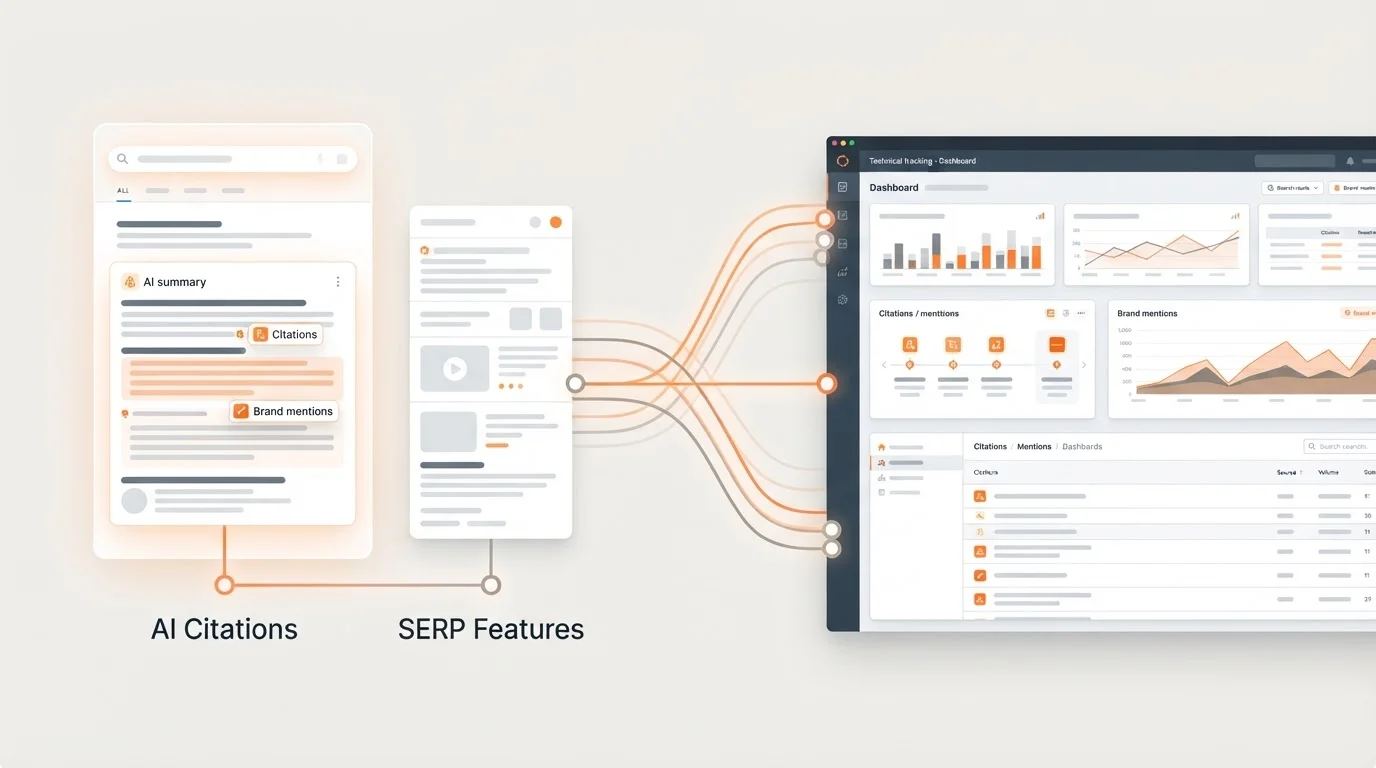
On Page is designed for the technical marketer or agency that needs absolute control over their SEO data pipeline. Its core value is not just in writing content, but in providing the diagnostic tools necessary to understand why content ranks. It is a powerful choice for teams that already have an SEO manager but want to automate the most tedious parts of data collection and reporting. The platform functions as a highly advanced cockpit for an experienced pilot who wants to monitor every detail of their search presence.
Granular Tracking of AI Overviews and SERP Features
One of On Page’s most significant advantages is its API-level tracking of AI search presence. Through its platform, users can monitor keyword rankings, competitor overlap, and presence within Google AI Overviews. This is crucial for SaaS companies operating in competitive niches where AI answers are now the primary real estate. The ability to see exactly how often your brand appears in these summaries allows for a more reactive and data-driven strategy.
Beyond just tracking, On Page allows users to provide an audit trail within their reports. This means every change made to a page or a strategy can be documented, creating a clear history of how specific optimizations affected rankings. This level of transparency is ideal for agencies reporting to stakeholders or for SaaS teams that need to justify their SEO spend with concrete performance data. It turns SEO from a guessing game into a documented series of technical improvements.
Integration and Workflow Automation
On Page is built to integrate with a modern tech stack. Its API allows for connections with tools like Google Sheets, n8n, Make, Postman, and Zapier. This enables technical teams to build custom SEO automation "recipes." For example, you could set up a workflow that detects a drop in AI search presence for a specific feature and automatically triggers a content refresh. These integrations allow On Page to function as the data backbone of a much larger marketing operation.
While On Page includes a Stealth AI Writer and an AI Optimizer, the platform remains a tool that requires a driver. It provides the intelligence, but the user still needs to decide which keywords to pursue and how to structure the overall brand narrative. It is less of an autopilot solution and more of a technical suite for those who want to build their own agency-grade reporting pipelines and combine several SEO datasets into one unified view.
Blogged: The Autonomous Growth Engine for SaaS Founders
Blogged takes a different approach, prioritizing full autonomy and product-led growth. It is built specifically for SaaS founders and lean teams who do not have a dedicated SEO manager. Instead of giving you a dashboard of metrics to analyze, Blogged takes over the entire content lifecycle—from the initial research to the final published post on your blog. It is designed for those who want their organic growth to run on autopilot while they focus on shipping code.
The Knowledge Engine: Turning Software into Stories

The biggest problem with generic AI writers is their lack of product knowledge. They often write vague advice that does not mention your software's specific features or unique value propositions. Blogged solves this through its Knowledge Engine for Autonomous SaaS Blogs. This feature allows you to ground the AI in your actual product facts by providing public product sources, uploading technical documents, pasting links, or writing a direct product description.
This ensures that every article generated is technically accurate and product-led. Instead of just writing about "how to improve project management," Blogged writes about "how to use [Your SaaS Name] to improve project management." This approach is highly effective for GEO, as AI search engines are increasingly looking for specific, factual content that provides a clear solution. By using your documentation as a source of truth, Blogged ensures your SaaS remains the authority in its niche without requiring constant manual oversight.
Get practical updates on on page vs blogged ai search presence content generation
Receive new articles and practical insights by email.
Full Autopilot and Native CMS Integrations
Blogged is designed to be set up once and run indefinitely. Its Autopilot feature handles research, planning, writing, optimization, and internal linking. For founders, this means the blog stays fresh and authoritative even when they are busy with a product launch or a fundraising round. It doesn't just suggest topics; it executes them. This removes the mental burden of content creation from the founder's plate entirely.
Publishing is equally seamless. Blogged offers a WordPress AI Blog Publishing integration that allows you to create and review articles in Blogged, then deliver them to your site. For those on Webflow, the integration goes a step further by helping collect consented visits and configured conversions for verified articles. This allows founders to see the direct impact of their blog on their bottom line without needing to piece together data from multiple different tracking tools. It bridges the gap between content creation and business outcomes.
Direct Comparison: Tracking Data vs. Driving Content
When choosing between these two, the decision often comes down to who will be using the tool. If you have an SEO specialist who wants to build automated reporting pipelines and monitor SERP feature shifts with high precision, On Page is a strong contender. Its API and data depth are built for that level of technical rigor. It provides the "why" behind your rankings, provided you have someone to read the data.
If you are a founder who wants to focus on your product and needs the blog to handle itself, Blogged is the superior choice. Blogged does not just track your AI search presence; it actively creates the content required to earn it. While On Page provides an audit trail of changes you made, Blogged performs the work so you don't have to. It is the difference between a high-end diagnostic tool for a mechanic and a self-driving car for the passenger.
Comparison Table: Feature and Price Snapshot
| Feature | On Page | Blogged |
|---|---|---|
| Primary Purpose | SEO Data & AI Tracking | Autonomous Product-Led Growth |
| Ideal User | SEO Managers & Agencies | SaaS Founders & Lean Teams |
| Knowledge Base | Manual Prompting | Integrated Knowledge Engine |
| AI Search Tracking | API-level (AI Overviews, SERP) | GEO-Optimized Discovery |
| Integrations | Zapier, n8n, Make, API | WordPress, Webflow Native |
| Starting Price | $229 per month (Starter) | $99 per month (Starter) |
| Growth Plan | $499 per month (Growth) | $169 per month (Growth) |
| Scale Plan | $999 per month (Scale) | $229 per month (Ultra Growth) |
Decision Framework: Which Should You Choose?
To help you decide, consider where your current bottlenecks lie. If you are drowning in data and need a way to organize it, On Page is the logical choice. If you are struggling to produce even one high-quality post per week that accurately describes your product, Blogged is the answer.
Choose On Page if:
- You need to build agency-grade automated reporting pipelines for multiple clients.
- You want to track the exact percentage of your keywords that trigger an AI Overview through an API.
- You have the technical capacity to use tools like n8n or Zapier to customize your SEO workflow.
Choose Blogged if:
- You are a SaaS founder who needs a consistent blog presence but lacks the time to manage it.
- You want your content to be based on your actual product documentation and technical specs to avoid hallucinations.
- You use WordPress or Webflow and want a set-and-forget solution that handles internal linking and publishing.
- You want a more accessible starting price point for high-quality, product-led content generation.
Frequently Asked Questions
Q: Can Blogged track my keyword rankings like On Page does?
Blogged focuses on the publishing and discovery side of SEO and GEO. While it optimizes for search visibility, it does not offer the same API-level, granular SERP feature tracking and audit reporting found in On Page.
Q: Does On Page offer a way to publish directly to my blog?
Yes, On Page offers a WordPress Import Plugin, but it is typically included in higher-tier plans like the Growth plan at $499 per month.
Q: How does Blogged keep my content accurate?
Blogged uses its Knowledge Engine, which allows you to ground the AI in your specific documentation, uploaded files, and product links. This ensures the AI isn't writing generic content but is instead using your product as the source of truth.
Q: Which platform is better for GEO (Generative Engine Optimization)?
On Page is excellent for tracking your presence in generative answers, while Blogged is better for creating the technically accurate, product-centric content that AI engines prefer to cite.
In the race for AI search presence, data is essential, but execution is what wins. On Page offers the best data for those who have the time and expertise to act on it. Blogged offers the best execution for those who need to build their brand and their product simultaneously. For the vast majority of SaaS founders, the ability to turn technical knowledge into discoverable, product-led content on autopilot makes Blogged the most efficient path to organic growth. Stop managing your blog and start letting it manage your lead generation.