
On this page
Organic growth is the gold standard for SaaS customer acquisition, yet it remains one of the most difficult channels to scale effectively. Founders frequently find themselves caught in a resource trap: they need high-ranking content to drive leads, but the time required to research, write, and optimize that content competes directly with the product roadmap. This conflict often leads to a "content desert" where blogs are updated sporadically, rankings stagnate, and competitors with larger marketing budgets seize the most valuable search real estate.
This guide explores a strategic solution through the lens of a blueprint for success. By shifting from manual content production to an autonomous blogging strategy, founders can secure Top 3 rankings for highly competitive keywords. We will examine how lean teams can use autonomous platforms like Blogged to transform internal product knowledge into discoverable, high-authority content that rivals industry giants without the overhead of a traditional agency or a bloated marketing team.
The SaaS Founder’s Content Paradox
Most SaaS startups begin with a burst of content energy where the founder writes the first few "vision" posts. However, as the user base grows, the demands of the engineering roadmap inevitably take over, and SEO falls to the bottom of the priority list. When organic traffic fails to materialize, founders usually turn to hiring expensive agencies or building internal content teams that require constant management.
Agencies often struggle to capture the technical nuance of a specialized SaaS product. This usually results in generic articles that fail to convert sophisticated B2B buyers. Internal teams represent a significant overhead that many early-stage companies cannot justify during the scaling phase. The result is a lack of consistency; in the eyes of search engines, a blog that hasn't been updated in months is a signal of declining relevance.
Why Traditional SEO Strategies Fail Lean SaaS Teams
Traditional SEO relies on high-volume publishing and extensive manual outreach, both of which are labor-intensive. For a founder, spending ten hours on a single 2,000-word article is ten hours not spent on feature development or customer success. When this effort is multiplied across a dozen competitive keywords, the math simply does not work for a small team.
Furthermore, the competitive landscape for SaaS keywords is dominated by players with massive SEO moats. To compete, you need a way to produce high-quality, product-led content at a frequency that signals authority to search engines. You need a system that doesn't just chase keywords but actually explains how your software solves specific user problems. This requires a level of technical depth that generalist freelance writers rarely possess.
The Autonomous Blueprint: A Case Study of Strategic Growth
To illustrate the impact of automation, consider the hypothetical blueprint of InnovateCo, a B2B SaaS company that broke the cycle of manual blogging. By treating content as an autonomous system rather than a manual chore, they were able to target keywords where entrenched competitors were ranking with thin content. Their journey demonstrates how a founder can theoretically achieve Top 3 rankings for over 10 competitive keywords by leveraging an autonomous platform.
The breakthrough comes when you move away from viewing blogging as a series of tasks—keyword research, drafting, formatting, and linking—and start viewing it as a persistent growth engine. By implementing a platform like Blogged, which handles the entire content lifecycle, a small team can shift their focus to high-level strategy and final review while the system handles the execution.
Phase 1: Ingesting Product Knowledge for High-Authority Content
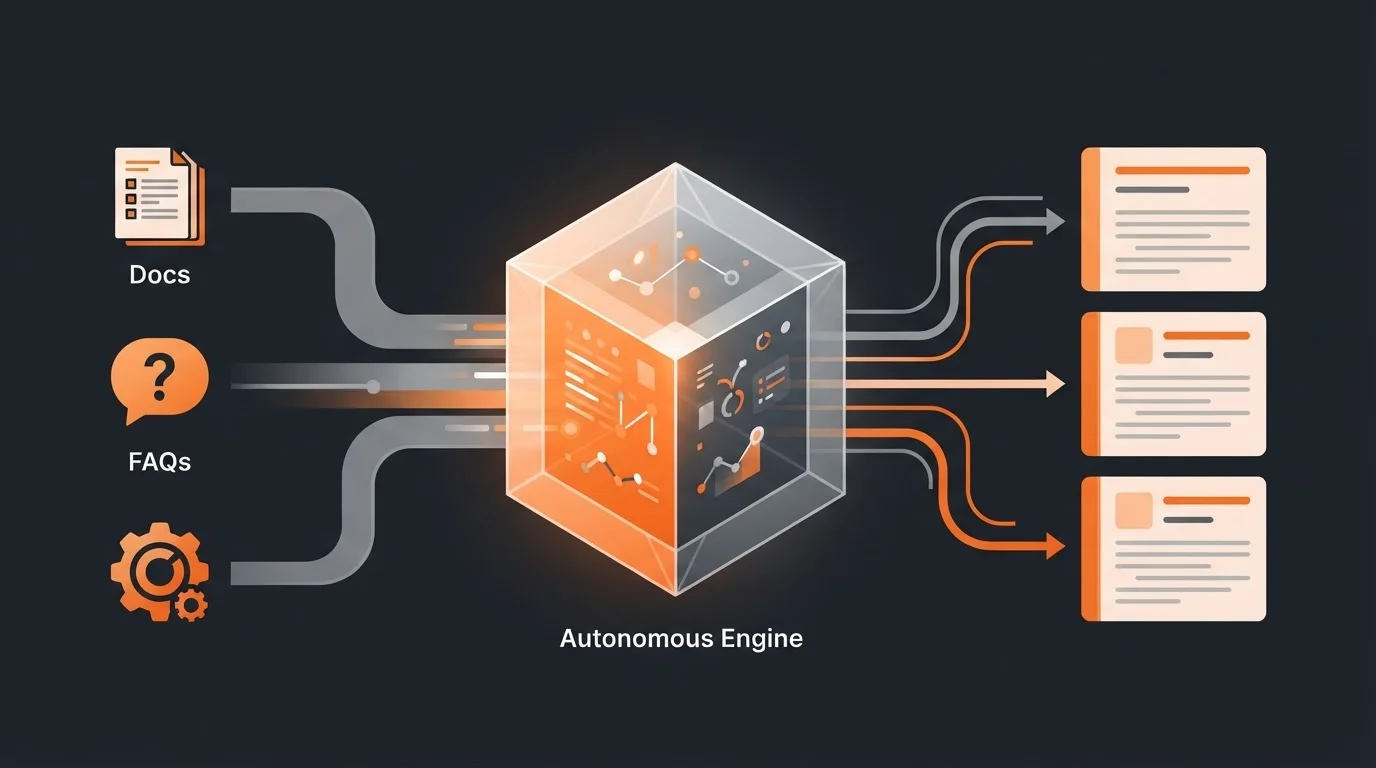
The success of any autonomous content strategy depends on the quality of the input data. An autonomous system should not just guess what your product does; it should be fed your actual product documentation, feature lists, and customer FAQs. This ensures that the generated articles are technically accurate and aligned with your brand’s unique value proposition.
When a platform like Blogged ingests this product knowledge, it transforms raw technical data into discoverable content. This product-led approach is critical for SaaS because it ensures the blog becomes an extension of your documentation and sales pitch. Instead of generic advice, the content provides specific solutions that include your product as the primary tool for success.
Phase 2: Building Domain Authority through Autonomous Consistency
Consistency is the most important ranking signal that many founders neglect because they are preoccupied with product launches. To break into the Top 3 for competitive terms, you must prove to search engines that your site is an active authority. An autonomous platform generates a content calendar that balances broad educational topics with deep-dive product guides.
Because the platform handles the heavy lifting—from keyword research to internal linking—you can maintain a publishing schedule that keeps your site fresh. The system automatically identifies opportunities for internal links, ensuring that new articles boost the authority of older ones. This creates a cluster effect, where search engines begin to view your domain as a comprehensive resource rather than just a single-page tool.
Phase 3: Mastering GEO (Generative Engine Optimization)
Modern search is no longer just about traditional blue links. We have entered the era of Generative Engine Optimization (GEO), where AI-driven search tools summarize information for users. Your strategy must address both traditional and AI-driven search simultaneously.
Articles must be structured with clear headings and schema markup for Google, but they also need to include the data-backed claims that AI models look for when generating summaries. This dual optimization approach ensures that when a user asks an AI assistant for the best software in your category, your product is cited as a primary source. By focusing on GEO, you future-proof your organic traffic against shifting search habits.
Integrating Autonomy into Your Technical Stack
A common fear among founders is that an autonomous tool will create a siloed blog that doesn't fit their site architecture or technical standards. Modern autonomous platforms avoid this by using native integrations that publish directly to your existing CMS. This maintains your design consistency and technical SEO standards without manual intervention.
For example, if you are using a self-hosted WordPress site, the connection is typically handled through a dedicated plugin and an application password. This allows for secure, automated delivery of content. If your team prefers a modern headless setup, integrations for Next.js allow you to collect consented visits and track conversions for verified articles, giving you clear visibility into how your organic traffic is performing.
WordPress and Ghost: Seamless Publishing Workflows
Whether your team uses Ghost or WordPress, the autonomous workflow remains consistent. With a Ghost AI Blog Publishing integration, the platform manages content creation and review while Ghost itself renders the reader experience. Users simply create a custom integration in Ghost, copy the Admin API key, and verify the connection within the autonomous platform.
This flexibility means that as your SaaS scales and potentially changes its tech stack, your content engine remains uninterrupted. The goal is to ensure that the "writing" part of the blog is fully decoupled from the "rendering" part, allowing you to switch platforms or update designs without losing the momentum of your published content.
Headless SEO: Next.js and Webflow Conversions
For teams building on Webflow or Next.js, the focus is often on performance and conversion tracking. Autonomous platforms like Blogged offer integrations that let users collect consented visits and configured conversions for verified articles. This is vital for a SaaS founder who needs to justify the marketing spend by showing a direct line from a blog post to a trial signup.
By using signed webhooks and content APIs, you can ensure that your autonomous blog is not just a collection of text, but a fully integrated part of your marketing funnel. This level of technical integration ensures that the blog scales with the rest of your application's infrastructure.
Managing Quality Without Sacrificing Time
Autonomy does not mean a lack of control. A critical component of a successful autonomous strategy is the ability to fine-tune the output. Platforms like Blogged include 3 revisions per article, ensuring that a founder or product manager can adjust the tone or technical details to perfectly match the brand voice before it goes live.
Furthermore, because paid plans often include unlimited team seats, your entire team can participate in the content lifecycle. A developer can jump in to verify a technical point in a post about API integrations, while a marketer can adjust the call-to-action. This collaborative environment ensures that the autonomous content still feels deeply human and aligned with the product's evolution.
The Economics of Autonomous Growth
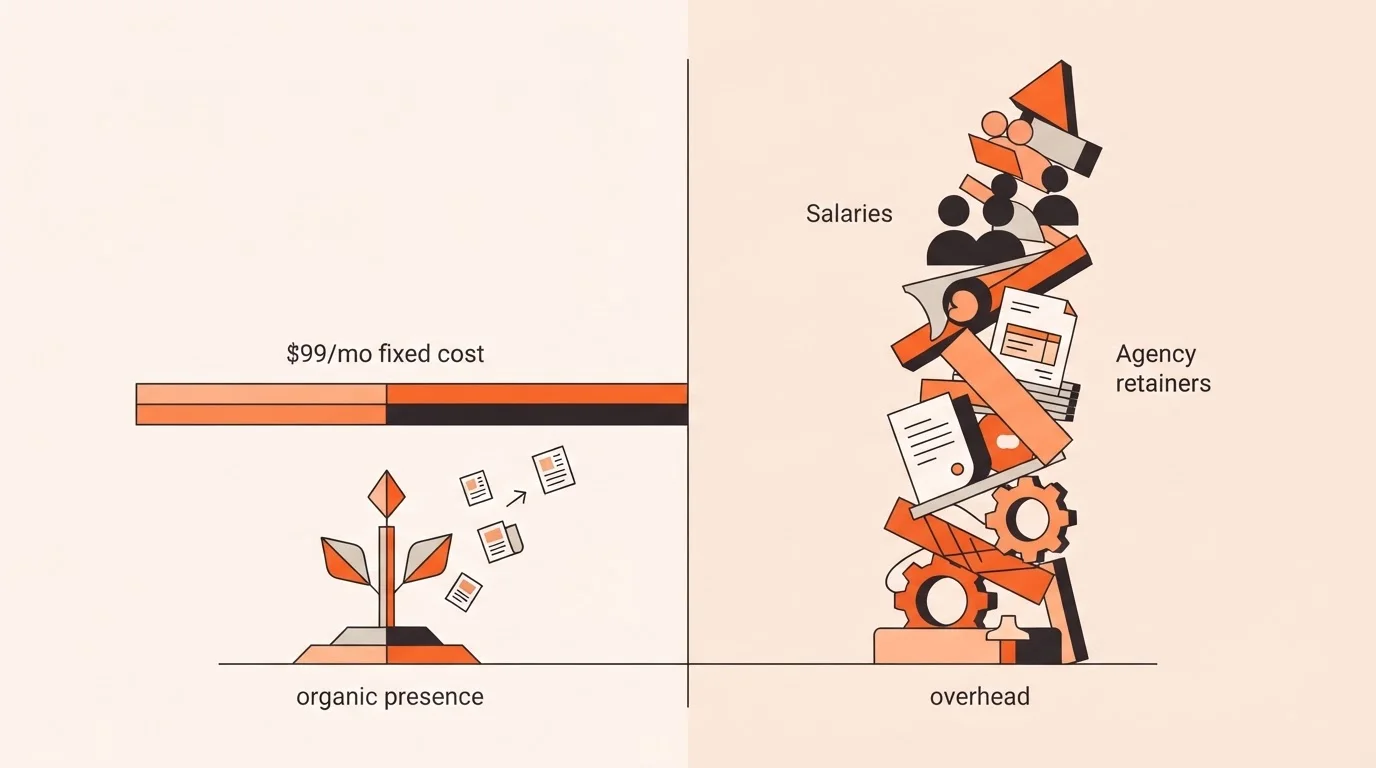
From a financial perspective, the shift to autonomous blogging is a clear win for lean SaaS companies. A platform like Blogged is listed at $99 per month, a fixed cost that is significantly lower than the "agency tax" or the salary of a full-time content marketer. This fixed-cost model allows you to reinvest capital into engineering while your organic presence grows in the background.
Securing Top 3 rankings captures the vast majority of search clicks, reducing your dependence on expensive paid ads. Over time, your organic presence becomes a compounding asset. Every new article published by the autonomous system increases the overall authority of the domain, making it easier to rank for future, even more competitive keywords.
Frequently Asked Questions About Autonomous Blogging
Q: Can an autonomous platform really rank for highly competitive keywords?
Yes. Rankings are driven by relevance, authority, and consistency. By ingesting your specific product knowledge, an autonomous platform creates more relevant content than a generalist writer, and its ability to publish consistently builds the domain authority required for Top 3 spots.
Q: Does using AI content hurt my SEO?
Search engines prioritize helpful, reliable, people-first content regardless of how it was created. By using your product documentation as the source of truth and reviewing the output through the 3 revisions included in Blogged, you ensure the content is accurate and helpful, which search engines reward.
Q: How much time does this actually save a founder?
While manual blogging can take dozens of hours per month, an autonomous platform reduces the founder's involvement to a final review and refinement phase, allowing them to focus almost entirely on the product roadmap.
Q: What integrations are available for my SaaS blog?
Blogged integrates with major platforms including WordPress (via plugin), Ghost (via Admin API), Webflow, and Next.js. Each integration supports collecting consented visits and conversion tracking.
Get practical updates on saas founder competitive keyword ranking autonomous blogging
Receive new articles and practical insights by email.
The path to SaaS success no longer requires founders to choose between their product roadmap and their organic growth. By treating content as an autonomous system rather than a manual chore, lean teams can outmaneuver massive competitors and secure the most valuable real estate on the web.
If your current SEO strategy feels like a resource drain that isn't yielding Top 3 results, it is time to stop blogging manually. Embracing an autonomous approach allows you to turn your product knowledge into a persistent growth engine, freeing you to focus on what you do best: building a world-class SaaS product.