
On this page
Every SaaS founder eventually hits a wall where their product roadmap and marketing strategy collide. You recognize that organic growth is the most sustainable engine for long-term scale, yet the manual labor required to fuel that engine is staggering. Researching keywords, drafting long-form guides, optimizing for search engines, and managing a relentless publishing calendar often takes a backseat to shipping features and supporting active users.
Tom Green, a founder building a high-growth SaaS, faced this exact bottleneck. He understood that his blog was a valuable asset, but his manual production process was too slow to compete in a crowded market. By shifting to an autonomous blogging strategy, Tom achieved a 5x increase in content velocity. He transformed his blog from a neglected side project into a high-output discovery engine that consistently attracted new leads.
This success story is not merely about speed; it is about how autonomous systems allow founders to translate internal product knowledge into discoverable, product-led content. By automating the heavy lifting of SEO and production, founders can finally stop choosing between building their software and growing their audience. This guide explores the specific strategies Tom used to scale his output and future-proof his brand for the era of AI discovery.
The Scaling Paradox: Why Manual Blogging Fails the SaaS Founder
In the software world, content velocity is a strategic advantage. While the specific relationship between volume and traffic varies by niche, the underlying principle is clear: consistent publishing expands your keyword footprint and signals to search engines that your site is an active, authoritative source of information. However, for a small team or a solo founder, maintaining that volume manually is an unsustainable burden.
The traditional content workflow is linear and fragile. It begins with brainstorming, moves to keyword research, then to outlining, drafting, multiple rounds of editing, and technical chores like SEO tagging and internal linking. If a founder gets pulled into a high-priority bug fix or a major product launch, the entire pipeline grinds to a halt. This inconsistency kills search engine rankings and slows down the compounding effect of organic traffic.
Beyond time constraints, founders often struggle with the 'translation gap.' External freelance writers, while talented at writing, frequently lack the deep product expertise required to write authoritative, product-led content. This forces the founder to spend hours 'fixing' drafts to ensure technical accuracy. Tom Green realized that he wasn't just fighting a time problem; he was fighting an architectural problem. He needed a system that could scale his expertise without requiring his constant presence in the editor.
Strategy 1: Grounding Content in the Knowledge Engine
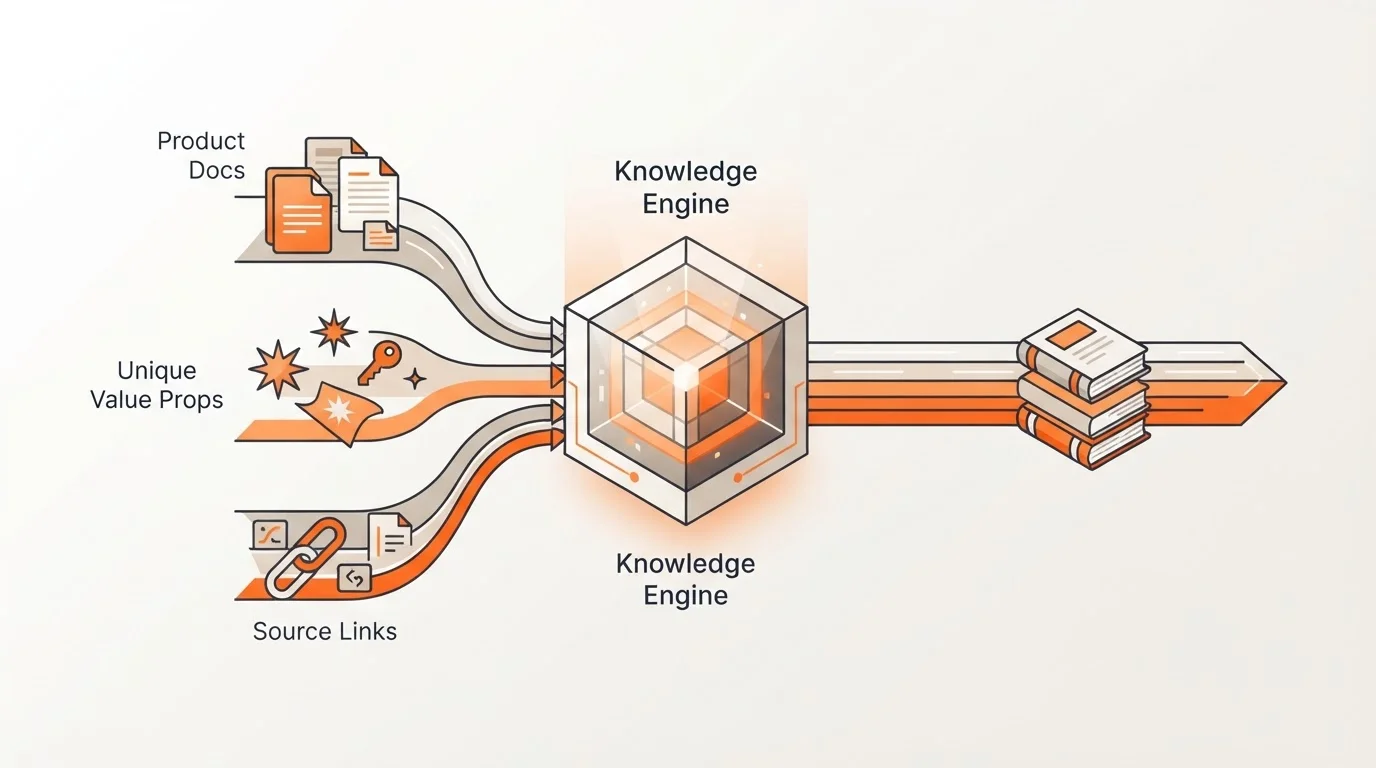
The first step in Tom’s 5x velocity increase was solving the accuracy problem. Automated content is often criticized for being generic or 'fluffy,' but Tom avoided this by utilizing the Blogged Knowledge Engine. This feature allowed him to provide the platform with a specific 'source of truth' for his SaaS, including product documentation, uploaded files, and unique value propositions.
By organizing these facts by product entity and facet, Tom ensured the AI understood the specific terminology and unique solutions his software provided. The system wasn't just pulling information from the open web; it was drawing from Tom’s own product data to create articles that were deeply relevant to his ideal customers. This grounded approach meant that every piece of content published was 'product-led' by default.
This centralized knowledge base acts as a living document. As Tom’s product evolved and new features were shipped, he could update the Knowledge Engine, and the autonomous system would automatically incorporate those changes into future articles. This ensured that high-velocity output remained accurate and up-to-date, reflecting the current state of the software without requiring a complete rewrite of the content strategy.
Strategy 2: The Autopilot Loop for Consistent Output
Once the knowledge base was established, Tom focused on maintaining a consistent publishing cadence. Consistency is perhaps the most difficult part of manual blogging, but it is also the most rewarded by search engines. Tom utilized the Full Autopilot feature to manage his content schedule without needing to start from scratch every Monday morning.
Blogged allows founders to build a durable SaaS content plan and let Full Autopilot refill a short Topic queue from approved Content Directions. This shift moved ideation from a weekly chore to a strategic oversight task. Tom could review and approve a month's worth of content directions in one sitting, knowing the system would handle the generation and publishing of those topics on the pre-defined schedule.
This 'refill' mechanism ensures that the content pipeline never runs dry. Even when Tom's team was heads-down on development, the blog continued to publish high-quality articles. This reliability is what allowed them to hit the 5x velocity mark consistently. By reclaiming the cognitive energy previously spent on 'what to write next,' Tom was able to focus on the high-level strategy that drove the business forward.
Strategy 3: Zero-Friction Publishing Through Direct Integration
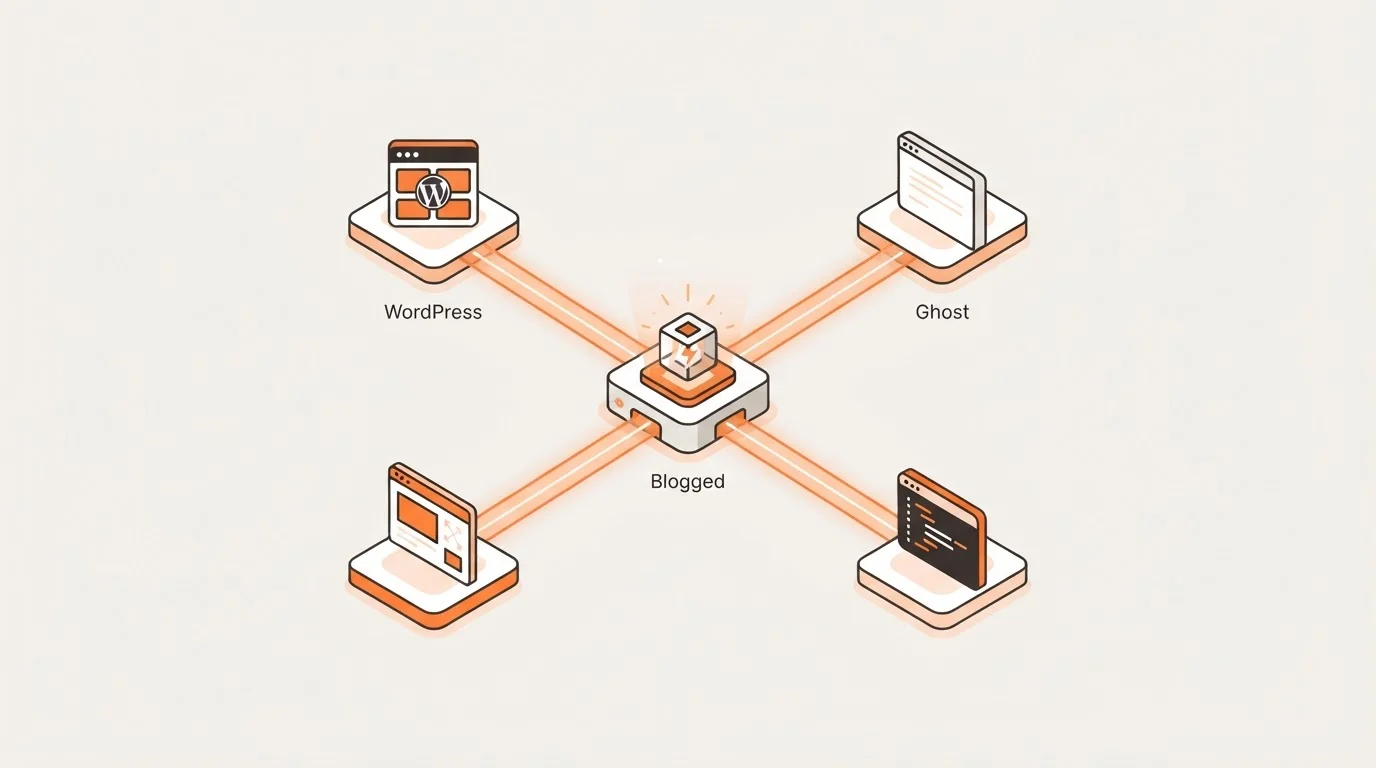
The final hurdle in increasing velocity is the 'last mile'—getting content from the draft stage to the live website. Manual copy-pasting, formatting, and link-checking are significant time-sinks that often lead to errors. Tom solved this by using direct publishing integrations to automate the delivery of his content.
For his WordPress site, Tom used the WordPress AI Blog Publishing integration. This allowed his team to create and review articles within Blogged and deliver them directly to the website using the Blogged Publishing plugin and an application password. This wasn't just about moving text; the integration also enabled him to collect consented visits and configured conversions for verified articles, closing the loop between publishing and lead generation.
Similar direct integrations exist for Ghost, Webflow, and Next.js. For instance, the Ghost integration manages content creation and review while Ghost renders the reader experience, and the Next.js integration allows for seamless delivery to custom-built stacks. By removing the manual steps of uploading and formatting, Tom ensured that his high-velocity output reached his audience with professional finish and zero delay.
Achieving GEO Success: Future-Proofing for AI Discovery
As the search environment shifts from traditional 'blue links' to AI-powered answer engines like Perplexity and ChatGPT, a new discipline has emerged: Generative Engine Optimization (GEO). Traditional SEO is no longer sufficient on its own; your content must now be structured so that AI models can easily parse it and cite it as a source of truth.
Blogged’s autonomous approach is built for this new era. By feeding the Knowledge Engine structured product facts, the platform produces content that is authoritative and easy for generative AI engines to consume. This increases the likelihood that your brand will be the one cited when a user asks an AI assistant a natural-language question about your industry or product category.
GEO success requires a combination of depth, freshness, and structure. By publishing five times more content than before, Tom ensured his brand had a massive volume of 'citable' data points across the web. The frequent updates managed by Autopilot also signaled to these AI models that the information was current—a key factor in how generative engines prioritize their sources. Founders who embrace this high-velocity, structured approach are positioning themselves to dominate the next decade of discovery.
The Operational Impact: Reclaiming the Founder's Time
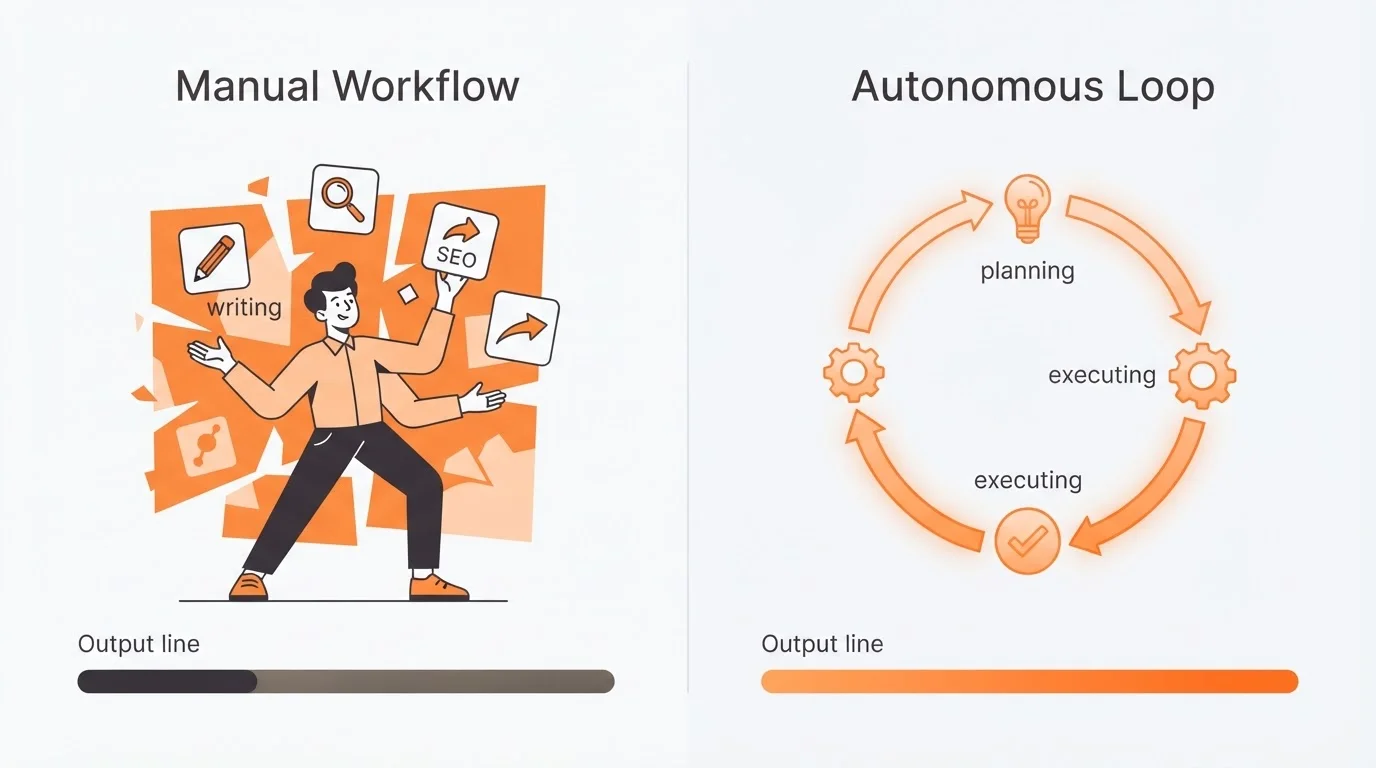
The shift from manual to autonomous blogging fundamentally changed Tom's business operations. The 5x increase in content velocity led to a significant expansion of his keyword footprint, but the most immediate benefit was the time saved. Instead of acting as a writer, editor, and site manager, Tom transitioned into a strategic reviewer.
Blogged includes unlimited team seats on its plans, which allowed Tom to involve his product managers and marketers in the review process without additional costs. This collaborative environment ensured quality control without creating a single-person bottleneck. When a piece of content needed fine-tuning, the team utilized the built-in revision tools—depending on the plan, Blogged offers 1 or 3 revisions per article—to ensure the tone and messaging were perfect.
Moreover, the built-in tracking allowed Tom to monitor Search Console performance, lead outcomes, and reader feedback in one place. This data-driven approach allowed him to refine his Content Directions over time, focusing on the topics that actually drove sign-ups rather than just raw traffic. The result was a lean, high-performance marketing engine that delivered better results than the manual processes he had previously managed.
Frequently Asked Questions
Q: How does autonomous blogging maintain quality compared to human writers?
Quality is maintained by grounding the AI in a specific Knowledge Engine. Unlike generalist writers, the system uses your actual product documentation and value propositions to ensure technical accuracy. You also retain control through the review process and revision tools.
Q: Does increasing content velocity help with AI discovery (GEO)?
Yes. AI engines prioritize structured, fresh, and authoritative content. By increasing velocity, you provide more data points for AI models to cite, and the frequent updates signal that your information is current.
Q: Can I use Blogged with my existing website?
Yes. Blogged offers direct integrations for WordPress, Ghost, Webflow, and Next.js. These allow you to publish content directly to your site while retaining your current design and user experience.
Q: How much founder time is required each week?
Once the Knowledge Engine and Autopilot are configured, most founders spend less than 30 minutes a week reviewing topics and approving final drafts. The platform handles the research, writing, and technical SEO.
Q: Is this only for top-of-funnel content?
No. The system is excellent for middle-of-funnel comparison articles and bottom-of-funnel feature deep-dives, as it uses your specific product knowledge to drive trial sign-ups.
Get practical updates on saas content velocity increase
Receive new articles and practical insights by email.
Tom Green's journey demonstrates that a 5x increase in content velocity is not just a dream for SaaS founders—it is an achievable reality. By moving away from manual, linear production and embracing an autonomous content engine, he was able to scale his organic growth without scaling his workload.
The future of SaaS marketing is product-led and autonomous. Platforms like Blogged allow you to transform your deep product expertise into a high-performance discovery engine, ensuring your software gets the visibility it deserves while you stay focused on building the future.