On this page
For most SaaS founders, the content lifecycle is an operational bottleneck. The sequence of researching keywords, planning topical clusters, drafting technical sections, and optimizing for search engines often consumes 20 hours a week or more—time that should be spent building the product. Scalenut and Blogged offer two distinct methodologies to solve this. Scalenut serves as a sophisticated AI co-pilot designed to accelerate human-led writing workflows. In contrast, Blogged operates as an autonomous engine that transforms your actual product knowledge into high-ranking, published content. This comparison evaluates how each platform handles the specific demands of a SaaS content strategy, from initial research to conversion tracking.
The SaaS Content Lifecycle Challenge
In the SaaS world, content is not just about volume; it is about maintaining technical accuracy while achieving search engine visibility. A generic AI draft that misses a critical feature update or misinterprets an API capability can damage a brand's authority instantly. The typical lifecycle spans five stages: discovery, planning, drafting, technical SEO/GEO optimization, and the final publishing loop.
When evaluating an autonomous seo platform saas, founders must decide if they want a toolkit to help their team write faster or a system that manages the entire loop independently. Scalenut excels at the former, providing data to inform human decisions. Blogged prioritizes the latter, anchoring its AI in your proprietary product data to ensure the blog runs itself.
The Shift Toward GEO and AI Discovery

Modern content lifecycles are evolving. Search Engine Optimization (SEO) is now accompanied by Generative Engine Optimization (GEO). This involves ensuring your product is discoverable not just on Google, but within AI answer engines like ChatGPT, Claude, and Perplexity. Both platforms address this, but through different lenses. Scalenut offers AI Visibility tracking to monitor brand mentions in LLM answers. Blogged uses a specialized Knowledge Engine to feed verified product data into the AI, ensuring that the generated content acts as a primary source of truth for these discovery engines, which reduces the risk of AI hallucinations.
Scalenut: The Marketer's AI Writing Cockpit
Scalenut is an all-in-one platform for content teams who need granular control over high-volume production. Its primary strength is the ability to analyze the top 30 search results for any keyword and provide a blueprint for a winning article. For companies with dedicated content managers, Scalenut serves as a productivity multiplier. The platform has reportedly helped over 200 businesses grow their organic traffic by consolidating keyword research and AI writing into a single interface. It is a powerful tool for those who want to be in the 'captain's chair' of their content strategy.
Cruise Mode and the 5-Minute Draft
The flagship feature of Scalenut is Cruise Mode. This guided workflow takes a user from a target keyword to a 1,500+ word draft in approximately five minutes. The process is structured into sequential steps: entering a keyword, selecting a title, building an outline based on competitor H2/H3 structures, and generating the text. While efficient, the output typically requires a human editor to ensure technical nuances are correct. It is a 'brief-to-draft' engine that excels at producing search-friendly skeletons based on existing web data.
SEO Hub and NLP Optimization
Beyond drafting, Scalenut provides an SEO Hub that assigns a real-time optimization score based on Natural Language Processing (NLP) terms. It suggests specific keywords to include to match the depth of ranking competitors. In 2026, Scalenut expanded its suite to include AI Visibility tracking, which monitors where your brand appears in LLM answers. This helps marketers understand their share of voice within AI ecosystems, making it a valuable tool for brand monitoring across platforms like Gemini and Claude.
Blogged: The Autonomous Growth Engine for Founders
Blogged takes a fundamentally different approach by prioritizing autonomy and product integration. For a SaaS founder, the goal is often to have a blog that drives growth without requiring daily management. Blogged addresses this by creating a hands-off publishing loop. Instead of starting with a generic keyword and asking for a manual outline, Blogged anchors its AI in your proprietary product data. This ensures the content is not just optimized for search, but accurately reflects the software it is meant to promote.
Get practical updates on scalenut vs blogged content lifecycle
Receive new articles and practical insights by email.
Knowledge Engine for Factual Accuracy
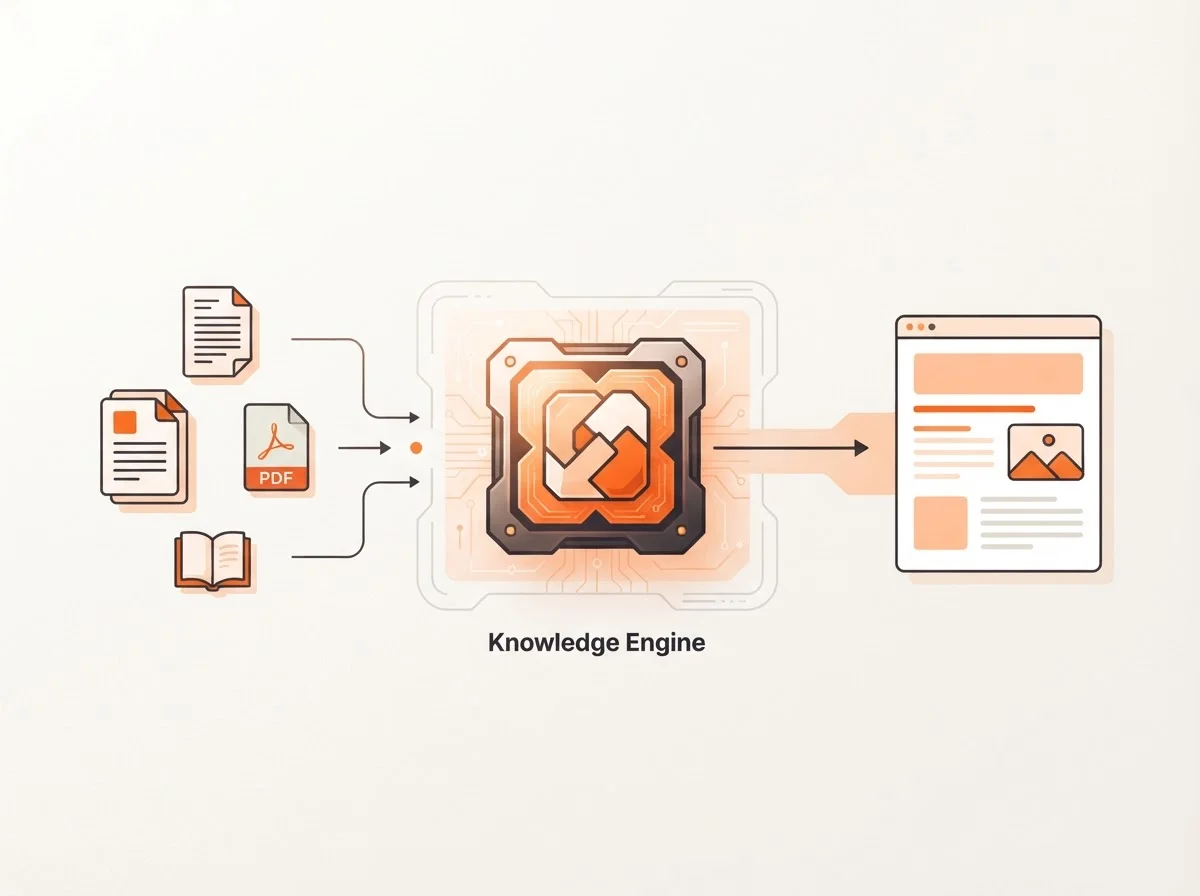
The core of the Blogged platform is its Knowledge Engine for Autonomous SaaS Blogs. This feature allows users to provide product sources such as public documentation, uploaded internal PDFs, technical links, or direct written descriptions. This capability solves the accuracy problem common in general AI writing. By using your documentation as the source of truth, Blogged generates articles that understand your specific features, dependencies, and use cases without constant human intervention. This makes it a true content management automation solution for technical products.
Autonomous Publishing and Conversion Tracking
Blogged treats publishing as a core part of the lifecycle. Its Ghost AI Blog Publishing integration manages the creation and review process while Ghost renders the reader experience. For founders using modern stacks, the Next.js integration is particularly powerful; it allows the platform to collect consented visits and track configured conversions for verified articles. This creates a direct link between content production and business outcomes, allowing founders to see exactly how their autonomous blog contributes to user acquisition.
Scalenut vs. Blogged: Comparison Table
| Feature | Scalenut | Blogged |
|---|---|---|
| Core Philosophy | Guided AI Assistant (Co-pilot) | Autonomous SEO Engine (Autopilot) |
| Primary Input | Keywords & Competitor SERPs | Product Knowledge & Documentation |
| Starting Price | $59/month (Starter) | $99/month (Standard) |
| Workflow Style | Step-by-step human guidance | Hands-off autonomous loop |
| Integrations | WordPress, Shopify, Semrush | Ghost, WordPress, Webflow, Next.js |
| Conversion Tracking | External (Google Analytics) | Built-in (Verified Conversions) |
| GEO Support | Brand mention monitoring | Knowledge-based fact verification |
Key Differences in Lifecycle Automation
The choice between these two platforms depends on who is driving the content strategy. Scalenut is designed for the user who wants to control the nuances of every brief. It provides the data and the NLP scores, but the human decides which clusters to target and which paragraphs to keep. It is a tool for building content.
Blogged is designed for the founder who wants to delegate the entire content department. It researches the market, plans the content from product docs, and publishes automatically. It is a system for delivering organic growth. If you choose Scalenut, you are committing to a faster version of a manual workflow. If you choose Blogged, you are installing an autonomous department that runs in the background.
Frequently Asked Questions
Q: Does Scalenut handle internal linking automatically?
Scalenut offers a Link Manager that suggests internal linking opportunities, but these must be manually reviewed and implemented by the user within the editor.
Q: How does Blogged keep content fresh when the product updates?
You can update the Knowledge Engine by providing new links or documents. The autonomous engine will prioritize this new data for all future content, ensuring the blog reflects your latest releases.
Q: Is Scalenut's pricing lower than Blogged for single users?
Scalenut's Starter plan is $59 per month, while Blogged is $99 per month. However, Scalenut's entry-level plans often have limits on the number of articles, whereas Blogged is built for higher-volume autonomous growth.
Q: Can I use Blogged with a custom-built website?
Yes, Blogged provides a Next.js integration and a Content API (via signed webhooks) specifically for teams using custom or headless architectures to collect traffic and conversion data.
Final Verdict: Choosing the Right Lifecycle Partner
If you have a dedicated marketing team and want to empower them with advanced keyword research and NLP scoring, Scalenut is a top-tier choice for ai content optimization saas. Its toolkit is purpose-built for marketers who want to refine every ranking signal. However, if you are a founder or a lean team focused on product-led growth, Blogged is the more effective solution. By automating the entire research-to-publishing loop and grounding it in your actual product knowledge, Blogged allows you to maintain an authoritative, high-ranking blog without the distraction of manual management. For most founders, the autonomy of Blogged provides a higher ROI on time, ensuring the blog drives growth while they focus on building the SaaS.