
On this page
Quick answer: SaaS founders are overcoming the content production bottleneck by transitioning from manual drafting to an autonomous blogging strategy. By leveraging systems like Blogged’s Knowledge Engine, startups transform technical API guides and feature documentation into discoverable, high-intent articles. This shift allows executive teams to reallocate significant hours from content review to core product development, effectively turning their blog into a self-sustaining engine for product-led content engagement and organic growth.
For many founders, the "Content Trap" is a common point of failure: you need a blog to drive organic reach, but the time required to write high-quality, technically accurate content is time you simply do not have while building a product. Success in the current search environment requires a system that bridges this gap, maintaining technical precision while scaling output at the pace of your development cycle.
The Founder's Bottleneck: Why Manual Content Fails to Scale
Before adopting an autonomous approach, most SaaS content strategies hit a predictable plateau. As a product-led company, your value proposition often resides in complex features that require deep, nuanced explanation. This creates a friction point between the marketing team’s desire for volume and the engineering team’s limited bandwidth.
Founders typically face three primary challenges when managing content manually:
- The Technical Accuracy Gap: Generic freelance writers often struggle to grasp the nuances of proprietary software architecture. This results in "fluff" articles that fail to provide real value to sophisticated users or developers.
- Inconsistent Cadence: Content is often produced in bursts. When a new feature launches, the team rushes out a post, followed by weeks of silence. Google and AI search engines prioritize consistent, high-quality updates, and a sporadic schedule stunting your organic reach.
- High Opportunity Cost: When founders or CTOs spend their weekends editing drafts to ensure technical correctness, they are trading high-value strategic time for editorial oversight. This manual review process is a significant drain on the bandwidth needed for fundraising and product roadmapping.
To sustain long-term growth, SaaS teams need a system that can research, plan, and optimize content as fast as they ship code. The solution lies in tools that ingest actual product knowledge and output articles that feel like they were written by the primary architect.
The Knowledge Engine: Turning Documentation into Discovery
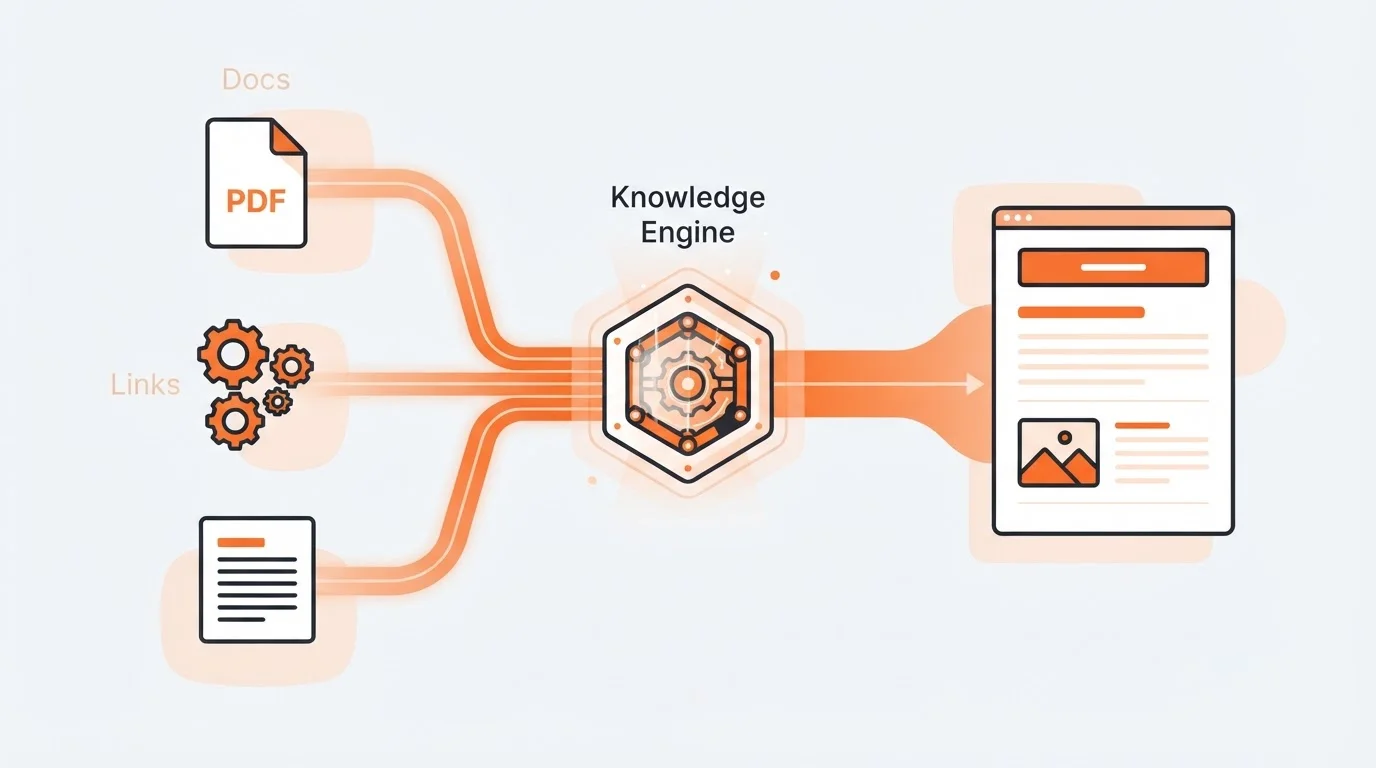
The core differentiator for a successful autonomous blog is its ability to integrate with the specific context of your software. A generic AI can't explain a niche feature, but a specialized Knowledge Engine for Autonomous SaaS Blogs can. This capability allows you to feed the system your actual product reality.
Founders can provide public product sources, uploaded documents, pasted links, or written descriptions to ground the AI in fact rather than hallucination. By uploading user manuals, internal wikis, and API documentation, you ensure that every published word is technically sound. This transition turns internal "product truths" into external "market discovery," building a topical map that establishes your SaaS as a niche authority.
This grounded approach is essential for Generative Engine Optimization (GEO). Modern search interfaces look for specific, entity-rich content that provides direct answers. By training the autonomous system on your technical assets, you produce the high-utility content that AI discovery engines prioritize.
Seamless Workflows: Integrating with Your Existing Stack
An autonomous blogging solution must integrate directly with your existing infrastructure to be effective. For SaaS teams, this means connecting the content engine to the CMS where their readers already live. Whether you use WordPress, Ghost, or a custom Next.js frontend, the goal is a seamless bridge from draft to published.
For example, Blogged’s WordPress AI Blog Publishing integration allows users to review articles within the platform and then deliver them to a self-hosted site using a dedicated plugin and application password. Similarly, the Ghost AI Blog Publishing integration manages the content creation and review cycle while Ghost handles the reader experience. By creating a custom integration and using an Admin API key, founders establish a hands-free pipeline for growth.
These integrations also facilitate data collection. By connecting to platforms like Next.js or Webflow, founders can collect consented visits and track configured conversions for every article. This data provides the concrete ROI needed to justify the shift away from traditional marketing agencies.
Reclaiming the Founder’s Week: The ROI of Autopilot
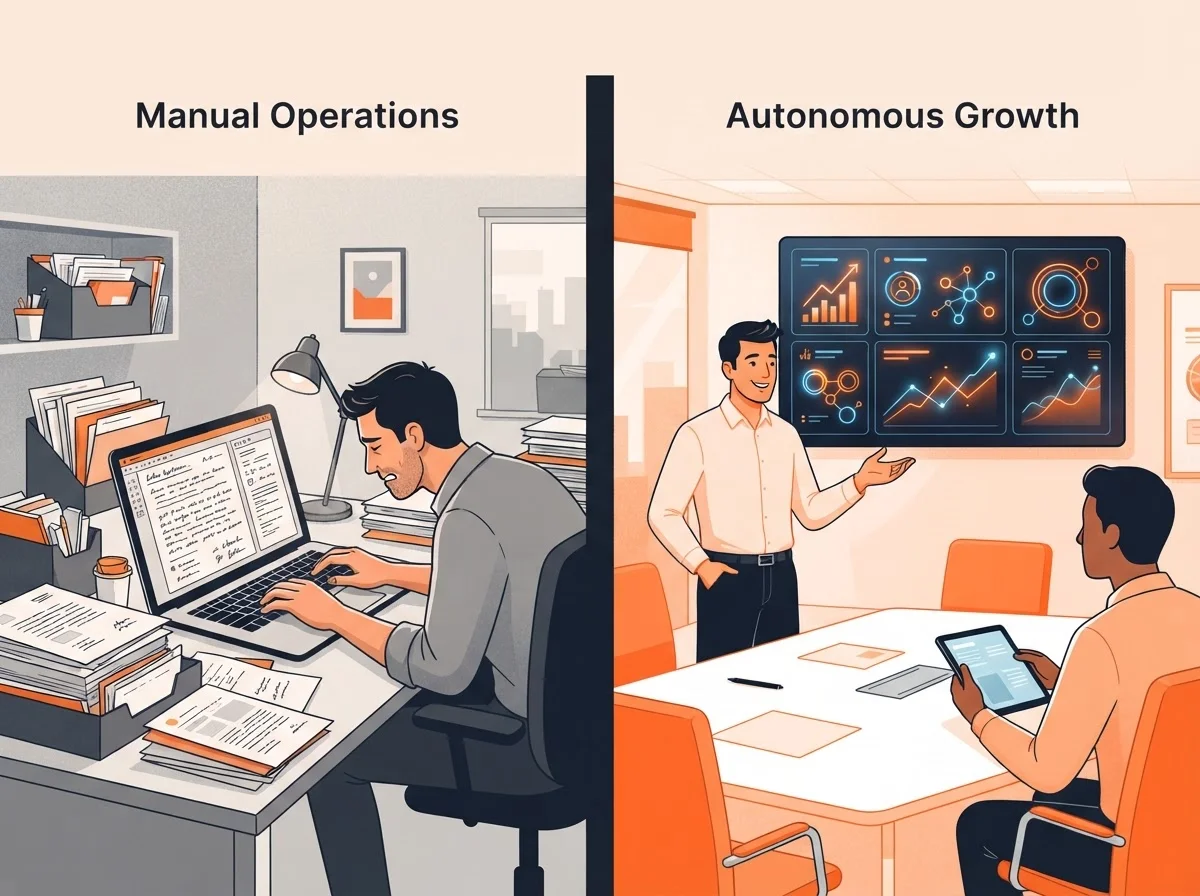
While traffic and engagement are the visible outcomes, the most significant ROI for a SaaS founder is the reclamation of time. In the manual era, content production is a constant weight. Moving to an autonomous platform changes the economics of your content marketing department.
Strategic platforms offer unlimited team seats, allowing you to invite product managers and technical editors into the platform to participate in a high-level review process. Instead of spending hours drafting from scratch, the team moves into a "verification" role. This shifts the workload from deep writing sessions to focused, 15-minute final approvals.
This saved time can be immediately reinvested into high-leverage activities like closing sales, refining the product roadmap, or preparing for a Series A. For a lean startup, the ability to maintain a world-class blog without a dedicated full-time content team is a massive competitive advantage. It allows you to "punch above your weight class" in search results, appearing as an established authority while remaining a focused engineering team.
Lessons for Scaling SaaS Teams
The journey toward autonomous blogging provides a blueprint for any leader struggling with organic growth. It is not just about using AI; it is about building a content infrastructure that reflects your product excellence.
Key takeaways for your strategy include:
- Prioritize Documentation Quality: The output is only as good as the knowledge you provide. Ensure your public API guides and feature descriptions are up to date before syncing them with your autonomous engine.
- Integrate for SEO Equity: Use direct integrations (WordPress, Ghost, Webflow) to ensure content is delivered directly to your domain. This builds the long-term SEO authority of your site rather than scattering assets across third-party platforms.
- Maintain a Human-in-the-Loop: Use the time you save to perform high-level strategic reviews. Ensure the "voice" of your brand remains consistent even as your production volume increases.
- Optimize for Product-Led Content: Focus on articles that solve a problem specifically by using your tool. An autonomous system can identify long-tail keywords and competitor gaps you might have missed, positioning your SaaS as the superior alternative during the user's research phase.
Frequently Asked Questions
Q: Will autonomous blogging negatively impact my SEO rankings?
No. Search engines prioritize helpful, accurate content regardless of its origin. By using an autonomous system grounded in your specific product knowledge, you often produce more relevant and useful content than a generic freelance writer, which typically leads to improved rankings.
Q: How much technical information do I need to provide to the system?
The system is designed to be flexible. You can provide public links, upload PDF manuals, or paste text descriptions. A more comprehensive "knowledge dump" at the start ensures higher technical accuracy in the resulting articles.
Q: Does the system handle internal linking for SEO?
Yes. Advanced platforms like Blogged automatically identify relevant keywords in new posts and link them back to your existing articles and product pages, creating a strong internal link structure without manual effort.
Q: Can my team review articles before they go live?
Absolutely. The workflow is designed for founders and product managers to remain in control. You can review, edit, and approve every draft within the platform before it is published to your WordPress, Ghost, or Next.js site.
Boosting content engagement is no longer a luxury—it is a necessity for scaling SaaS companies in a crowded market. By transforming your unique product knowledge into a discoverable content engine, you move from a reactive content strategy to a proactive growth machine. The choice for the modern founder is simple: spend your valuable hours writing about what you’ve already built, or use an autonomous system to tell the world while you build the next big thing.
Get practical updates on saas product led content engagement case study
Receive new articles and practical insights by email.