
On this page
For SaaS founders, the path to organic growth is frequently blocked by high-competition head terms. While ranking for a broad term like "CRM" or "Project Management" sounds ideal, the reality involves massive budgets and years of authority-building. Chasing these vanity metrics often leads to high bounce rates because the user's intent is too broad to align with a specific software solution.
The most efficient route to sustainable growth lies in dominating long-tail keywords. These are specific, multi-word queries that signal high buyer intent and lower competition. By focusing on niche pain points—such as "automated inventory tracking for boutique retailers" rather than just "inventory software"—SaaS teams can attract users who are actively seeking a solution to a granular problem.
The primary challenge is execution. Staying consistent with high-quality, product-led content while simultaneously building a company is an operational bottleneck for most lean teams. Autonomous blogging platforms allow founders to bridge this gap, transforming technical product knowledge into a continuous stream of optimized, discoverable content. This guide breaks down the tactical framework for long-tail SEO and GEO domination and how autonomous systems handle the research, writing, and publishing workflows that typically stall growth.
The Strategic Shift: Why Head Terms Are a Trap for Growing SaaS
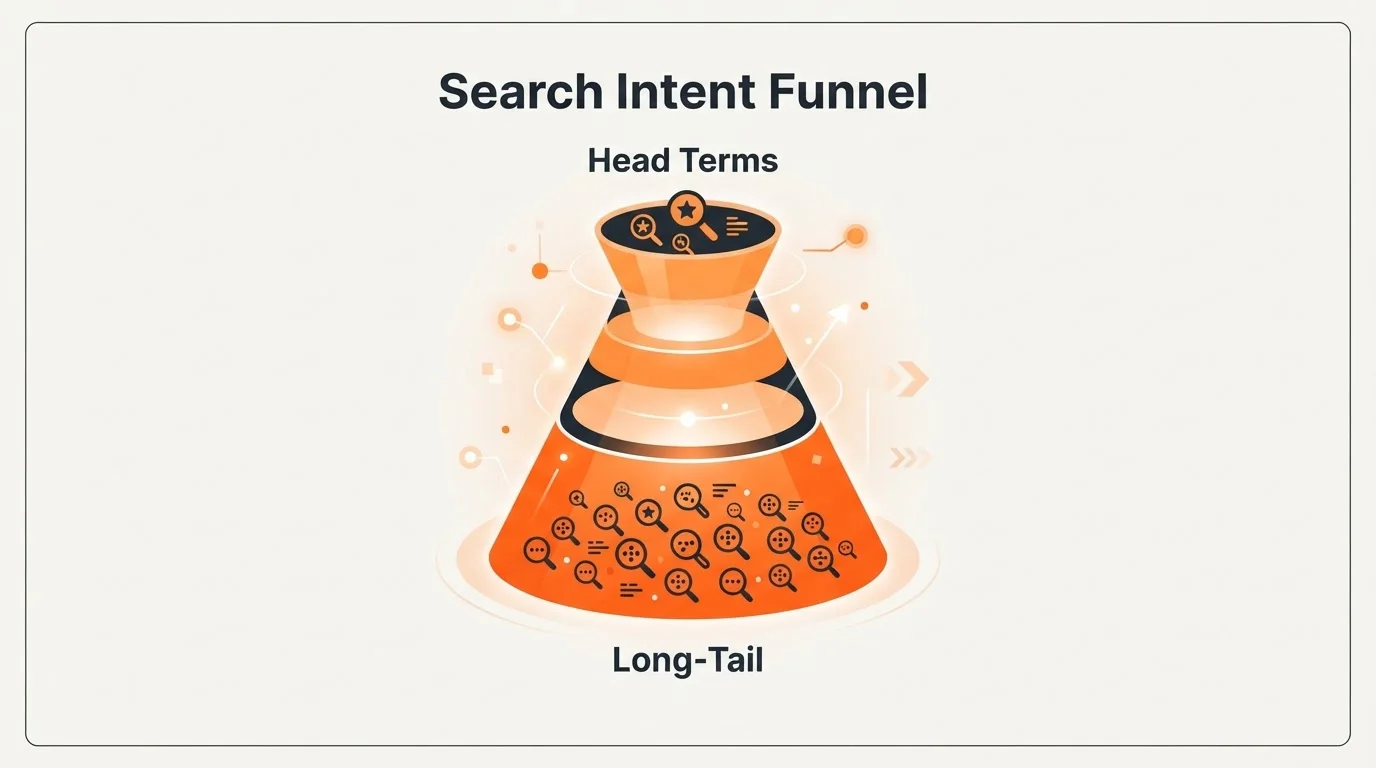
Most early-stage SaaS companies burn through limited marketing resources trying to rank for high-volume keywords. While these terms attract thousands of monthly searches, they are almost exclusively dominated by incumbents with decades of SEO equity. For a growing team, competing for these terms is a battle of attrition that rarely yields visible results.
The core issue is a disconnect between content and the Ideal Customer Profile (ICP). Broad terms attract top-of-funnel users who are merely browsing or researching definitions. These visitors rarely convert because the content is not specific enough to address their immediate technical hurdles or specific business workflows. To drive revenue, founders must capture users further down the funnel—those searching for specific features or integrations.
Long-tail keywords represent an underserved and highly profitable market. While individual search volume is lower, the aggregate volume of niche queries is massive. More importantly, these queries indicate a person ready to implement a tool. A user searching for "how to automate multi-currency expense tracking for remote teams" is significantly more likely to sign up for a trial than someone searching for "accounting tips."
Evaluating Keyword Efficiency
To build a successful growth engine, you must audit your current organic traffic for intent alignment. If your blog drives hits but your trial sign-up rate remains negligible, you are likely attracting the wrong intent. A high-performing SaaS blog prioritizes problem-oriented guides over generic industry commentary.
Long-tail queries convert at a higher rate because they align with a user’s immediate, acute need. If your content strategy lacks articles for these niche queries, you are ceding the most valuable part of the market to competitors who are willing to be more specific. A scalable strategy requires mapping every unique pain point your product solves to a discoverable piece of content.
Solving the Production Bottleneck with Autonomous Blogging
The main obstacle to long-tail dominance is the sheer volume of content required. To cover every relevant niche query, a SaaS may need dozens or even hundreds of specialized articles. For small teams, manually researching, writing, and optimizing this volume is an operational impossibility. This is where an autonomous SEO and GEO blogging platform like Blogged changes the growth trajectory.
Blogged handles the entire lifecycle of a blog post on autopilot—from keyword research and optimization to internal linking and direct publishing. This allows founders to move from publishing one or two posts a month to maintaining a consistent, high-frequency schedule. This scale is necessary to establish topical authority in the eyes of search engines, signaling that your site is a comprehensive resource for its niche.
Unlike generic AI writing tools, an autonomous platform designed for SaaS focuses on product-led content. It uses your specific product data to show readers exactly how your software solves their problems. This ensures every long-tail article functions as a sales tool, providing value while naturally positioning your product as the solution.
Transforming Product Knowledge into Discoverable Assets
Autonomous blogging is only as effective as the data feeding the system. By integrating your product documentation, feature lists, and customer use cases, the AI can generate authoritative advice that reflects your unique value proposition. This prevents the creation of "filler" content that technical B2B buyers often ignore.
When evaluating an autonomous solution, look for a system that connects your internal knowledge to the writing process. This ensures that technical topics—such as "configuring real-time webhooks for SaaS billing"—accurately reflect your software's actual capabilities. This approach builds trust with technical audiences and positions your brand as a legitimate subject matter expert.
GEO: The New Frontier of SaaS Discoverability
While traditional SEO remains vital, the rise of AI-driven search engines like Perplexity, ChatGPT Search, and Google’s AI Overviews has introduced a new requirement: Generative Engine Optimization (GEO). Modern users are increasingly getting their answers from AI summaries rather than clicking through long lists of blue links.
GEO focuses on making your content understandable and citable for these AI models. Autonomous platforms that prioritize GEO ensure your content is structured with clear facts, authoritative data points, and direct answers to complex questions. This increases the likelihood that your SaaS will be recommended as the top solution when a user asks an AI, "What is the best tool for automating X?"
By optimizing for both traditional search and generative engines, you create a dual-threat growth strategy. You capture the classic searcher looking for a guide and the modern user looking for an AI-generated recommendation. This comprehensive visibility is essential for maintaining market share as search behavior evolves.
Get practical updates on saas long tail keyword organic growth case study
Receive new articles and practical insights by email.
Technical Execution: Seamless Publishing and Integrations
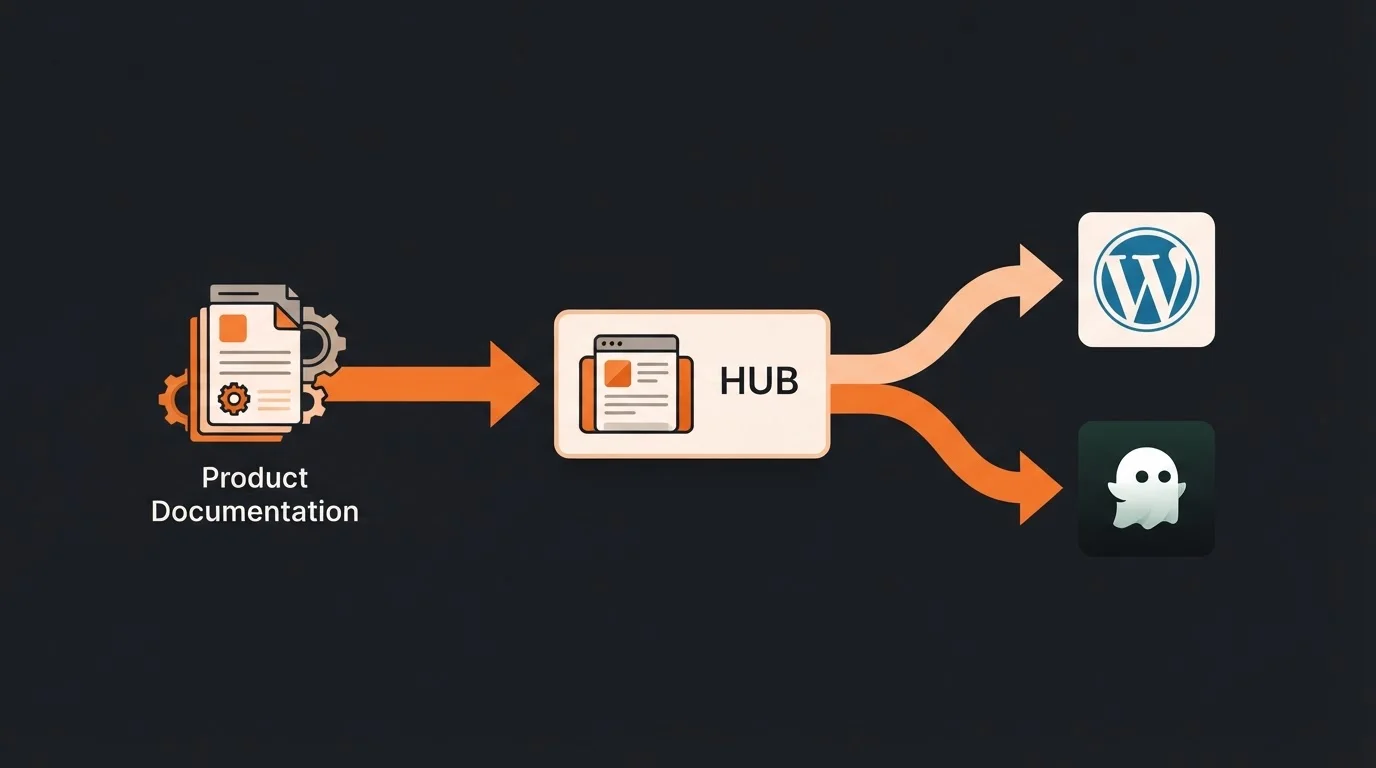
Operational efficiency depends on how easily content moves from a draft to a live URL. Manual formatting and copy-pasting are significant time sinks that prevent founders from scaling content efforts. Modern autonomous platforms solve this through native integrations with the most common SaaS content stacks.
For teams using WordPress, the integration is streamlined via the Blogged Publishing plugin. By establishing a secure connection using an application password, users can create and review articles within the blogging platform and deliver them directly to their site. This workflow preserves all SEO metadata and formatting, ensuring the content is ready for indexing immediately.
Ghost users benefit from a similar automated loop. By creating a custom integration in the Ghost admin panel and using an Admin API key, founders can verify their connection and allow the autonomous platform to manage content creation while Ghost handles the reader experience. These integrations also allow for the collection of consented visits and configured conversions, providing a direct data loop to measure which articles are actually driving sign-ups.
Next.js and Webflow Connectivity
SaaS companies using more modern or custom stacks like Next.js or Webflow are not left out of the automation loop. Native integrations allow these platforms to sync content and track conversion metrics just as easily as traditional CMS options. This ensures that regardless of your tech stack, your organic growth engine remains data-driven and fully integrated into your marketing funnel.
Maximizing ROI with Collaborative Content Management

The financial argument for autonomous blogging is compelling for lean SaaS teams. With pricing starting at $99 per month, the cost per article is a fraction of the expense associated with high-end freelance writers or full-time content marketers. This allows startups to compete with much larger organizations in search results without expanding their headcount.
Furthermore, the collaborative nature of these platforms increases internal efficiency. Every paid plan on Blogged includes unlimited team seats, meaning product managers, engineers, and marketers can participate in the review and approval process without additional costs. This cross-functional collaboration ensures that the blog stays technically accurate as the product evolves.
To ensure quality control, Blogged includes 3 revisions per article, allowing founders to provide initial guidelines and fine-tune the output to match their specific tone. Additionally, the platform includes 2 pages typically used for pillar content or key landing pages, ensuring that the entire organic entry point for your SaaS is professionally managed and optimized for growth.
Frequently Asked Questions
Q: How long does it take to see results from a long-tail keyword strategy?
While SEO results vary, targeting long-tail keywords typically yields faster visibility than head terms because there is less competition. Consistency is key to building the topical authority required for long-term growth.
Q: Does autonomous blogging negatively impact my site's SEO?
No. Search engines prioritize content that is original, helpful, and provides value to the reader. By using your unique product knowledge and documentation, autonomous platforms create high-quality, product-led content that search engines reward.
Q: What is the difference between SEO and GEO?
SEO (Search Engine Optimization) focuses on ranking in traditional search results like Google. GEO (Generative Engine Optimization) focuses on ensuring your content is cited and recommended by AI-driven search engines and large language models.
Q: How do I connect Blogged to my WordPress site?
You will need to install the Blogged Publishing plugin on your WordPress site and establish a connection using an application password for secure, automated delivery.
Q: Can my whole team use the platform?
Yes. Every paid plan includes unlimited team seats, allowing for collaborative review and approval across your entire organization.
Dominating long-tail keywords is the most effective way for SaaS founders to build a sustainable organic growth engine. By shifting focus away from high-competition vanity terms and toward specific user intent, you can attract high-quality leads that actually drive revenue. Autonomous blogging removes the execution barrier, allowing you to scale your content production without sacrificing your focus on building the product. For the modern founder, leveraging a platform like Blogged at $99 per month is a strategic investment in long-term discoverability and market authority.