
On this page
SaaS development moves at the speed of code, but SaaS marketing often moves at the speed of manual labor. For founders, a single feature update or UI redesign can trigger a grueling cycle of rewriting blog posts, updating tutorials, and refreshing SEO metadata. When the product evolves faster than its public-facing documentation, the resulting content drift confuses customers, increases support tickets, and stalls organic growth.
Transitioning to an autonomous blogging strategy allows founders to transform their content lifecycle from a reactive manual process to a synchronized system. By leveraging tools like Blogged, designed to ingest product knowledge directly, SaaS teams can ensure their blog remains a reliable source of truth. This approach turns internal technical expertise into a self-sustaining organic growth engine without the traditional overhead of a full-scale content agency or a bloated marketing team.
At a flat rate of $99 per month, Blogged manages the entire workflow—from research and planning to writing, optimization, and publishing. This allows the core team to remain focused on building the product while the blog runs on Autopilot, delivering product-led content that attracts and converts users through both traditional search and AI discovery.
The Friction of Rapid Iteration: Why Manual Content Fails SaaS Founders
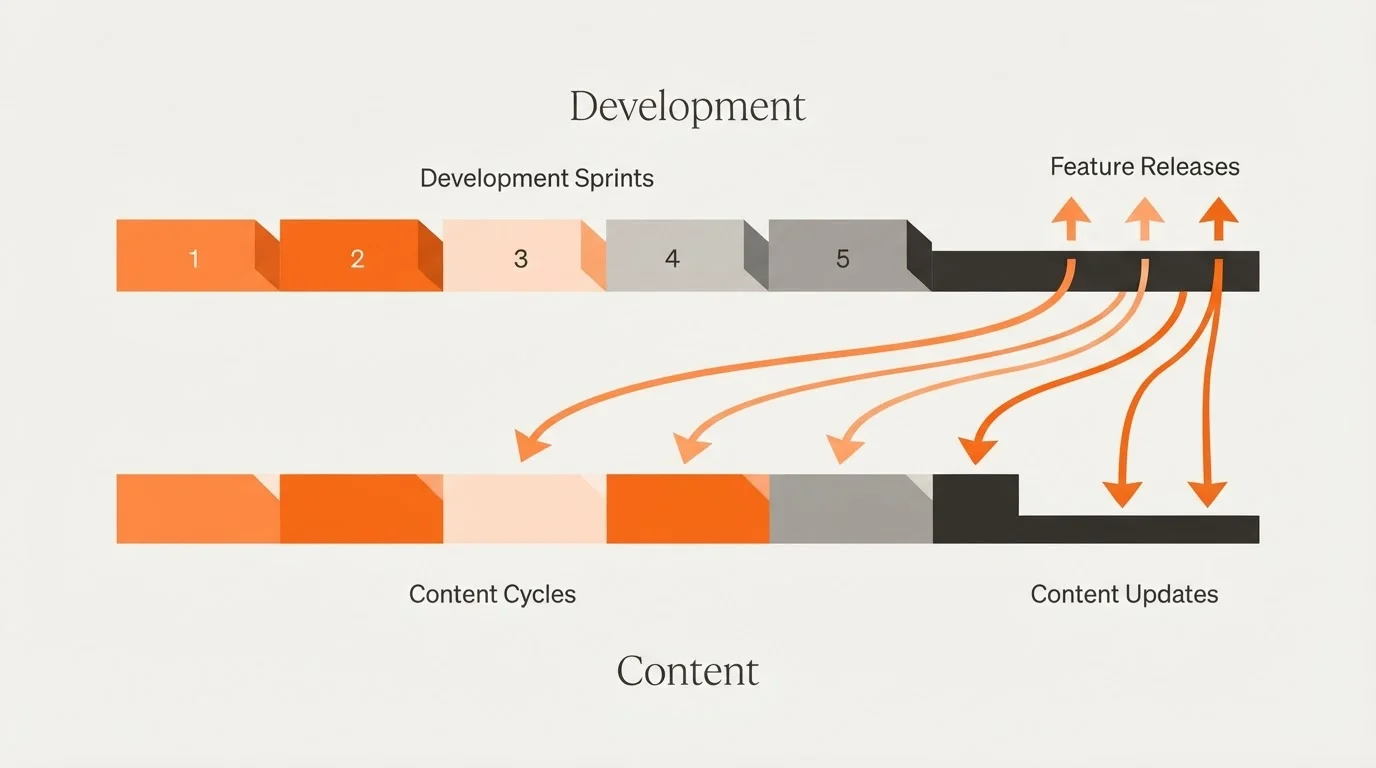
Modern SaaS companies operate on high-velocity agile models, pushing updates weekly or even daily. While this agility is a competitive advantage for the product, it creates a massive bottleneck for marketing. Every time an API endpoint is released or a navigation menu is renamed, a library of existing articles can become instantly inaccurate.
The manual burden of maintaining a blog at this pace is often unsustainable for small teams. Content creators frequently spend more time revising old posts to reflect the current state of the software than they do creating new, lead-generating material. This friction leads to several critical points of failure that impact the bottom line, including higher support overhead and brand erosion.
The Real Cost of Content Decay
Outdated content leads to significant support debt. Customers encounter guides that no longer match the live product experience, increasing the volume of 'how-to' tickets for features that have already been improved. When prospective customers see screenshots or descriptions that don't align with the actual software, it creates immediate distrust.
Beyond customer trust, content decay negatively affects search visibility. Search engines and AI discovery tools reward accuracy and freshness. If your blog articles describe features that were deprecated months ago, your authority in your niche will decline. Founders need a product change content strategy that functions as a direct extension of their development pipeline rather than an isolated marketing task.
Synchronizing Content with the Development Pipeline
To bridge the gap between development and discovery, founders are turning to autonomous SEO and GEO blogging platforms. These systems are designed to handle the heavy lifting of research, writing, and optimization that usually drains a founder’s time. By automating the transition from product knowledge to published content, teams ensure their blog remains an accurate reflection of the software.
An autonomous system like Blogged doesn't just generate generic text. It transforms specific product knowledge into discoverable, product-led content. By integrating this into the workflow, the blog evolves alongside the code. This ensures that every new feature is immediately discoverable by potential customers, turning every release into an opportunity for organic traffic.
Building a Dynamic Product Knowledge Base
The effectiveness of an autonomous blog depends on the quality of the information it consumes. Instead of expecting a writer to manually 'learn' every UI change, founders can utilize their feature specifications and release notes as a centralized source of truth. The AI uses this data to generate and update content with technical precision.
When a product change occurs, the system can cross-reference new specifications against the existing library. This creates a proactive feedback loop where content freshness is a default setting. For a SaaS founder, this means the blog stays technically accurate, reflecting the current capabilities of the platform without requiring a manual review of every past post.
Native Integrations for a Seamless Content Stack
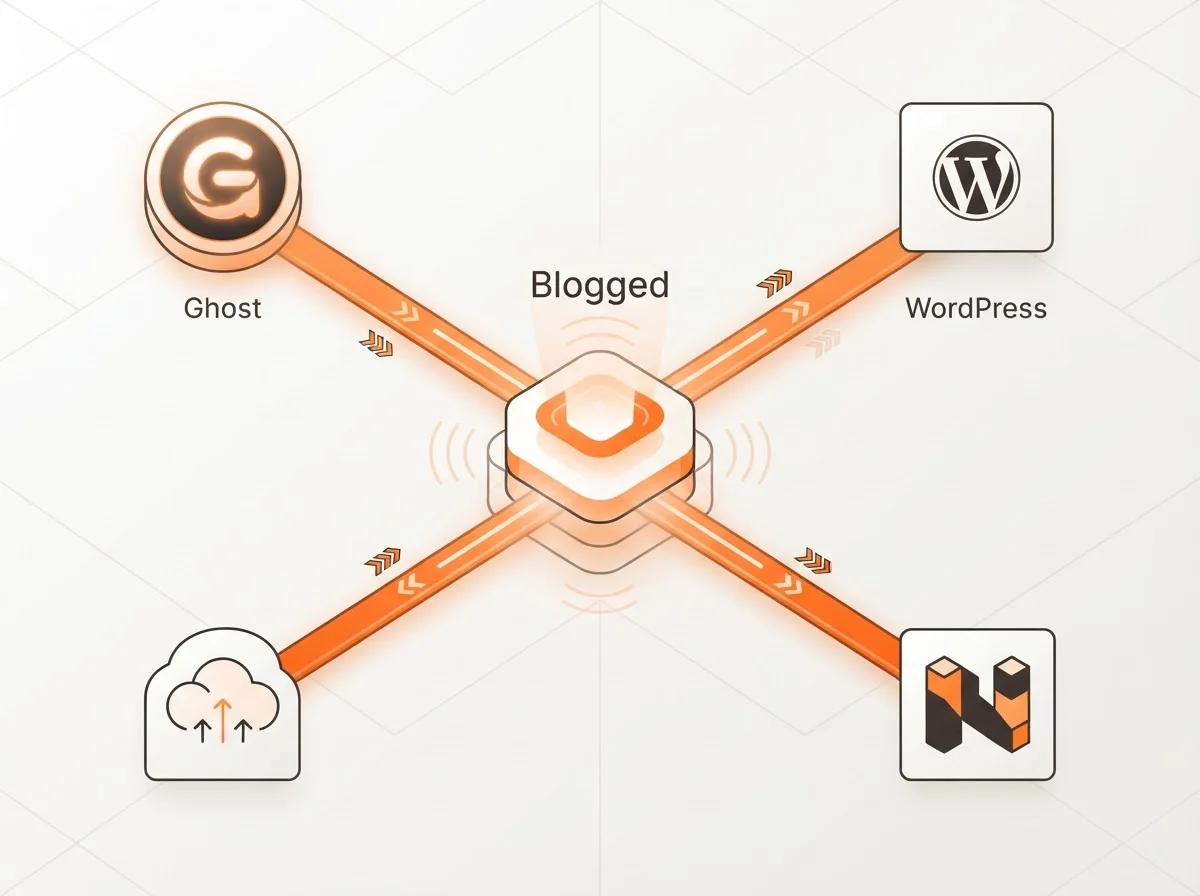
For an autonomous system to be truly effective, it must integrate seamlessly with existing marketing and engineering stacks. Whether a SaaS is built on a headless architecture or a traditional CMS, the publishing process must be frictionless. Blogged offers several native integrations to ensure content delivery is as automated as content creation.
For example, the Ghost AI Blog Publishing integration allows founders to manage content creation and reviews within Blogged while Ghost handles the final reader experience. This setup ensures technical SEO happens behind the scenes, while the public-facing site remains fast. Similarly, the WordPress AI Blog Publishing integration connects to self-hosted sites via a dedicated plugin and an application password, allowing users to review articles in Blogged before delivering them to their website.
Optimization and Conversion Tracking
Speed is only one part of the equation; the content must also perform. Integration with platforms like Webflow and Next.js allows teams to do more than just publish. The Webflow CMS AI Blog Publishing integration and the Next.js AI Blog Publishing integration enable users to collect consented visits and track specific conversions for verified articles.
This data-driven approach ensures the faster update cycle contributes to the bottom line. By seeing which updated product features drive the most sign-ups, founders can refine their agile content for SaaS strategy. The system ensures every article is optimized for both traditional search engines (SEO) and modern AI-driven discovery (GEO).
Scaling Organic Growth Without Increasing Burn Rate

One of the primary objections founders have to scaling content is the cost of human resources. Traditional content teams require managers, writers, and SEO specialists, all of whom add to the monthly burn. Autonomous blogging flips this model by offering unlimited team seats on every paid plan. This allows product managers, marketers, and developers to participate in the review process without additional per-user costs.
By involving multiple stakeholders in the review phase, SaaS companies ensure every automated update is brand-aligned and technically sound. The ability to request 1 to 3 revisions per article ensures the final output meets the high standards required for B2B SaaS marketing. This collaboration model allows a single founder or small team to manage an output that would typically require a much larger department.
Future-Proofing with GEO Readiness
Search and AI discovery now reward specific, useful content over sheer volume. By keeping content fresh and technically accurate through autonomous updates, SaaS firms improve their visibility in AI-driven search results, also known as Generative Engine Optimization (GEO). This ensures that Large Language Models and AI search tools always have the most current data about your product.
As AI search becomes a primary way for users to discover software, having a blog that is always up-to-date is a massive competitive advantage. You are no longer just fighting for a spot on Page 1 of Google; you are ensuring that AI assistants recommend your product based on the latest feature set and use cases documented in your blog.
Frequently Asked Questions
Q: How does autonomous blogging ensure technical accuracy for niche SaaS products?
By using your specific product documentation and release notes as the primary source of truth, platforms like Blogged ensure the AI focuses on your unique features rather than generic industry information.
Q: Can I use autonomous blogging if my site is built on a custom stack like Next.js?
Yes. Integration options for Next.js and custom APIs allow you to publish verified articles and track visitor conversions directly within your custom frontend architecture.
Q: How much control do I have over the final published content?
You maintain full editorial control. You can review every draft and utilize 1 to 3 revisions per article to fine-tune the messaging before it goes live on your site.
Q: What is the cost of starting an autonomous blogging strategy?
Blogged starts at $99 per month, which includes all core features like research, optimization, and automated publishing on autopilot.
Achieving faster content updates for product changes is no longer a luxury reserved for SaaS companies with massive marketing budgets. By adopting an autonomous approach, founders can synchronize their marketing efforts with their development cycles, ensuring every new feature is immediately discoverable by potential customers.
The future of SaaS growth belongs to those who can bridge the gap between building a great product and telling the world about it. By transforming your internal knowledge into an automated, product-led content engine, you can stop managing a blog and start scaling your company.
Get practical updates on saas faster content updates product changes case study
Receive new articles and practical insights by email.